
Author: Natalie Rosella Boonzaier
Website: https://rosellaprojects.com/
Socials: https://www.instagram.com/rosellaprojects/
Six Minute Read
YASHICA 635: Photographs Filled with Character & Riddled with Reliable Charm
Shutter Speeds: B, 1s, 1/2s, 1/4s, 1/8s, 1/15s, 1/30s, 1/60s, 1/125s, 1/250s, 1/500s.
Aperture Values: f/3.5, 4, 5.6, 8, 11, 16 and 22 (smooth & continuous, no hard stops).
I will temporarily post my blogs here while I set up a blog section on my website.
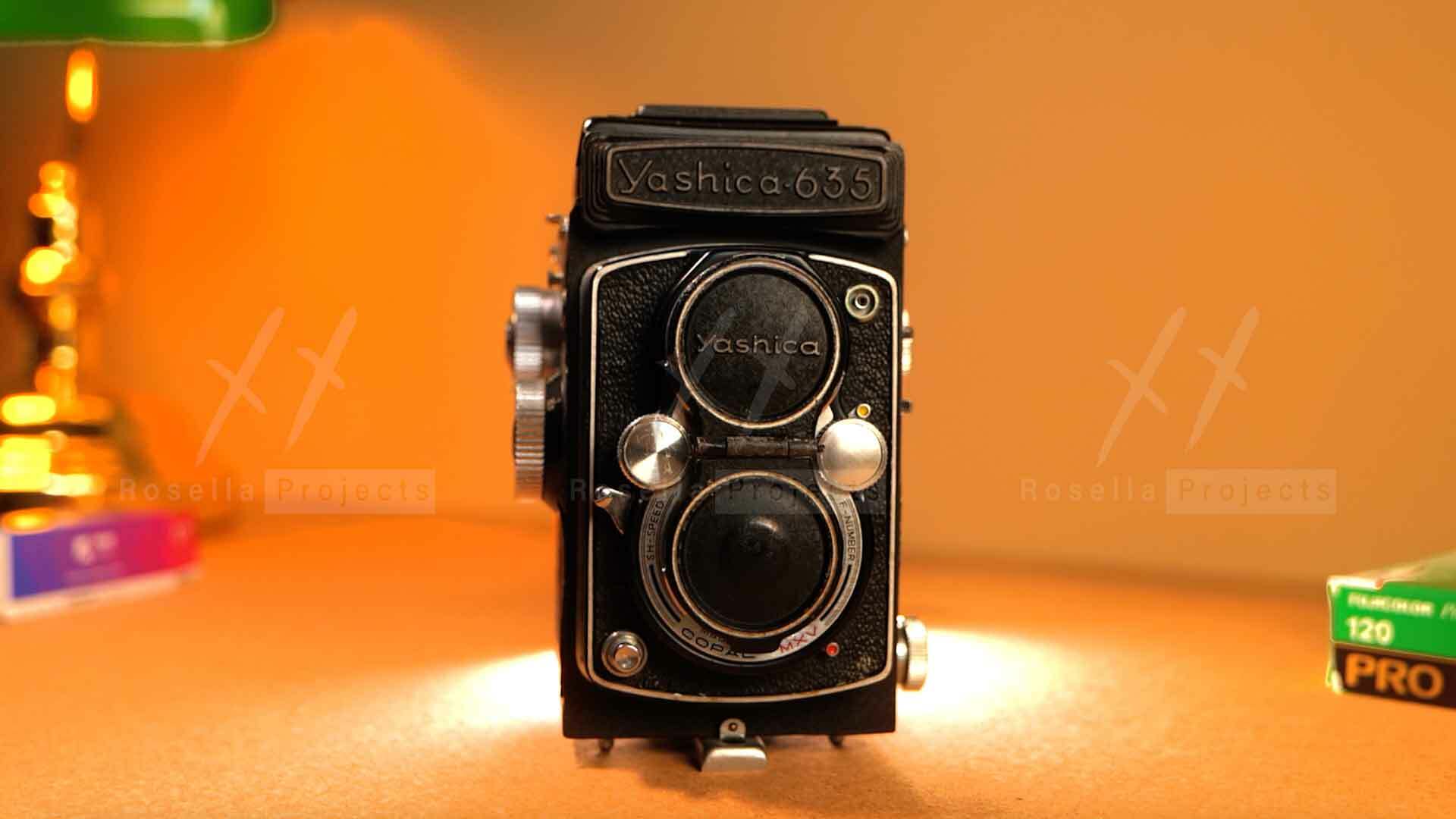
The Yashica 635 is a dual format Twin Lens Reflex Camera (TLR) that takes 120 film and, if you have the appropriate conversion kit, it also takes 35mm film. Manufactured in Japan from 1958 to 1971, most Yashica 635 TLRs come equipped with an 80mm Yashikor lens, like the one that I own (Figure 1). Later, and more rare, models were produced to feature the 80mm Yashinon lens, which is considered the superior lens of the two. Having said that, the Yashikor is a good lens and I think it’s good enough to the point where the deciding factor on image quality is the photographer and not whether the photographer is shooting with a Yashikor or a Yashinon lens. An 80mm focal length is a relatively standard focal length on TLRs and, in square 6x6 format, is equivalent to ~50mm on a full frame or 35mm system.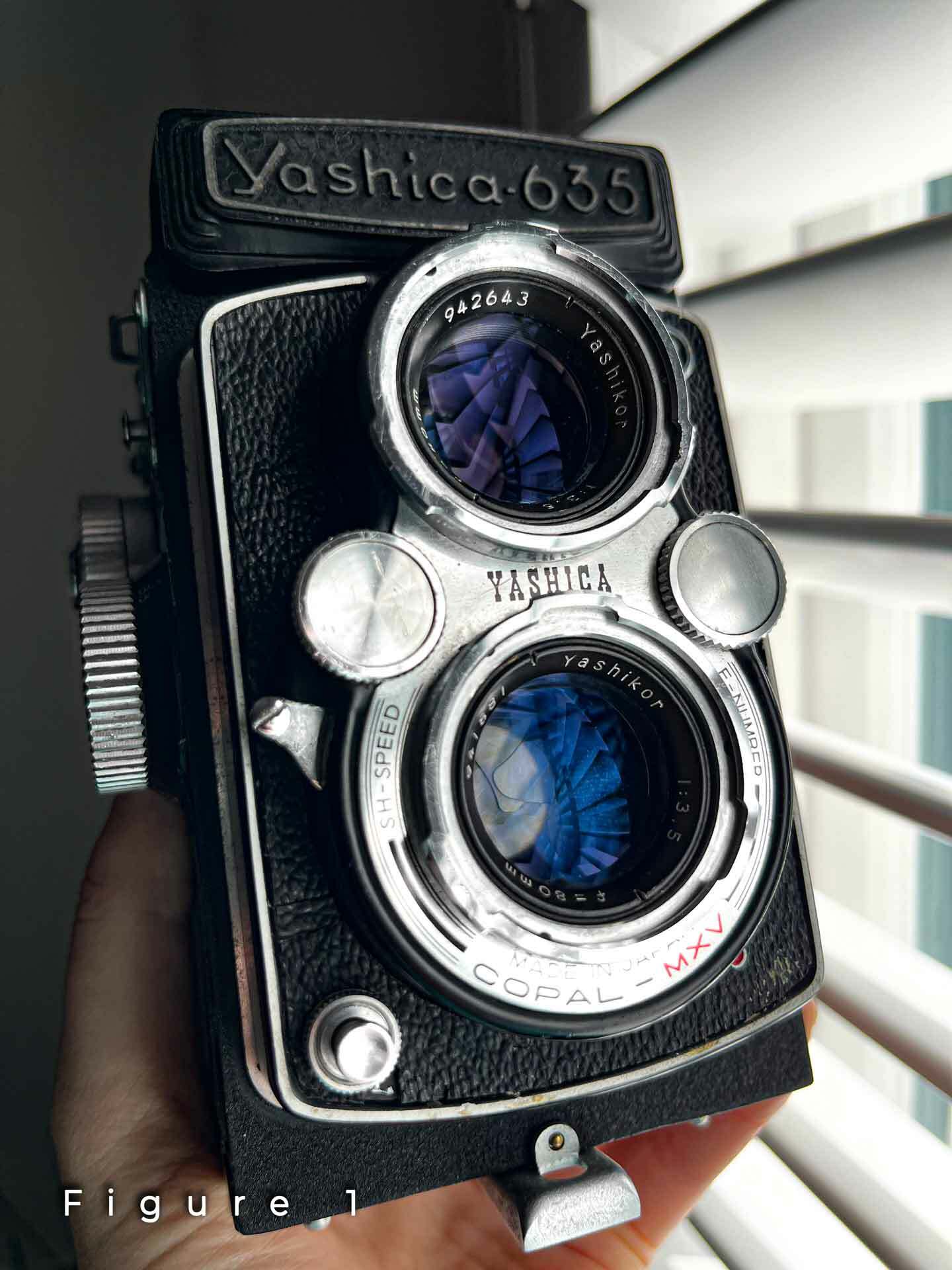
Though the Yashica 635 is the first TLR camera that I’d heard of that can additionally take 35mm film, it certainly was not the first TLR to introduce such a feature. Among the more popular examples of this conversion is that by Rolleiflex, through the introduction of their Rolleikin conversion kits from the early 1930s. Though I own the Rolleikin 2 conversion Kit, I have not used it because my Rolleiflex TLRs are new in my collection - Once I make use of them I will be sure to share my results and my experience. With regard to the Yashica 635 35mm conversion kit (Figure 2), I will create a separate blog and Youtube video once I have rolled through the 35mm black and white film that’s currently loaded into the camera.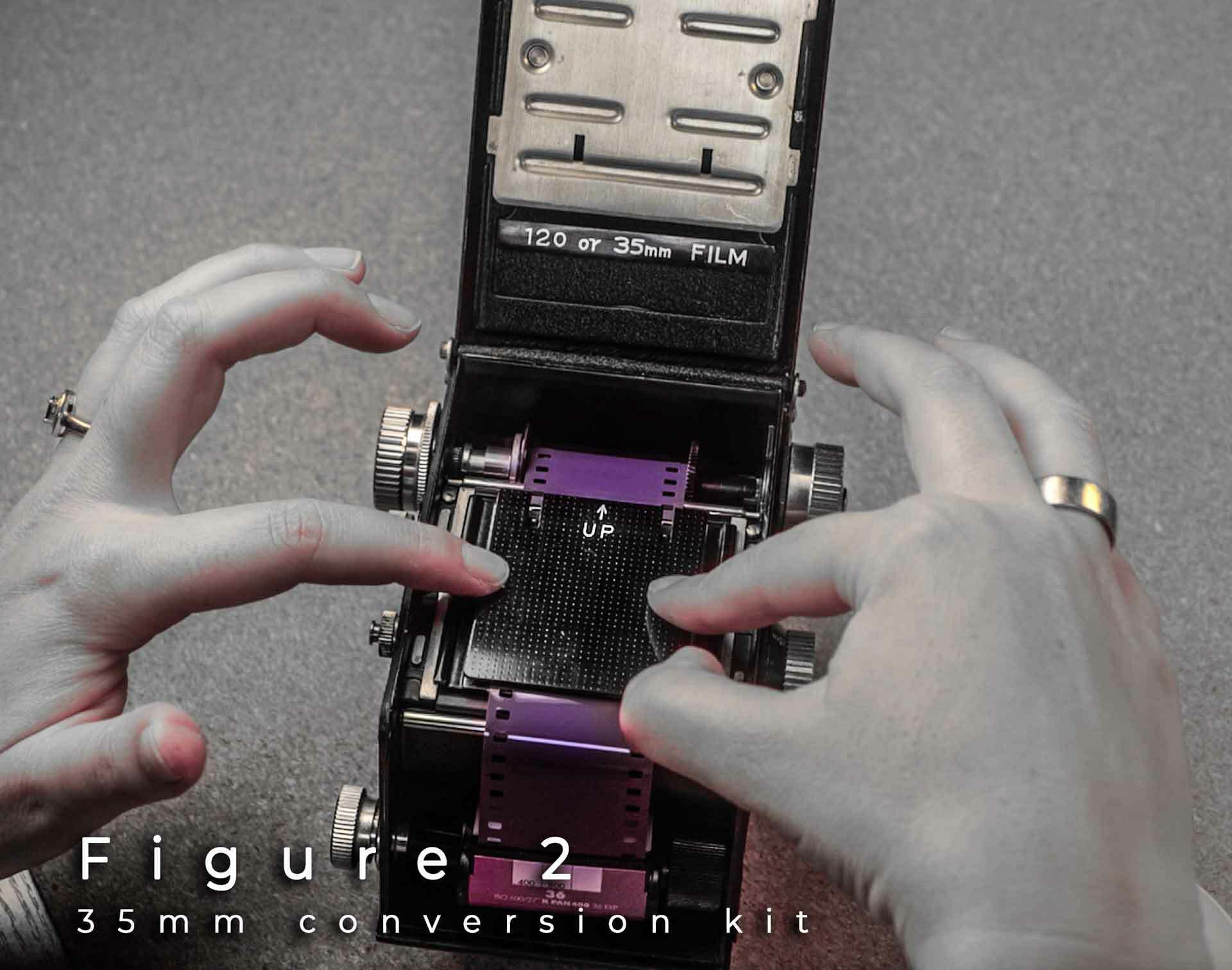
Sticking to the Yashica 635 TLR’s capacity as a medium format camera that shoots 12 6x6 square frames on a 120 film roll, I would like to firstly discuss the overall build and feel of this camera. It is a lovely size that is not too big and not too small, and it consists of a substantial bulk of mass that feels stable and strong. It is also small enough to fit in your smaller of camera bags comfortably. I believe it is all metal, with a leatherette covering and sturdy metal knob finishes. The Yashica font on that front of the camera reminds me of a font type that you’d find in an old western movie, like on those “wanted” signs or in the newspaper and it makes me smile whenever I see it. Shutter Speeds: B, 1s, 1/2s, 1/4s, 1/8s, 1/15s, 1/30s, 1/60s, 1/125s, 1/250s, 1/500s. Aperture Values: f/3.5, 4, 5.6, 8, 11, 16 and 22 (smooth & continuous, no hard stops).
To briefly touch on what a twin lens reflex camera is, its most notable feature is that it has two lenses, one lens in the viewing compartment, the viewing lens, which displays your field of view through a mirror; and one lens in what is called the taking compartment, the taking lens - the one that captures the image to film (Figure 3). These two lenses aren’t always identical twins, but in the case of my Yashica 635, they are. They are both 80mm Yashikor f/3.5 lenses. An example where two lenses in a TLR are not identical twins would be as we can see with my Tele Rolleiflex, where the taking lens, the lens that takes the photo onto film, is a 135mm Carl Zeiss Sonnar F/4. Whereas the viewing lens, the lens used to view, compose and focus your image, is a 135mm Heidosmat F/4. My assumption to this being the case is that one does not require a top-of-the-line lens to compose an image, the fine quality of a lens is most relevant to the lens that is capturing the image to the film plane. 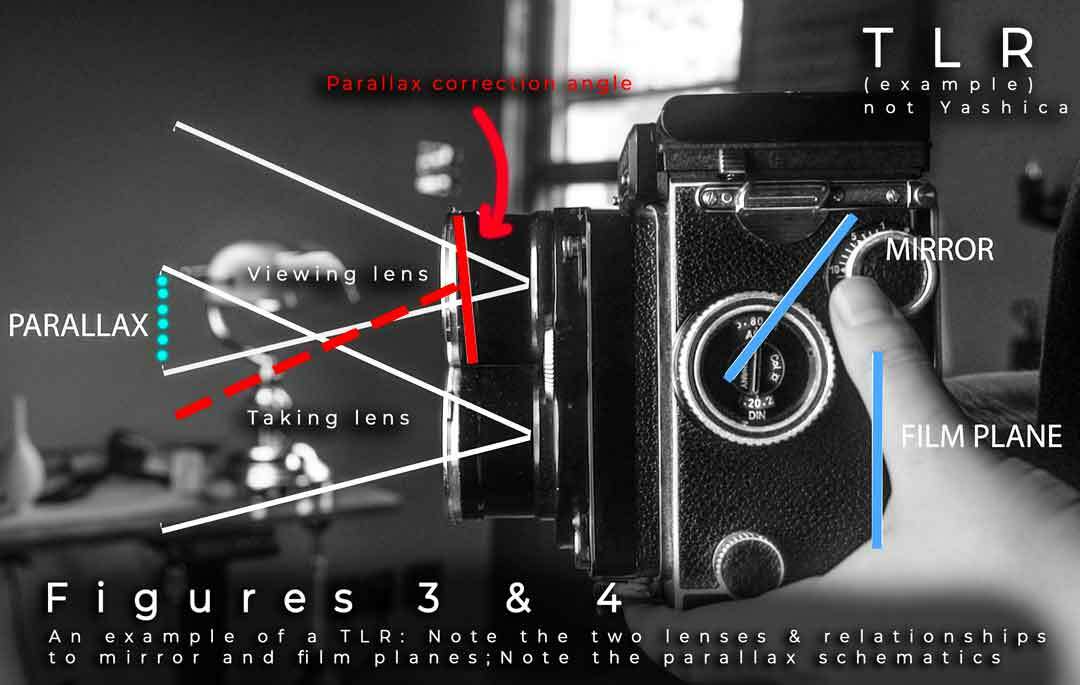 Another reason I also think that a different lens is used for viewing is that my Tele Rolleiflex features Parallax correction, which I believe means that the viewing lens is built in such a way that it faces ever so slightly downward (Figure 4). This is done to account for the fact that the two lenses are on slightly different supero-inferior planes - one lens sits on top of the other. And if you don’t account for this, you get what is referred to as parallax effect or parallax error. The Yashica 635 system is not corrected for parallax. This isn’t really a big deal, but it is evident in this composition (Figure 5), which I shot on my first day with this camera, which was also my first time shooting medium format. At the bottom of the frame is part of a ledge (which was very close to the camera) that I hadn’t seen through the viewing lens, but was captured by the taking lens.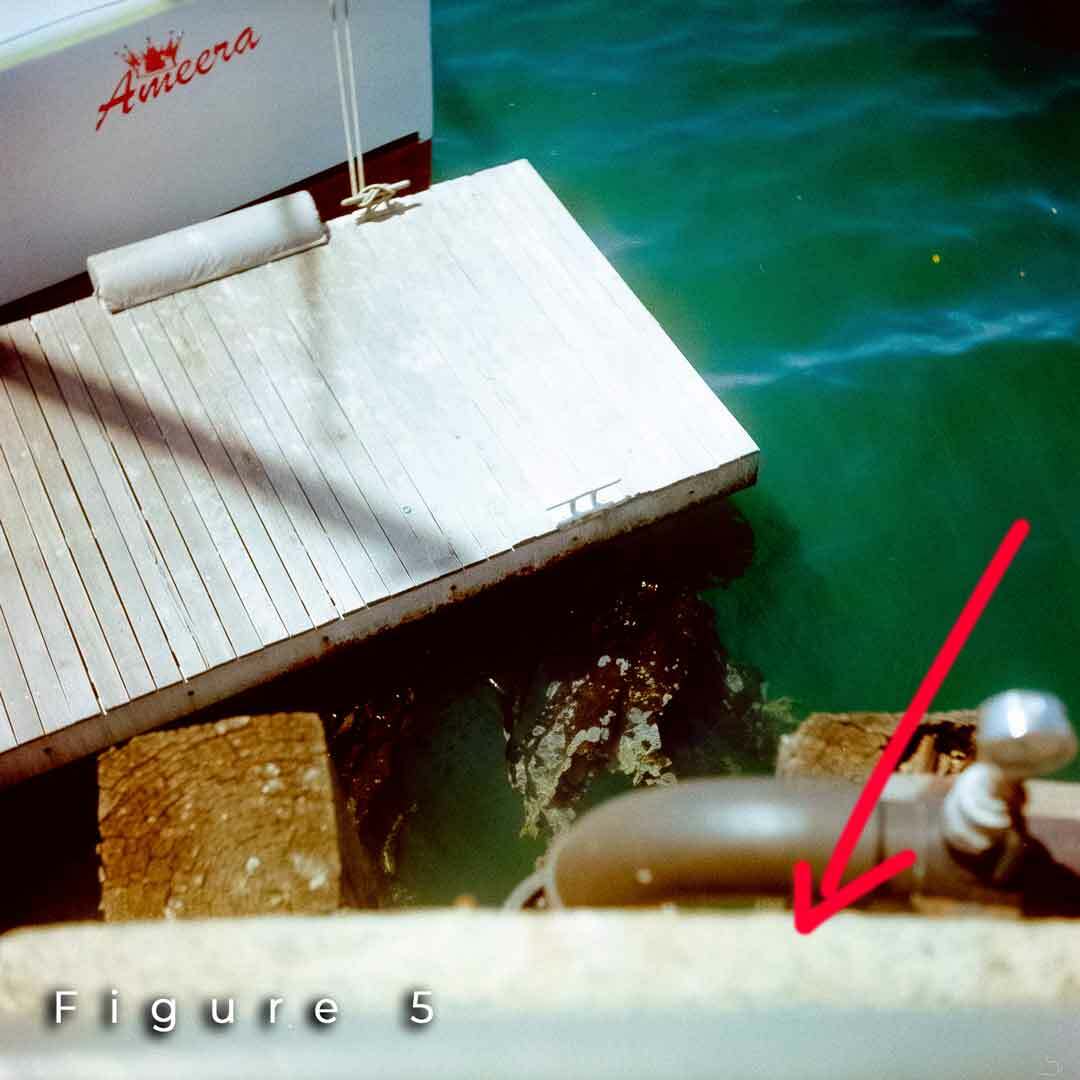
With all that said, the parallax effect is not a huge deal in my opinion because it’s minimal due to its minimum focus distance not being particularly close at 1m. The parallax error becomes significant with the Yashica 635 when close-up lenses are adapted to the lenses. Because you are shooting at a closer distance, the mismatch in framing between the two lenses on the TLR becomes more of a factor. So, when purchasing close up lenses, be sure that you are purchasing close-up filters that are a) the correct size and b) complete sets that include the viewing filter’s parallax correction piece (Figure 6).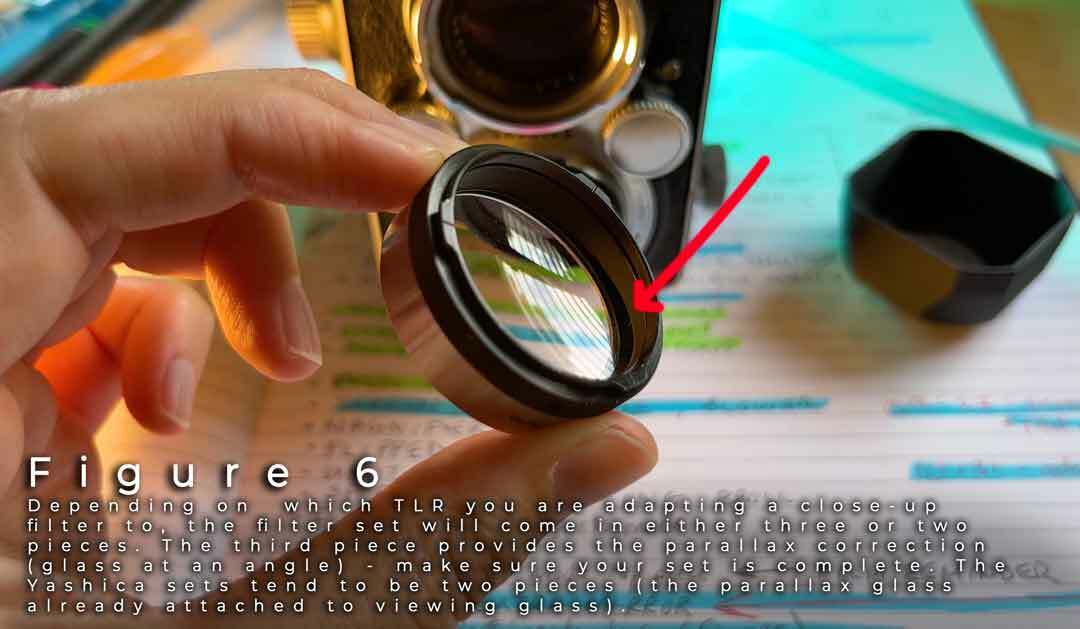
Because these two lenses live on the same vertical plane, they can be focused simultaneously with the same focusing knob (Figure 7). And one can assume that what happens in the viewing lens will reflect in the final image captured by the taking lens…unless it has been tampered with. I once spent ~8 hours correcting this on my Zeiss Ikon IKOFLEX ii. So, if you at some point decide to ever take on a repair of a TLR, don’t forget to mark where your lenses initially rest when they are eventually screwed back in. Because if they are screwed back into inconsistent positions, there will be a mismatch between viewing and taking lenses in terms of critical focus.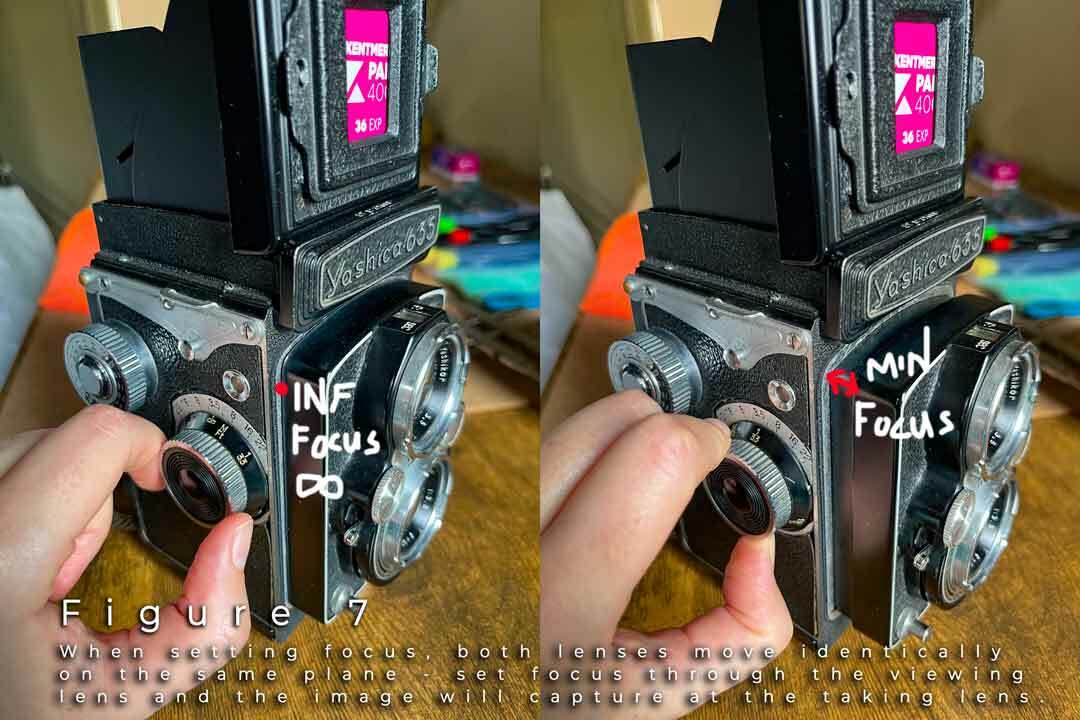
TLRs operate via a leaf shutter mechanism, which means that if you are careful, you can shoot at slower speeds because there is no mirror slapping as you take the shot, and there is no curtain abruptly moving. The blades open and close and don’t cause vibration so the limiting factor is your hands and not necessarily camera shake due to a mirror. But this means that 1/500th of a second is as fast as you’ll get with this technology.
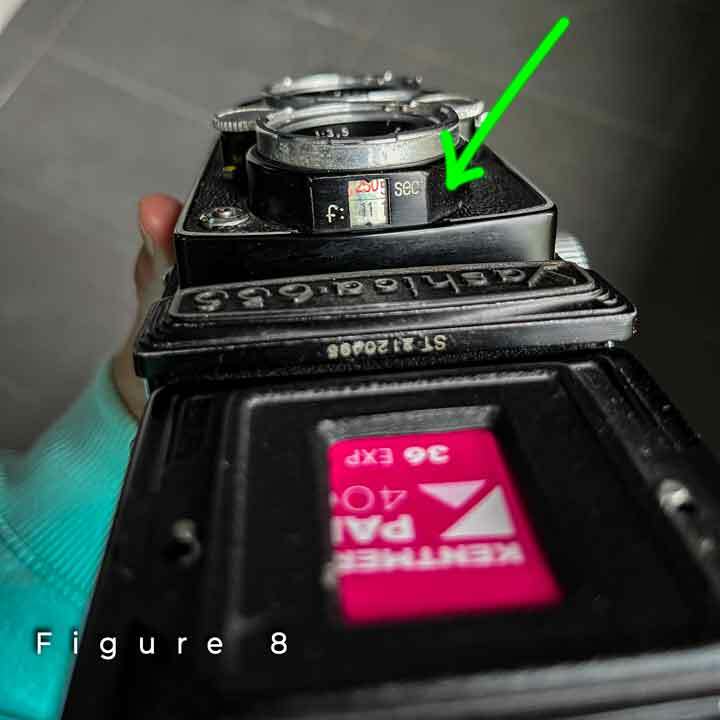
The aperture and shutter speed dials are placed similarly to Rolleiflex cameras between the two lenses on either side. And you can view your values at the top of the viewing lens (Figure 8). So if you have nice smooth dials, you can hold the camera in your two hands and adjust the dials while viewing your values above (Figure 9). I never change my shutter speed after I have cocked the shutter - and I strongly suggest you don’t either. You could damage your shutter mechanism. For a complete rundown, review and demonstration of how to use and load the Yashica 635, I kindly refer you to my full comprehensive video on Youtube.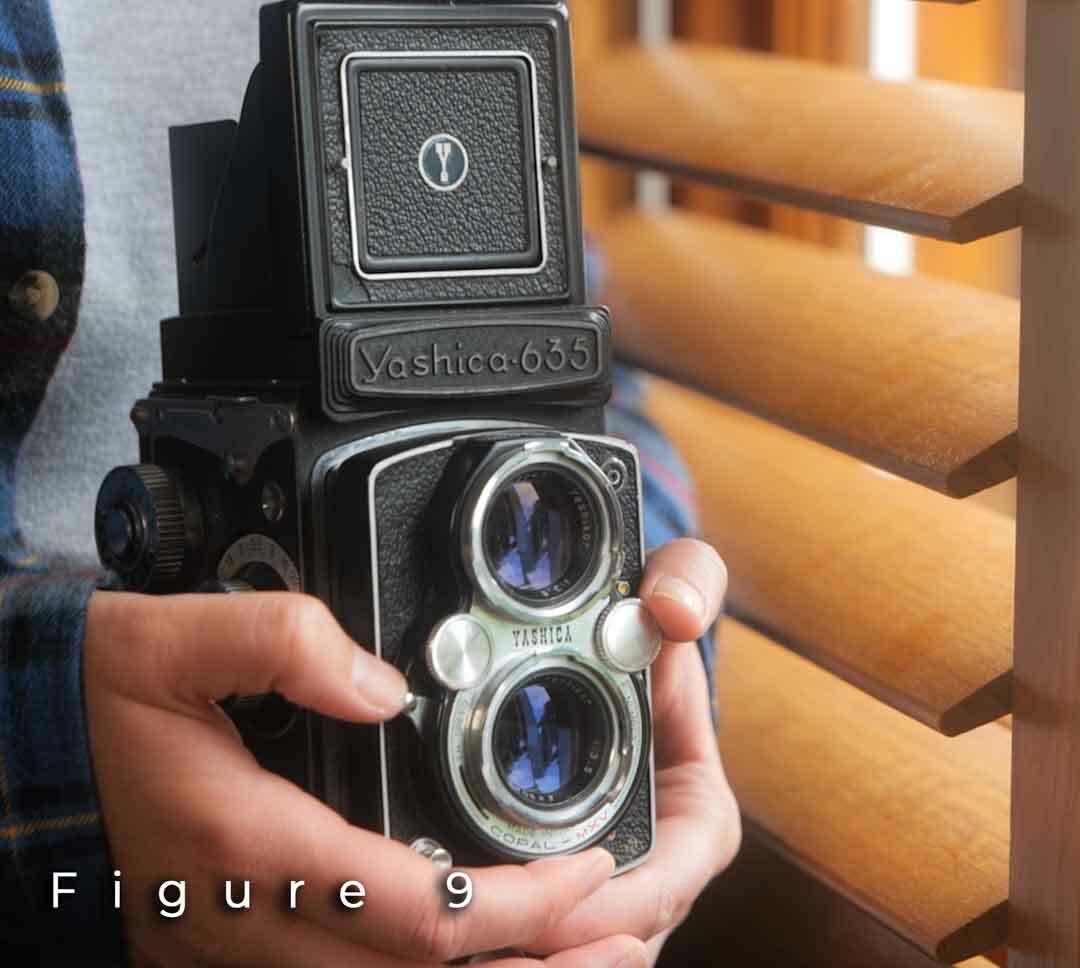
The act of winding your film is independent to cocking your shutter lever. This makes the Yashica 635 a decent TLR for double exposures, which I don’t make…not on purpose at least (Figure A). I automatically wind the film advance lever after each exposure to prevent double exposures. This is helpful, because it’s become an easy practice to bake into my brain: take the shot, advance the film and then I wait until the next photo moment to set exposure, composition and focus, with the last step being cocking the shutter and then releasing it.
With the Rolleiflex TLR system, you advance the film via a crank on the left and when you reverse the crank to its resting position the shutter is cocked by that one process. So you need to lock your shutter release if you plan on taking the photo later. In my opinion, having the film advance knob and focusing knob both on the right, and then having the shutter cocking on the front, makes for a pleasant flow in the physical process of your photography with the Yashica 635. You can keep the camera pretty much in the same place in your hands during the entire process. My Rolleiflexes and Zeiss Ikon TLRs all require focusing via your left hand, which I don’t quite gel with as much, because you need to switch between left and right hands to set yourself up to take your shot.
Lift the back of the lid of the focusing hood swiftly to reveal the viewing screen (Figure 10). This is a nice big square which represents the majority of your field of view for 6x6 medium format exposures. And the red rectangle represents the framing for your 35mm photography (purple arrow, Figure 11). I would suggest touching the ground glass and focusing screen as little as you possibly can - rather blow at it if you need to - same with the lenses for that matter. I also suggest that you use the magnifier glass whenever possible for best focus results, especially when shooting wide open (green arrow, Figure 11). 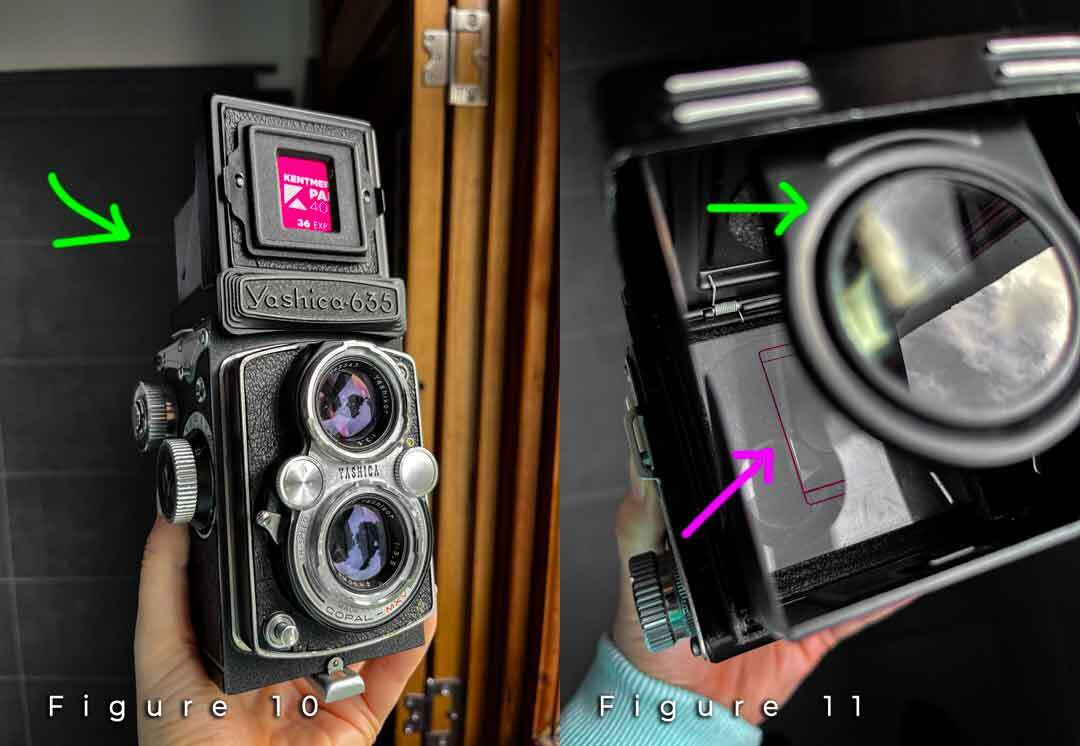
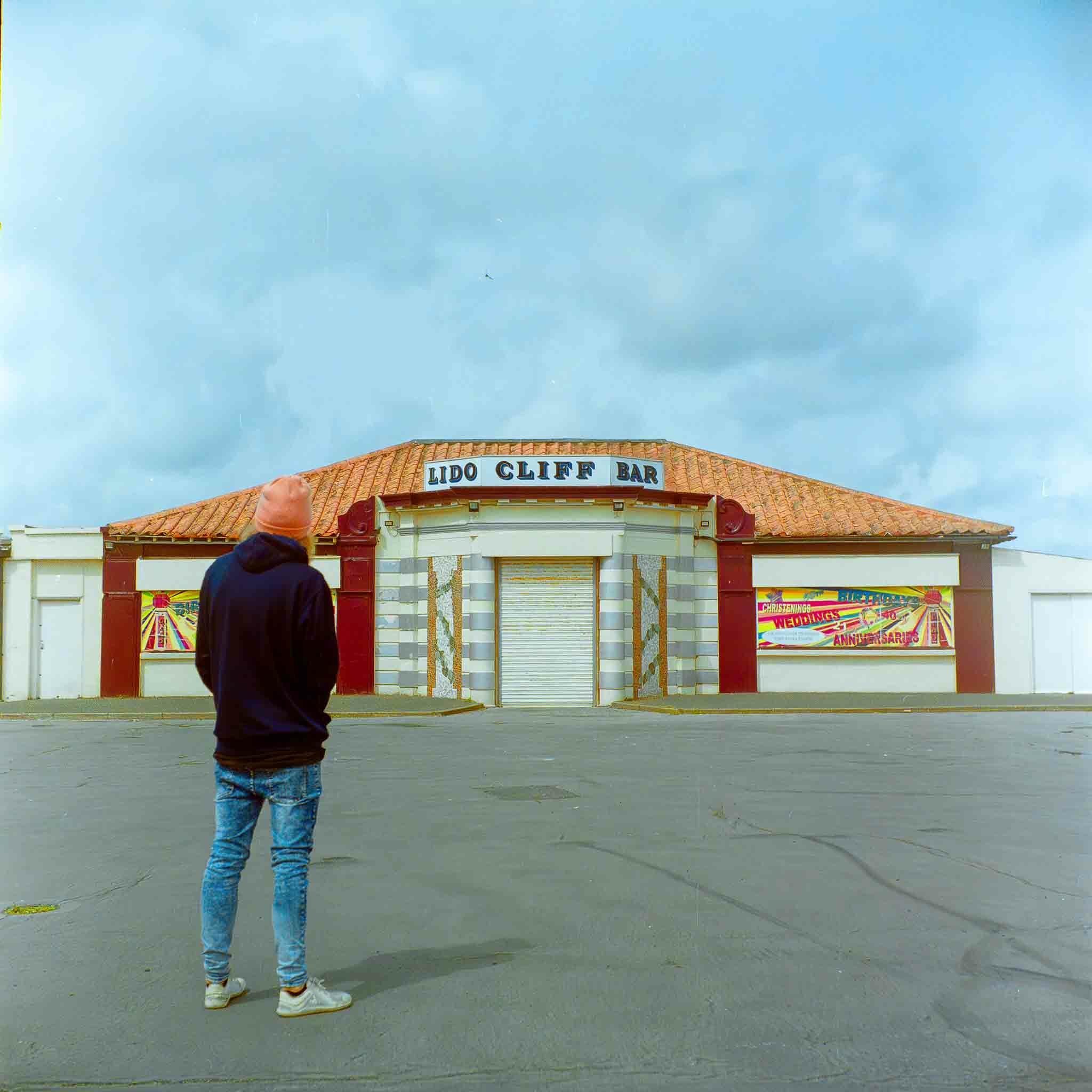
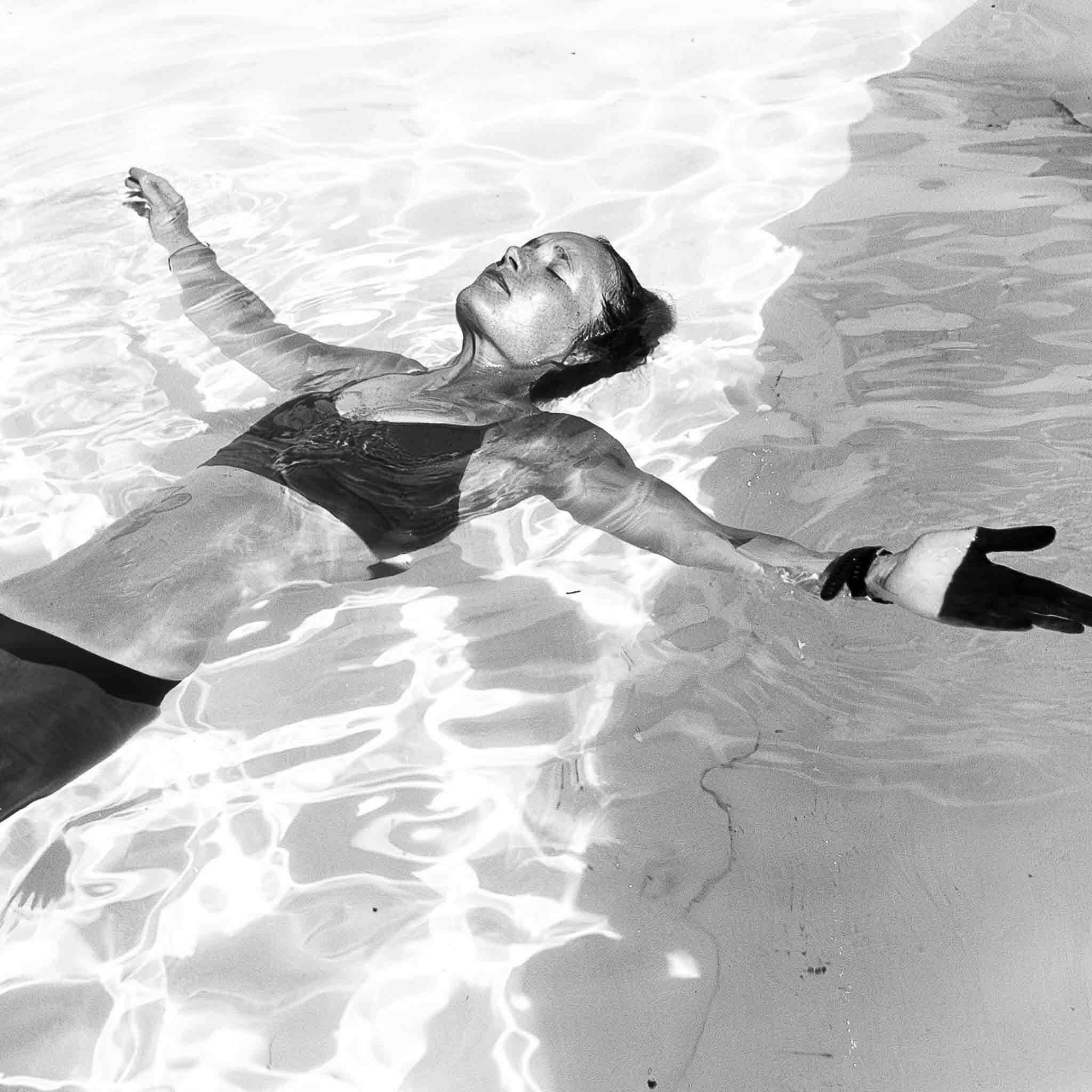
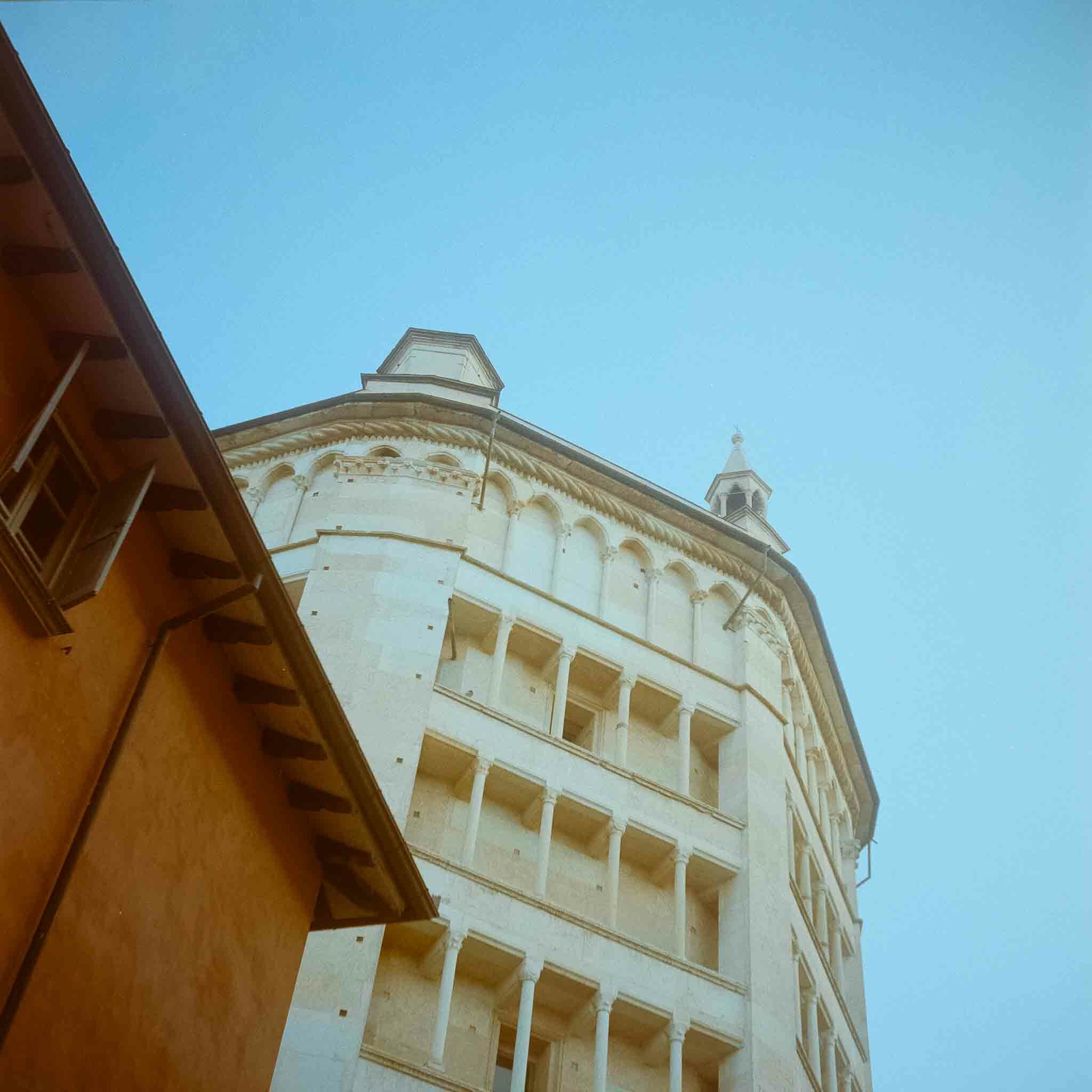
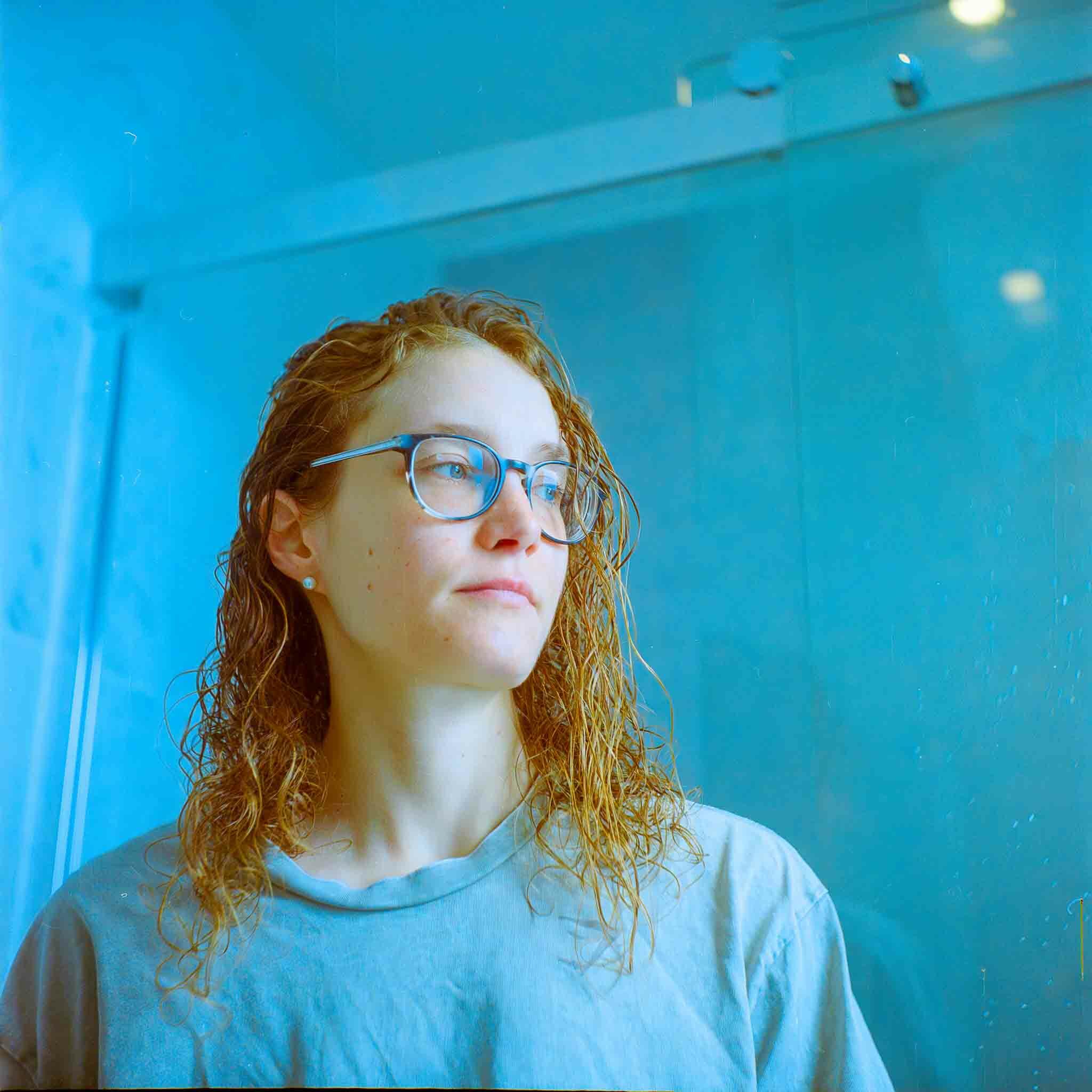
Composing with a TLR takes some getting used to - due to the mirror reflection, you view things reversed or flipped so right is left and left is right for fine tuning. TLR viewfinders are predominantly operated as waist level finders. You can adapt prism view finders to some models, which I have not yet had the experience of using. This allows you to shoot at eye level, and the presence of a prism means that the field of view is no longer reversed, like with the waist-level shooting. I find shooting at waist level to result in some great shooting angles that produce beautiful compositions (Remaining Figures). For all the details regarding Sports Mode, Flash Sync (M & X), Self-timer and Specialised Cable Release I, once again, refer you to my video.
To conclude, this camera has brought a new level of joy to my photography. My copy is not perfect, there are some optical marks inside the taking lens and it is laggy with the slow shutter speeds. Neither of these factors have posed an issue to my photography, however. Not only have I been able to create some beautiful imagery with it, I have learned to prioritise patience in photography. I have been taking photos with my Yashica 635 for about two years and I can say it opened a door that I didn’t know existed. I have since opened up a few cameras to learn their mechanical processes and have managed to take apart and repair a Zeiss Ikon IKOFLEX ii, which was a painful learning process. I have also since opened up and repaired a Pentacon Six Hybrid. And I now have a gorgeous collection of twin lens reflex cameras, all of which have their defining features that set them all apart from one another. From 75mm to 80mm and 135mm, and from F/3.5 to F/2.8 to F/4 - the various combinations and manufacture eras make for a fine collection, which I am very happy to not only display at home, but to shoot with pretty much every day.