
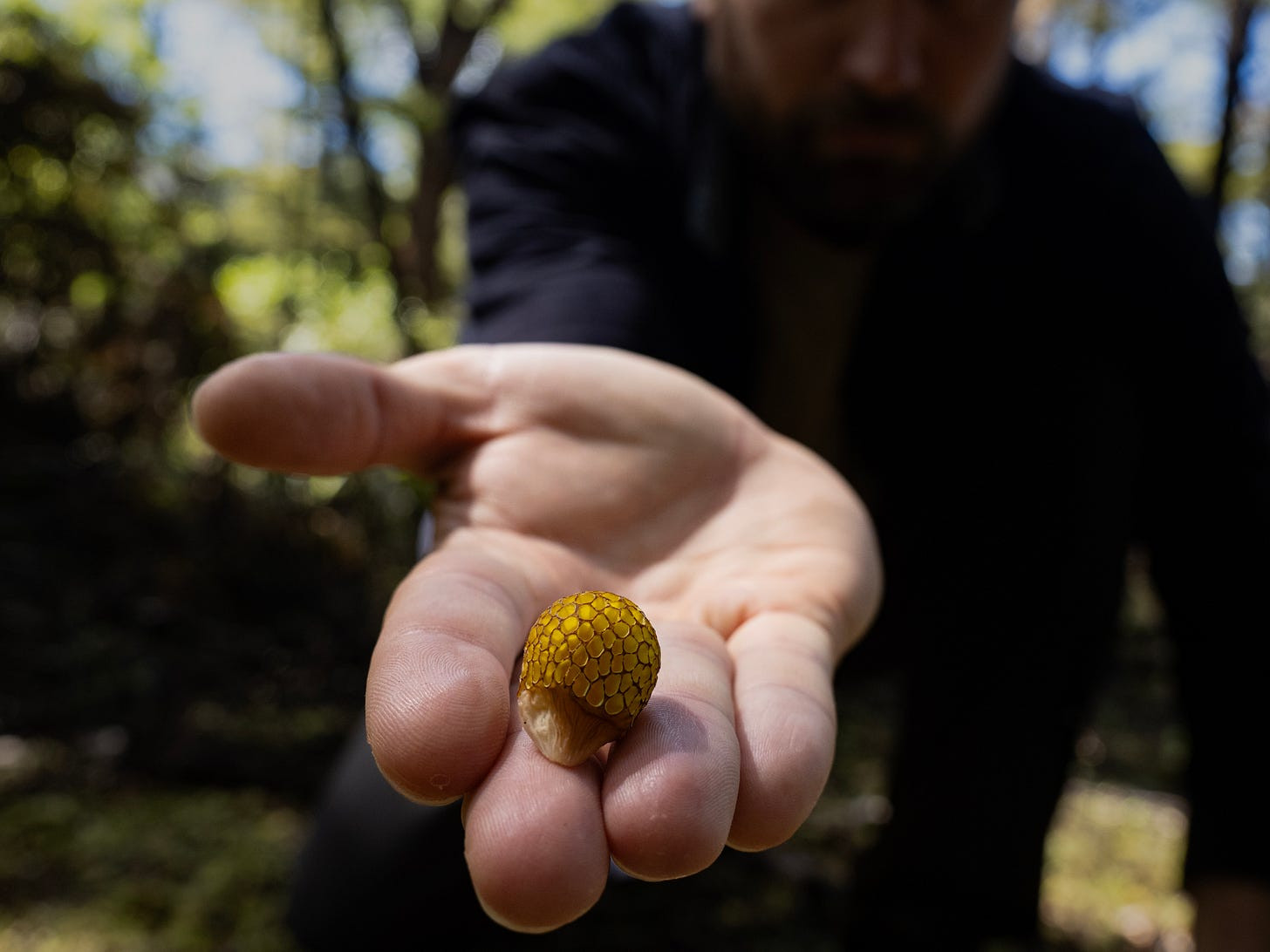
This past week I hiked along Lake Rotoiti in St. Arnaud, following the shoreline where the track sits between mossy roots and silvered trunks. Somewhere along the way I found myself thinking about Cyttaria gunnii, a parasitic fungus that grows like tiny honeycomb oranges on southern beech.
It’s a species I’ve come across before in the Fiordlands and Kahurangi. The thought barely formed when I immediately spotted them: first one, then dozens scattered across the side of the track.
 Cyttaria gunnii is also called the myrtle beech orange or Māori beech strawberry. I even found one with a red tip, so I can see where it’d get the latter common name.
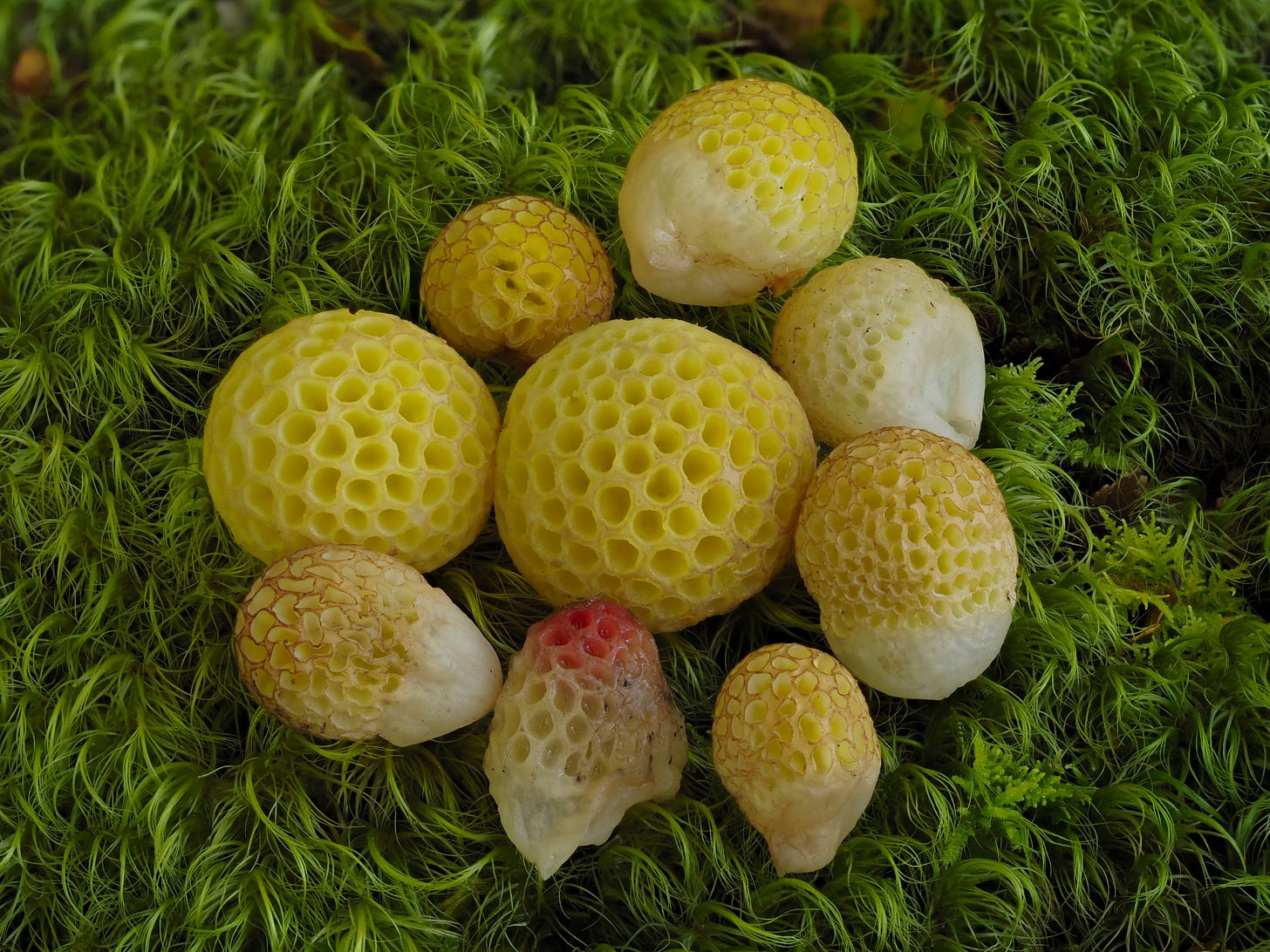 It’s an edible ascomycete that produces soft, jelly-like spheres in colors that range close to lemon to deep amber. The species occurs across the southern temperate world: New Zealand, Tasmania, southern Victoria, and the forests of Patagonia, but each population is bound to its host.
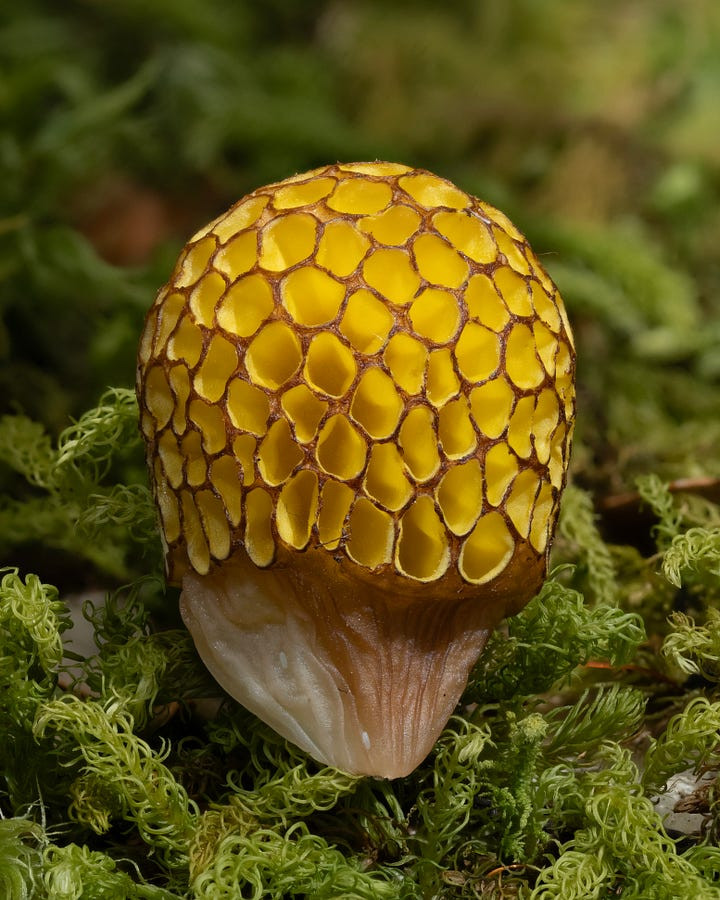
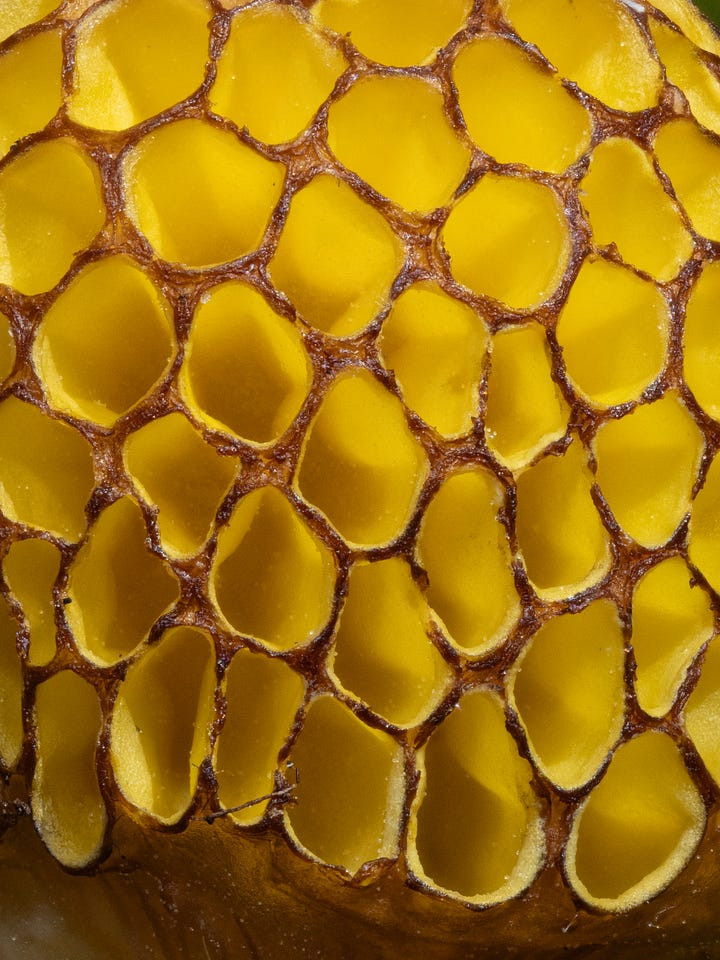 In Aotearoa, that host is the silver beech, Nothofagus menziesii. In Australia, its counterpart lives on myrtle beech, N. cunninghamii.
The relationship between Cyttaria and Nothofagus is a Gondwanan story with every species of Cyttaria tied to a single beech lineage. These fungi can’t live anywhere else (they’re true parasites, not mutualists) and feed from living tissues that shape the trees in return.
This chonker is the most massive cluster of Cyttaria nigra galls I’ve seen before covering a silver beech next to Flora Hut in Kahurangi National Park.