

 Are you a) allergic to eggs; b) vegan; or c) out of eggs in your kitchen? You will answer yes to one of these questions at some point in your life, so I just wanted to do a quick post to explain the science behind egg replacers and how to use them.
Binding Agent
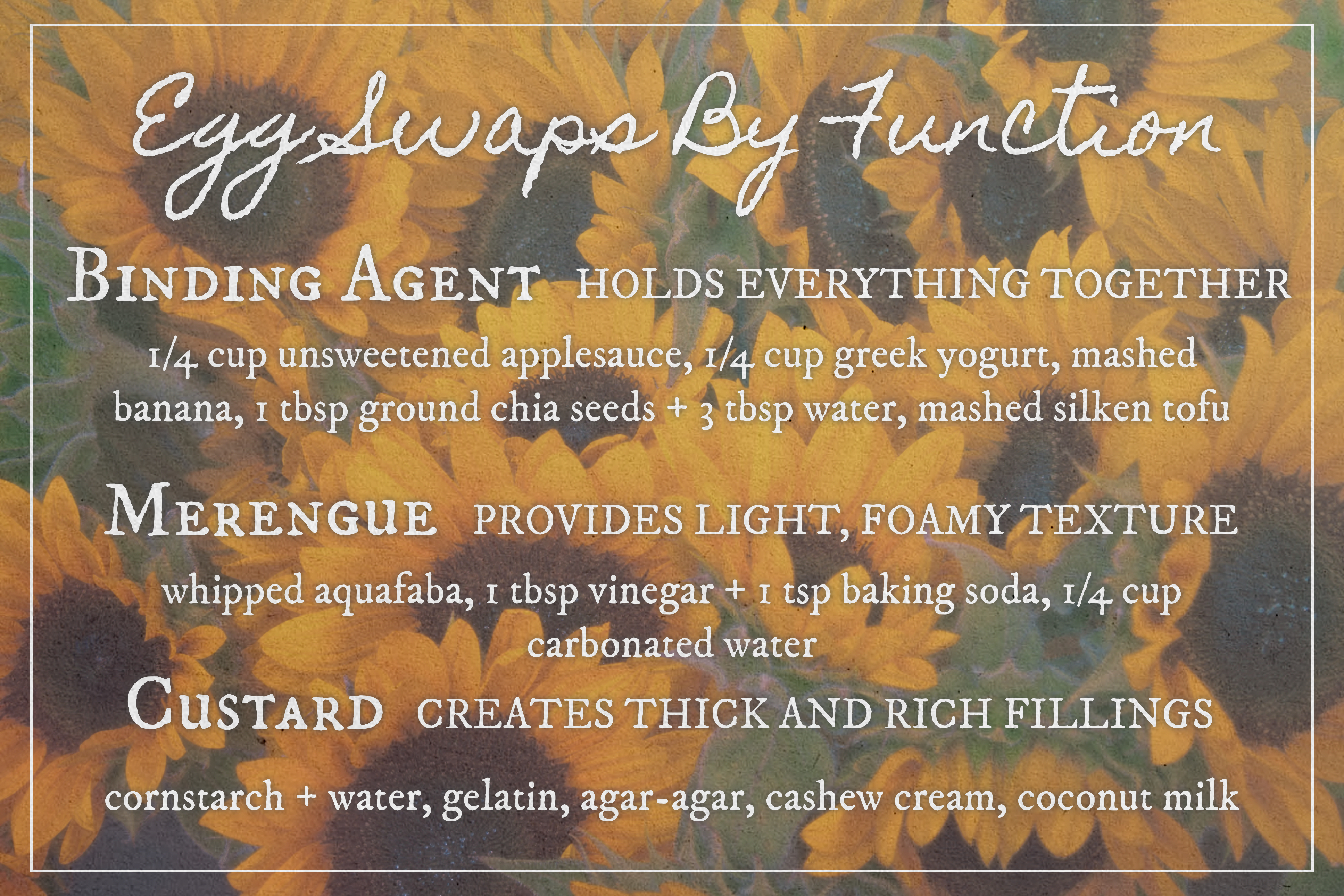
The most common use for eggs is as a binding agent, or something that holds the ingredients together into a cohesive dough. For this, you simply need another ingredient that has roughly the same texture as an egg. A good rule of thumb is that, unless otherwise specified, ¼ cup of a replacer = 1 egg. I use unsweetened applesauce most frequently because it's cheap and comes in huge containers, but Greek yogurt and sour cream also work incredibly well, especially in quick breads. I tend not to use mashed banana, pumpkin purée (unless it's pumpkin scones -- more later), or nut butters because they drastically affect the taste of the final product, even though their texture is some of the most similar to actual eggs.
Merengue
Another common use for eggs is merengue, or whipped egg whites that create lift and a light texture in a baked good. Think sponge cake, macarons, marshmallows, and pancakes. Aquafaba is the liquid that remains after cooking chickpeas, and it's a fantastic eggless substitute. I actually learned that trick from a bartender who whips the aquafaba for use in cocktails that would normally employ raw egg whites. Vinegar and baking soda also work, as the goal of the egg whites is to facilitate a bubbly reaction, as does carbonated water.
Custard
The third use for eggs is as a coagulant in custards. Coagulation is a process in which the proteins in an egg are broken down while cooking and restructure to form a gel-like texture. If you've ever had pastry cream, this is what creates that goop. The difficult thing about custards is that every recipe is different, so there's no one-size-fits-all for replacers, but generally, a mixture can be thickened by adding cornstarch and water mixed together into a slurry (stir immediately while adding so it doesn't clump!) along with cashew cream or coconut milk to provide the volume that 6 or so eggs would add. Agar-agar and gelatin also work; use these in place of cornstarch if you are planning on freezing the custard. Cornstarch separates out and "weeps" in the freezer.
Eggless Pumpkin Candied Walnut Scones
Scones
2 cups all-purpose flour
½ cup sugar
½ cup butter, grated
2½ tsp baking powder
½ tsp salt
½ cup buttermilk (plus 2 tbsp for brushing)
1 tsp vanilla
¼ cup pumpkin purée
1 tsp pumpkin pie spice
Candied Walnuts
½ cup chopped walnuts
¼ cup real maple syrup
¼ cup coarse turbinado sugar
½ tsp cinnamon
In a large bowl, combine the flour, sugar, baking powder, salt, and pumpkin pie spice. Grate in the butter and mix with your hands until pea-sized clumps form. In a mixing cup, combine the buttermilk, vanilla, and pumpkin purée and whisk to combine. Pour over the dry ingredients and stir into a dough using a wooden spoon.
In a separate bowl, combine the walnuts, maple syrup, turbinado sugar, and cinnamon, and mix thoroughly.
For mini scones, separate the dough into two equal 5" disks, then cut each into 8 pieces. For regular scones, roll dough out into a 9" disk and cut into 8 pieces. Place the scones on a baking sheet, then brush with the remaining buttermilk. Refrigerate until solid, about 20 minutes for mini and 30 minutes for regular. Preheat oven to 375ºF. Remove from fridge, top each scone with the candied walnuts, and bake for 15 minutes (mini) or 18 minutes (regular).