
I was looking up niche mythological creatures for book/blog fodder and stumbled upon the nuckelavee. It’s a rather unique monster, technically a sea demon, from the mythology of the Orkney Islands off the northern coast of Scotland. It’s sometimes referred to as a sea demon or sea devil.
Accounts of it vary somewhat, but it is almost always depicted as a skinless, cyclopean horse with the skinless torso of a human, complete with head and arms, attached where a saddle would normally go. Sometimes the horse has fins on its legs, and sometimes the head of the humanoid part is described as far too big and lolling from shoulder to shoulder. Sometimes its arms as described as far too long and reaching nearly to the ground. Some sources also describe its mouth(s) as “sticking out like a pig’s” and being disproportionately massive; “like a whale’s”.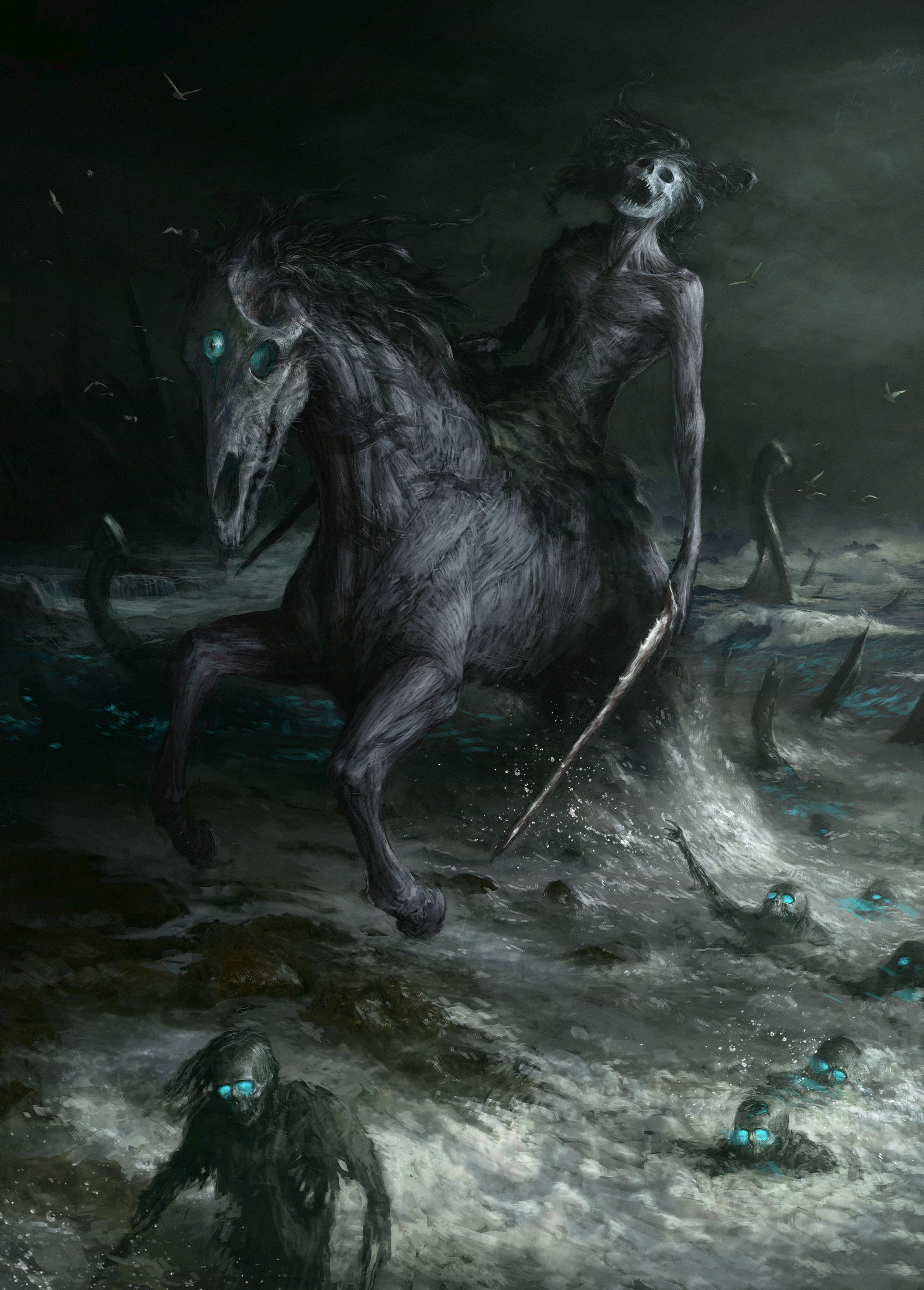
Artwork by Vulpes-Ibculta on DeviantArt
What is standard across all of its depictions is the creature being a bringer of famine and disease. Its breath is so toxic that crops wilt and livestock get sick or die should they be exposed to it. It is said to bring sickness and drought, and although it’s a sea dwelling-creature, it would make its way onto land to cause chaos, typically in the autumn months. They were said to be found on beaches most frequently. The Mither of the Sea of Orkney folklore was said to hold them at bay in the summertime, resulting in them being confined to the depths of the ocean during that period.
Aside from its hideous appearance, it was also averse to fresh water, so something as simple as rain would keep it from leaving the ocean and someone being chased by this monster could cross a stream to avoid it. It’s not described as to what it looked like underwater, but on land it took the form of the fleshless centaur thing described previously.
Some other depictions add or remove things. Sometimes there is only one nuckelavee, other times it’s not clear if there are more than one. Sometimes its head is three feet wide, and it occasionally has a weakness to iron, kind of like the fae do. One depiction I found had its scream deafen any who heard it, and one particularly novel trait found was it absolutely despising the smell of burning seaweed and flying into a rage if it smelt it, bringing disease to human and animal alike to demonstrate its anger.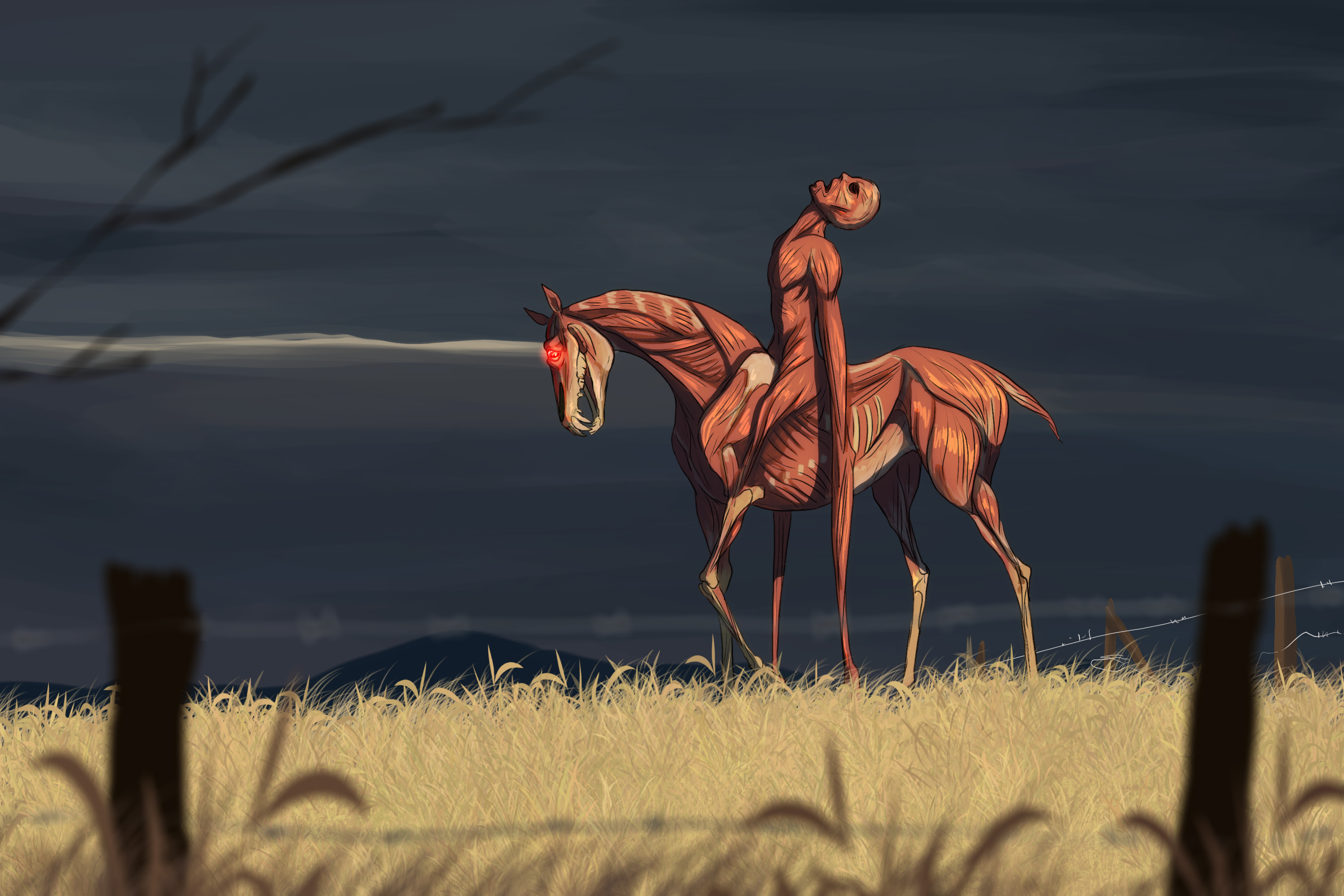
Artwork by DigitalisDog on DeviantArt
So what else did this uniquely horrifying monster do? Besides being a walking plague factory that didn’t approve of the farming or kelp industry, it was pretty feared by the people who believed in it. Some wouldn’t speak its name at all, or only if they said a prayer right after. Regardless of source, it was always depicted as an incredibly evil being that had no real purpose other than to sow disease and chaos, along with the occasional drought.
I found the nuckelavee to be incredibly interesting when researching it. Some of the artwork I found of it is nothing short of stunning, and I love the idea of a skinless centaur-adjacent sea monster. The way it’s described is pretty unique as far as oceanic creatures go, and I can see why people would be afraid of it. A skinless biohazard that really hates farming would be a considerable threat to small farming communities tucked away on remote islands, which is likely why it took the blame for crop failures, dead cattle, and droughts in the Orkney Islands in the 1700s.