
Introduce yourself; who are you and what types of books do you write?
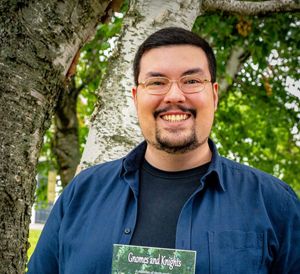
Michael, I really appreciate you sharing your platform to give me the opportunity for this interview! My name is Steve Evans, and I publish under the pen name Stephen C. Evans (there are a lot of Steve Evans’ out there!). I’m a science fiction writer living in Sandusky, Ohio with my wife and two children. I know this is about as cliché as it comes, but I’ve always written the kind of books I love to read. Whether I have a book or a computer in my lap, I love stories that pull me away from the hyperrealism of everyday life. I don’t want to read something that just reminds me of last Tuesday at work, and I don’t want to write something that makes my readers feel the same way. The stories I have always enjoyed the most are the ones that make for the best escapism.
That being said, even when my stories are set in unrealistic places, like a dystopian future, a runaway space elevator, or my own downtown (with the street names changed to protect the innocent), I still work hard to ground them in the reality that matters most to me: self-sacrifice, humility, perseverance, faith, and growth through the kind of suffering that the world hoists on us all. My books are firmly rooted in science fiction, but deeply character-driven, emotionally complex, and with just enough of the kind of humor that’ll make you question my sanity just a little.
I love playing with twists, whether we’re talking twist endings, twist middles, or even a twist beginning or two. I loved the feeling of being slapped in the face with the endings of old Twilight Zone reruns when I was a kid, and love getting smacked in the face with the twist endings of Black Mirror episodes today. But I don’t just want to hit my readers with something great and unexpected, I want to hit them with something great and unexpectedly true. At their core, my stories are rooted in sci-fi ridiculousness, anchored in people and what matters most to them. 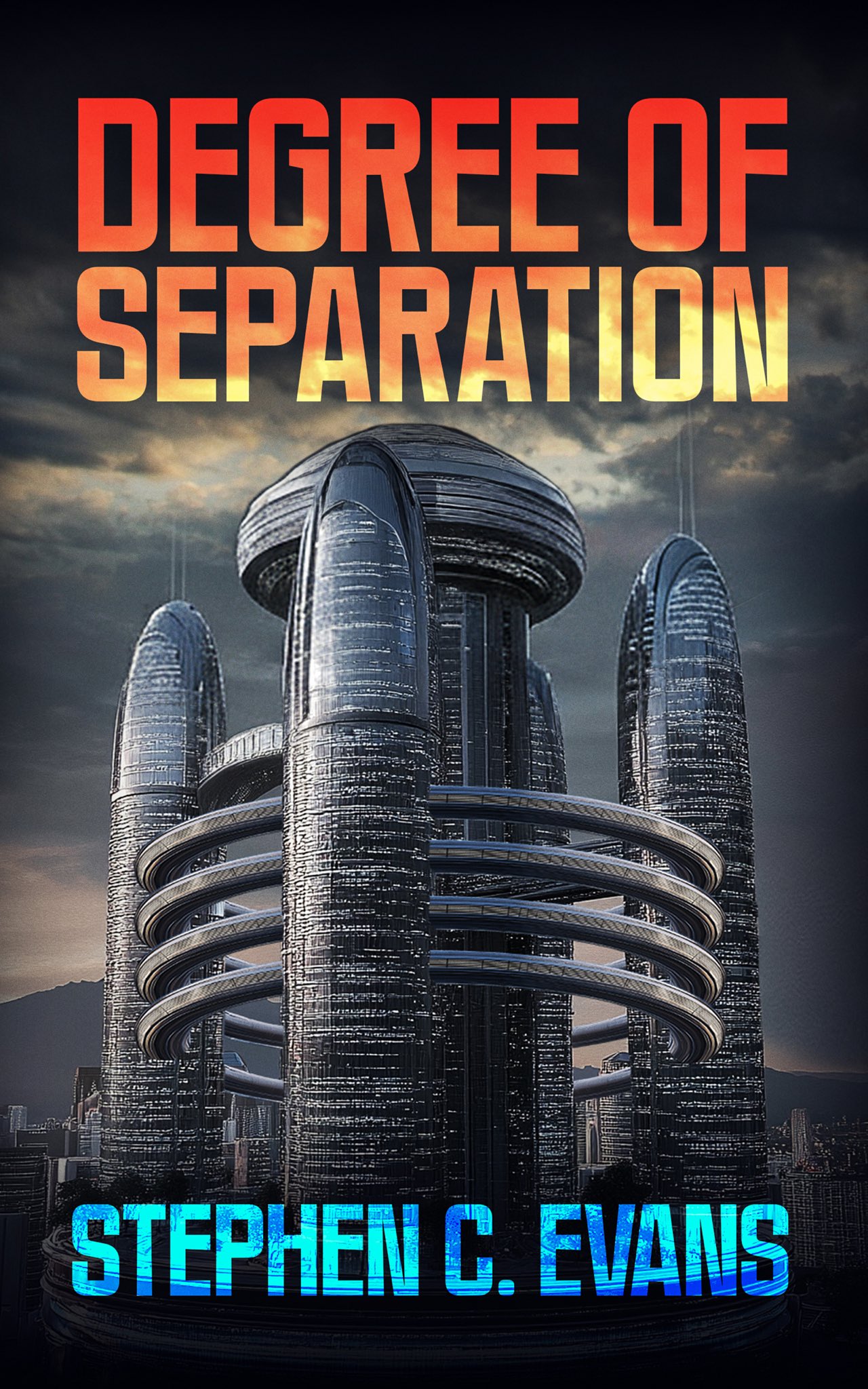 What are your books about?
To date, I’ve published two novels, both of which explore ordinary people caught in extraordinary circumstances.
My first novel, Minutiae, follows a teenager named Cal who wakes in an Ohio cornfield with no memory of who he is or how he got there. What he quickly discovers, however, is that he possesses extraordinary abilities, not least among them the ability to predict the future with unnerving accuracy, along with a flawless eidetic memory of everything except who he is or why strangers want him dead. As Cal is hunted by forces beyond his understanding and more and more mysterious abilities continue to surface, the story becomes a blend of conspiracy, survival, and identity centered on a single question: if you can see into your own future, is it enough to ever truly escape your past?
My second standalone novel, Degree of Separation, expands the scope to an imploding technological utopia after a mysterious explosion begins to unravel reality itself. The story follows Clark and seven strangers whose lives become dangerously intertwined and indelibly linked as the futuristic experimental city begins to fail all around them. As reality fractures at an exponential rate, a hidden experiment into the very heart of the universe is revealed. At its core, it’s a story about connection, about how random people–thrown together seemingly by chance– find themselves at a fulcrum so severe it places the fate of all in the hands of a mere few…and the countdown to see how they will respond to the enormous burden thrust upon them.
What was the inspiration behind writing your first book?
The original seed for Minutiae actually came from a short story I wrote for a high school assignment more than a decade before the novel existed. It centered on a teenage boy who had a superhuman ability to see patterns so complex that, while standing on a crowded train platform, he could tell just from the flow of people’s behaviors that a specific chain of events was evolving that would result in a child falling from the platform at the exact moment a train arrived.
The twist was that the boy himself was on the run and desperate to remain unnoticed. Saving the child meant exposing himself, so his life depended on him using his heightened awareness to intervene without anyone remembering he was there.
At the time, it was a pretty naïve story. I never explained the stakes, didn’t give the kid a backstory or even a name, and didn’t do nearly enough to convince any reader why they should care, let alone my English teacher (sorry, Mr. Ceccoli).
But the idea stuck with me. That tension between extraordinary perception and invisibility–the dichotomy between seeing everything while needing to remain unseen–never really let go.
Years later, that concept evolved into the backbone of Minutiae. Early drafts of the novel even included a revised version of that original story as the prologue, but as painful as it was to cut something I loved, it ultimately slowed the opening and didn’t serve the larger story. So it remains forever in my heart and mind's eye (and maybe still in a dusty corner of my basement somewhere).
In a lot of ways Minutiae was born from that one image and single question–part Jason Bourne, part Alvin Maker, and a question I spent over a decade chasing: what happens when someone can see everything, but can’t afford to be seen at all?
What did you learn while writing your second book?
I assumed that having one novel under my belt would make writing the second a lot easier, but it ended up being a lot more challenging than I expected–and it forced me to swing a lot bigger. As intimidating as that was, it pushed me to expand the scope of the story, especially when it came to world-building and characterization, and to step out of my comfort zone instead of playing things safe.
If anything, my imposter syndrome grew louder as the story grew bigger and more ambitious than anything I’d attempted before. But instead of letting my hesitation rein me in, I worked to push past it and trust my characters more. Instead of holding them hostage to the rigid parameters of my original outline, I learned to let them make their own choices and drive the story in unexpected directions. As a result, the book ended up in places I never could have planned, and my characters made decisions far more interesting than anything I could have forced on them.
I also grew a lot in learning when to show instead of tell, especially with exposition, and in trusting my readers instead of clinging to my insecurities and spoon-feeding every detail. There were plenty of times I was tempted to over-explain the subtle things that excited me about the story or the world-building, but letting those elements breathe on their own ultimately made the story a lot stronger.
With Minutiae, I kept a really tight grip on the reins. But with Degree of Separation, I learned to let the chaos have its head a lot more. After that, I was able to focus on following the most interesting, honest path through the wreckage, picking up the pieces in the most creative way I could rather than trying to control every step of the journey.
What is the most rewarding part of being an author?
I’ve always loved the feeling of a story coming together under my fingers, especially when it starts taking turns I never anticipated when I first sat down to write it. That moment when everything clicks is incredibly satisfying, in a way I don’t have words to describe.
But as much of a cliché as it is, the most rewarding part of being an author for me is hearing how a story connected with someone else–especially when that person has no obligation to give me any feedback at all. When a reader I barely know goes out of his or her way to tell me that something I wrote stuck with them or really meant something to them, it never gets old.
I’ve been fortunate enough to win a couple awards for some of my short stories over the years (and not to brag but I’m still my mom’s favorite author), but the moment that means the most to me happened when the most influential teacher I ever had (hi again, Mr. Ceccoli) asked for permission to use one of my published shorts in his class. I honestly don’t know if that can ever be topped.
What elements do you think make for a good story?
I’m a huge fan of strong settings and immersive world-building. I know there’s no such thing as a completely unique story, but I love creating worlds that feel like they couldn’t have come from anywhere other than the chaos crammed into the disorganized attic that is my semi-deranged mind.
That said, no amount of world-building can save a story if the characters don’t matter. I can always tell when a story is on the right track when I can’t stop thinking about the characters, even when I’m not actively writing. Whether I’m working on a short story or a novel, I’ll catch myself wondering how a particular character would respond to something happening in my real life, or even dreaming about some of the stranger imaginary friends born from the recesses of my nerdy mind.
At the end of the day, even the greatest concept in the world is dead on arrival if nobody cares what happens to the people at the center of it. And once you do have characters that mean something to you, that’s when you have to be willing to do terrible things to them. As sad (or occasionally rewarding) as that can be, characters need to face situations that matter in a relatable way, with consequences that stick.
Even if I have to apologize to my mother when I kill off the ones she likes best.
What is the hardest part of being an author for you?
One of the hardest parts for me still is finding the right balance between showing and telling. I’ve come a long way as an author, but sometimes I can still see a scene so vividly in my head it just feels wrong not to dump every last detail onto the page, even when I know that isn’t what best serves the story. Knowing what to leave out, and trusting the reader to meet me half way, can be a real challenge.
I also really struggle with cutting scenes I really love. I especially love working with dialogue, which makes it especially hard when I have an interaction I think is particularly great, but in the end because of the meanderings of the story isn’t necessary. Knowing a scene works doesn’t always mean it belongs.
Stephen King famously says a writer has to “kill your darlings,” and he’s absolutely right. And I hate it. Which is probably why, despite all of his horror masterpieces, I sleep with On Writing in my freezer at night.
What is your current writing project?
I’m currently working on a high-concept sci-fi thriller that I would describe as Die Hard on a space elevator. It follows a brilliant autistic teenager who wins a contest to name the world’s first geosynchronous space elevator, earning a seat on its maiden voyage to a space station under construction in orbit. He communicates exclusively through movie quotes, which makes him a unique and surprisingly effective lens for the story.
The trip includes an eclectic group of passengers: engineers, politicians, journalists, crew members, and a young, unqualified commander who happens to be the company owner’s son. As the prototype elevator ascends, what initially appears to be nothing more than routine shakedown issues slowly reveal themselves as deliberate acts of sabotage. With time running out, and no clear idea who can be trusted, the story becomes a closed-environment mystery with enormous stakes.
At its core, it’s a tense, high-action, tech-heavy cat-and-mouse survival story, but also one of responsibility, guilt, overcoming the past, looking to the future, and exploring the ways people connect and communicate–or fail to–when it matters most.
Alongside that project, I am also working on expanding a longer short story I recently completed titled Lucid. The story follows three medical students who uncover the remnants of an abandoned DARPA-backed research project into lucid dreaming, originally intended as a treatment for PTSD. When they succeed in resurrecting the drug and experimenting on themselves, the story becomes a psychological horror focused on power, control, and moral erosion, with the characters using their dreams like a personal holodeck with increasingly dark consequences that bleed into their waking lives.
I just wasn’t able to accomplish everything I wanted with the story crammed into the format of a short story, even a longer one without losing everything that made it so effective, so I’m currently in the process of expanding it into either a novella or a full-fledged novel, depending on where the story ultimately takes me!
What is the best writing advice you’ve ever received?
I think the best advice I’ve ever internalized as a writer, even though it isn’t especially profound, is to tell the story that’s inside me first, and to fight the urge to judge it before I even have a draft sitting before me. I have a tendency to agonize over every line as I write, worrying about how it will fit into later chapters and whether it’s “right” instead of letting the story grow and evolve naturally. That impulse to make everything perfect on the first pass can be paralyzing.
Learning to give myself permission to write a messy, imperfect first draft (or second, or third) has been transformative. Once I have a cohesive story on the page, then I can step back and reshape it, refine it, connect the dots between my twists and evil machinations, and fix all the broken mechanics that crept in along the way. None of that can ever matter if I don’t get the story out in the first place.
Where can readers discover more about you and your books?
The best place to find me, and pretty much everything I’m working on these days, is at my website: https://www.stephencevansauthor.com/
It has my author bio, contact information, and links to all my social media, along with my novels, magazines where some of my short fiction is still available, along with an anthology I had a couple of shorts published in. Readers can also subscribe to my mailing list there, which is the primary way I keep people updated on new projects, releases, and whatever creative chaos I’m getting myself into at any given moment.
You can also find me on social media at: X (Twitter): https://x.com/c00lpenname
Instagram: https://www.instagram.com/stephen__c__evans
TikTok: https://www.tiktok.com/@c00lpenname
Michael, I just want to offer a huge thank you for the opportunity to talk about my work and for letting me ramble on about the things I love writing about! I really appreciate it!