
Introduce yourself; who are you and what types of books do you write?
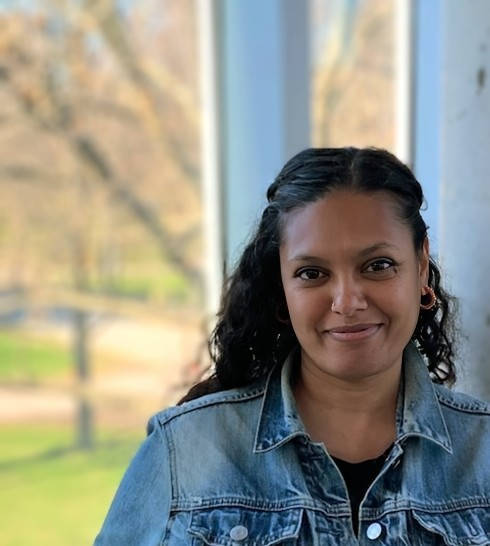
I’m Nadia Ragbar and I live in Toronto. The stories I write fall under the category of literary fiction, and though grounded in reality they all tend to have one aspect that’s slightly absurd or heightened. Before writing my debut novel, I wrote short stories and flash fiction. One of my flash stories was included in the anthology Unpublished Cities, edited by Dionne Brand, which was short-listed for the Toronto Book Awards.
 What are your books about?
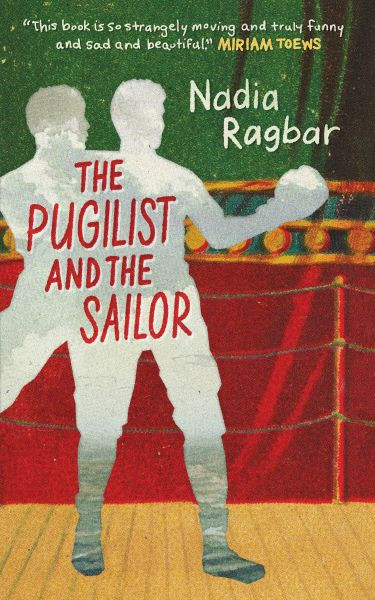
My debut novel, The Pugilist and the Sailor (Invisible Publishing), is about adult conjoined twins, Dougie and Bruce Reuben, who are amateur boxers. The only problem is that Bruce hates boxing and Dougie is intent on ramping up their training in order to win a championship title. Bruce is a bookkeeper who has become smitten with Anka. Unaware of the facts of the twins’ physicality, an epistolary relationship unfolds between Anka and Bruce, as he wrestles with how to find his voice and his own identity.
So far, the common theme across my short stories and novel is exploring characters who are in some state of limbo. My novel is really about the ways that we find balance in compromise and community.
What was the inspiration behind writing your first book?
I was inspired to write about conjoined twins by Katherine Dunn’s amazing novel, Geek Love. Geek Love follows a carnival family, where two of the siblings are conjoined twins. Dunn takes a more fantastical approach where I use one absurd element of my characters’ lives—the fact that they are amateur boxers—in order to raise the stakes of each trying to develop their autonomy. My story is told through an ensemble cast, and another one of the protagonists is Anka Ramratan, an Indo-Guyanese woman grieving the loss of her parents. She came to exist on the page because I was inspired to create the type of character I would have loved to encounter when I was a teenager and young adult.
 What is the most rewarding part of being an author?
I love feeling inspired to create something. It is incredibly rewarding to create characters you feel connected to and really invested in. I also really enjoy the collaborative aspect of working with an editor. It is such a gift to work with someone who is engaged with your writing but has a different perspective, in order to refine the narrative so that the best version of the story shines through for readers. Spending time creating is definitely the most rewarding aspect!
What elements do you think make for a good story?
For me it begins and ends with characters. Once you have a fully formed character, the action of the plot is generated by throwing them into the peculiar circumstances that they bristle against. Then all of the movement forward comes out of the character’s choices. I feel that once a writer is invested in their characters, then readers will connect with them deeply as well.
What is the hardest part of being an author for you?
Time management! Right now, I don’t write every day, although I do always feel consumed by the project at hand. I struggle to write at the same time every day, and I tend to slip it into twenty-minute nooks-and-crannies, here and there.
What is your current writing project?
I’ve started working on a project about the unconscious patterns that get repeated down a family line. At the moment, I’m interested in playing with form the way a lot of creative non-fiction can, so I’m having fun thinking of it as an experimental novel. Whether it actually ends up that way or not remains to be seen! Its focus is on an Indo-Guyanese family living in suburban Ontario in the 1980s, but shifts back in time to an ancestor who was kidnapped from India and forced into indentured labour in Guyana.
What is the best writing advice you’ve ever received?
I was told once that thinking-time is also writing-time, and that alleviated a lot of guilt I was feeling about not being able to sustain a daily writing practice. I do like to sit with the emotions and themes I’m interested in; to let them percolate in my mind a bit before I really get down to writing. This advice reminds me that there is no one right way to be creative; there is no set prescription for how to be creative.
Where can readers discover more about you and your books?