
Introduce yourself; who are you and what types of books do you write?
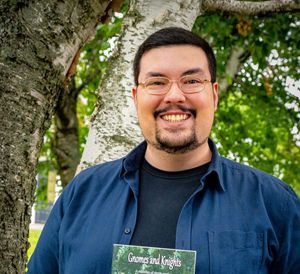
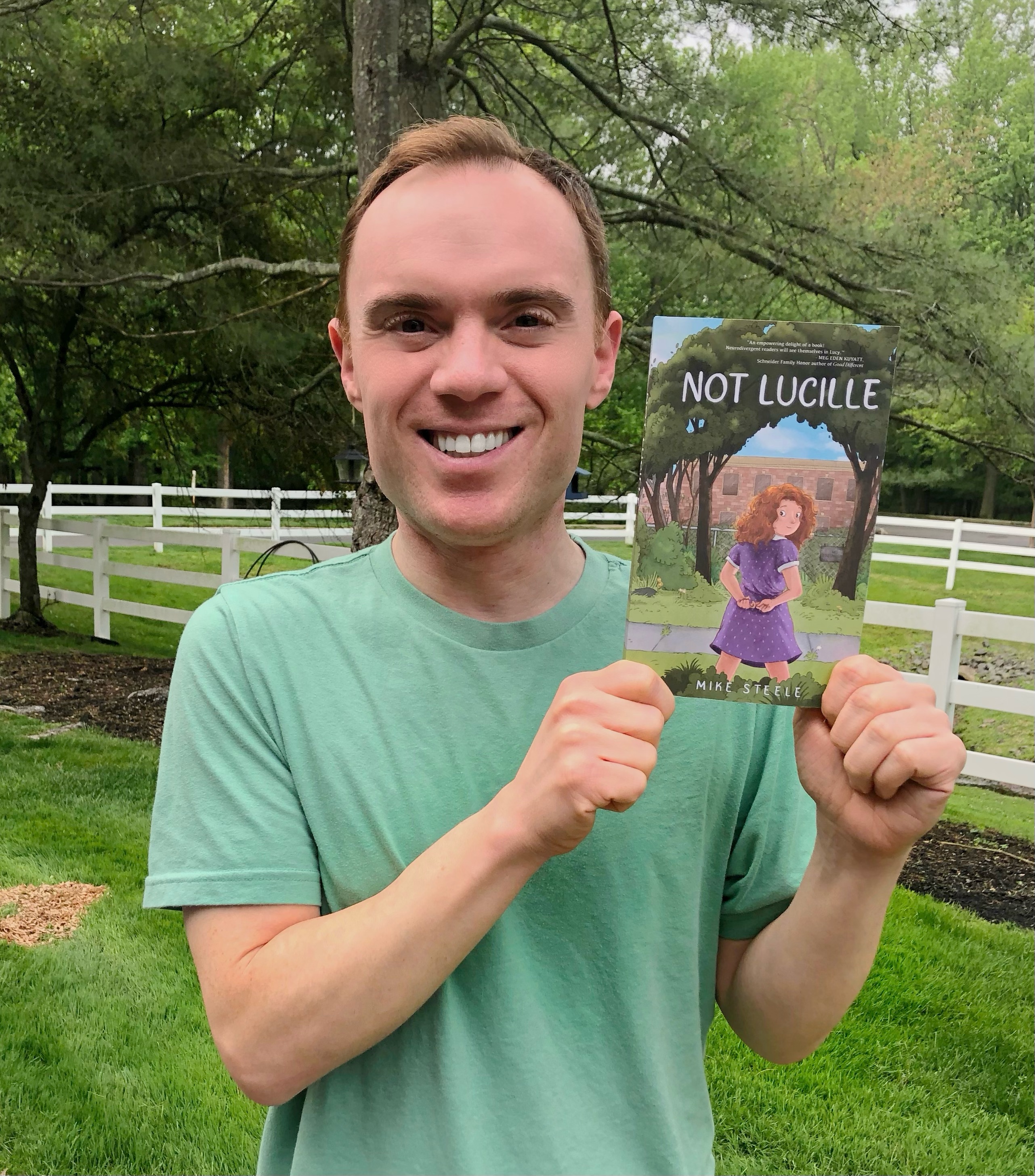
My name is Mike Steele, and I’m a children’s author and playwright. My debut middle-grade novel is set to be published on June 24 of this year. I have eight plays published in the school play and theater for young audience markets (I’ve been writing for the stage for 15 years). By day, I’m an elementary school librarian and live at the Jersey Shore. I like to attend musicals, create mixed-media artwork, play claw machines, and try new bubble tea cafes. I also have two cats that are spoiled beyond belief.

What are your books about?
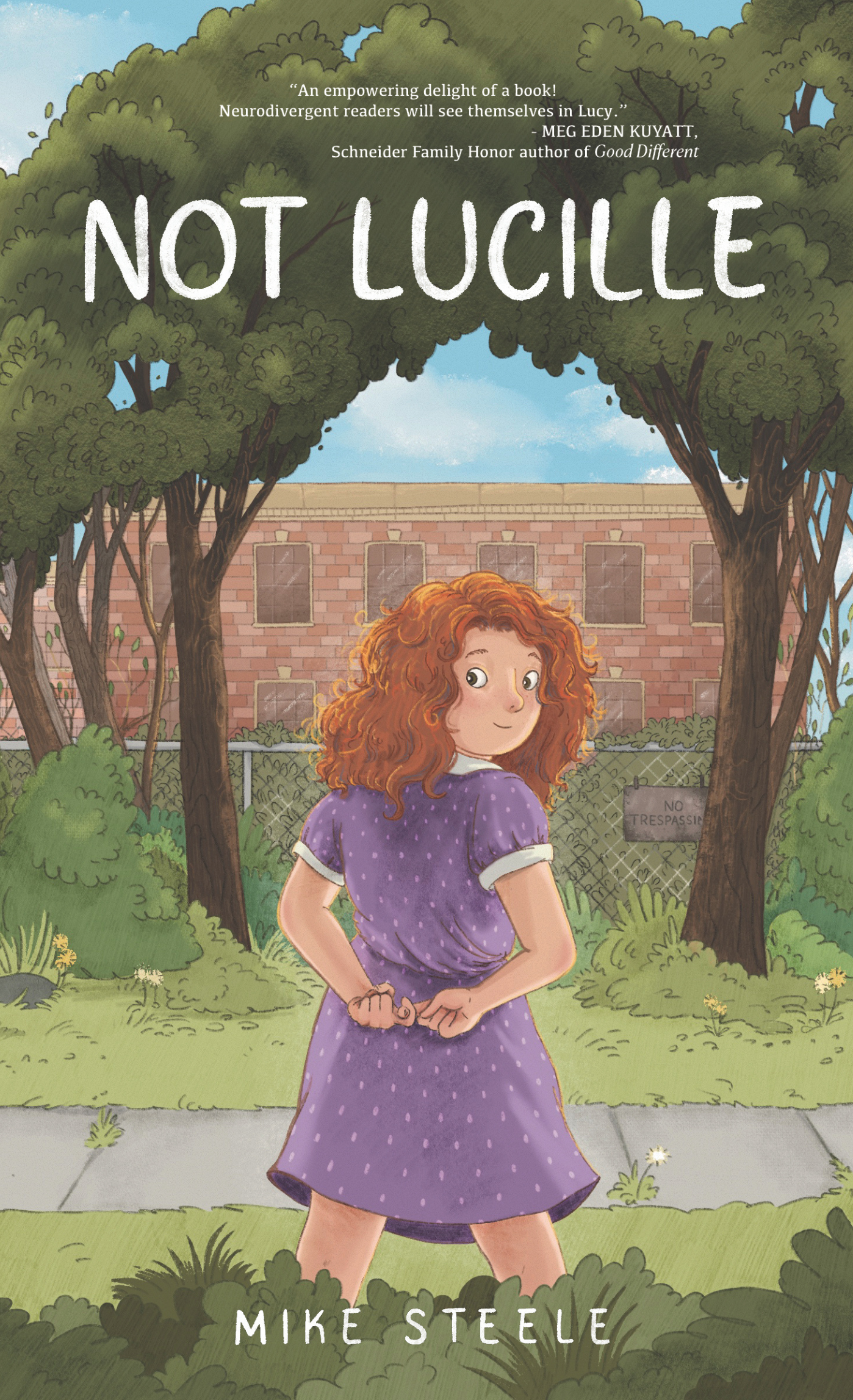
Not Lucille is my middle-grade debut. It’s historical fiction, set during the Great Depression. Here’s a synopsis:
It’s 1931, and children should be seen and not heard ...
Ten-year-old Lucy Contento can’t help but be seen and heard. And she’s always in trouble for it. She talks too much. She’s impulsive. She writes with the wrong hand. Her parents would be mad enough knowing she routinely earns afterschool detentions. They’d be furious if they found out she’s been sneaking onto the campus of the nearby Trenton Academy for the Deaf. But there, Lucy has met Florence, a lonely and profoundly deaf girl her own age. Florence doesn’t mind Lucy’s flaws. Though Florence can’t speak, she has a unique way of communicating. If Lucy can figure out how to learn Florence’s special language, the two could be friends.
Lucy devises a plan, but it’s going to cost a whopping $7.98—more money than she’s got. She can’t tell her parents why she wants the funds without revealing she’s been visiting Florence. Besides, her parents don’t have a penny to spare. Her father has been out of work for months. And nobody else in the Contento family has an income. Or do they…? Lucy soon discovers she’s not the only member of her family hiding something. Can she get the money she needs while keeping everyone’s secrets? Or will her scheming land her in the biggest trouble of her life?
In this story of friendship and belonging, a young girl navigates prejudice, punishment, and identity while establishing her voice in a world that often tries to keep her silent.
What was the inspiration behind writing your first book?
Not Lucille’s main character, Lucy, is very much inspired by my grandmother. She was talkative, filled with energy, and unafraid to share her opinions. Like Lucy, she was a redheaded Italian-American. My grandmother would've been about the same age as Lucy during the time of the story. Creating Lucy was easy. All I had to do was imagine my grandmother at 10 years old and then write.
Not Lucille is set in 1930s Chambersburg, which is a neighborhood in Trenton, NJ. At the time of the story, Chambersburg was almost exclusively an Italian-American area with a large immigrant population. My mother's side of the family is from Chambersburg, and I grew up just outside the city. When I was a kid, I remember hearing people of all ages refer to a park in Chambersburg as the Deefies. I thought it was such a strange nickname for a park, and I wanted to learn more. I asked my grandparents about it, and they told me the park used to be a campus for a school for the Deaf. I've done a ton of research about the area, but nobody seems to know where the word Deefies came from. I can only assume it's somehow connected to the word deaf and that it originated as a pejorative (though I've never heard any negative connotation associated with the word in my time). Most Trentonians today probably have no idea the park has anything to do with a school for the Deaf.
When I learned that a school for the Deaf used to be in Chambersburg, I wondered if the disabled students boarding on the closed campus had much interaction with the surrounding Italian-American community. I thought it would have been interesting if my grandmother had snuck onto the campus as a little girl. I wondered how she would've interacted with Deaf kids who didn't communicate the same way she did. It became the premise of Not Lucille.
What did you learn while writing your second book?
I haven’t written a second book. Hopefully, with a second book, I’ll learn how to get through the publication process faster. I wrote Not Lucille (mostly) over a few weeks in 2020 while trapped in my condo in Brooklyn, where I was living at the time of the pandemic. I was finishing grad school and would spend all morning working on coursework and all afternoon writing. Drafting the first few drafts was easy. Finding beta readers to test the story was easy. But trying to convince people to invest their labor and money to bring the story to publication took some work.
With my first play, finding a publisher was a fairly smooth process. I’d had a successful initial production and submitted the manuscript directly to publishers without many new edits (the bulk of the editing happened prior to the initial production, and it was based on story needs that came up during the rehearsal process). The entire dramatic publishing industry is what we’d think of as small press, and it focuses on publication for the sake of licensing works for production. The major dramatic publishers are fantastic at marketing their catalogs. I pretty much submitted, sat back, made a decision when publishing offers came in, and then sat back again and let the publisher do their thing.
With books, it’s a whole different game. I submitted to agents and entered social media pitch contests. I went through rounds of very specific editing types I hadn’t realized existed (like developmental edits and line edits). I had to decide whether to focus on a Big Four deal, pursue small press, or go the self-publishing route. Once I chose a publisher, there were more edits and discussions about cover art and other marketing needs. In book publishing, most of the marketing seems to fall on the author, at least when you’re unestablished. I’d say the bulk of my time during the publication process of my first book has been spent figuring what my next step should be. With my second book, hopefully, the road to publication can be faster, and I’ll figure out how. Did I just jinx myself?
What is the most rewarding part of being an author?
For me, it’s when people enjoy my work. I find the actual process of writing to be daunting. I know some people love it and speak about it as if they can’t help but write, write, write. It’s stressful for me to write because I know I’ll need to eventually get my manuscript to a point where I think it’s good enough for other people to read it. I don’t write to let stories sit on my hard drive, so the goal is always publication. Once I finally have confidence in my work, I’m excited for other people to read it. When they have confidence in it, as well, it means a lot to me.
What elements do you think make for a good story?
A good story is one you enjoy. I know there are rules. I’d never say abandon all the rules, at least not if someone wants a story that’s marketable. But at the end of day, if you like a story, it’s a good story, whether or not it follows the rules. I, personally, like concept-driven stories over plot-driven stories. I like to be entertained and given chances to laugh. Add in some sentimental moments, and you’ve got me. A high school English teacher once told me sentimental writing isn’t good. I say it is. See what I mean about rules?
What is the hardest part of being an author for you?
The hardest part is fleshing out a full story. I can come up with a million premises (X character is in Y situation), but turning those premises into full-length stories is a challenge. I spent more than 10 years spinning my initial premise for Not Lucille (a girl who talks too much sneaks onto a campus of a school for the Deaf and meets a girl who can’t talk at all) into a fully story in my mind. Once I had the major characters and plot points mentally outlined, I was able to outline on paper and get out a first draft relatively quickly.
What is your current writing project?
Right now, I have nothing in the draft stage. Maybe I shouldn’t advertise that. With my debut novel launching in a few weeks and the school year ending at the same time, there’s no way I can focus on writing. Get me to summer, and I’ll be working on something new. I’ve got a contemporary realistic fiction story in my mind.
What is the best writing advice you’ve ever received?
Wow… Hmm… I’ve received so much great advice, but it all seems specific to my own needs at the time I received it—like advice about how to fix a specific story element or finding an ideal word to use for an important moment in a story. But general advice… There are so many people offering advice, and so much of it can feel conflicting. I say go with your gut. People have said it to me, as well. So that’s the best general writing advice I’ve ever received.
Where can readers discover more about you and your books?
You can learn more about me and my writing at www.mikesteeleonline.com or @msteelewrites (I’m on X, Instagram, and TikTok).