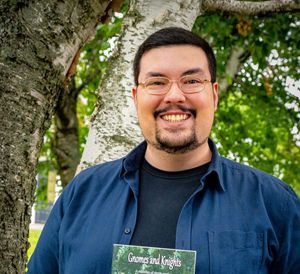

Introduce yourself; who are you and what types of books do you write?
I am a Vietnam veteran and retired high tech executive whose heroes have always been his favorite authors. I began writing novels as a cathartic exercise and a way to emulate my heroes, then found telling stories to be a way to get readers to think about our societal problems and the state of civilization. In terms of genre, my novels fall into the crime fiction and domestic suspense categories but there’s always a surprising love story tucked inside a tense plot.
What are your books about?
Ordinary people, under the pressure of extraordinary and dangerous circumstances, are faced with moral dilemmas. Some always die, someone falls in love, and several people must make difficult choices. But there’s always an underlying theme, a reason for telling the story, a segment of society exposed. While the main characters are ordinary people, the supporting cast is comprised of murderers, thieves, scammers, alcoholics, dogged, sometimes incompetent, cops, and wrong-headed do-gooders.
What was the inspiration behind writing your first book?
My mother’s sudden, traumatic passing. I didn’t believe she had to die, didn’t believe she had gotten the care she deserved, and was incensed by the callous reaction to her illness and ultimate death. So, I wrote a novel about an elderly woman who unexpectedly becomes critically ill and hospitalized. Doctors can’t determine the cause of her illness and want to wash their hands of her case, but her son, Randle, is determined to save her life. He becomes convinced that someone is trying to kill her in a way that is undiscoverable, but the police don’t believe him. Randle has to solve the riddle himself, and what he finds is both shocking, unexpected, and revealing about his mother and his family.
What did you learn while writing your second book?
Propelled by anger and passion, I wrote that first novel in three months and rushed it into publication. It was like a weight lifted off my shoulders but as I wrote my second novel, I realized that there were many things I would have handled differently had I slowed down and taken my time. My craft had improved; my knowledge of the publishing industry had increased; my character development had added depth; my plotting was more rigorous. So, I learned to take my time, immerse myself in my characters, and to polish, polish, polish the narrative.
What is the most rewarding part of being an author?
Having readers say they enjoyed the book, or had learned something, or had been encouraged to think about an issue in society. When I attend a writing event and someone tells me that one of my books had an effect on them, I’m fulfilled as a writer.
What elements do you think make for a good story?
Every good story begins with characters that readers can relate to and care about. Without sympathetic characters, a story will never be read. The second element is conflict. The characters must be in conflict with one another or with outside forces. The characters have to want something and there must be obstacles in their way. In a good story, the reader is challenged to agree or disagree with the protagonist’s quest and must fear a believable antagonist. The plot must be infused with tension and dreaded next events to keep the pages turning. And, lastly, the ending must be a satisfying reward for turning three hundred pages. That’s a lot to expect from a book.
What is the hardest part of being an author for you?
I’m sure most authors will say marketing their work and I’m not a lot different. You have to overcome a reluctance to self-promote. The most enjoyable part of marketing for me is meeting readers in person at events. The worst is splashing ads on social media.
What is your current writing project?
I’m putting the finishing touches on a prequel to my first novel, The Undiscovered Country, the book I talked about earlier. Taylor Sheridan has taught all of us to write origin stories and this new book is Randle’s origin story. It’s a story about a divorce in which the parties are manipulated by family members and are chewed up by a cold-hearted legal system. The parties resort to criminal schemes and violence but there are no winners when confronted by an unjust legal system. The experience taints Randle’s view of the legal system, and perhaps all authority, in the sequel, The Undiscovered Country.
What is the best writing advice you’ve ever received?
If you’re serious about writing, learn the craft. I had no idea that every genre has its peculiar rules. I had never thought about character arc. I didn’t know what plot devices are. I didn’t know how to build a foundation with theme. But I did have role models—the books by my favorite authors—and I learned how to see and understand their use of craft.
Where can readers discover more about you and your books?
Here are a number of links where readers can find information about me or about my books:
https://facebook.com/mike.nemeth.328784
https://instagram.com/nemosnovels
amzn.to/4bLHpAa (A Tissue of Lies)
amzn.to/3CVzMY4 (The Two Lives of Eddie Kovacs)
amzn.to/3YIqTur (Parker’s Choice)
amzn.to/2TiU9Jx (The Undiscovered Country)