
Introduce yourself; who are you and what types of books do you write?
Hi! I’m science fiction author Jeremy Clift. My writing blends real-world science, space exploration, and biotechnology with deeply human stories of love, identity, and survival. Before turning to fiction, I was an international news correspondent with Reuters, covering global politics, wars, and economic change. I’ve also been a publisher for an international institution. Today, I bring that same global perspective to storytelling, creating immersive worlds where corporate power, AI, and alien civilizations collide with the most intimate struggles of family and belonging. My books are part of the Sci-Fi Galaxy series, written for readers who want stories that are thrilling, thought-provoking, and emotionally resonant.
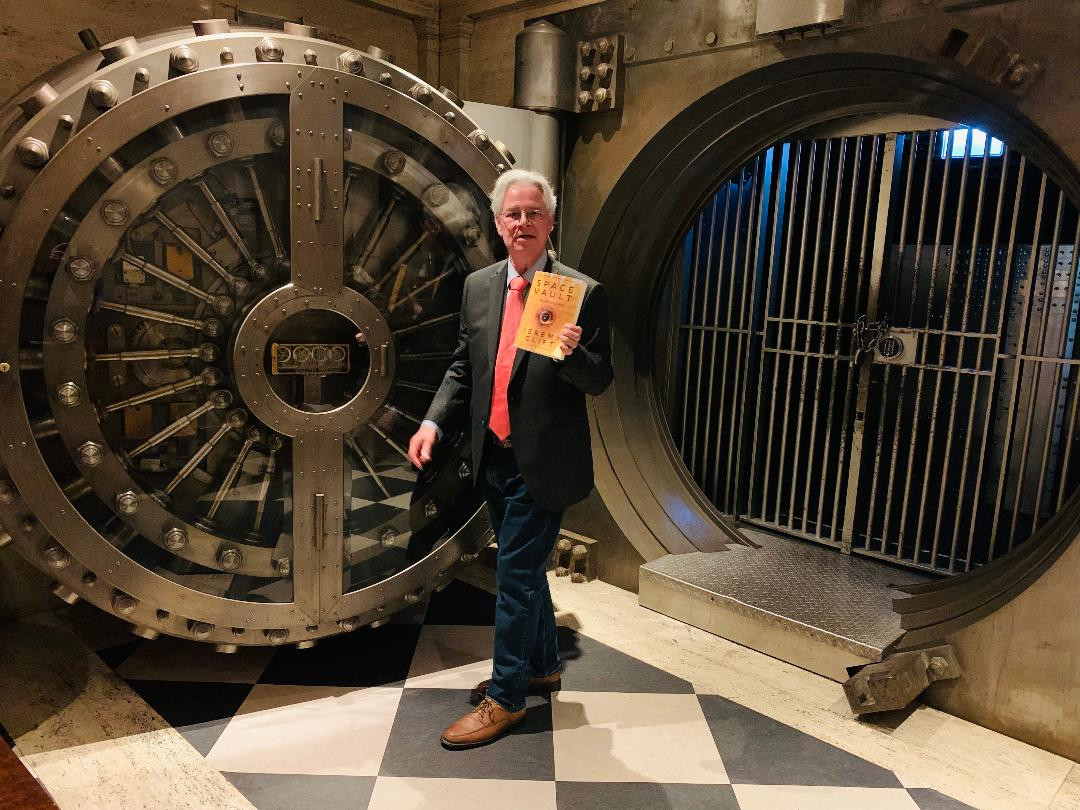 What are your books about?
The Sci-Fi Galaxy series explores humanity’s struggle to survive and define itself in a future shaped by genetic engineering, corporate control, and space colonization. Born in Space: Unlocking Destiny introduces Teagan Ward, a mother struggling to reunite with seven children, born artificially in an orbiting space lab. The second book, Space Vault: The Seed Eclipse, continues the story as Earth reels from climate upheaval, while rival forces battle for control of a lunar seed vault holding the last genetic codes for food and survival. At the heart of both books is a simple but powerful theme: one mother’s love pitted against forces seeking to own humanity’s future.
What was the inspiration behind writing your first book?
The catalyst for Born in Space came from imagining how humanity’s future might unfold if large commercial habitats became the new homes for those fleeing Earth’s wars and climate collapse. I was fascinated by the idea of children conceived and raised entirely in space, looking down at Earth yet never belonging to it. My background as a journalist covering global crises made the premise feel urgent—what if our struggles for power, resources, and survival simply migrated off-world? What would the mining of valuable asteroids, for example, do to the Earth’s economy? At the same time, I wanted to explore something deeply human: how love, family, and sacrifice would play out in these stark new environments, and what it would mean for children whose destinies are engineered among the stars.
 What did you learn while writing your second book?
With Space Vault: The Seed Eclipse, I learned how important it is to balance big ideas with intimate emotion. The science—terraforming, genetic codes, alien ecosystems—can be fascinating, but what carries readers through is the human heartbeat. I also learned to trust the arc of my characters. Teagan’s journey surprised me; she became stronger and more complex than I first imagined, and her daughter Diana evolved from a symbol into a vibrant presence shaping the story’s future. From a craft perspective, I learned how to expand a universe while keeping the narrative grounded, ensuring that every cosmic threat is mirrored by a personal struggle.
What is the most rewarding part of being an author?
The most rewarding part is at two levels. First, as a pantser, I love it when I can bring the story full circle and complete the plot in intriguing and satisfying ways. Second, from the reader’s perspective, I love it when readers tell me I got it right, the IVF for example, from a mother’s perspective; they felt both transported and moved—that they stayed up turning pages not just for the plot, but because they cared about the characters. Writing allows me to fuse science, philosophy, and imagination into stories that entertain while sparking deeper reflection. But the greatest reward is emotional: knowing that themes of love, survival, and identity resonate with people across the world. After years of writing journalism for headlines, fiction gives me the freedom to reach hearts as well as minds, and that connection is profoundly fulfilling.
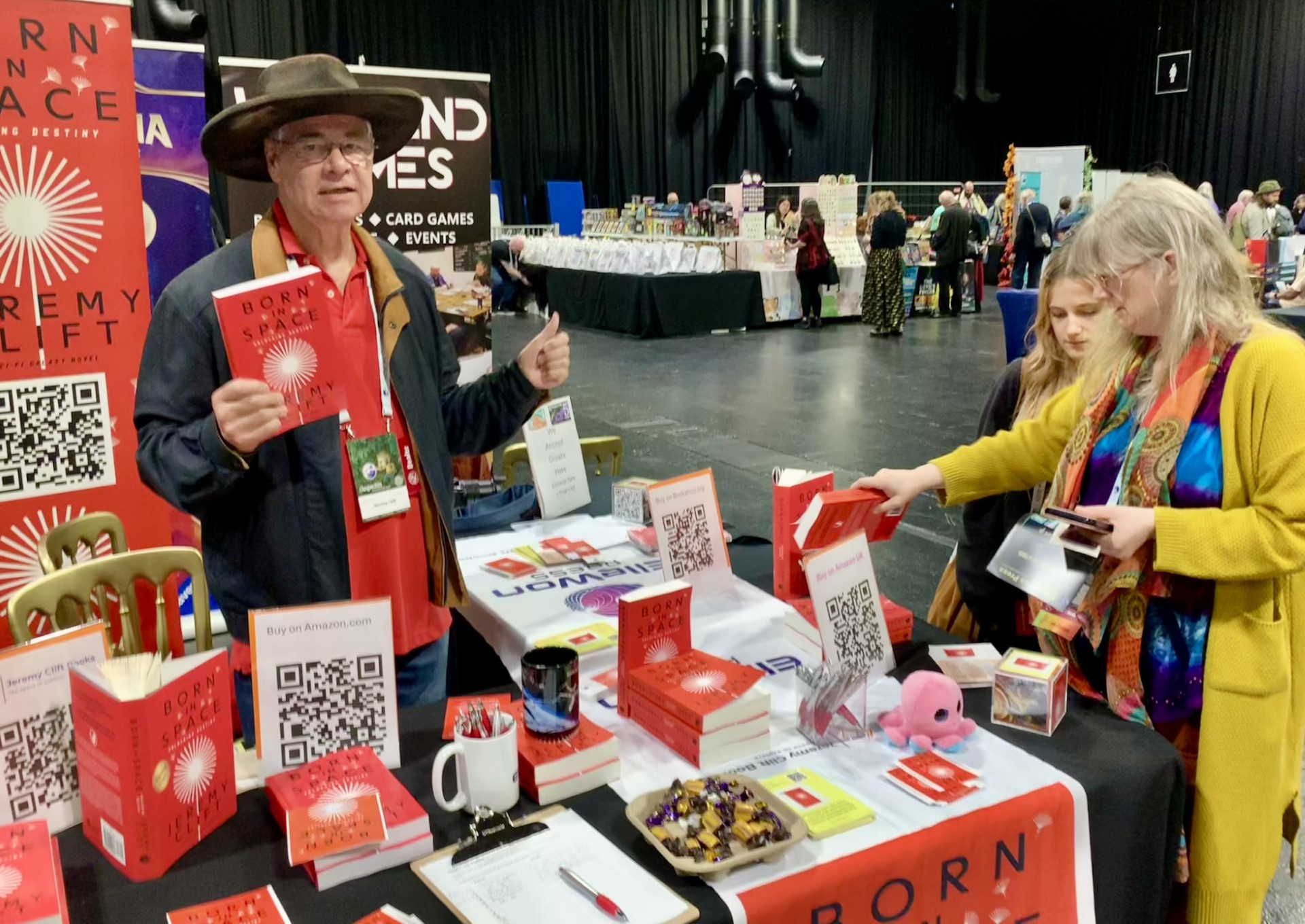 What elements do you think make for a good story?
A good story combines three things: imagination, plausibility, and humanity. Imagination pushes the boundaries—what if humanity colonizes space, or AI controls our future? Plausibility grounds the tale in science or logic, making extraordinary events believable. Humanity makes us care—through characters who are flawed, brave, or desperate in ways we recognize. Add conflict, whether personal or cosmic, and you have momentum. Finally, great stories raise questions: not only “what happens next?” but “what does this mean for us?” The best science fiction—like Clarke, Le Guin, or The Expanse—delivers both spectacle and truth, leaving readers changed by the journey.
What is the hardest part of being an author for you?
The hardest part is the balance between creativity, discipline, and marketing. Ideas come easily; shaping them into a coherent, compelling narrative takes persistence. As a former journalist, I am used to deadlines, but novels demand a different kind of stamina—sustained focus over years, not hours. Marketing adds another layer of difficulty for the independent author: finding the time to promote effectively, learning how to reach the right audience, and balancing promotion with the actual writing can be daunting. Another challenge is vulnerability. When you write fiction, you put your imagination and your heart on display, opening yourself to critique. Yet each obstacle is part of the process, and every finished book feels like proof the struggle was worth it.
Why did you choose to have a female hero? How did you come to draw her?
I chose Teagan because the themes demanded a maternal perspective. The story is about genetic engineering, reproduction, and the survival of children. To tell it through a male hero would have missed the emotional core. Teagan is not just a mother archetype, though—she is resourceful, flawed, and resilient, carrying scars from captivity and hope for a future beyond exploitation. I drew her from many sources: women I interviewed in crisis zones, mothers who fought to protect families in impossible conditions, and literary heroines who embody both vulnerability and strength. Through Teagan, I wanted to show that courage is not just about combat, but about love fierce enough to reshape destiny.
What elements make for great science-fiction stories?
Great science fiction works when it combines scale with intimacy. The scale comes from vast ideas—interstellar travel, alien contact, new forms of life or society—that stretch our imaginations. But the intimacy lies in how those ideas affect individual lives: a parent protecting a child, a scientist forced into an impossible choice, or a community struggling to survive in a hostile environment. The best sci-fi also mirrors our present, using speculative settings to explore power, inequality, and resilience. Think of Dune’s meditation on ecology and empire, or The Martian’s focus on ingenuity and survival. Ultimately, great science fiction succeeds when it moves us emotionally while challenging how we see our own world.
What is your latest writing project?
I am currently working on Space Shield, the third installment in the Sci-Fi Galaxy series. The story revolves around a massive shield being constructed in orbit to protect Earth from solar storms and cosmic threats. Behind the technology lies political intrigue, corporate ambition, and the question of whether such a shield will save humanity—or enslave it. Returning characters, including Teagan’s family, must navigate the consequences of earlier choices while facing new dangers from both aliens and human rivals. The book also deepens the personal arcs, including love, sacrifice, and betrayal, culminating in a climax tied to a hidden cosmic cycle, plus giving a love interest to Arturo, the humiliated son of the mining magnate Howie Rich.
 What is the best writing advice you’ve ever received?
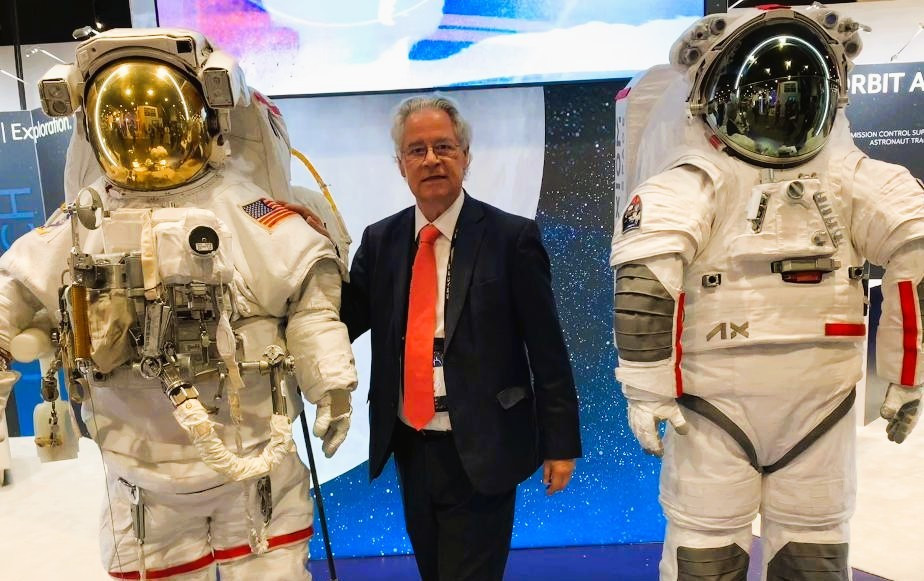
The best advice from the first writing conference I attended was simple: write a series. For me, that meant the intense research I did over three to four years—on asteroid mining, lunar regolith, and space in general, including attending mining conferences and the Space Symposium in Colorado Springs—was useful for several books, not just one. Another key piece of advice was to find the angle that feels most authentic to you. In my case, I wanted the story told from a female perspective, enhancing the contrast between motherhood and the harsh realities of space. And finally, finish the draft before editing. Momentum matters more in early stages; writing is discovery, and trusting that process leads to a finished book.
Where can readers discover more about you and your books?
Readers can explore more about my work and upcoming releases here:
• Author Website: https://www.jeremycliftbooks.com
• Future Tense author sci-fi blog: https://www.jeremycliftbooks.com/blog
• Amazon Author Page: https://www.amazon.com/author/jeremyclift
• Goodreads: https://www.goodreads.com/author/show/49544194.Jeremy_Clift
• LinkedIn: https://www.linkedin.com/in/jeremyclift
• Instagram: https://www.instagram.com/jeremy_clift_books/
• Facebook: https://www.facebook.com/cliftL1/
• ElleWon Press Facebook: https://www.facebook.com/ellewonpress
• ElleWon Press YouTube: https://www.youtube.com/@ellewonmedia9359
• Twitter/X: https://x.com/p_clift