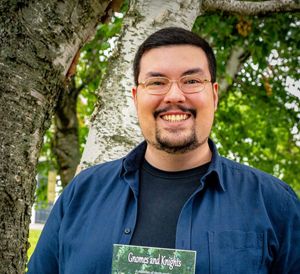

Introduce yourself. Who are you and what types of books do you write?
I’m Eric G. Reid. I’m a writer, editor, and publisher at Skinny Brown Dog Media, an independent publishing house based in Georgia.
I write story-driven nonfiction about faith, identity, spiritual formation, and what happens when we confuse leadership with discipleship. Most of my work lives in the overlap between the church and everyday life—where people are tired, sincere, and trying to live with integrity.
I’m also a ghostwriter and book coach, so I spend a lot of time helping other authors shape lived experience into words that sound like them. What are your books about?
My current book, Leadership Was Never My Calling, follows my slow unlearning of title-chasing and my quiet re-learning of love. It’s built around real scenes—conference green rooms, long drives home, inbox invitations, and the silence after the mic goes off—because that’s where the real formation happens.
The thread running through it is simple: you can do “the right things” and still lose yourself. The book offers language for that loss and small, practical ways to come back to presence: to God, to your family, and to the people right in front of you.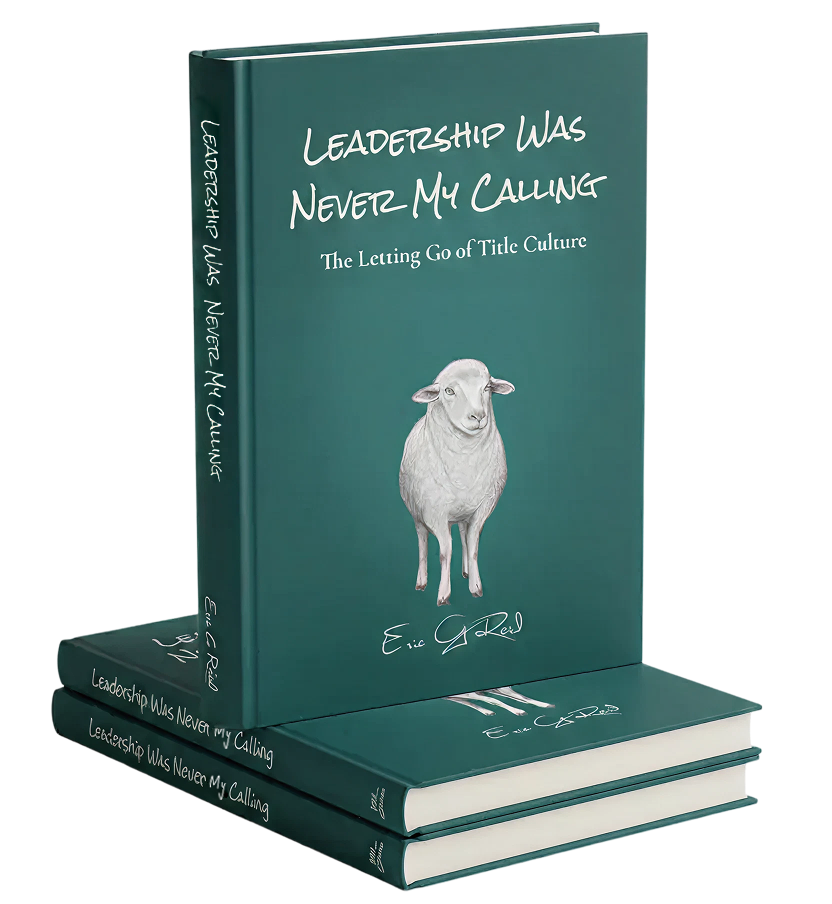 What was the inspiration behind writing your first book?
The first book started as a refusal. I didn’t want to write it. I wanted to be the guy with a neat leadership story and a clean ending. Instead, I had a moment where the image I’d built and the man I actually was collided—and I couldn’t unsee it.
What pushed me to write was realizing how common that collision is. I kept meeting good-hearted leaders and volunteers who were doing everything “for God” while quietly starving for approval. I wanted to put words to that experience without turning it into a rant.
What did you learn while writing your second book?
My second book—the follow-up I’m writing now—is teaching me that the work doesn’t get easier; it just gets truer. The temptation is to polish everything into principles. But readers don’t need another set of slogans; they need a companion who stays honest about the ongoing work.
I’m also learning to trust smallness. If my first book was about stepping off the stage, the second is about learning how to live once you’re off it—how to build a life that can’t be measured by applause.
What is the most rewarding part of being an author?
Hands down, it’s the email or hallway conversation that starts with, “I thought I was the only one.” When someone realizes they’re not crazy for feeling hollow inside a good-looking life—that’s holy ground.
The other reward is watching authors I work with finally find their voice. Not their “brand voice”—their actual voice.
What elements do you think make for a good story?
A good story tells the truth in a particular way. It doesn’t hover above life; it lands inside it. It has texture—rooms, sounds, awkward pauses, the thing you said that you wish you could take back.
And it has stakes. Not always explosions—sometimes the stake is a marriage, a friendship, a conscience. The best stories let the reader recognize themselves without feeling exposed.
What is the hardest part of being an author for you?
The hardest part is staying honest when the publishing world rewards performance. It’s easy to start writing for the audience in your head instead of the person in front of you.
Practically, it’s also juggling the work: writing, editing, publishing, and then doing the awkward part—telling people the book exists—without turning into the kind of “platform guy” the book is warning against.
What is your current writing project?
Right now, I’m preparing Leadership Was Never My Calling for release, including a limited first printing with a companion section called Walking Toward the Basin—short prayers and practices meant to help readers live the message, not just underline it.
I’m also drafting the follow-up book, which explores what “quiet greatness” looks like after you’ve stopped chasing the room.
What is the best writing advice you’ve ever received?
Write like you’re telling the truth to one person, not performing for a crowd. Whenever I forget that, my sentences get louder and my soul gets smaller.
The other piece of advice is simple: don’t rush the ending. If you’re still in the middle, let it be the middle. Readers can smell fake resolution.
Where can readers discover more about you and your books?
Website: https://ericgreid.com
Publisher: https://skinnybrowndogmedia.com
Facebook: https://facebook.com/ericgreid
LinkedIn: https://linkedin.com/in/ericgreid
Instagram: https://instagram.com/ericgreid
Skinny Brown Dog Media on Instagram: https://instagram.com/skinnybrowndogmedia