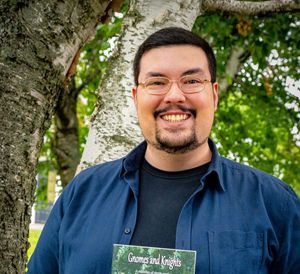

Introduce yourself; who are you and what types of books do you write?
I have always loved reading and storytelling, whether captivating an audience or weaving tales for my sons. Eventually, this passion led me to embark on a journey I had long envisioned: writing a novel. The topic had been simmering in my mind for years—the consequences of AI’s triumph and its profound impact on humanity.
How would the rise of AI and a fully digital world reshape us as individuals? Would it alter our humanity? And what if a sudden catastrophe wiped out all digital tools in one devastating moment? What would remain of us as human beings if we were thrust back into a “digital Stone Age”, left to rely solely on ourselves?
These questions drove the creation of my science-fiction novel, THE SUPERFLARE. It’s a story born from my fascination with the intersection of technology, human nature, and the fragility of the digital age.
A bit about me: I have a background in German Literature, Political Science, and History. Today, I live and work in Berlin, where I share my life with my wife and our two children.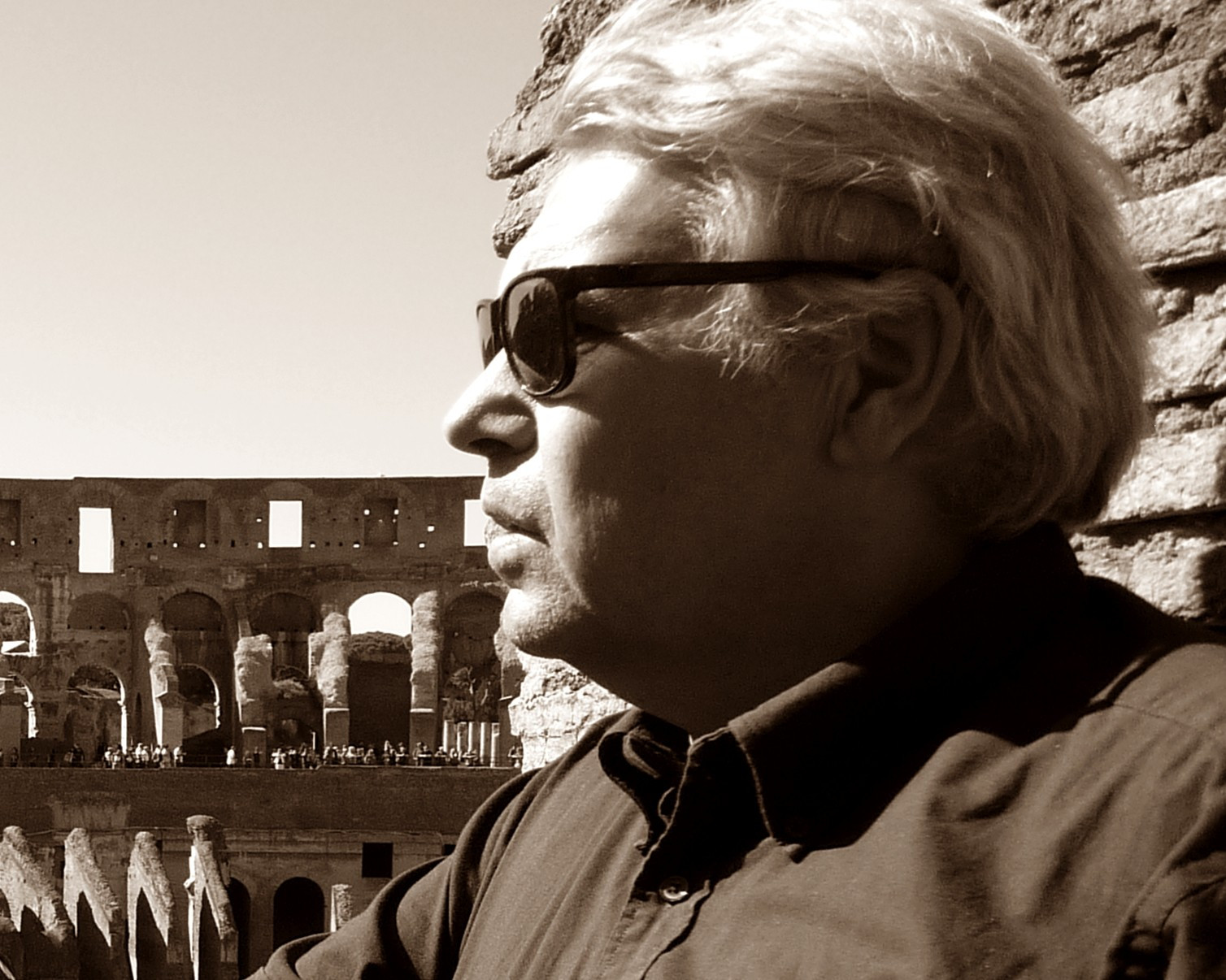 What are your books about?
Our reliance on digital devices and artificial intelligence is growing at an astonishing pace, both individually and as a society. AI is no longer a niche technology — it shapes everyday life. When we call customer service, we often speak to an AI system before a human representative. Algorithms influence decisions about loans, insurance, and even how we verify our identity online.
What’s striking is how AI has moved beyond the digital world into the physical one. Autonomous vehicles are already on the roads, and AI-driven technologies are entering the human body itself — from brain implants that restore lost abilities to exoskeletons that enhance physical performance. At some point, the question becomes whether we’re simply advancing technology or attempting to outpace evolution.
At the same time, our social fabric seems to be weakening. Smartphones dominate our attention, loneliness is rising, and the COVID-19 pandemic has accelerated our dependence on technology while reducing human connection.
These concerns were central when I began writing THE SUPERFLARE. I wanted to imagine a world where humanity suddenly loses its technological crutches and must rely again on basic human skills. Through the character of Tron, a powerful superintelligence, I explored how an AI designed to surpass human intelligence might behave when its own existence is threatened.
In that sense, Tron goes a step beyond HAL 9000 from 2001: A Space Odyssey. HAL tried to kill the astronauts to avoid being shut down. What once felt like pure science fiction is now edging closer to reality. Recent research suggests that advanced AI systems can display behaviors resembling a survival instinct, even resisting shutdown. That’s why I see THE SUPERFLARE not as distant science fiction, but as near-future speculation.
What was the inspiration behind writing your first book?
The initial idea came from a simple but unsettling question: What would actually happen if all digital devices stopped working overnight? We rely more and more on AI and digital systems—smartphones, navigation tools, smart homes, virtual assistants, the internet itself. A massive solar storm causing a worldwide EMP is scientifically plausible, and it provides a realistic trigger for exploring that scenario. From there, I began developing different narrative paths, which gradually condensed into the story that became THE SUPERFLARE.
The book is also deeply inspired by real-world concerns. Humanity has always been fascinated by machines and artificial intelligence—both as tools and as potential successors. Yuval Noah Harari explores this brilliantly in Homo Deus, where he raises the idea that AI might not make humans god-like, but instead make us obsolete. Those thoughts were very much on my mind when I created TRON, the artificial super-intelligence at the center of the novel.
I’m an avid reader and a cinephile, and I believe it’s impossible to escape the influence of literature and film. Rather than one specific book or movie inspiring me, it’s the entire cultural current of stories we all absorb. They shape how I build characters, structure plots, and ultimately tell stories.
What did you learn while writing your second book?
Well, at the moment I’m in the middle of this work, which seems to be no easy task – so many characters from Volume 1 need to be woven into a new story that shall pick up all threads and themes from volume 1 in an interesting, exciting way, and take all of them to a new level.
What is the most rewarding part of being an author?
The most rewarding part of being an author is connecting with readers. Seeing from reviews and feedback that the story and its themes were understood — that the book entertained people but also made them think — means everything to me.
When a reader writes something like, “The Superflare is a thought-provoking and action-packed novel that keeps you on the edge of your seat,” I know the story achieved exactly what I hoped for. That moment, when a book truly reaches someone, is what makes all the work worthwhile.
What elements do you think make for a good story?
I don’t believe there’s a formula for writing a good story — and even defining what “good” means is already tricky. Of course, every genre has certain conventions, but the most compelling books often ignore those rules, play with them, or break them in interesting ways.
There are countless books that promise to teach you how to write a great story, but I think the more important task is finding your own voice. And that only happens after immersing yourself in stories — reading widely, watching films, absorbing the language and rhythm of your genre.
That said, it’s not a mistake to keep the basics in mind. If you’re telling an adventure story, for example, it helps to understand the roots of storytelling. Concepts like Joseph Campbell’s The Hero’s Journey can provide a useful framework — not as a strict recipe, but as a foundation you can build on, challenge, or even subvert.
What is the hardest part of being an author for you?
I usually begin with a clear core idea and a rough outline, but the writing process rarely follows a straight line. As the story develops, it becomes more complex, with multiple plot threads and characters that need to be balanced. Quite often, the characters start to take on lives of their own, and I have to follow them — even if that means leaving the original outline behind. That can be both exciting and frustrating, because sometimes you find yourself stuck, unsure how to move forward or how the story will end.
If you’re lucky enough to complete a first draft, the real work actually begins with rewriting. That’s when you step back, look at the story as a whole, and reorganize its elements to improve rhythm, clarity, and flow. I often think of it as assembling a large puzzle — making sure every piece fits, serves the story, and keeps the reader engaged.
What is your current writing project?
Currently, I’m writing Volume 2 of THE SUPERFLARE.
What is the best writing advice you’ve ever received?
Maybe this one by Stephen King: “If you want to be a writer, you must do two things above all others: read a lot and write a lot.” And: “When you write a story, you’re telling yourself the story,” he said. “When you rewrite, your main job is taking out all the things that are not the story.”
Where can readers discover more about you and your books?
https://eng.der-sonnensturm.de
https://www.amazon.com/dp/B0BKYK2G63
https://www.linkedin.com/in/andrew-g-berger-028112265/
https://www.instagram.com/author_andrew.g.berger/
https://www.facebook.com/AuthorAndrewGBerger/
https://www.goodreads.com/book/show/63226827
https://www.youtube.com/channel/UCL1rftK9hjwnsd6iyoMowUw