

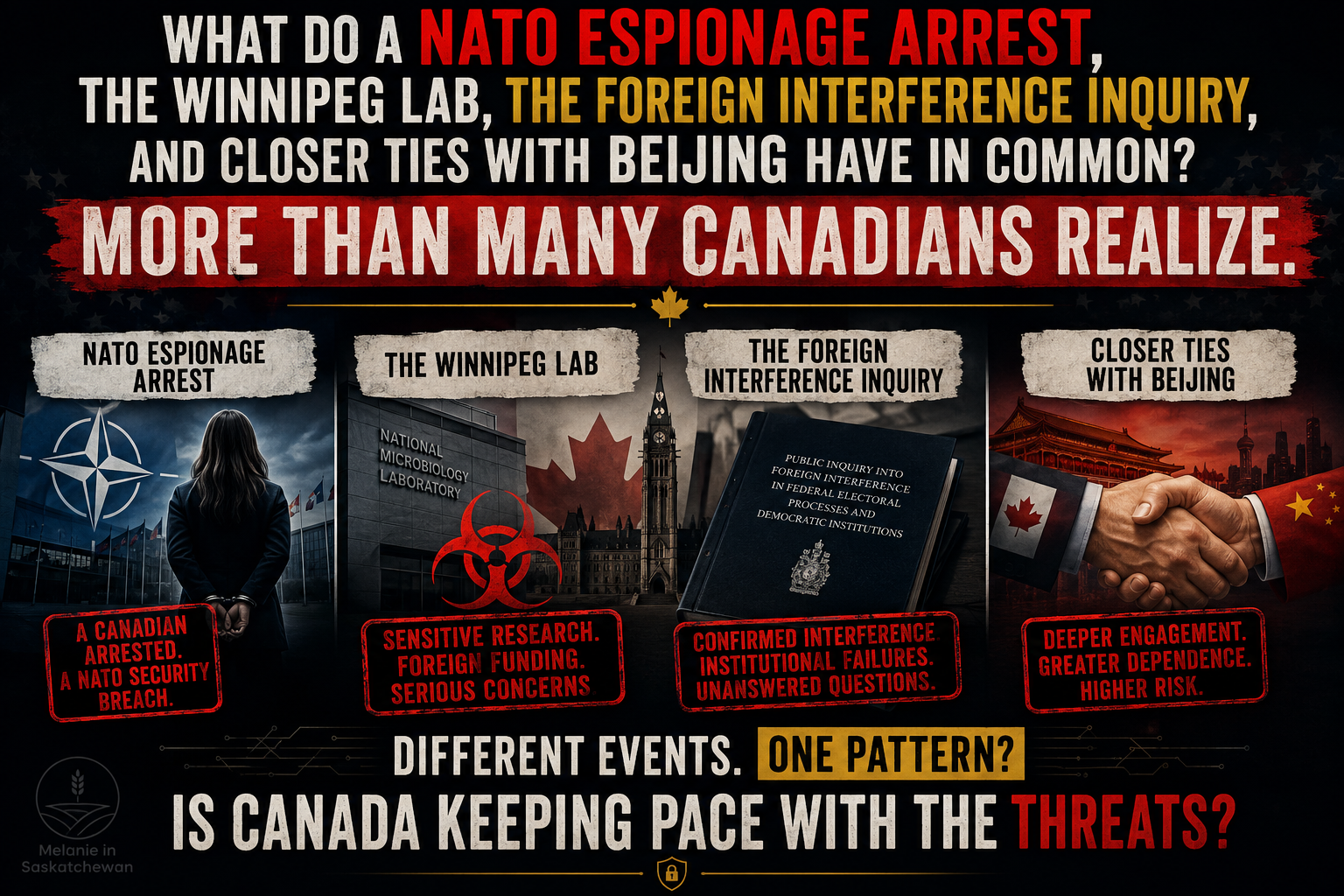
 Every once in a while, a story comes along that makes you stop and think hard, or occasionally even gasp aloud. Not because you already know what happened. It’s more like you honestly don't know what to think anymore.
Imagine sitting in a waiting room and someone leans over and says, "Did you hear a Canadian working inside NATO headquarters was arrested on suspicion of spying?" Most of us would probably have the same reaction.
"How on earth does something like that happen?" And that's not a political question, it's a Canadian question.
Last week, Belgian authorities arrested a Canadian citizen working as an intern at NATO's Supreme Headquarters Allied Powers Europe (SHAPE), the military command responsible for planning and coordinating alliance operations. She had reportedly passed the screening required to work there before later being arrested on suspicion of espionage for an unidentified foreign country and membership in a criminal organization. The investigation is ongoing, and like anyone else accused of a crime, she is presumed innocent unless proven guilty.
But even if she's ultimately cleared, one uncomfortable question isn't going away: How did someone get that close to one of the world's most sensitive military organizations only for alarm bells to start ringing afterward?
That's the part that sticks with people.
For months, members of the Liberal government lectured Canadians how important security clearances are, mostly in Question Period taking jabs at the Conservative Party leader. We watched the Liberals repeatedly criticize Pierre Poilievre for refusing to obtain a Top Secret clearance, arguing the process was essential to protecting Canada's national security.
Isn’t that interesting?
Because today the conversation isn't about why Pierre Poilievre doesn't have one. It's about whether Canadians should have confidence in the system that grants them.
This also isn't happening in isolation. For years, CSIS has publicly warned that the People's Republic of China represents one of Canada's most active foreign interference and espionage threats. Then came Justice Marie-Josée Hogue's Foreign Interference Commission, confirming that foreign interference was real, persistent and that Beijing played a significant role, even though there was no evidence it changed the overall outcome of a federal election.
Then there was the Winnipeg laboratory.
Two Chinese scientists working inside Canada's highest-security infectious disease laboratory were escorted out amid serious security concerns. Parliamentary investigations later uncovered undisclosed relationships with Chinese institutions and deadly pathogens from the lab mailed out of country to Beijing. The RCMP investigation continues, while reports indicate both Chinese scientists eventually relocated to China.
Nor was Winnipeg the only warning.
Just last week, reports revealed that Global Affairs Canada had dismissed 25 diplomats over the past year, including one employee accused of maintaining inappropriate secret contact with a foreign government. The department has not identified the country involved, but the case is another reminder that concerns about foreign influence are not hypothetical. They are showing up inside Canada’s own institutions. If Canada’s security agencies and departments are repeatedly confronting these risks, Canadians are entitled to ask whether our safeguards are keeping pace with the threat.
One story? Well, maybe.
Two? Hmm, perhaps.
Three? Pull my other leg why don’t you.
During Prime Minister Justin Trudeau’s 2018 trip to India, convicted attempted assassin Jaspal Atwal attended an official event with the Canadian delegation and received an invitation to a second reception before it was withdrawn. A subsequent review by the National Security and Intelligence Committee of Parliamentarians found there was no systematic vetting of guest lists for the Prime Minister’s foreign events and identified significant gaps in existing procedures. The review also found the RCMP failed to pass relevant information about Atwal’s criminal history to the Prime Minister’s protective detail, despite having information that should have triggered notification.
Questions about security have surfaced in other ways as well. In 2017, Stanislav Yezhov accompanied Ukrainian Prime Minister Volodymyr Groysman to Ottawa as his official interpreter. Weeks later, Ukraine arrested Yezhov on allegations he had been spying for Russian intelligence. Photographs from the visit showed him inside the Prime Minister’s Office, standing near the Prime Minister’s desk while the leaders posed for the media. There is no evidence he compromised Canadian information during the visit, but the episode was another reminder that trusted access can quickly become a national security concern when the people granted that access are later revealed to be working for hostile intelligence services.
Five years later came another international embarrassment. During President Volodymyr Zelenskyy’s visit to Parliament, Yaroslav Hunka, a veteran of a Nazi military unit, received a standing ovation in the House of Commons before his wartime service became public. Responsibility ultimately rested with the Speaker, who resigned, but the episode exposed broader questions about due diligence and coordination surrounding high-profile state events. None of these incidents is identical. Yet taken together with the Winnipeg laboratory affair, confirmed foreign interference, recent security-related dismissals at Global Affairs Canada, and now a Canadian under espionage investigation at NATO, they paint a picture of institutions that have too often found themselves reacting to security failures instead of preventing them.
We have arrived at the point where reasonable people stop calling it coincidence and start wondering about the pattern, and that's why this latest arrest matters. Not because anyone knows the outcome, but because Canadians have heard the warnings before.
We've watched the investigations.
We've read the reports.
We've been told lessons were learned.
Yet somehow another story lands on the front page that leaves people asking exactly the same questions.
Meanwhile, Prime Minister Mark Carney is, in my opinion, recklessly pursuing closer economic engagement with Beijing while Canada's relationship with our closest ally and largest trading partner, the United States, continues to fray.
Somehow, Canadians have been publicly brainwashed to believe America is their greatest threat and are eager to embrace China. Please, make it make sense! Remember… Mark Carney boldly told Canadians all those many months ago that the greatest threat facing Canada is China. Then he turns around and jumps in bed with them claiming it’s the new world order.
Nobody is suggesting Canada shouldn't trade with China.
Trade is one thing. But trust? Trust is a whole other matter. And national security should never become an afterthought in the pursuit of either.
Perhaps that's what bothers me most.
It's not the arrest itself. It's the feeling that Canadians are always the last ones expected to ask the obvious questions.
Who approved the security clearance?
What level of access did she have?
Were warning signs missed or ignored?Has the system changed since Winnipeg?
Or are we simply being assured, once again, that everything is under control
Governments build public confidence by proving they deserve it, not because they ask for it or because “We’re the government and we demand it!” Because national security isn't measured by speeches or carefully crafted talking points provided by spin doctors after intense focus group sessions.
It's measured by whether the people guarding the gate are actually watching who's coming through it.
Melanie
A Note From Melanie: Before anyone accuses me of jumping to conclusions, let's stick to the facts. Belgian authorities have not identified the country the accused is alleged to have been working for, and they have not accused her of acting on behalf of China. She has been charged, not convicted, and like anyone else, she is entitled to the presumption of innocence. My concern isn't about one person's guilt or innocence. It's about whether Canada's security systems are keeping pace with the threats our own intelligence agencies have been warning about for years.
This article is reader-supported. To receive new posts and support my work, consider becoming a paid or free subscriber🤗