

Ukraine paired a confirmed frontline gain with deep strikes that destroyed Russian aircraft at Rostov and damaged the Slavneft-YANOS refinery, while Russia struck cities across Ukraine and moved armored vehicles and drone-support assets toward Dobropillia. Air defense also ran through several major international decisions: the EU committed €3.3 billion for Ukrainian missiles and drones, Poland and Germany prepared Patriot transfers, and Denmark accelerated a $276 million package for Ukrainian air defense.
🇺🇦 Ukraine’s Defense & Military Developments
• Four Russian aircraft were confirmed destroyed at the Rostov-on-Don military airfield after a Ukrainian drone strike. Ukraine’s General Staff said two An-26 transports, one An-12, and three helicopters were hit; satellite analysis later identified two Mi-8 helicopters, the An-12, and one An-26 as completely destroyed, while Russian channels reported that two crew members died in one of the helicopters.
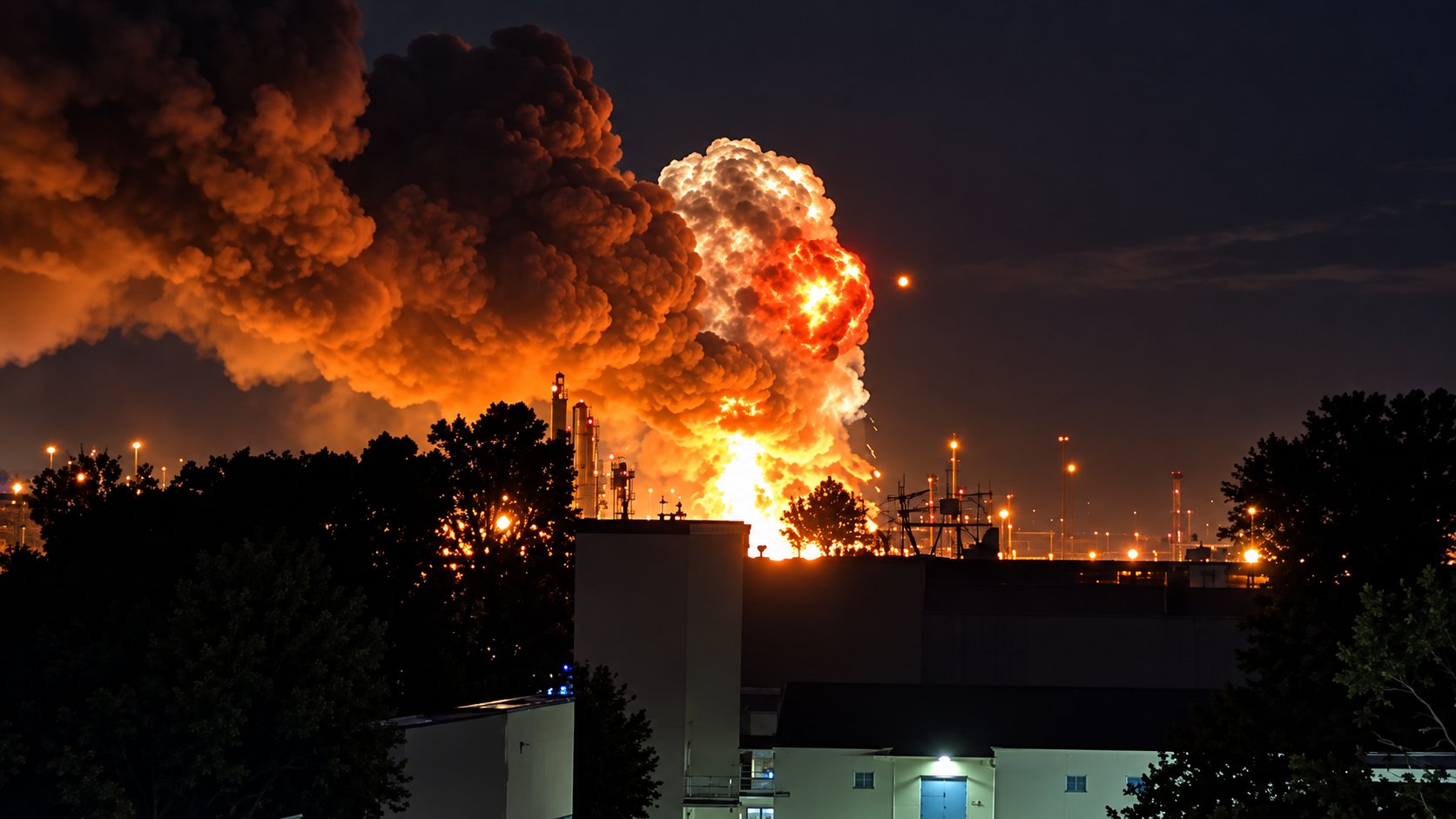
• Ukrainian forces struck the Slavneft-YANOS refinery in Yaroslavl, where a fire and damage were reported at a primary refining unit. The plant processes about 15 million tons of crude oil annually, produces gasoline, diesel, aviation fuel, fuel oil, and lubricants, and supplies products used by the Russian armed forces.
• The 66th Mechanized Brigade liberated the village of Serednie in Donetsk Oblast during Operation Vivaldi. Ukrainian artillery and drones suppressed Russian firing positions before mechanized infantry and tanks cleared the settlement without Ukrainian losses and pushed Russian forces back across the Nitrius River.
• Ukrainian air defenses intercepted or suppressed 131 targets during Russia’s overnight attack, including 124 Shahed, Herbera, and other drones and seven Banderol/Dan-T UAVs. Missile and drone strikes were recorded at 36 locations, while debris from intercepted targets fell at five more.
• The Third Army Corps says its forces inflicted enough damage on Russia’s elite Rubikon drone unit to force it off the priority Lyman-Borova sector. Ukrainian troops disabled parts of its command system and destroyed logistics, ammunition stores, drone launch sites, newly formed units, and experienced operators.
• High-speed interceptors developed by two Ukrainian companies have successfully completed combat tests against jet-powered Shahed drones, President Volodymyr Zelensky said. One hostile drone was destroyed at high speed, and Ukraine is continuing trials while working with both manufacturers to accelerate the systems into mass production.
• Ukraine is reorganizing command structures on the eastern front as Major General Viktor Nikoliuk leaves the East Operational Grouping of Troops. The grouping is being dissolved, while the new Center and Azov formations are taking over defensive sectors; from September 18, the Lyman direction moved under Center, which also includes the Third Army Corps.
• Ukrainian forces struck a ground-control station for Russia’s Orion UAV system at the Saky airfield near Novofedorivka in occupied Crimea during September 17-18. Orion can remain airborne for up to 24 hours, operate at altitudes of up to 7.5 kilometers, and carry 200-250 kilograms of guided weapons.
• The 425th Skelia Assault Regiment carried out a combat evacuation of 21 soldiers from the 159th Mechanized Brigade who had spent more than 10 months on forward positions without rotation and had become surrounded. Assault troops fought through Russian positions to open an exit route and captured several Russian soldiers during the operation.
🇷🇺 Russia & the Warfront
• Russian forces struck Sumy with six or seven guided aerial bombs, one of which hit a residential high-rise between the third and fourth floors. Two municipal employees were killed and seven people were injured, including a 13-year-old girl; three victims were in serious condition, and rescuers pulled four people from the rubble.
• At least 16 people, including two children, were injured in Kyiv and six in Odesa during Russia’s overnight attack on Kyiv, Odesa, Kropyvnytskyi, and Zaporizhzhia, which also damaged homes, schools, infrastructure, and railway facilities. In Zaporizhzhia, a separate Russian strike that day hit the Armstor shopping center, causing a major fire and destroying a local supermarket; no casualties were initially reported there.
• Russian forces twice struck an 11-story Ukrzaliznytsia administrative building in Odesa on September 18. The second attack came about 30 minutes after the first, when emergency crews were already working at the site; 10 people were injured, including two rescuers, and more than 70 State Emergency Service personnel were involved in the response.
• Russian drones carried out a large-scale attack on Konotop in Sumy Oblast, damaging a kindergarten, School No. 11, medical facilities, private homes, railway infrastructure, the gas distribution network, and numerous power lines. Much of the city lost gas service, and two women were injured.
• Russia’s 51st, 8th, and 41st Combined Arms Armies are moving armored vehicles and drone-support assets toward the Dobropillia sector in Donetsk Oblast. Brigadier General Denys Prokopenko said about 1,200 Rubikon drone crews could support possible autumn mechanized attacks involving assault groups of roughly 200 infantry and columns of about 50 armored vehicles.
• Russia has created a unified digital military register linked automatically to tax records, police databases, medical files, property registries, and border-control systems. An electronic summons is legally considered delivered seven days after it appears on the online portal, regardless of whether the recipient opens it.
• Brigadier General Denys Prokopenko assesses that Russia’s concealed mobilization is already underway and could become overt after the elections. He said Russia may recruit up to 600,000 personnel between late September and early winter and could move them toward the front before the end of the year.
• President Vladimir Putin denied that Russia intends to attack Europe but said Moscow would respond if Russian vessels were seized in scenarios similar to European exercises in the Baltic Sea. He also described Russia’s nuclear triad as a guarantee of sovereignty and again repeated Moscow’s claims about the legitimacy of Ukraine’s government.
• Ukrainian investigators have concluded that the August 5 strike on a railway platform in Kyiv Oblast’s Brovary district used a modernized RM-48U training missile rather than an Iskander. Eight people were killed in that attack, and RM-48U missiles accounted for more than half of the 228 ballistic and hypersonic missiles Russia launched at Ukraine in July and early August.
• Russian fiber-optic FPV drones now have a range exceeding 40 kilometers, according to Kharkiv Mayor Ihor Terekhov. Kharkiv first recorded such a Russian drone in February 2026.
• Russia is already using jet-powered Shahed drones controlled through Mesh modems, while Ukraine’s electronic-warfare teams are rushing to develop countermeasures. Technology adviser Serhii Beskrestnov criticized former Armed Forces commander-in-chief Oleksandr Syrskyi and his electronic-warfare chief for failing over the previous year to build a systematic response to Mesh-controlled systems or provide sufficient electronic protection for Kyiv.
• Russia launched a Soyuz-2.1b rocket carrying a classified military spacecraft from the Plesetsk Cosmodrome in Arkhangelsk Oblast. Stable telemetry was established after orbital insertion and onboard systems were operating normally; the flight profile was consistent with GLONASS launches, although the spacecraft’s exact mission was not identified.
• According to Ukraine’s General Staff, Russian losses for September 17 included 1,960 personnel, one tank, six armored combat vehicles, 43 artillery systems, seven multiple-launch rocket systems, three air-defense systems, 1,439 UAVs, and 14 cruise missiles.
🇺🇸 United States
• The United States has warned European allies that deliveries of key missile and air-defense systems could face delays of up to five years because of depleted American stocks, complicating Ukraine’s access to additional Patriot interceptors. Germany is seeking faster access to Tomahawk missiles and Typhon launchers, while Lockheed Martin plans to raise annual PAC-3 MSE production from about 600 to 2,000 units.
• The Pentagon is considering cutting the U.S. military presence in Europe by about 25,000 troops, roughly one-third of the current force, while another option would withdraw around 40,000. Germany, Italy, and Spain could be most affected, and General Alexus Grynkewich is expected to submit an assessment ahead of final recommendations due on November 6; no final decision has been made.
• The Trump administration is considering economic agreements with Russia before the war in Ukraine ends as a possible incentive for Moscow to move toward ending hostilities. Potential areas include extractive projects, the Arctic, and energy trade, but the proposals remain under consideration rather than finalized policy.
• Pentagon officials are investigating the disappearance of F-35 components that were being shipped from Australia to the United States for repair and were rerouted through Hong Kong. The missing items included a cockpit canopy using stealth-related technology, and the incident has triggered a congressional investigation and national-security briefings while the F-35 program office works to recover the parts.
• House Democrats have opened an inquiry into Donald Trump Jr.’s ties to International Boxing Association President Umar Kremlev after reports that the Russian businessman paid for two days of post-wedding celebrations, including a private-island rental and fireworks. Representative Robert Garcia sent Trump Jr. a formal letter seeking information about possible foreign influence.
🇪🇺 Europe & World
• The European Union will allocate €3.3 billion to Ukraine for the purchase of missiles and drones. Remaining funds from the SAFE program are also intended for new joint Ukraine-EU defense projects, while European Commission President Ursula von der Leyen linked the effort to the proposed Freya ballistic-missile defense system; further financing is tied to reforms that still require approval by Ukraine’s parliament.
• Poland scrambled military aircraft and placed ground-based air-defense and radar systems on alert after Russia launched jet-powered drones toward western Ukraine. Ukrainian monitoring sources reported that a Shahed fell near the Polish border; Ukraine’s border guards separately said crossing operations are suspended in affected areas during air threats to prevent crowds and casualties.
• Denmark accelerated a new military aid package for Ukraine after a Russian warship fired two signal rockets toward a Danish military helicopter in international waters in the Baltic Sea. One rocket reportedly passed dangerously close to the aircraft, and Denmark’s 1.8 billion kroner package, worth about $276 million, will be directed to Ukrainian air defense.
• President Volodymyr Zelensky launched the C8, or Carpathian Eight, format in the Ukrainian Carpathians on September 18. The initiative brings together Ukraine, Romania, Serbia, Poland, Slovakia, the Czech Republic, Austria, and Hungary, with broader EU interaction, and is intended to cover security, energy, logistics, cross-border economic cooperation, and support for local communities.
• Ukraine’s Foreign Ministry says it will not recognize Russian-organized State Duma elections held September 18-20 in occupied Crimea, Sevastopol, and occupied parts of Donetsk, Luhansk, Zaporizhzhia, and Kherson regions. The ministry said those territories remain part of Ukraine and warned that participation in the Russian vote on occupied Ukrainian territory could carry legal consequences.
• Up to 25,000 North Korean citizens could be working in Russia’s drone industry, including at facilities in Alabuga, Tatarstan, where Shahed-type drones are assembled. They are reportedly brought in under student visas and paid about $7,500 a year on average, while North Korean authorities take most of their earnings.
• China has privately asked Iran to use its influence over Yemen’s Houthis after their advance along the Red Sea coast and around the Bab el-Mandeb Strait increased risks to Saudi oil exports and maritime traffic. China has been Iran’s largest trading partner and main oil buyer for more than a decade.
• Poland is preparing to transfer a small number of Patriot missiles to Ukraine as part of a €50 million military aid package. Poland’s operational commander supports the transfer, which is being coordinated with NATO allies, including the United States.
• Germany plans to provide Ukraine with 10 Patriot MIM-104E GEM-T interceptors, valued at about $29.6 million. The United States is prepared to authorize the transfer once the congressional notification period is completed.
• Norway has established the Jomsborg training camp in eastern Poland, about two hours from the Ukrainian border, where hundreds of Ukrainian soldiers can train at the same time. The complex covers an area roughly equal to 100 football fields and includes drone laboratories, trench networks, firing ranges, and mock urban environments operated with instructors from Norway’s Telemark Battalion.
• Russia has formally protested to Japan over the deployment of U.S. Typhon missile systems, which can launch Tomahawk cruise missiles and SM-6 weapons. The systems are being used during the September 8-24 Orient Shield exercises involving the United States, Japan, and Australia and are expected to be moved to a U.S. military base in Japan after the drills.
• Czech Prime Minister Andrej Babiš proposed creating a European missile-defense architecture called “Euro Patriot” at the Prague Defense Summit. The concept is intended to provide multilayered protection against ballistic threats such as Russia’s Iskander and Kinzhal missiles, and Babiš said he plans to seek support from other European governments.
• Ukraine and Romania opened the Bila Tserkva-Sighetu Marmației international road crossing in Zakarpattia. The checkpoint will operate around the clock for passenger vehicles up to 3.5 tons, has capacity for as many as 700 vehicles per day, and is expected to handle buses and trucks after completion of a bridge across the Tisza River.
⚡ Geopolitics & Economy
• The U.S. sanctions bill targeting Russia would impose mandatory restrictions on Moscow’s leadership, energy and defense sectors, and shadow-fleet shipping system while giving President Trump authority to apply penalties of up to 100 percent against the five largest buyers of Russian fuel. Russia, China, and India have all opposed the legislation, while Trump plans to sign it.
• Saudi Aramco will withhold crude allocations next month from at least two European refineries, with restrictions affecting European buyers under long-term contracts after a drone attack on the East-West oil pipeline. Partial operations are expected to resume within days and full recovery in about six weeks, while Poland’s Orlen has already issued more than 10 tenders for alternative supplies.
• President Vladimir Putin placed the Russian assets of Auchan, Nestlé, Leroy Merlin, FM Logistics, and Bati Logistics under the temporary management of Moscow-based JSC L.E.V. Management. Ownership has not formally changed, but the foreign companies have lost independent control over their Russian assets.
• Ukraine is expected to receive about 600,000 tons under new EU steel import restrictions, out of an overall import quota of roughly 18 million tons. Oleksandr Vodoviz, head of the office of the CEO of Metinvest Group, warns that a December quota review based on the previous six months could lock in export volumes depressed by wartime production stoppages for years.
• Russian ESPO Blend crude rose above $120 per barrel, its highest level since April, as Chinese refiners increased purchases and supply disruptions hit Saudi exports. ESPO’s premium over Brent reached $20-30 per barrel, Urals rose to $110, and major Chinese state energy companies bought a large share of November and December cargoes.
• Hungary could stop importing Russian gas entirely within a year, according to Energy Minister István Kapitány, who says the existing pipeline network is sufficient to secure alternatives at competitive prices. Budapest is also reviewing the Russian-backed expansion of its nuclear plant, discussing crude-oil diversification, and investing in storage systems and wind power.
• Kremlin representatives and the leadership of Germany’s Alternative for Germany are preparing a meeting on the possible restoration of Russian gas supplies to Germany. The proposed talks would involve Kirill Dmitriev, Alice Weidel, and Tino Chrupalla and could take place next March in Israel, the UAE, or India, but only after a framework peace agreement between Ukraine and Russia.
🛑 Society & Policy in Ukraine
• Ukrmetalurhprom President Oleksandr Kalenkov says Ukraine’s freight rail system is critically vulnerable in frontline regions: average daily loading fell 4 percent nationwide in the second quarter and 17 percent on the Prydniprovska branch, while about 30 trains a day fail to depart because of crew shortages. Russian attacks have hit Ukrzaliznytsia facilities 6,119 times since the full-scale invasion, including more than 1,500 attacks in 2026 that damaged 508 locomotives.
• Ukraine repatriated the bodies of 252 people killed in the war. Russia says the remains belong to Ukrainian citizens, including military personnel, and Ukrainian law-enforcement agencies and Interior Ministry experts will conduct forensic examinations and identification.
• Kyiv has completed 80 percent of its planned preparations for the 2026-2027 winter season, including repairs, maintenance, fuel and equipment reserves, and energy-resilience projects. Three diesel-generator installations have already been built to back up water supplies, while the capital’s overall resilience plan is valued at 37 billion hryvnias, including 22 billion assigned to city-funded projects.
• A device with an antenna, SIM card, and other components resembling surveillance equipment was found inside Lviv Mayor Andriy Sadovyi’s official vehicle. The car’s battery had fully discharged twice over the previous month before the structure was dismantled and the device discovered, and law-enforcement agencies were informed.
Ukraine’s September 18 battlefield picture combined a confirmed territorial gain near the Nitrius River with deep strikes that destroyed Russian aircraft at Rostov and damaged the Slavneft-YANOS refinery. Russia simultaneously inflicted civilian casualties and infrastructure damage in Sumy, Kyiv, Odesa, Zaporizhzhia, and Konotop while moving armored vehicles and drone-support assets toward Dobropillia. Air defense connected several of the day’s major international decisions, from planned Patriot transfers by Poland and Germany to Denmark’s $276 million package and the EU’s €3.3 billion commitment for Ukrainian missiles and drones. Economic developments ranged from new U.S. sanctions legislation and new EU steel import restrictions affecting Ukraine to disrupted Saudi oil supplies to Europe and the loss of independent control by major foreign companies over their Russian assets.
🤝 SUPPORT US 💙
We continue to work only because you read and support us. If you appreciate what we do, please become our sponsor or donate here👇
☑️ patreon.com/meanwhileinukraine
or
☕️ buymeacoffee.com/meaninuak
or
☕️ ko-fi.com/meaninua
or
💳 paypal.me/meaninua
Your support helps us continue delivering timely and accurate updates. Stay informed and stand with Ukraine! 🇺🇦