

Ukraine regained full Starlink, Starshield, and US intelligence support while new imagery and assessments showed severe damage to major Russian military-industrial facilities in Yelets and Oryol. Kyiv also set firm limits for future peace negotiations amid disputes over US influence on Starlink operating modes and future American support for Ukraine, alongside Europe’s €70 billion financing challenge for 2027.
🇺🇦 Ukraine’s Defense & Military Developments
• Satellite imagery indicates that Russia’s Proton-Electrotex plant in Oryol was functionally destroyed after a Ukrainian strike, with both production workshops heavily damaged and clean rooms hit. Earlier imagery showed damage to facilities producing silicon wafers and microchips used in Russian weapons systems, while Ukraine’s General Staff later confirmed the strike.
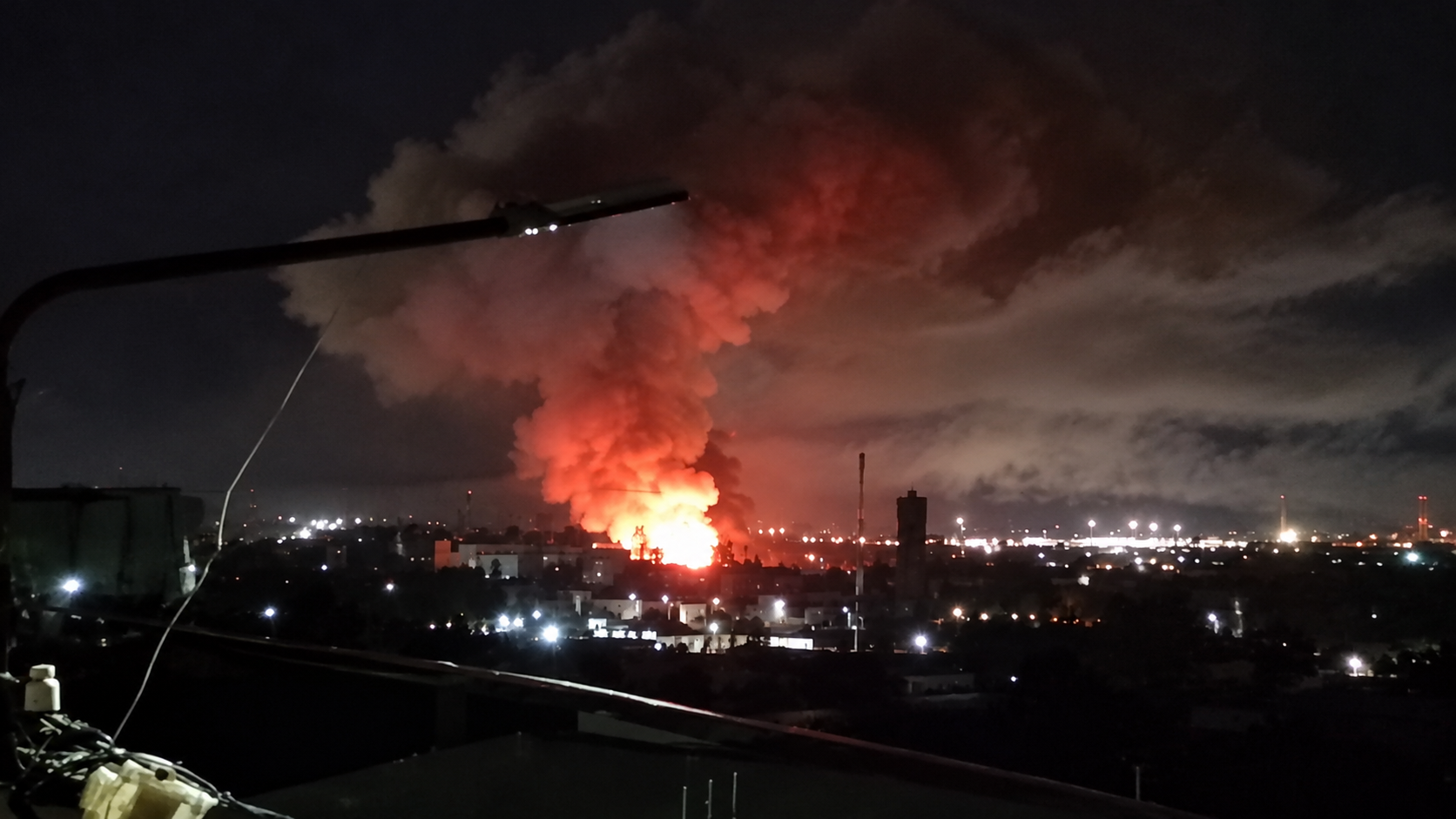
• Ukraine struck the Energia plant in Yelets, about 300 kilometers from the Ukrainian border, reportedly using several Storm Shadow cruise missiles. The facility produces power components for Iskander-K and Iskander-M missiles, UMPB D-30SN bombs, and UMPK kits, while the attack caused a large fire and post-strike imagery showed major damage to a production building that Exilenova+ assessed as no longer able to operate.
• CyberBoroshno assesses that the October 24 strike on Togliattikauchuk in Russia’s Samara region hit the D-3 and IP-3 MTBE synthesis units, with a combined annual capacity of 335,000 tons. MTBE is a high-octane gasoline component, and Ukraine’s General Staff says products from the plant are also used in components for solid rocket fuel.
• Ukraine’s General Staff said Ukrainian Defense Forces struck two Russian radar stations near Hostishcheve and Kurgannoye in the Belgorod region, a command post near Tarasivka in occupied Zaporizhzhia, and a command-observation post near Hola Prystan in occupied Kherson. The same operation also hit concentrations of Russian troops near Mykolaivka, Novoukrainka, Berdiansk, Okhrimivka, and Tarasivka.
• Around Kupiansk, Ukrainian operations involving UAVs and underground tunnels are disrupting Russian infiltration tactics from the north, according to the Institute for the Study of War. Ukrainian forces are also counterattacking on several axes and preventing Russian groups from establishing themselves in the northern part of the city.
• Ukrainian MiG-29s are being used to intercept and destroy Russian jet-powered Shahed drones, with “Denfix” of the 204th Sevastopol Tactical Aviation Brigade among the pilots carrying out the missions.
🇷🇺 Russia & the Warfront
• Russia launched about 1,600 guided aerial bombs, 48 missiles of various types including ballistic missiles, and nearly 2,300 strike drones against Ukraine over the past week, according to President Volodymyr Zelensky. He described the scale of the attacks as Russia’s response to diplomacy and attempts to end its isolation.
• Six people were injured, including one who was hospitalized, when Russia struck a five-story residential building in Vinnytsia on October 25. Four apartments were completely destroyed, while private homes, civilian and critical infrastructure, and a care home were also damaged elsewhere in the region, forcing the evacuation of 15 residents.
• Russian strikes in the Donetsk region caused one civilian fatality and injured six people. An FPV drone strike caused the fatality in Yarova, while bomb and drone attacks injured four people in Kramatorsk and two more in Sloviansk.
• A Russian drone struck a minibus in Kherson, causing one fatality and injuries.
• Russian attacks struck four Epicenter retail locations, with facilities in Poltava and Kharkiv among those identified. The Kharkiv store was reportedly hit overnight.
• Dmitry Medvedev publicly called on US President Donald Trump to order the Pentagon and CIA to “eliminate” Ukrainian President Volodymyr Zelensky. He tied the demand to Kyiv’s rejection of Russia’s preferred peace terms, continued Ukrainian strikes on Russian refineries, and Ukraine’s continuing need for Western assistance.
• A Russian prisoner of war captured by Ukraine’s 40th Marine Brigade during Operation Audit described severe shortages of food and water among Russian assault groups in Donetsk region, including cases in which soldiers drank from puddles. According to his account, supplies are sent only after assault troops reach an assigned position, which is checked by a Mavic drone before food can be delivered by a Molniya UAV.
• Russia’s Lancet loitering munitions have lost much of their earlier effectiveness on the battlefield, according to an assessment cited by Defence Blog from pro-Russian militant Pavel Gubarev. He attributed the decline to changes in Ukrainian tactics and countermeasures.
• For the first time in more than a decade, the Russian Navy reportedly had no warship in the Mediterranean for roughly two months, from early July until early September. The stated reasons included Russia’s loss of access to a key regional base and the need to redirect resources toward protecting vessels of its shadow fleet in other waters.
• Russia has deployed another air-defense ring around Vladimir Putin’s Valdai residence, extending roughly 50 kilometers and passing through the Khotilovo airfield area and the vicinity of a secret laboratory on Lysy Island. The total number of air-defense positions around the residence now exceeds 50, roughly half the number reported around Moscow and the Moscow region.
• Aviation expert Kostiantyn Kryvolap assesses Russia’s new small Filin cruise missile as a serious threat because it could reach western Ukraine with minimal warning time. Its guidance system uses components unified with later Geran-2 series, while its low cost could force Ukraine to use more expensive air-defense interceptors.
• Russia’s Rassvet satellite system currently has about 30 spacecraft and allows observation of Ukraine for roughly one hour per day, according to reserve Captain First Rank Andrii Ryzhenko. He estimates that about 300 satellites would be needed for continuous coverage and around 700 for a global system, while sanctions, imported-component shortages, and problems with Soyuz rockets are slowing deployment.
• Russia has established a “droneport” in Novoozerne in occupied western Crimea with capacity for about 20 UAVs operating over the Black Sea. Ryzhenko links the site to Russian efforts to threaten routes serving Odesa and the Danube ports, while NATO has increased reconnaissance and patrol activity in the region.
• Two experienced pilots from the Russian Knights aerobatic group were lost when a Su-30SM crashed during a training flight in Russia. Colonel Oleg Yerofeyev had about 3,300 flight hours and Major Vladimir Kochetov about 1,500, while pilots from the group have regularly been used for combat missions since the start of the full-scale invasion.
• Russia’s reported daily losses as of October 25 included 1,850 personnel, three tanks, five armored fighting vehicles, 49 artillery systems, five MLRS, three air-defense systems, 1,738 UAVs, and six units of special equipment, according to Ukraine’s General Staff.
🇺🇸 United States
• Full Starlink and military Starshield service was restored for Ukraine at about 05:20 on October 25, with the mobility speed limit raised to roughly 420 km/h. US intelligence sharing, including ballistic-missile warnings, was also restored, while Ukraine’s shortage of air-defense systems remains unresolved. Reuters reported that more than a week of earlier restrictions disrupted some Ukrainian military operations and described a longer-running US practice of influencing Starlink coverage and operating modes as an instrument of foreign policy, exposing the extent to which government decisions can depend on privately controlled SpaceX infrastructure.
• The November 3 US congressional elections could substantially change Washington’s Ukraine policy if Democrats gain control of the House and possibly the Senate, according to Reuters. The outlet reported that renewed aid legislation would likely have the two-thirds support needed to override a Trump veto, while Democrats could also challenge decisions easing restrictions on Russian diesel and energy.
• Elon Musk says Starlink satellites could become Russian targets if the network is used for offensive operations against Russia, warning that destroying spacecraft could threaten both communications and orbital safety. Ukrainian Defense Ministry adviser Serhii “Flash” Beskrestov disputes claims that commercial Starlink can support medium- or long-range drone strikes, saying civilian terminals in Ukraine are limited to roughly 70–90 km/h, lose connectivity above those speeds, and do not operate over Russia. He says those limitations make the use of commercial Starlink for medium- and long-range drone strikes physically impossible.
• The New York Times focused on the erosion of Ukrainian trust in the United States, describing the Trump administration’s policy as damaging a relationship built over decades. The newspaper linked what it called a “moral blow” to sharply reduced US support and Washington’s rapprochement with Moscow while Russian attacks on Ukrainian civilians continue.
• El País focused on the strategic consequences of changes in US policy, arguing that the risk of Ukraine being left increasingly alone against Russia is being driven not only by Russian actions but also by changes in US policy. The newspaper pointed to intelligence-sharing restrictions, problems with Starlink access, and the US diesel arrangement with Russia, while describing Moscow as seeking to use winter conditions to increase pressure on Ukrainian civilians.
• Nearly 70% of registered US voters are concerned about corruption, self-dealing, or conflicts of interest in the Trump administration, according to a Financial Times/Focaldata poll. The online survey of 1,648 registered voters, conducted on October 16–18, also found that nearly half of those who voted for Trump in 2024 shared those concerns, with a reported margin of error of ±2.8 percentage points.
🇪🇺 Europe & World
• Ukraine will not allow Moscow to determine its security guarantees and will not accept military restrictions or neutrality, while territorial questions can be decided only at the leaders’ level, President Volodymyr Zelensky said. Kyiv is prepared to discuss some proposals from US presidential envoy Steve Witkoff at technical talks in November, while Zelensky says a strong postwar army remains central to Ukrainian security and could number around 800,000 depending on guarantees, budget capacity, and long-term partner funding.
• Kyiv expects a November trilateral meeting with the United States and Russia to produce practical steps toward eventual leaders-level negotiations. Ukraine wants progress on stopping strikes against energy infrastructure and at sea, restoring full grain exports, and continuing prisoner exchanges, while Zelensky identified an end to energy strikes and Russian agreement to a leaders’ meeting as two signs that Vladimir Putin is genuinely prepared to end the war. The US side is looking toward December and the G20 summit in Miami for such a meeting, and Kyiv says it is ready if Moscow is prepared to take part.
• Aleksandar Vučić conceded defeat after Serbia’s early parliamentary election, with the student list receiving about 2.2 million votes and projected to win 135–140 seats. Vučić’s United Serbia list received about 1.72 million votes and was projected at roughly 105 seats, with the student movement’s victory ending his long control over political power.
• Moscow says it is ready to resume trilateral Russia-Ukraine-US talks after November 4, although Kremlin aide Yuri Ushakov said an initial meeting would be preliminary and expectations should remain low. He also said Europe should participate, while Kyiv had previously looked toward Abu Dhabi in the first half of November; Russian Foreign Ministry spokeswoman Maria Zakharova added that Moscow would accept only European politicians who favor dialogue and continued contact with Russia. She did not identify any specific countries.
• Bulgaria’s presidential election is heading to a runoff between Iliana Iotova and Andrey Gyurov. Most parallel counts put Iotova ahead, although one showed a narrow Gyurov lead; Gyurov is the more pro-Ukraine candidate of the two, while the Bulgarian presidency has limited powers.
• Kremlin aide Yuri Ushakov acknowledged that the United States has so far failed to persuade Ukraine to accept proposed peace terms. He blamed Kyiv’s European partners and said Moscow had expected stronger US pressure on Ukraine after the Russia-US meeting in Anchorage.
• Expert Spencer Warren, cited by Forbes, assesses that the risk of Russia being the first to use nuclear weapons would rise if the United States distances itself from NATO while Moscow increases pressure on European democracies. He identifies the Baltic states as the most likely direction of further Russian expansion and links Kremlin nuclear threats to an effort to deter a Western response.
• The Wall Street Journal says restrictions on Ukraine’s access to Starlink are accelerating efforts by US allies to develop their own satellite communications systems. European partners are concerned about reliance on a network with an effective private “kill switch.” Republican Congressman Dan Crenshaw has criticized restrictions on a system he says Ukrainian forces use to defend against Russian aggression, while concern in Congress also centers on the lack of a rapidly available alternative for the United States and its allies. The Telegraph also noted that Starshield has been used for missile and drone interception and long-range operations, arguing that the ability of a single private actor to restrict access creates a military risk.
• North Korean leader Kim Jong Un visited the Chinese border city of Dandong but did not meet Xi Jinping in person. He was accompanied by Wang Huning, the fourth-ranking member of China’s leadership, who conveyed greetings from Xi.
⚡ Geopolitics & Economy
• The European Commission wants a political agreement by the end of the year on how to cover an estimated €70 billion Ukrainian financing gap for 2027, including roughly €40 billion for defense and €30 billion for the national budget. The defense gap could fall to €27 billion if NATO countries fulfill promised bilateral assistance, with EU leaders expected to discuss financing options at an extraordinary summit on November 26.
• Russia says it is prepared to export as much diesel as the market demands after reaching an arrangement with the United States. Russian diesel has been temporarily exempted from part of US sanctions until April 7, 2027, and an initial 40,000-ton shipment is already heading to New York.
• The Financial Times describes the Black Sea as the world’s most dangerous route for merchant shipping, with 40 sailors lost and more than 570 vessels attacked this year. More than four attacks per day were recorded on average in the third quarter, and Ambrey data attributes about 90% of vessel strikes over the past 45 days to Russia.
• The Kremlin says Vladimir Putin may attend the G20 summit in Miami in December, where Volodymyr Zelensky could also be present. Moscow says the decision may depend on contacts among Russia, China, and the United States during the APEC summit and is also considering a possible meeting involving Putin, Xi Jinping, and Donald Trump.
🛑 Society & Policy in Ukraine
• Ukraine and Russia agreed to a limited ceasefire in a designated area of occupied Oleshky in the Kherson region beginning at 03:00 on October 27. Human Rights Commissioner Dmytro Lubinets says the next steps are expected to include demining the road and delivering food, water, medicines, and hospital equipment. Civilians are also expected to be allowed to choose evacuation to Ukraine or Russia under a new control mechanism involving the United States; ISW says the sides appear closer on the mechanism itself, although the ceasefire boundaries and guarantees of free evacuation choice remain unclear.
• Kyiv could face its hardest winter since the beginning of the full-scale invasion because of damaged generation, regular outages, and water-pressure disruptions, according to The Wall Street Journal. Ukrainian experts cited in the report say freezing weather could bring at least 12 hours of outages per day nationwide, with worst-case scenarios reaching 20 hours in some regions.
• Electricity restrictions are being tightened in occupied Crimea while crews repair central power grids. Local authorities say additional restrictions will be introduced during the day, and hot-water supplies may also be limited because of continuing power disruptions.
• Ukrainian lawmaker and former Constitutional Court judge Vasyl Nimchenko received two Pension Fund payments in Kyiv over two days, worth UAH 296,400 and UAH 333,600. His 2025 declaration listed an average pension of UAH 192,100 per month and total annual pension payments of UAH 2.3 million.
Ukraine restored critical US intelligence and satellite services on October 25 while Ukrainian strikes put pressure on several different layers of Russia’s military-industrial system. Damage at Proton-Electrotex, Energia and Togliattikauchuk affected facilities linked respectively to military microelectronics, missile and bomb power systems, and chemical inputs connected to rocket-fuel production. The day’s negotiation signals were concrete on timing, format and agenda, but substantial gaps remain over security guarantees, military restrictions, neutrality, territory and the level of outside pressure on Kyiv. The Starlink dispute and Europe’s €70 billion financing gap for 2027 expose two longer-term constraints on Western support: technological dependence and financing capacity. Russia, meanwhile, launched about 1,600 guided aerial bombs, 48 missiles and nearly 2,300 strike drones against Ukraine over the past week, while pressure on Black Sea shipping continued with more than 570 vessels attacked this year.
🤝 SUPPORT US 💙
We continue to work only because you read and support us. If you appreciate what we do, please become our sponsor or donate here👇
☑️ patreon.com/meanwhileinukraine
or
☕️ buymeacoffee.com/meaninuak
or
☕️ ko-fi.com/meaninua
or
💳 paypal.me/meaninua
Your support helps us continue delivering timely and accurate updates. Stay informed and stand with Ukraine! 🇺🇦