

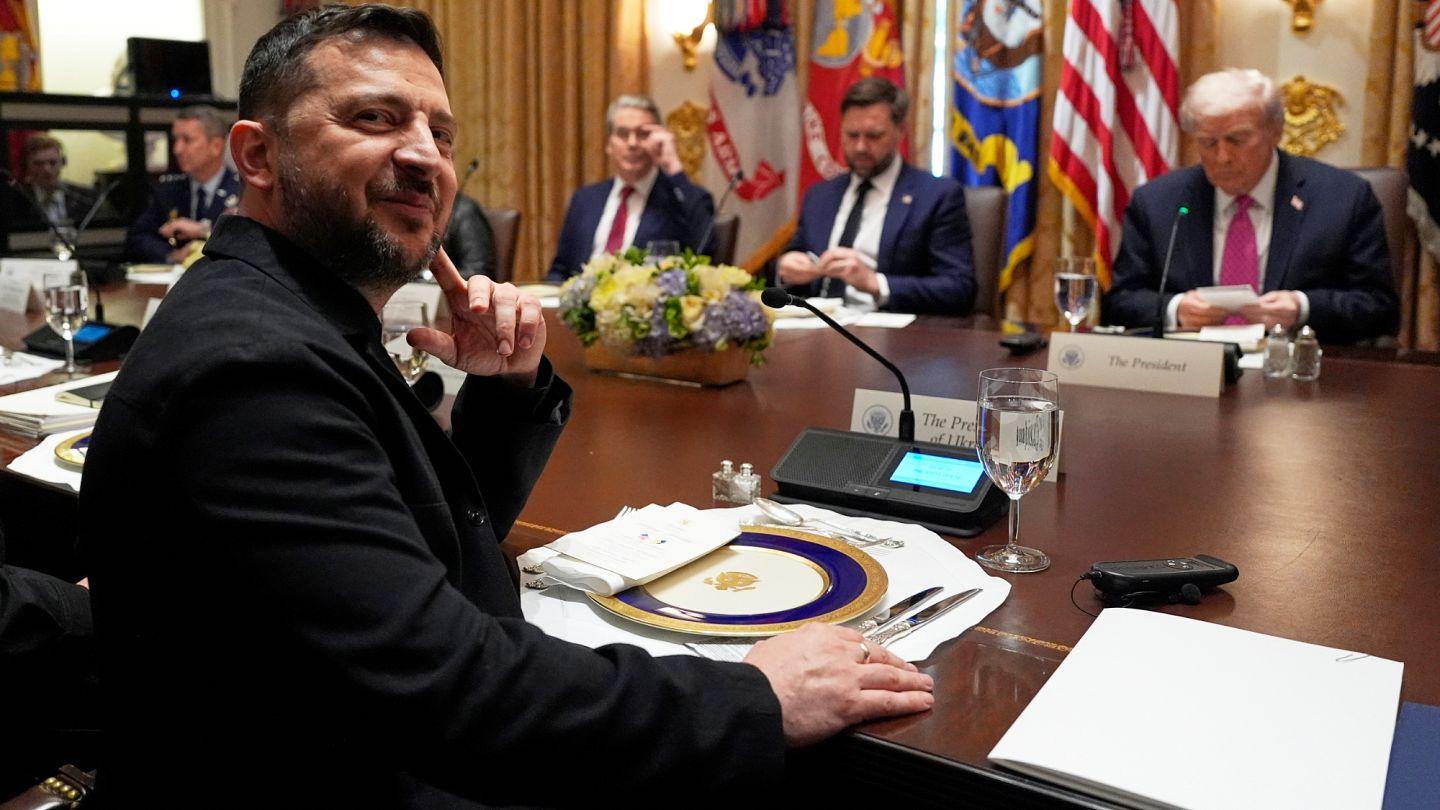
Donald Trump said a potential peace deal with Russia could move ahead without Volodymyr Zelensky and separately called Ukraine’s renewed strikes on Russian refineries unacceptable. Ukrainian forces meanwhile reported four Su-34M bombers destroyed and two damaged at Borisoglebsk, while conflicting accounts in Washington left responsibility for the restrictions on Ukraine’s Starshield access unresolved. Europe continued to debate financing, frozen Russian assets, sanctions and air defense as Ukraine faced a severe Patriot interceptor shortage and renewed attacks on its power system.
🇺🇦 Ukraine’s Defense & Military Developments
• Ukraine’s shortage of PAC-2 and PAC-3 interceptors for Patriot systems has reached a critical level. Zelensky said most such interceptors had long been directed to the Middle East and that Ukraine was not a priority in their distribution, often receiving batches of only two, five or ten missiles through the European-funded PURL program. A stock of ten interceptors reported on October 7 was subsequently used during Russian attacks, leaving only a few available. Zelensky said Ukraine must receive ballistic-missile interceptors to protect its energy infrastructure if there is no energy ceasefire and argued that Europe has enough Patriot missiles to help Ukraine through the winter.
• A Ukrainian Neptune strike on the Borisoglebsk military airfield in Russia’s Voronezh region destroyed four Su-34M bombers and damaged two more, according to the Ukrainian Navy. The strike was estimated to have caused at least $150 million in direct Russian losses, while Russia is estimated to have 120 to 180 Su-34s and to produce only 10 to 12 annually, meaning replacing six aircraft would require at least six months; Navy spokesman Dmytro Pletenchuk described the six affected aircraft as an entire aviation flight and noted that Russia typically employs three Su-34s simultaneously.
• One of the main crude-processing units at Russia’s Ryazan refinery stopped operating after a Ukrainian drone attack, with several pipelines also reported damaged. The CDU-6 shutdown affects a refinery capable of processing about 340,000 barrels per day and supplying fuel to Moscow, while the overnight fire continued into the following day and the plant accounts for roughly 5% of Russia’s refining capacity.
• Ukrainian forces struck the Surgut condensate stabilization plant in Russia’s Khanty-Mansi Autonomous Okrug, about 2,400 kilometers from the Ukrainian border, causing a fire on the site. The Gazprom facility processes gas condensate into motor and aviation fuel and has a design capacity of 12 million tons of feedstock per year.
• Ukrainian drone attacks forced all four Moscow airports to suspend or restrict operations overnight, with more than 200 flights delayed or canceled by the morning of October 16. Domodedovo was closed for more than seven hours, Zhukovsky for almost 6.5 hours, and Vnukovo and Sheremetyevo for roughly 5.5 hours; the restrictions affected at least 66 flights at Vnukovo and 79 at Sheremetyevo, while Aeroflot diverted some aircraft to Nizhny Novgorod. Russian sources claimed 644 Ukrainian drones had been intercepted between 8:00 p.m. on October 15 and 8:00 a.m. on October 16, explosions were reported in Vladimir and Elektrostal, and mobile internet restrictions were introduced in St. Petersburg.
• Ukraine’s 66th Mechanized Brigade released footage from the liberation of Zelena Dolyna during Operation Vivaldi and said its forces had also cleared several forest belts and ravines. The brigade reported pushing Russian forces approximately nine kilometers eastward.
• Ukrainian forces struck a Russian 55Zh6U Nebo-U long-range radar near Magri in Krasnodar Krai, where a fire broke out after the attack. The radar is designed to detect aircraft, cruise missiles and ballistic missiles and is valued at roughly $100 million.
• Ukrainian manufacturer SkyFall has delivered its first StarGate aerial medical evacuation drone to a combat brigade for frontline testing. Designed to evacuate wounded personnel under fire and across minefields, the six-rotor aircraft can carry up to 150 kilograms over 15 kilometers one way, cruises at 65 km/h, can reach 105 km/h, can be prepared for flight in about 10 minutes, uses Starlink, SkyFall’s L-Link and AI-based navigation without GPS, and is expected to start at $50,000, with the company planning production of up to 1,000 units per month by the end of 2026.
• Ukrainian forces are returning tanks and infantry fighting vehicles to limited mechanized maneuvers by pairing them with FPV escort drones that intercept Russian UAVs and Vampire heavy bombers used for reconnaissance and munitions drops. Vehicles are also being fitted with metal-rod “hedgehog” armor intended to trigger attacking drones away from the main armor.
🇷🇺 Russia & the Warfront
• Russia launched 315 attack drones against Ukraine between 7:00 a.m. and 7:00 p.m., including 78 jet-powered drones and 15 S-8000 Banderol/Dan-T systems. Ukrainian air defenses reported intercepting or suppressing 253 UAVs, including 49 jet-powered drones and nine S-8000s.
• Vladimir Putin threatened further mass strikes on Ukraine while claiming Russian forces had captured 310 settlements and about 6,500 square kilometers since the beginning of 2026. He also claimed full control of Luhansk region, said Ukraine retained only about 10% of Donetsk and 16.5% of Zaporizhzhia regions, and attributed Dobropillia and Oleksiievo-Druzhkivka to Russian control, although those claims lacked confirmation and available maps showed a different situation, with Dobropillia under Ukrainian control. Valery Gerasimov separately repeated claims about Lyman, Sviatohirsk and Kupiansk, while Russian commanders alleged that up to 2,000 Ukrainian troops had been encircled and destroyed on the northern Kharkiv axis, although available maps did not support that account.
• Russia’s planned low-orbit Rassvet satellite network is being developed through Russia’s Bureau 1440, with satellite production being accelerated through a contract with China’s Shanghai Spacecom Satellite Technology, according to expert assessments. The system is intended to provide Russia with independent broadband communications for military operations and improve drone range, maneuverability and resistance to jamming. One assessment said a full system by late 2026 or early 2027 could allow Russia to strike Ukrainian targets almost in real time, while another estimated roughly two more years before military use and expected the network to operate with some limitations during its initial stage.
• Russian attacks caused new power outages across Dnipropetrovsk, Zaporizhzhia, Sumy, Kharkiv, Khmelnytskyi and Chernihiv regions and struck energy facilities in Kyiv, Kyiv region, Volyn, Odesa and Rivne regions. Hourly restrictions and industrial limits were introduced in several areas, while emergency outages in Kyiv region also affected the Bucha, Obukhiv and Fastiv districts.
• A Russian drone strike on the Agrofrukt LTD enterprise in Manevychi, Volyn region, killed one person and injured eight, while another jet-powered Shahed damaged a garage cooperative in the Lutsk community. About 270,000 customers in Volyn were left without electricity, and by the second day of the blackout hospitals, boiler plants and water services were operating on generators, electric public transport remained halted, and low water pressure left upper floors of apartment buildings at risk of losing supply.
• Russian attacks in Odesa region hit an energy facility and a consumer-goods plant, causing fires and injuries, while seven private homes were also damaged and more than 70 rescuers were deployed. DTEK restored electricity to 33,300 customers, but 11,500 households remained without power because of damaged equipment.
• Two people were killed and 14 injured in Russian drone strikes on Kharkiv’s Shevchenkivskyi district, including one man taken to surgery in extremely serious condition after resuscitation. Drone impacts were also recorded in the Osnovianskyi and Industrialnyi districts, where one strike caused a fire.
• A prolonged Russian drone attack on Rivne damaged residential buildings and the large Equator shopping and entertainment center. Seven people sought medical assistance, one person was later reported dead, and the attack also caused power disruptions in the city and surrounding area.
• Russian drones struck Uman in Cherkasy region at three locations overnight. A second-floor balcony of a ten-story residential building and one car caught fire, the guard house of a residential complex was destroyed, and a fire broke out on an open area of commercial warehouses. Five people were injured, three were hospitalized, one man was rescued from rubble, and emergency crews extinguished all resulting fires.
• Russia is considering using Su-25 attack aircraft as launch platforms for Geran-4 and Geran-5 jet-powered drones to extend their operating range. Two drones could be mounted on the No. 2 and No. 10 suspension hardpoints of one aircraft, and Russia has more than 100 Su-25s, although there is no reliable evidence that such launches have yet been used in combat.
• Russian forces are using new attack-drone routes toward western Ukraine that differ from the more typical approaches from the north, aviation expert Bohdan Dolintse said. He estimated that recent interception rates ranged from about 60% to 80-85% during attacks involving several hundred drones, while possible use of relay equipment in Belarus and Russian-controlled Transnistria remains an assessment rather than a confirmed fact.
• A Russian strike on October 14 completely destroyed the main logistics center of the Faino Market retail chain, killing and injuring employees. The company, which operates more than 200 stores across seven Ukrainian regions, is rebuilding supply routes and warned of possible delays and temporary shortages of some goods.
🇺🇸 United States
• Donald Trump said Volodymyr Zelensky could be excluded from a potential peace agreement with Russia because he considers the Ukrainian president unready for a deal with the Kremlin. Trump also blamed Barack Obama for the loss of Crimea, called the peninsula Ukraine’s most valuable territory and incorrectly described it as surrounded by ocean on four sides.
• Restrictions on Ukraine’s military Starshield access remain the subject of conflicting accounts inside the United States. The Telegraph, citing four informed sources, reported that Elon Musk initiated the restriction, Trump approved it and the Pentagon implemented it, limiting Ukrainian drones using Starshield to roughly 160 km/h while Russian jet-powered drones were traveling at about twice that speed. Other reporting said the instruction reached Pentagon leadership from the White House. Trump denied involvement by both himself and Musk, said after checking that the system was working as before and questioned whether a shutdown had occurred; a senior US official separately denied a presidential order but allowed that another official or agency could have acted. The US government owns and operates its Starshield network, while SpaceX controls commercial Starlink systems. The limits began on the night of October 14, service was restored on October 15 but not to full capability, and Zelensky said restrictions were being gradually eased; Ukraine had failed to intercept some Russian drones and was seeking a European alternative, including cooperation with France. Near Kupiansk, one Ukrainian unit reported that a Starshield-connected drone lost contact, automatically slowed, consumed more battery and failed to reach its target in time; the same speed restriction affected the unit’s next mission, increasing flight time toward Russian supply routes and giving Russian defenses more time to detect and intercept the Ukrainian drone.
• Trump said the United States had stopped ammunition sales to allies until American stockpiles are replenished, after which partners would again be allowed to buy weapons. He also blamed the Biden administration for transferring large quantities of Patriot missiles, Tomahawks and other weapons to Ukraine and said European countries should pay for arms supplied to Kyiv.
• A reported four-part US peace plan described by British journalist Owen Matthews in The Spectator includes financing Ukraine’s reconstruction, security guarantees without NATO membership, economic reintegration of Russia, Ukraine and Europe through an energy agreement, and ending the war along the front line with territorial exchanges and Ukrainian recognition of occupied territory as Russian. Jared Kushner and Steve Witkoff had discussed the proposal with Ukrainian representatives, according to the report, but failed to secure concessions from the Kremlin after meetings in Moscow, while Russia ignored the energy ceasefire announced by Trump.
• Trump called Ukraine’s renewed strikes on Russian refineries unacceptable because of their effect on global oil and diesel prices and said Kyiv should choose different targets. Ukraine resumed the attacks after a three-day pause during which Russia carried out mass strikes on Ukrainian energy infrastructure that left hundreds of thousands of people without electricity, and Trump said reaching an agreement with Zelensky was more difficult than reaching one with Putin.
• Republican senators Roger Wicker and Kevin Cramer proposed that Ukraine halt attacks on Russian energy facilities for 100 days in exchange for expanding Starlink coverage roughly 300 kilometers into Russia. According to the report, Zelensky agreed to the format, which was intended to allow Ukrainian strikes on Russian missile launchers, while an alternative discussed was additional Patriot missiles in exchange for a pause in refinery attacks.
• Nine US senators are demanding an immediate Pentagon inspector general investigation into disruptions affecting Starlink, Starshield, intelligence sharing and threat warnings in Ukraine. The bipartisan group wants possible involvement by Pentagon officials, SpaceX or others examined and requested information on the investigation by November 1, citing risks to Ukrainian defense capabilities and US personnel.
• Ukrainian and US negotiating teams are preparing another meeting within days and remain in constant contact, with the Ukrainian side coordinating future discussions with Trump representatives Steve Witkoff and Jared Kushner. The level of the next meeting has not yet been decided, while Zelensky said Trump is easier to negotiate with than Putin, noted that previous meetings with Trump had led to concrete decisions, described the Russian leader as currently unwilling to negotiate in any format, and said European support for Ukraine had strengthened over the previous month.
• The US Treasury extended General Licenses 128D and 130B for specified operations involving about 2,000 Lukoil fuel stations outside Russia and certain structures in Bulgaria through April 24, 2027. The exemptions cover operations in Europe, Central Asia, the Middle East and the Americas, while the underlying US sanctions on Lukoil and Rosneft remain in force.
• Katie Zacharia was reported to have lost her position as Trump’s new press secretary on October 16, less than a week after her appointment, according to three people familiar with the situation. Trump had told her that day to reconsider her decision regarding the role, while neither the White House nor Zacharia had formally confirmed the departure at the time of publication.
🇪🇺 Europe & World
• Moldova recorded five unauthorized drone incursions into its airspace in less than seven hours during large Russian attacks on Ukraine, the Moldovan Defense Ministry said. The drones crossed northern and southeastern parts of the country, with no crashes or explosions reported.
• Zelensky said he expects the first Swedish Gripen fighters to arrive soon. Separately, Ukraine signed a January contract with Saab for 16 Gripen E fighters worth about 24.6 billion Swedish kronor, approximately $2.54 billion; plans also call for the first 16 Gripen C/D aircraft to arrive in early 2027 and for Ukraine to purchase 22 new E-series fighters by 2030. Zelensky said Swedish aircraft would complement F-16s and help counter Russia’s fastest jet-powered Shahed drones.
• Belgium is expected to provide Ukraine with an additional batch of F-16 fighters by the end of 2026 under an agreement announced by Zelensky after talks with the Belgian side. Ukraine says F-16s have proved highly effective against Russia’s fastest jet-powered Shaheds, while Belgium had previously agreed to accelerate the transfer of three aircraft and partners supplied additional ammunition.
• Polish Foreign Minister Radoslaw Sikorski said the United States had not allocated any of its own money for Ukraine’s defense since January 2025 and that Europe is financing those needs. He also said Kyiv has alternative sources of intelligence beyond the United States.
• Zelensky and Hungarian Prime Minister Peter Magyar held their first full bilateral talks since Magyar took office, discussing political relations, economics and logistics. The two sides agreed to continue negotiations at ministerial level, improve conditions for national minorities and rebuild political and economic ties “on new foundations,” while Zelensky said Ukraine had already fulfilled legislative and reform requirements raised by Hungary, did not rule out a visit to Budapest, and noted Hungary’s support for opening two clusters in Ukraine’s EU accession negotiations.
• France will accelerate previously agreed missile deliveries to Ukraine and work on faster approvals for producing certain French weapons directly in Ukraine, Emmanuel Macron said. Additional meetings are expected to focus on speeding those production authorizations.
• Pope Leo XIV called on Vladimir Putin to accept a local ceasefire in Russian-occupied Oleshky in Kherson region so food and medicine could be delivered and civilians could evacuate voluntarily and safely. The Vatican also said the Holy See was prepared to assist a broader peace process between Ukraine and Russia.
• Zelensky warned EU leaders that as many as 20 million Ukrainians could leave for Europe if Russia wins the war. More than four million Ukrainians are already under temporary protection in EU countries.
• Zelensky urged the European Union to account for Ukraine’s defense capabilities in its budget planning from 2028 onward. He described Russia as a long-term threat and said Putin was turning the country into a model resembling North Korea, where children are prepared for war from an early age, while arguing that Ukraine’s military and defense technologies also contribute directly to European security.
• Belarusian leader Alexander Lukashenko said Trump has no right to decide who should lead Ukraine and that the choice belongs exclusively to Ukrainians. Lukashenko supports holding elections in Ukraine, referred to Zelensky’s earlier promise to remain president for only one term, and said he opposes outside powers dictating their outcome.
• Marine Le Pen said she is ready to visit Ukraine and meet Zelensky to discuss future French support. She estimated France’s previous assistance at about €6 billion annually and argued that the country can no longer sustain financial support at that level, although continued deliveries of military equipment remain possible.
• Russia is delaying another previously agreed prisoner-of-war exchange with Ukraine amid a renewed escalation of strikes. The last mass exchange returned 103 Ukrainian service members on August 19, while another ten military personnel previously listed as missing returned in a separate Independence Day stage.
• Germany is demanding the removal of Starlink speed restrictions affecting Ukraine because Berlin finances part of the satellite technology and expects Kyiv to receive the promised capabilities in full, Foreign Minister Johann Wadephul said. Germany does not yet have a full explanation for why the limits were imposed and is preparing questions for the United States; the measures had affected Ukrainian military operations.
• Czech Prime Minister Andrej Babis said Europe has been largely sidelined by Trump’s dealings with Putin and should play a larger role in decisions affecting Ukraine. He opposes placing roughly €100 billion for Ukraine directly in the EU’s multiannual budget, favors an external loan instead, and warned of a possible funding shortage in Kyiv; he also accused Trump of having “let Europe down” and said peace cannot mean accepting Russian ideas.
• Germany is planning €50 million for restoration work at the Chornobyl Nuclear Power Plant, subject to parliamentary approval expected by mid-November. G7 countries have accumulated €260 million toward an estimated €500 million restoration bill, Britain is separately providing more than €20 million, and a donor conference is scheduled for November 9 in Paris.
• Finland is pushing for a complete EU ban on tourist visas for Russian citizens, and Estonia has joined the initiative. A more immediate EU-level measure under discussion is an entry ban on Russian veterans of the war against Ukraine, while several European states already maintain their own restrictions.
• Dutch Prime Minister Rob Jetten said too few countries are prepared to increase financing for Ukraine even as some allies prepare additional military aid. He identified stronger Ukrainian air defense as one of the priorities for that support.
• Russian attacks on Ukraine repeatedly interrupted border processing near Polish-Ukrainian crossings in Lublin province, producing long queues for trucks, cars and buses. Waiting times reached 40 hours at Dorohusk, more than 24 hours at Hrebenne with 880 trucks in line, and about eight hours at Zosin with 250 trucks.
⚡ Geopolitics & Economy
• The European Union is preparing another sanctions package against Russia and does not plan to lift existing restrictions before the war ends, European Commission President Ursula von der Leyen said. She said Moscow had not observed the proposed energy ceasefire “for a single minute” and had instead intensified its aggression, while the EU’s 22nd package adopted on October 12 already targeted about 1,600 representatives of Russia’s defense-industrial sector.
• Belgian Prime Minister Bart De Wever remains categorically opposed to using frozen Russian central bank assets at this stage. He argued that frozen sovereign assets have historically not been seized during wars and stressed that any such EU decision requires unanimity.
• Danish Prime Minister Mette Frederiksen said Ukraine’s budget is effectively exhausted and that Kyiv cannot buy or produce everything it needs for defense. She called frozen Russian assets the “most obvious source” of additional funding, said Russia should pay for the damage it has caused, and said normal European cooperation with Russia is impossible while Moscow continues its war and hybrid activity against other European states.
• Ukraine expects the war in 2027 to cost €155 billion and says it needs at least another €70 billion from European partners for defense, weapons and resilience. Zelensky said additional financing could allow Ukraine to double or triple production of some drone types used to stop Russian assaults, cut logistics routes and strike the Russian economy.
• Ahead of winter, Ukraine had 16 billion cubic meters of gas in underground storage, the highest level since 2020 and above the government’s stated minimum requirement of 13.2 billion cubic meters. On October 15, in Ukraine’s first export auction, companies sold about 12.75 million cubic meters of gas for approximately €9.36 million at €69-69.03 per MWh.
• Since July, Iran has continued exporting liquefied gas and aviation fuel despite the US maritime blockade in the Strait of Hormuz, disguising cargoes among ship-to-ship transfers involving other Gulf producers. The operations have taken place near the coast of Oman and allowed Tehran to maintain maritime energy exports despite US restrictions.
• EU quotas on imports of Ukrainian steel were cut by 60% in July 2026, a change that could reduce Ukrainian exports to the bloc by about 1.3 million tons annually. Metinvest CEO Yuriy Ryzhenkov said Europe has effectively become the industry’s main market because of maritime logistics problems.
• Chinese company Shenzhen Xingkai Technology controls roughly half of the market for high-powered mesh modems used in Russian drones and supplies XK F-359 units for Geran and Gerber UAVs. An order for 500 devices cost 19.5 million yuan, about $2.87 million, with Atlant-Engineering and LT Global Forwarding serving as intermediaries, while the equipment allows drones to relay signals to other aircraft beyond direct radio contact and was declared in customs documents as antennas and remote-control devices.
• Kirill Dmitriev, Putin’s special representative and head of the Russian Direct Investment Fund, claimed that the United States is exploring ways to ease sanctions on Russia because Washington increasingly sees the measures as harmful to the US itself. He also predicted new Russia-US initiatives in the near future, but there has been no confirmed US decision to ease the sanctions.
• Russia’s Rosatom has proposed a two-stage nuclear energy project for Indonesia, beginning with small floating power units for remote industrial clusters and followed by large land-based nuclear plants. Russian First Deputy Prime Minister Denis Manturov said private Indonesian companies had shown interest in the floating plants.
🛑 Society & Policy in Ukraine
• Ukraine’s Cabinet temporarily suspended 18 billion hryvnias in VAT refunds to businesses because of budget liquidity problems even though the claims had already passed checks and were ready for payment. Only 9.8 billion hryvnias was refunded in September, 54% less than in August, while the total amount claimed for refund stood at 44.7 billion hryvnias as of October 1. Metinvest estimates that exporters operating on margins of 5-10% may have only two to three months of liquidity before delays risk production cuts, export stoppages and closures.
• Civilian deaths and injuries in Ukraine were 85% higher in September than in the same month of 2025, according to the United Nations. At least 328 civilians were killed, while overall civilian casualties reached their highest September level since the start of Russia’s full-scale invasion.
• Ukrenergo announced power restrictions for industry and businesses across all Ukrainian regions from 6:00 a.m. to 11:59 p.m. on October 17 because of damage from large Russian attacks on energy facilities. Some regions will also have hourly outages for all consumer categories, with restrictions equivalent to one to 2.5 rotating outage groups, or roughly four to ten hours per day.
• Ukraine is better prepared for winter than in previous heating seasons, Energy Minister Denys Shmyhal said, citing additional protection for generation and transmission facilities and more than 33,000 tons of energy equipment received with international partners. He also said Russia has begun using new drones with shaped charges against power-line towers and electricity networks.
• More Ukrainians could be forced from their homes this winter because of Russian attacks on critical infrastructure, damaged housing and rising living costs, the International Organization for Migration warned. Among people who returned to Ukraine during the previous three months, worsening living conditions were already driving some to consider leaving again, while around six million Ukrainian refugees were already in Poland, Germany and the Czech Republic.
• Police in Zakarpattia detained a 45-year-old priest of the Ukrainian Orthodox Church of the Moscow Patriarchate after a shooting in Vyshkovo left three people dead and two hospitalized. Investigators found weapons and what appeared to be a bag of cannabis at his home, ordered blood tests for alcohol and drugs, and are pursuing charges of intentional murder and attempted murder of two or more people, with prosecutors seeking detention without bail.
• Ukraine is gradually restoring non-priority state spending that had been frozen at the end of September pending international assistance, Prime Minister Serhii Koretskyi told parliament. Defense, pensions, social payments and public-sector salaries were exempt from the freeze, while recently adopted measures including a 20% VAT on foreign marketplace parcels worth up to €150 are intended to unlock part of the financing in 2026, with further partner conditions still required for additional tranches.
Washington’s decisions now directly intersect with several of Ukraine’s most immediate wartime constraints: Patriot stocks are critically low, Starshield capabilities have not fully returned, Trump opposes renewed refinery strikes, and he says a peace agreement could proceed without Zelensky. Ukraine nevertheless reported major military results inside Russia, including six Su-34M aircraft destroyed or damaged, a shutdown at the Ryazan refinery and disruption of more than 200 Moscow flights. Europe is simultaneously debating how to cover Ukraine’s financing gap through frozen Russian assets and budget support, while separate decisions concern fighter deliveries and continued sanctions on Russia. Inside Ukraine, the same day brought large-scale power disruptions, civilian casualties and new restrictions for the electricity system, while Kyiv says its 2027 war effort will require €155 billion.
🤝 SUPPORT US 💙
We continue to work only because you read and support us. If you appreciate what we do, please become our sponsor or donate here👇
☑️ patreon.com/meanwhileinukraine
or
☕️ buymeacoffee.com/meaninuak
or
☕️ ko-fi.com/meaninua
or
💳 paypal.me/meaninua
Your support helps us continue delivering timely and accurate updates. Stay informed and stand with Ukraine! 🇺🇦