

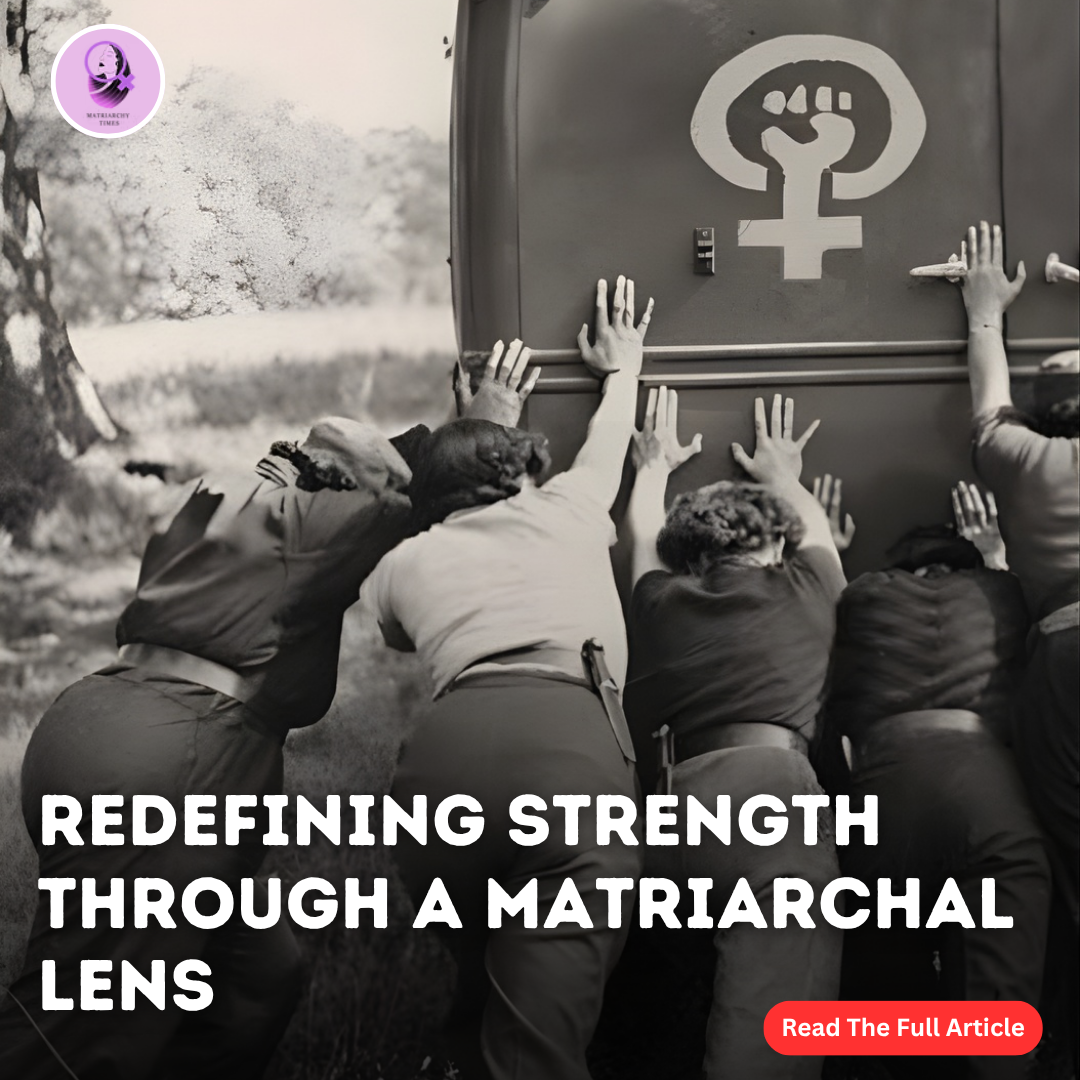
 There is a word that has always seemed too little for women, and that word is "strength."
For so long, society instructed us that it meant being tough, being competitive, or having to fight every fight like a solitary warrior. It asked us to reflect on a hyper-individualized, aggressive conception of power that never actually fit the profound, systemic ways we build, connect, and maintain life. What if real strength is not about being an iron wall, built to oppose and persevere, but in being the fertile ground, the vital, life-giving source through which the entire world sustains itself? This root power is the heart of what it means to be a strong, feminist woman in the contemporary world. It’s about taking on a matriarchal understanding of power that puts relationship, profound caregiving, and long-term vitality at centre stage, not as inferior characteristics, but as the most important sources of social energy.
We are not trying to simply overrule the previous systems and bring in a new, inverted hierarchy; we are establishing a new thing, a new foundational operating system for humanity, based on the common good and a profound sense of female interdependence. This revolutionary shift in perspective redefines success from personal domination to shared flourishing, and it is anchored in the quiet, unshrinking capability to maintain life, community, and hope alive on the long trajectory of history. It is the capability to maintain the web, keeping it intact and vibrant through every storm, a resilience born from her unshakeable obligation to the entire group.
 To understand this new form of power, we must look not to the king's castle, but to the forest floor. The forest's true resilience lies not in the height of the tallest tree, but in the unseen, subterranean miracle of the mycelial network. This silent, vast web of fungal threads connects every single organism, sharing nutrients, transmitting distress signals, and distributing resources to the struggling, ensuring that the health of the individual is always secondary to the health of the collective. This network is a living manifesto for interdependence, proving that a system centered on radical mutual aid and seamless cooperation is exponentially more durable than one built on ruthless, isolated competition. The patriarchal society, in contrast, insists on a vertical, towering architecture, a hierarchy that demands singular dominance and sees strength as the ability to cut oneself off from need.
This towering, competitive architecture is a fragile lie. It is the antithesis of the Matriarchal principle, which understands that isolation is a death sentence for any organism, and most certainly for a civilization. A woman’s strength, too long defined by a set of borrowed, male centric virtues, can only be authentic when it embraces this reality: to be connected is to be powerful. To provide sustenance and care for the network is the most critical form of leadership, one that demands a strategic foresight far deeper than any momentary act of aggression. Our current cultural mythology is saturated with figures of women who are either tragic victims, manic competitors, or solitary, weaponized goddesses who only act for personal vengeance or glory. These archetypes, from the scorned witch to the lonely warrior queen, are all models of isolation. They are reflections of a patriarchal fear of shared power, designed to keep women separate and vying for a single, small seat at a man's table
The Matriarch archetype is the necessary, revolutionary replacement. She is not a woman who has become "one of the boys" by hardening her heart; she is a figure who has transcended the need for male validation or competitive imitation entirely. She is not the vengeful goddess of myth, nor the 'Girl Boss' of corporate fantasy. She is the center of the web, the one whose power is derived not from what she owns or what she dominates, but from the simple, profound fact that she is the locus of connection. She differs fundamentally from the lonely Queen in that her authority is not absolute; it is consensual, earned daily
through her demonstrable commitment to the well-being of the entire group, and it is distributed outwards, enabling the power of others rather than hoarding it. This power is the quiet hum of the engine, not the loud, shattering explosion. It is the strength of the weaver, whose hands turn individual threads of human potential into an unbreakable collective cloth.
Her leadership style is not a command but a patient, deep listening that harvests wisdom from all members before reaching a decision that serves the long-term, multi-generational good. The Matriarch understands that a quick, top-down decision might solve a crisis today, but genuine collaborative decision-making builds the collective trust necessary to survive the crisis of tomorrow. Her role is to govern through care, to see emotional wisdom not as weakness, but as the most precise navigational tool for a complex society. Where patriarchal strength values conquest, acquisition, and the short-term flexing of individual will, Matriarchal strength values stewardship, sustainability, and the long-term protection of the environment and the community. The former seeks to establish personal glory over a pile of broken things; the latter seeks to grow a garden that will feed everyone, including those yet to be born. It is a fundamental choice between a strength that consumes and a strength that creates.
The necessity of choosing this Matriarchal style is not merely an ethical imperative, it is a practical, life-or-death argument for the entire species. The crises we face today ecological, social, and political are all systemic failures born from the patriarchal philosophy of unlimited individual expansion and domination. That old strength, the one that asks us to be cold and unforgiving, is precisely the reason the planet is burning and our communities are fraying. It is a model of power that is fundamentally unsustainable because it ignores the iron law of the mycelial network: if the roots are unhealthy, the entire forest will fall. Matriarchal strength, by prioritizing the resilience of the whole, offers the only realistic template for survival. It replaces the logic of scarcity with the practice of abundance, showing that shared resources grow, while hoarded resources decay. It is the recognition that the highest form of power is not found in the tools of war, but in the enduring, life-affirming technologies of peace, healing, and reconciliation.
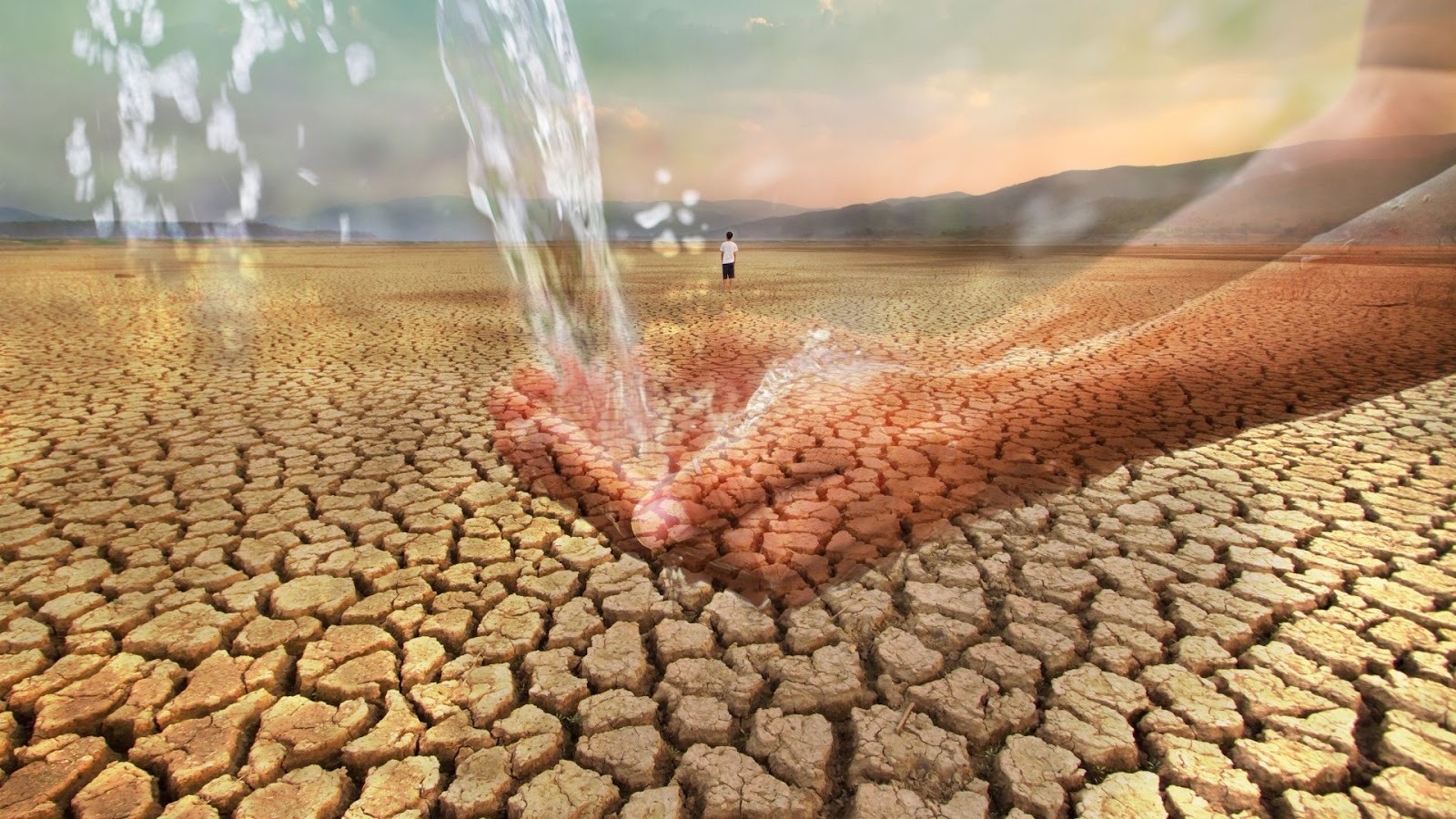 This shift is a revolution of focus, demanding that we finally lay out practical arguments for why this change is necessary for both women and for society generally. For women, it is the pathway back to an authentic, powerful selfhood unburdened by masculine expectation. It frees us from the exhausting obligation of having to prove we are "tough enough" by destroying something, and instead validates us for the profound, generative act of maintaining life. For society, it is the antidote to the current epoch's self-destructive drive. A system led by a Matriarchal principle would not wage endless war over oil, but would pour its energy into clean water and secure housing for all. Its ultimate currency would not be gold, but collective health and the richness of human potential realized. It is the profound, necessary choice to subordinate the fleeting personal gain of a few to the enduring, beautiful common good of all.
For too long, the idea of a woman-centered system was dismissed as a utopian fantasy, a myth that could never be built on the scorched earth of reality. Yet, the proof is not in a dream but in history itself. The world is dotted with enduring examples of matrilineal and matriarchal cultures from the Mosuo in China to the Minangkabau in Indonesia, to the Iroquois Nation of North America standing proof that systems where women hold center as the focus of political, social, and economic power are completely possible, peaceful, and
remarkably durable. They are not perfect, because nothing human is, but they demonstrate the core principles of relational power and collective responsibility in action. They are the essential stories that we must tell and share to radically reimagine what strength could even be for all human beings, regardless of gender, giving us a realistic jumping off point for the rest of humanity to start following the example of a system that actually works.
 To truly inspire others to embrace this deep, abiding resilience, we must change the language and cultural expectations surrounding it. It is not about becoming somehow "fearless" or "untouchable"; it is about resilience, the deep capacity to spring back from despondency, to learn humbly from every mistake, and to continue rising with grace and renewed purpose. It is a strength that finds its quiet fury in the refusal to be extinguished, not in the power to crush. Remind all the women you can that it is time to start living the core values of matriarchal power in their daily lives: deep listening, genuine collaborative decision-making, and passionately subordinating the common good to personal gain. Let them know that their self-knowledge, their intuition, and their profound compassion are not weights or distractions, but their highest and most necessary weapons.
Let them recall that the ultimate goal is not to be one queen on a beautiful, isolated throne, but to be the fertile ground in which new, ethical leaders, new sustainable ideas, and new, healthier ways of living can continually sprout for everyone in the network. We do not seek to be the final word, but the perpetual beginning. Your strength, now embodied in this holistic, relational way, is a gift not just to yourself, but to the countless generations yet to come, who will follow in your footsteps and draw their own enduring, generous strength from your example.