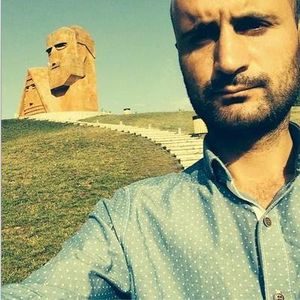

On September 19, 2023, Vladimir Mikayelyan was displaced from the village of Vaghuhas in Karabakh/Artsakh; he reached Stepanakert, and then, on the 26th, he was forcibly displaced along with everyone else. He initially spent six days in Armenia's Amasia then traveled to Russia's Kislovodsk, where he lived for six months. Afterward, he stayed for six months in the village of Svarants, in the Armenia's Syunik Province, before finally settling in the neighboring Tatev village, where he continues to live to this day. In short, he followed the same "route" well-known to the Karabakh/Artsakh people Artsakh. "I was earning good money in Kislovodsk, but I don't speak Russian, so I came back," he says.
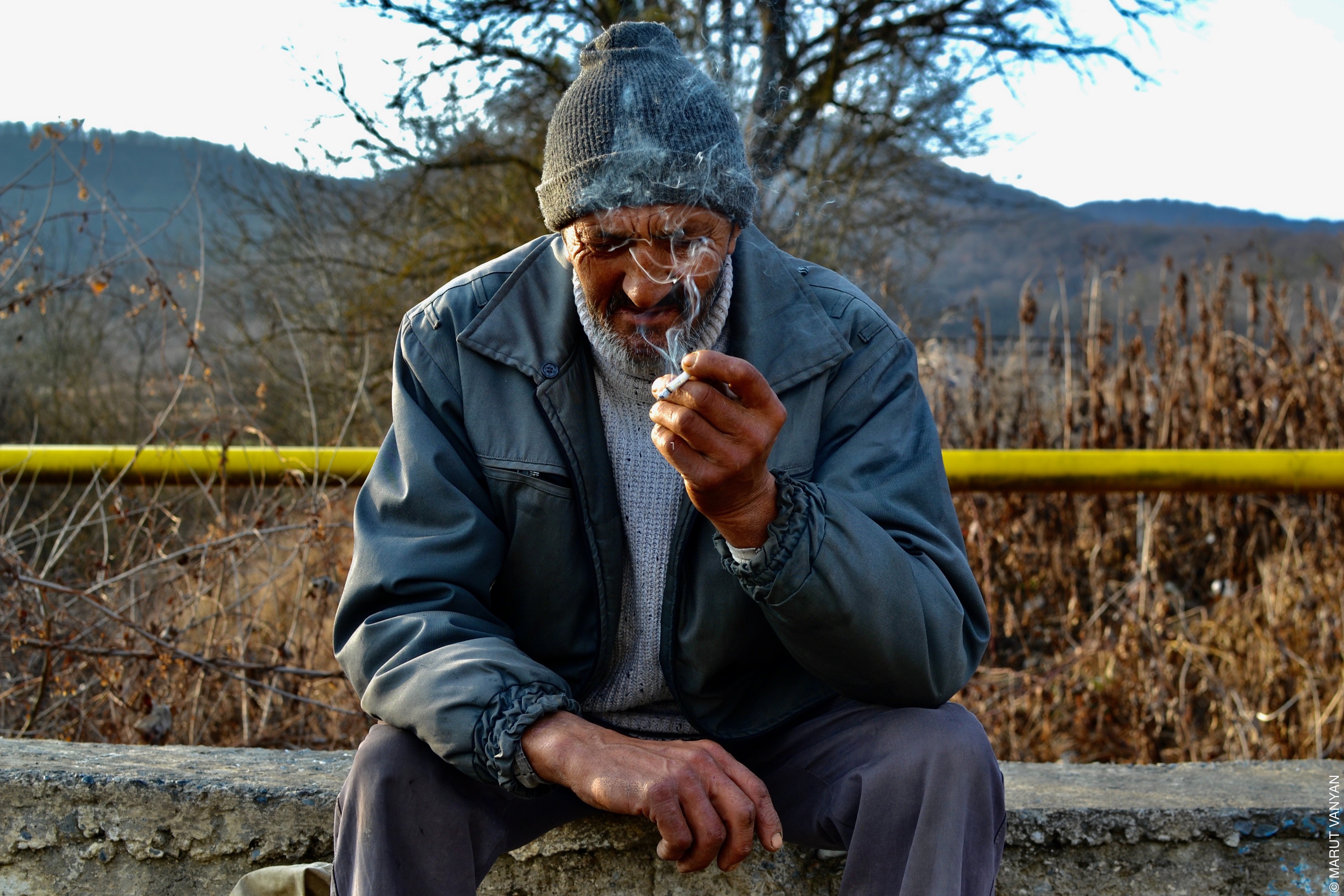 Vladimir. Karabakh/Artsakh, 2023 | Marut Vanyan
Vladimir regained his Armenian citizenship in the summer of 2025 and obtained a “new” Armenian passport. From a bag full of documents, he pulls out two blue passports of the Republic of Armenia to show me. He had kept the passport he received in Karabakh/Artsakh with such care that it was indistinguishable from the new one. “Not that one, this one! No, not that one, this one!” we say, getting a bit confused as we open them and check the dates.
I “provoked” Vladimir by asking if he had heard about the new biometric passports. “No, what passports?” he asks. “Well, they’ve issued new red passports; eventually, we’ll all have to get one and pay thirty thousand drams,” I say. “No way. I don’t want one,” he retorts, his expression a mix of firm resolve and irritation, or perhaps both. “But it’s going to be mandatory,” I say. “Where am I supposed to get the money?” Vladimir asks, looking at me as if I were the one to blame, or as if he were expected to pay me.
While many Karabakh/Artsakh Armenians have faced bureaucratic hurdles in obtaining a "new passport," things have been even more difficult for Vladimir. "At the Ministry of Labor and Welfare and the Goris Municipality, I was told I had to go to Yerevan to get a new Armenian passport. Believing them, I sat the car and traveled to Yerevan. 'Who sent you here? Isn't there a passport office in Goris?', they asked with surprise in Yerevan. In the end, the round trip cost me sixty thousand drams (about $200)," says Vladimir.
He and his wife maintain that, due to conflicts with the Ministry of Labor and Welfare's office in Goris, officials decided to "settle a score" by creating difficulties for them.
Vladimir’s wife, Ruzan, had also not heard about the "red passports," as their home in Tatev has neither internet access nor a television. There is no washing machine or refrigerator either, since they lack a kitchen and a bathroom. The outhouse, a pit dug by Vladimir, is located outside. Having spent his entire life wielding a shovel and a scythe, Vladimir’s hands have become bony and somewhat square-shaped from the physical labor, a stark contrast to his thin arms.
Vladimir has lived with a second-group disability since childhood, and a new condition, a hernia, has recently developed. "It was in October. Sharp, sudden pain flared up in his abdomen during the night; I called an ambulance, and he was taken to the Goris Medical Center," Ruzan recalls. “The surgeon ‘put the hernia back in place,' forbade heavy physical works, and said that if it recurs, surgery will be necessary,” says Vladimir’s wife.
In his native Vaghuhas village, everyone knows Vladimir as "Dimo," but in Tatev, he is called Vladimir or Valod.
"Do you remember how, during the blockade, we walked three kilometers from your village together, all the way to the banks of the Tartar River?" I ask. He didn’t recall it until I showed him the photographs. "Ah... that’s the church..." he says, staring fixedly at the screen. "And didn’t you take a picture of my home? Are Azeris living there now? And isn’t this the home of Karo, the projectionist, the one whose son, Gisho, was killed?" Vladimir asks as I show him photos of his village.
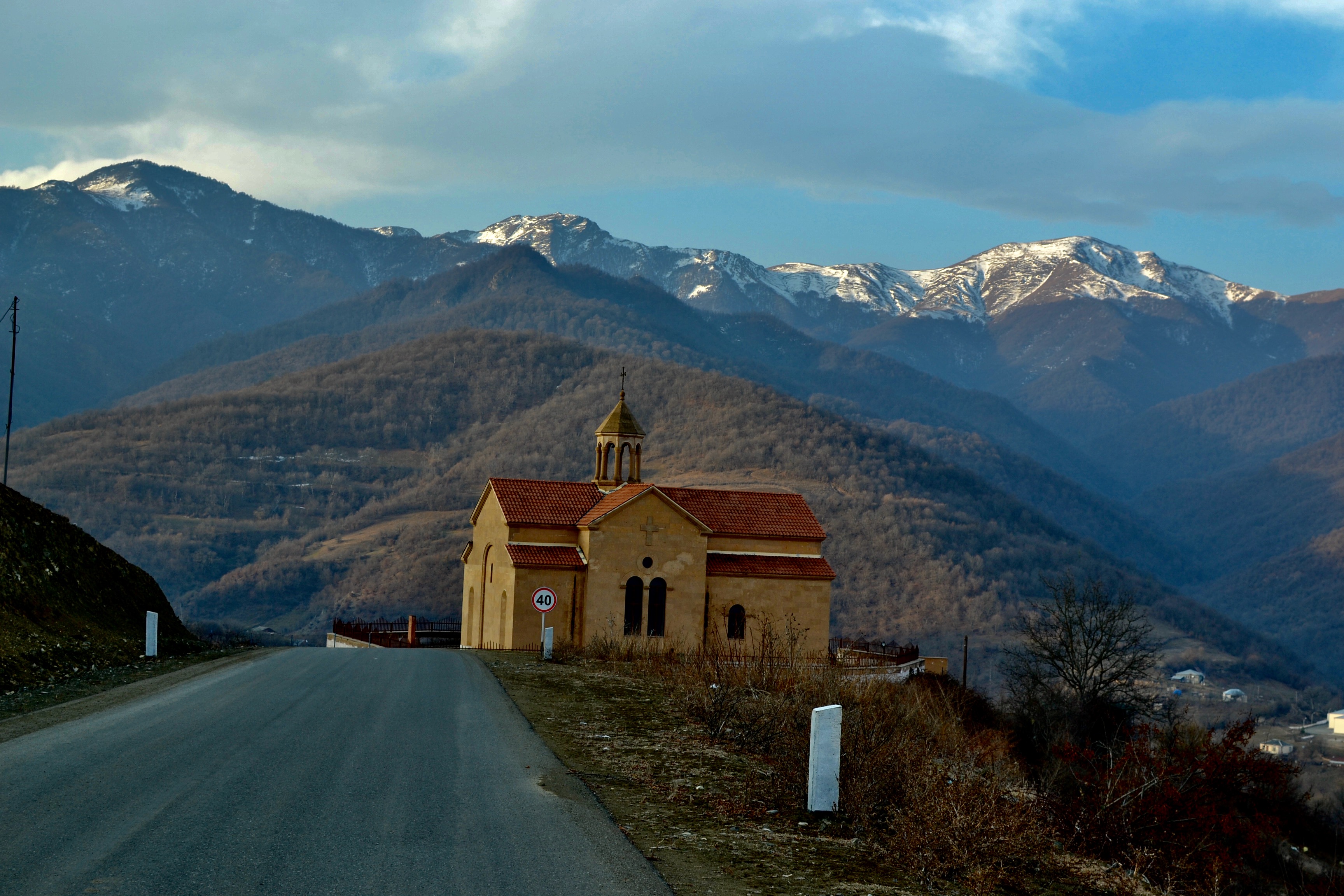 Vaguhas village church. Karabakh/Artsakh 2023 2023 | Marut Vanyan
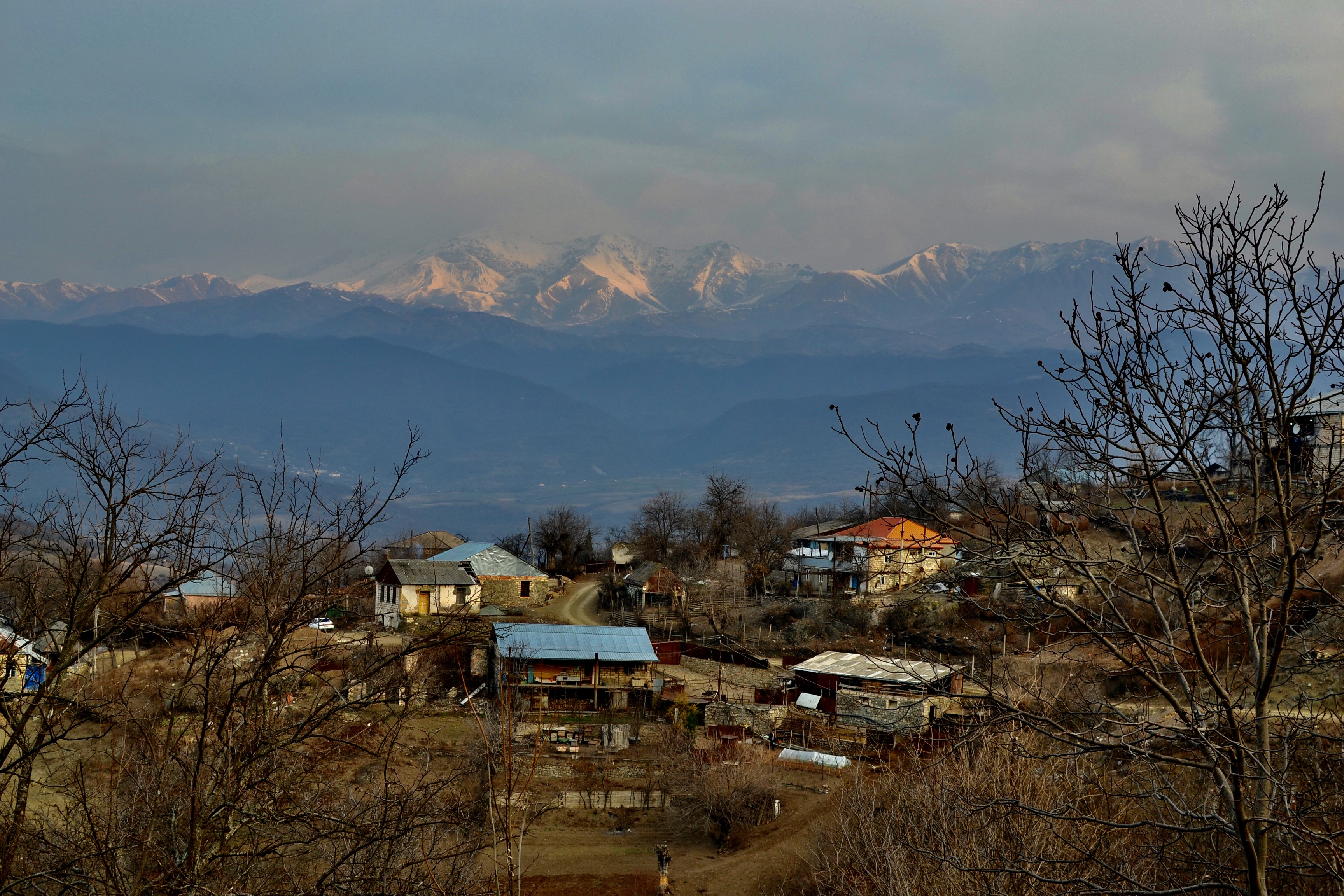 Vaghuhas village of Martakert Region 2023 | Marut Vanyan
Vladimir doesn’t know how to thank the people of Tatev. The house where he and his wife currently live was provided by the community, a village home that had long stood empty. "The owner told me, 'As long as there’s stove smoke rising from our ancestral hearth, we don’t want anything from you,'" Vladimir says, full of gratitude. He lists the names of the Tatev residents who helped him, careful not to leave anyone out. "You see that cooking oil Ruzan poured into the pan? The church, Harout offered. Father Mikayel told me, 'Just let us know whatever you need,'" he says, expressing his thanks, then adds with an ironic joke: "In Tatev, they help me; at the Social Security office, they just 'iron' me out."
Vladimir gathers goods from the surrounding forests, thyme, rosehips, walnuts, and whatever else nature provides, and sells them near the Tatev Monastery, earning his livelihood this way. He recounts that on one occasion, he barely managed to escape Azerbaijani captivity after having gone into the forest to gather these natural offerings. “I got lost; I’m not familiar with the area. I looked up and saw two huge men holding large black phones (probably walkie-talkies), and as soon as I saw that, I ran as fast as I could,” he recounts, visibly shaken, while continuing to sift the wild thyme. “It’s a thousand drams ($3),” he says, scooping the thyme into two large cups and placing them inside a plastic A4 transparent files. He and his wife get groceries on credit from the village shop, paying off the debt once their social assistance payment arrives on their bank card. “Ruzan, check again, the money usually comes in on the third of the month,” Vladimir instructs his wife.
“We spend money on bread every single day; we just can’t keep up. If only I had an electric oven, I could bake bread at home,” says Ruzan. Before going to sleep, they use a small electric heater to warm the house as best they can, then switch it off and get into bed.
So, why was Vladimir excluded from the support program?
Vladimir pulls documents and evidence, one after another, from a large plastic bag, unable to understand why he has been excluded from the state support program.
He had been a beneficiary of this program until September of 2026.
His wife, Ruzan, asserts that staff at the Goris branch of the Ministry of Labor and Social Affairs treated them with discrimination and spoke to both her and Vladimir in a rude manner. Ruzan herself is from the community of Khndzoresk in Syunik. She says that officials at the Social Welfare Office told them they would need to get a divorce through the Civil Registry Office (ZAGS) if they wanted Vladimir to remain eligible for the support program. “They pressured us to get a formal divorce, and told me I should demand a share of my parents' home. What could our marriage certificate or my parents' home possibly have to do with Vladimir’s eligibility for the government program? How is it that he has been receiving benefits under this program all this time, and now they’ve suddenly decided to cut him off? Show me the government resolution! When I pointed this out at the Social Security office, they just stared at me—they had no answer. In any case, they told him, ‘You won’t be getting any support; you won’t see a penny, why do you keep coming here?’ When I speak up in Vladimir’s defense, they ask, ‘Why are you bringing your wife along?’ But how is it that all the other beneficiaries continue to receive support, while Vladimir has been cut off?” asks Ruzan, visibly agitated.
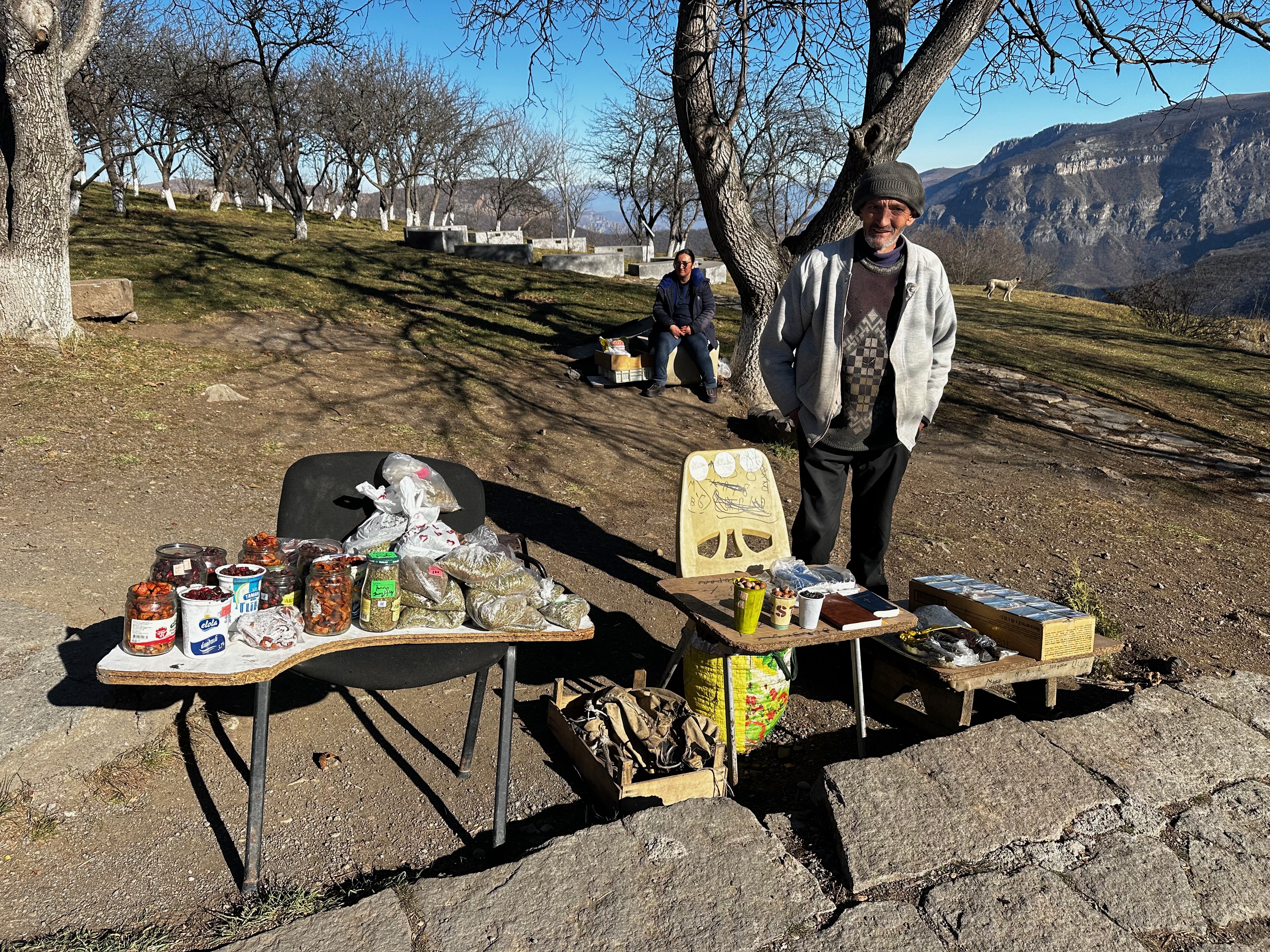 Vladimir and his wife Ruzan next to the Tatev Monastery