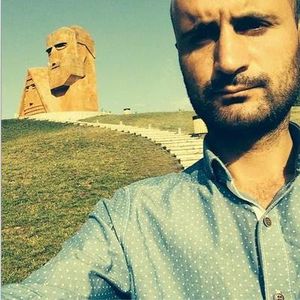

On September 19, 2023, I had hidden with my laptop on my lap in my four-room Soviet-era apartment in Stepanakert. I had been living there alone since my two sisters and brother got married. After the 44-day war in 2020, the sound of explosions had triggered a sort of defensive instinct in me; that is why I was sitting next to the concrete pillar that supported the four floors above. It still haunts me to this day (recently, in a church in Goris, I saw a child with a balloon approaching the lit candles; I knew it was going to pop, yet my acoustic startle reflex kicked in.)
It was midday. Just then, thunderous explosions began to blast out, followed by the sounds of drones and Kalashnikovs. Sirens started wailing in the air. Terrified women and children were running from the upper floors down to the basement—the very same basement where I had spent my childhood during the First Karabakh War in the early 90s. The same thing was happening all over again, decades later. At that moment, I received a call from the BBC: "Can you tell us what is happening in Nagorno-Karabakh?" they asked. I hold the iPhone out from the balcony and say, “Listen for yourselves.” “Please go to a safe place,” says the BBC journalist.
Instead, I walked to the Brothers' Cemetery—the location closest to the city of Shushi, which had come under Azerbaijani control following the 2020 war and from where Stepanakert, the capital of Nagorno-Karabakh, was being shelled. I was filming while hiding behind gravestones and cypress trees. I had previously been to the very spot where the shells were landing, and I knew those were Armenian combat positions tasked with defending the capital. It was clear to me that no one would survive that bombardment. I was not mistaken. The next morning, I met a soldier (an old man) carrying a machine gun with the bullet chain slung haphazardly over his shoulder; who said, "Everyone has been killed."
The sound of artillery blasts was followed by the staccato rattle of Kalashnikovs. It was clear that close-quarters combat was underway in the gorge.
There was no electricity in the city, and everyone was in the basements; the city was lit up only by the explosions of artillery shells that continued throughout the night.
My cousin and I had gone to charge our phones using diesel generators when, on our way back, shells began exploding around us. "Stay close to the wall, stay close to the wall," I kept urging.
When we got home, children and moms in the basements were wailing and weeping. We went up to the third floor and fell asleep to the "tune" of the artillery, deluding ourselves with the hope that it was the Armenian army’s artillery firing and that there was no danger. But we were simply too exhausted; sleep overcame us.
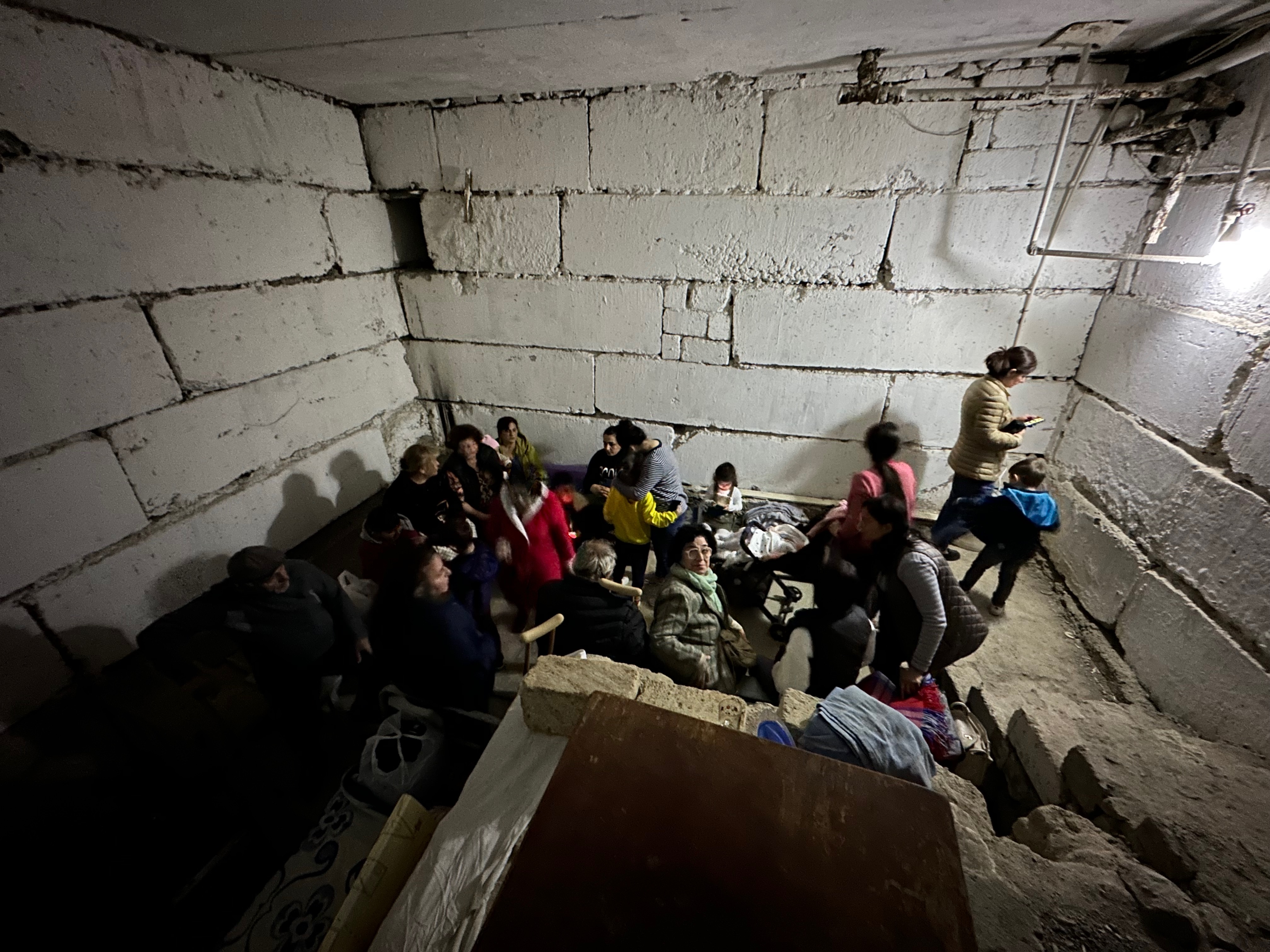 Stepanakert, 19 September 2023 | Marut Vanyan
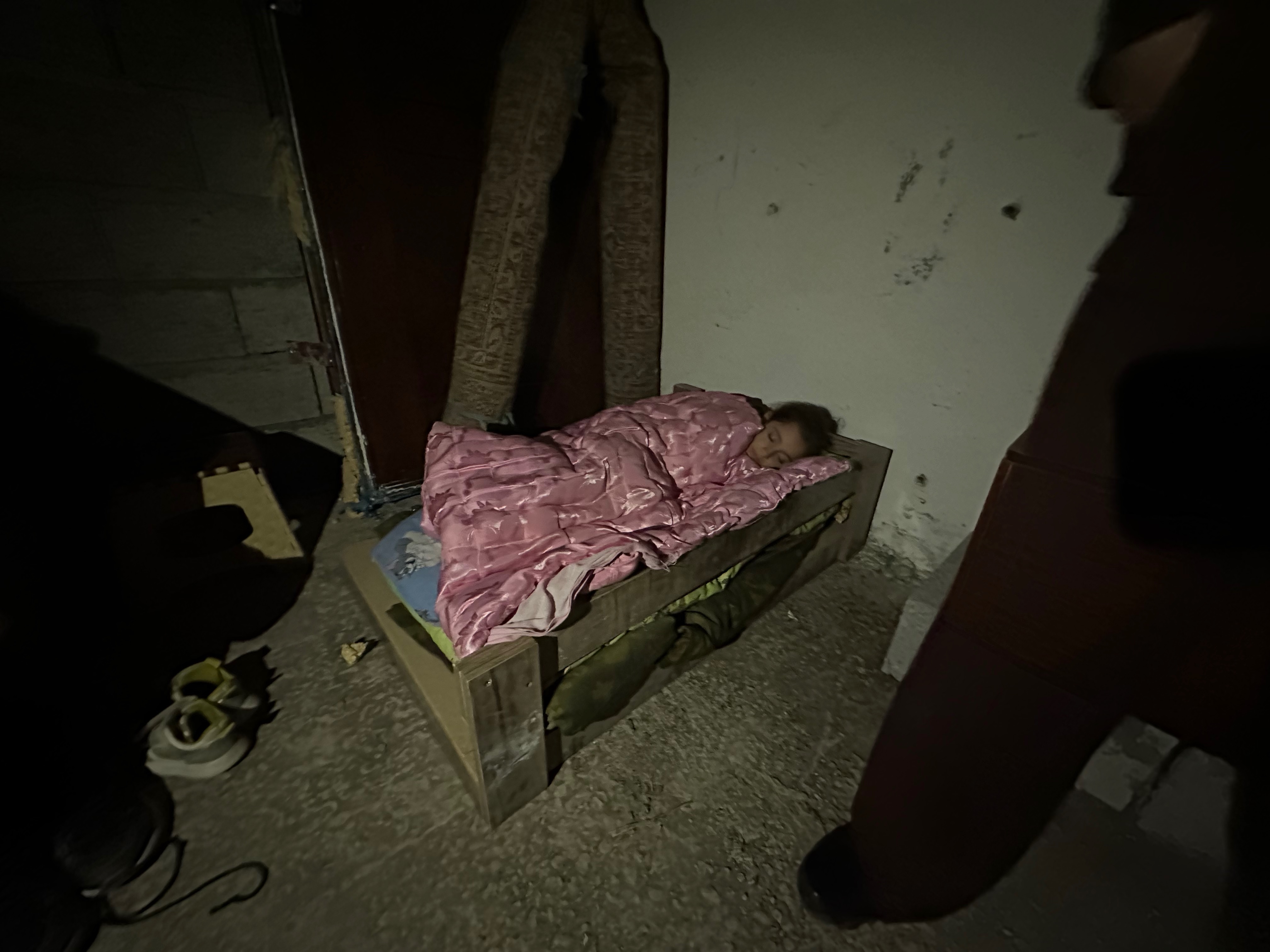 Stepanakert, 19 September 2023 | Marut Vanyan
Erica (the sleeping little girl) is currently in Abovyan, next to Yerevan. She says she remembers and misses their home in Stepanakert and wants to go back there. Her mother, who is originally from Abovyan but had been living in Stepanakert, says that it was in Stepanakert that she felt good and free. "I was breathing freely there; I even miss the days of the blockade," she says.
The shelling, which began around noon on September 19, continued until the end of the following day.
Unlike during the 44-day war of 2020, in 2023 Russian "peacekeepers" barred foreign journalists from entering the region. Nevertheless, they would confirm that in 2020, hospitals, the maternity, kindergartens, and schools in the capital, Stepanakert, were shelled. The same occurred in 2023. This is what the city center looked like on September 19, 2023.
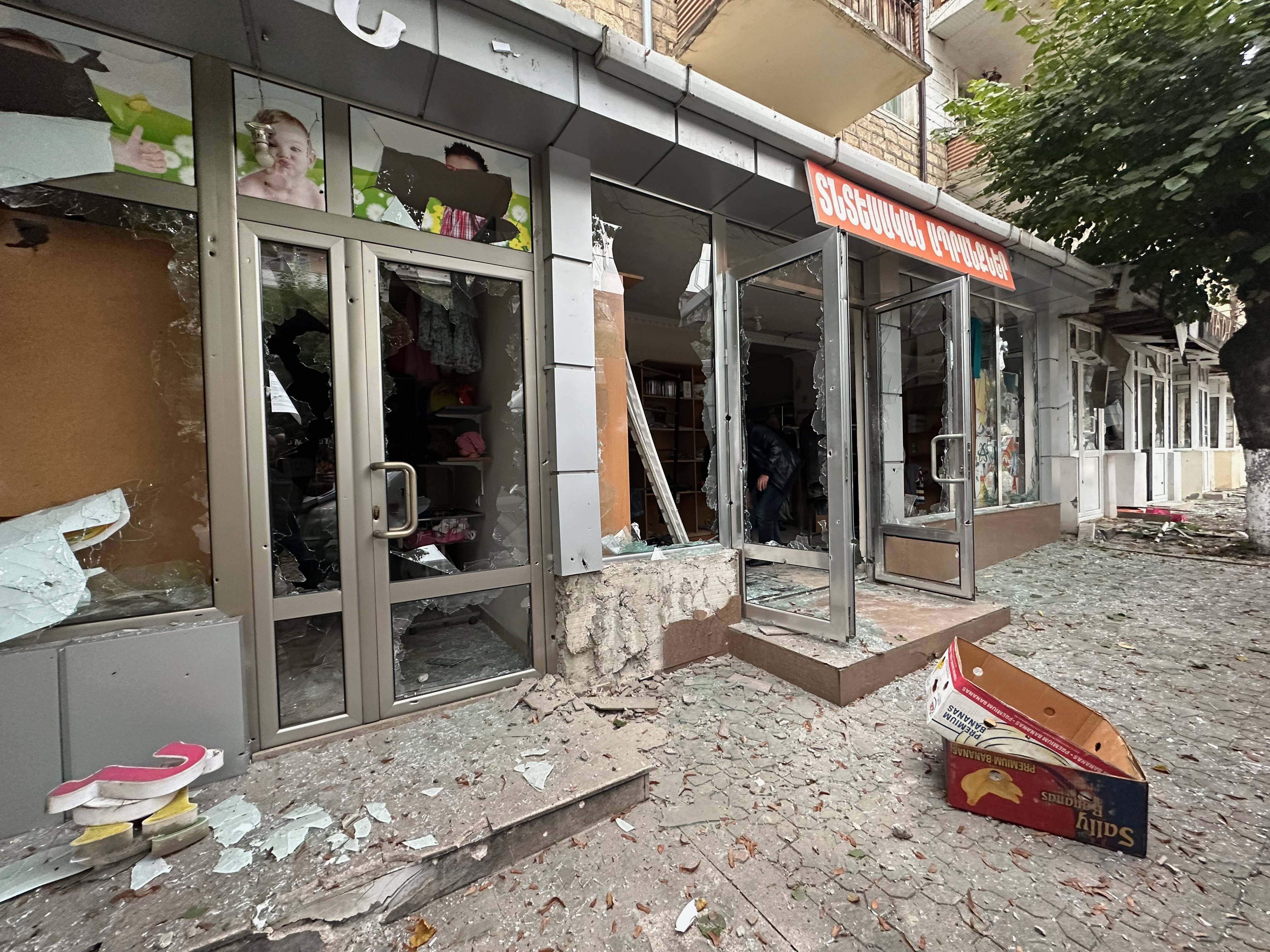 Stepanakert, 19 September 2023 | Marut Vanyan
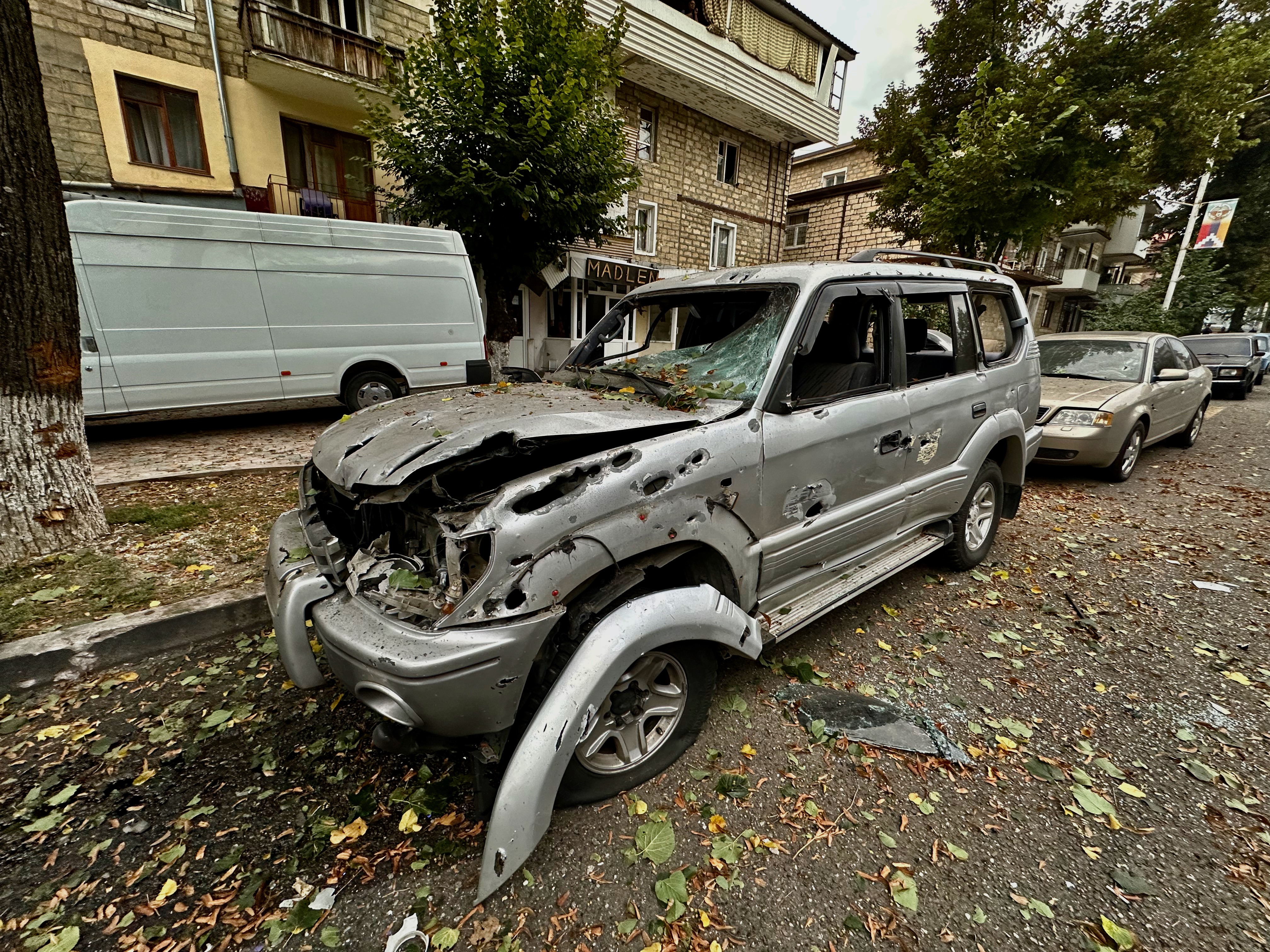 Stepanakert, 19 September 2023 | Marut Vanyan
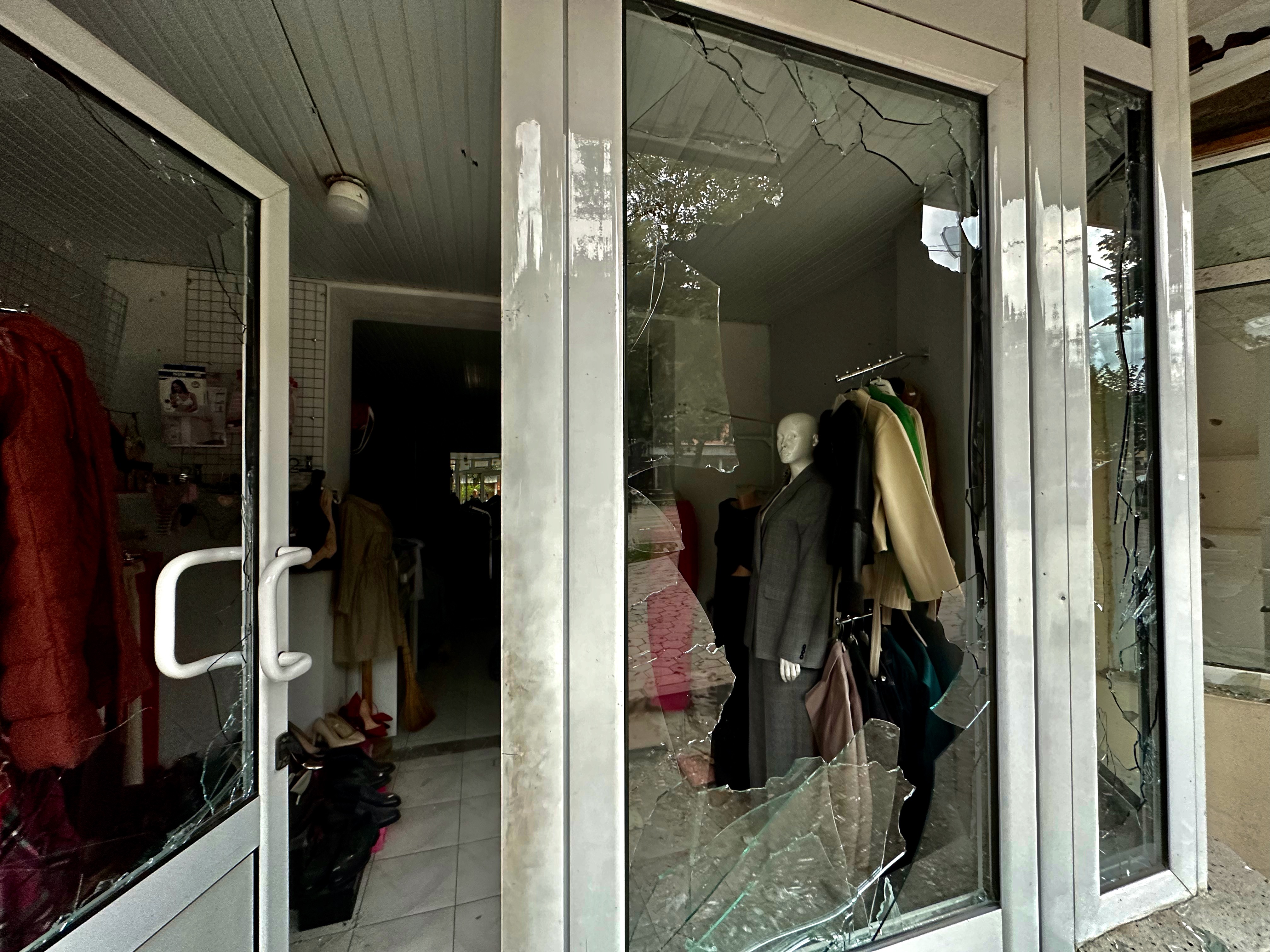 Stepanakert, 19 September 2023 | Marut Vanyan
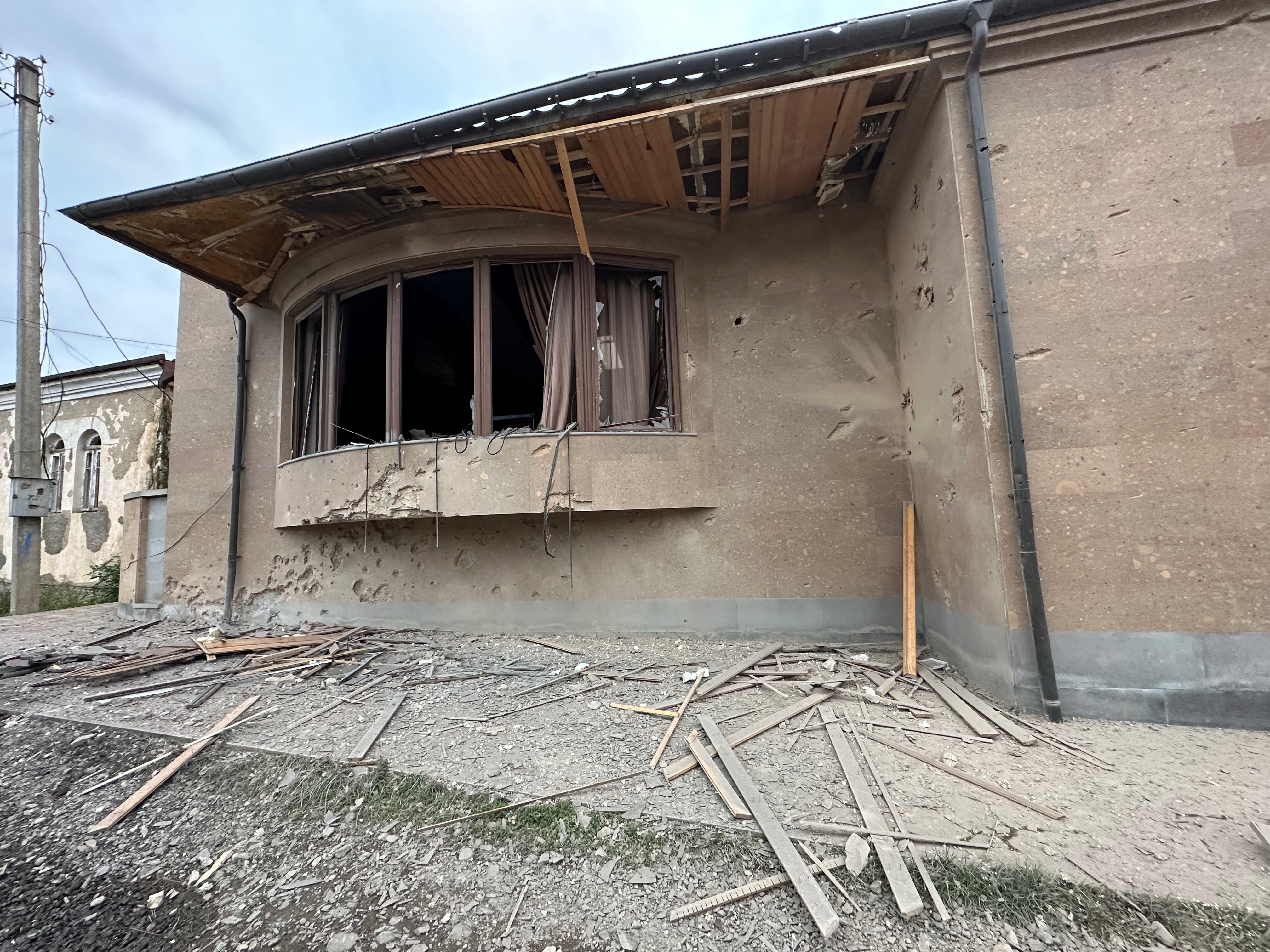 Stepanakert, 19 September 2023 | Marut Vanyan
It was no longer safe to go to the outskirts of Stepanakert; the area had fallen under the control of Azerbaijani troops. At night, campfires glowed in the nearby forests. Residents had gathered in the church basement. What do these children have to say?
-- Hello, children.
-- Hello.
-- Where have you come from?
-- We came from home.
-- Why?
-- Because there is a war.
“The windowpanes have shattered,” says their grandmother. “And the houses have collapsed,” adds her grandchild.
The suburbs of Stepanakert had already become under the control of Azerbaijani soldiers. Residents of the neighbourhoods had been evacuated and had taken shelter in the basement of the Stepanakert church. This is the very same Holy Mother of God Cathedral that the Azerbaijani authorities have demolished recently.
I tried to get as close as possible to that neighborhood—where my sister’s house was located, too. It was a feeling very much like watching horror movies when I was young. My legs refused to move. The houses were completely empty, and the shops, naturally, were closed. Only the rare car or Russian peacekeeper military vehicle would pass by.
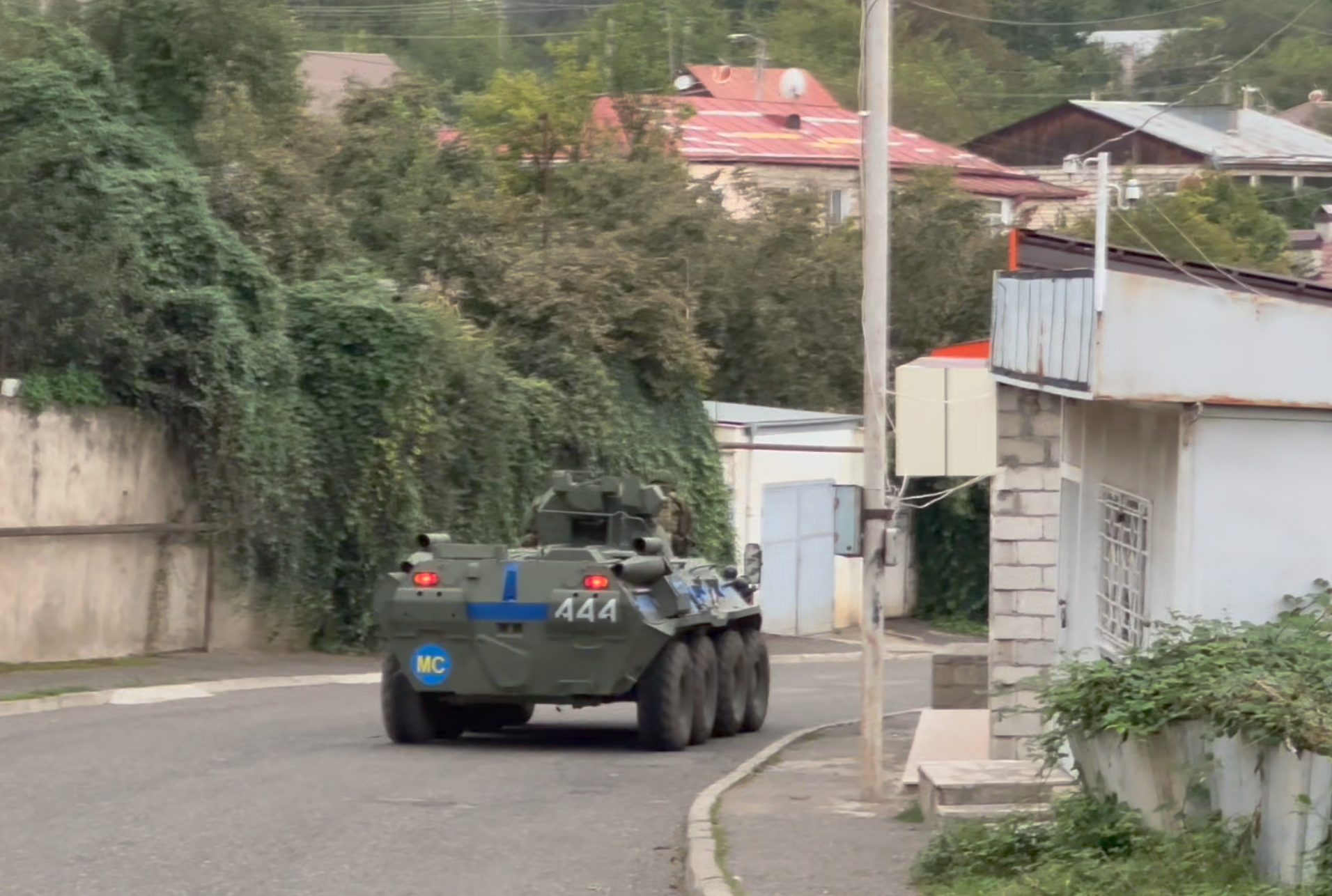 22 September 2023, Stepanakert. Snapgrab from a video | Marut Vanyan
The reservoir supplying water to the capital city was located in an neighbourhood that had come under Azerbaijani control. Rumors circulated at the time that they had thrown a cow into the reservoir, poisoning the water. Even though the story was untrue, people were still afraid to drink running water and instead collected water in plastic containers from nearby water sources.
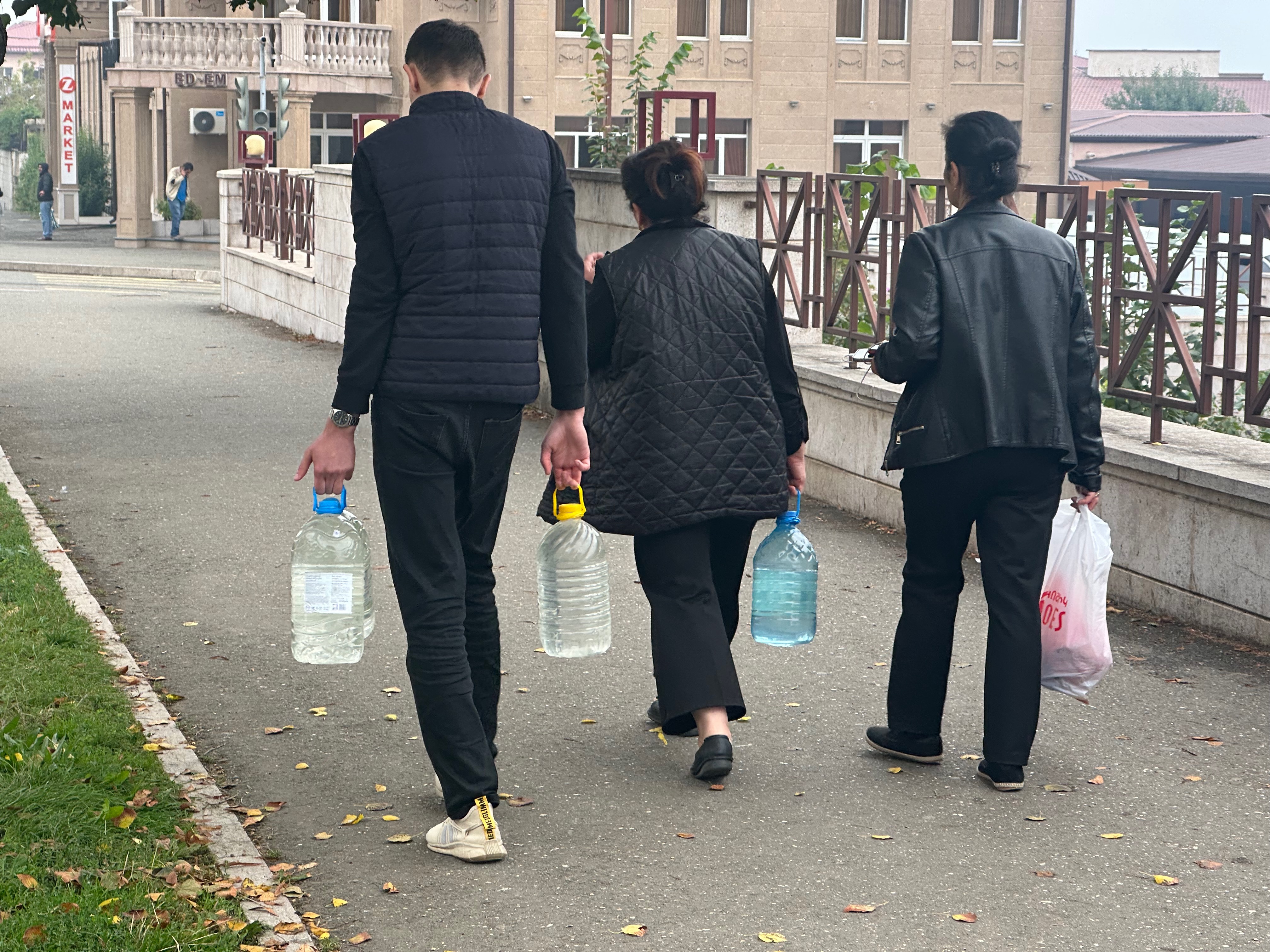 Stepanakert, 19 September 2023 | Marut Vanyan
Essentially, the capital, Stepanakert, was the only part of Armenian Karabakh/Artsakh that remained. Almost all the villages and settlements had come under Azerbaijani control. Villagers reached the capital however they could. They were placed in schools—like this grandmother, who has to sleep in this "bed" made from school chairs.
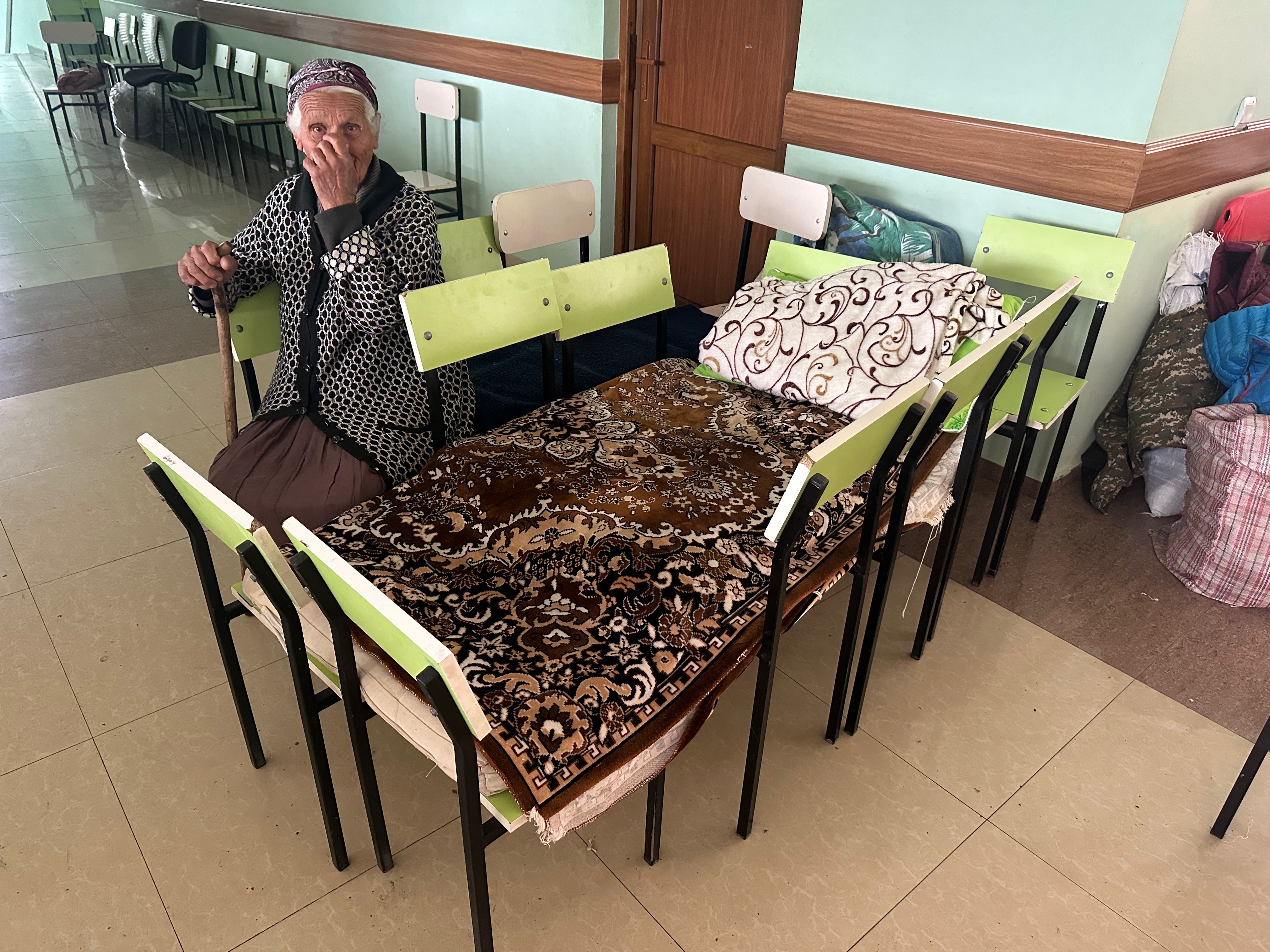 22 September 2023 | Marut Vanyan
My neighbor, Mrs. Venera, has placed some salt on the ground on a plate right in front of our apartment, supposedly to bring happiness and good fortune. Anyway, I am not superstitious.
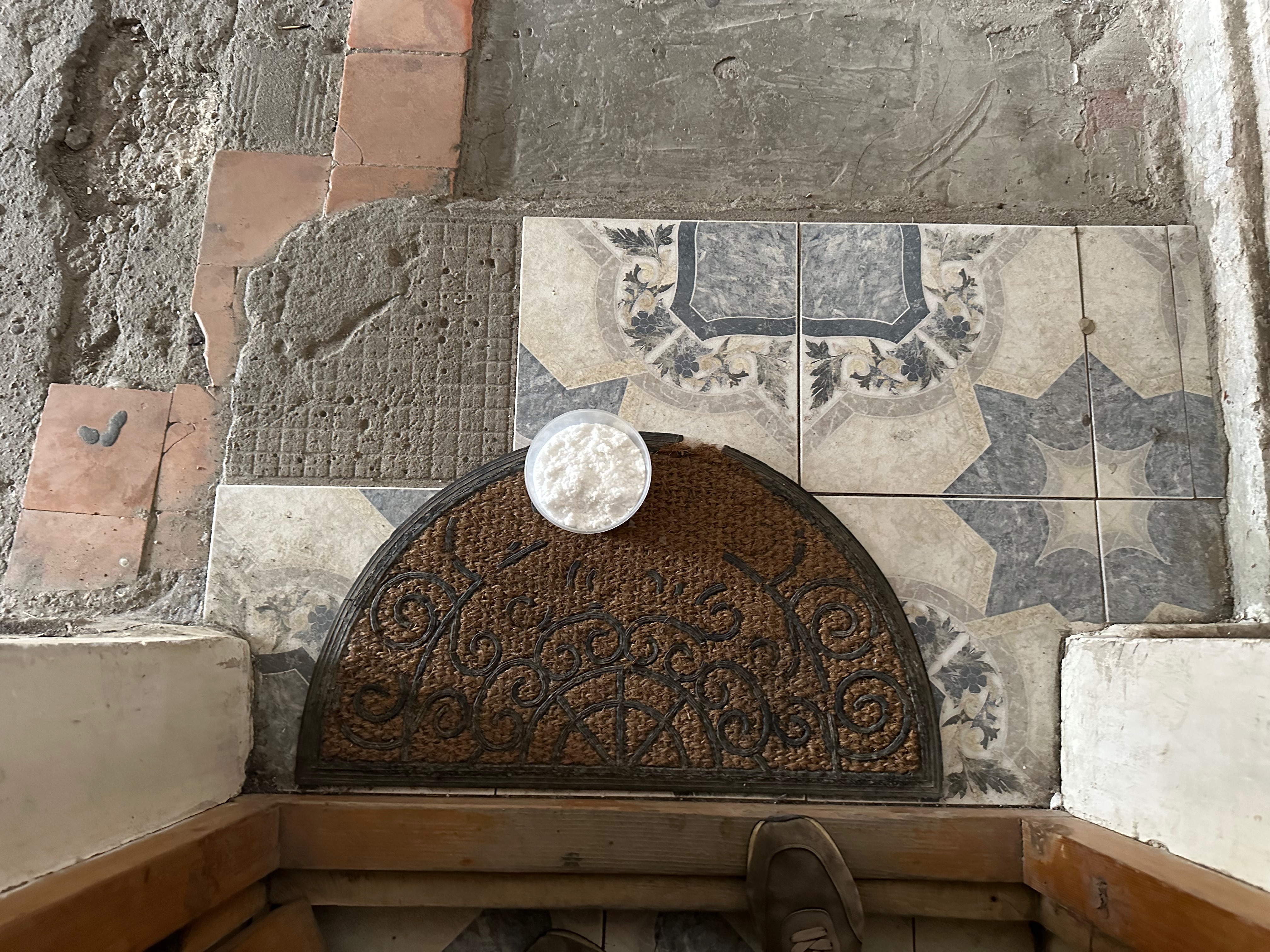 23 September 2023 | Marut Vanyan
The funeral of a little child who died from the explosion of an artillery shell.
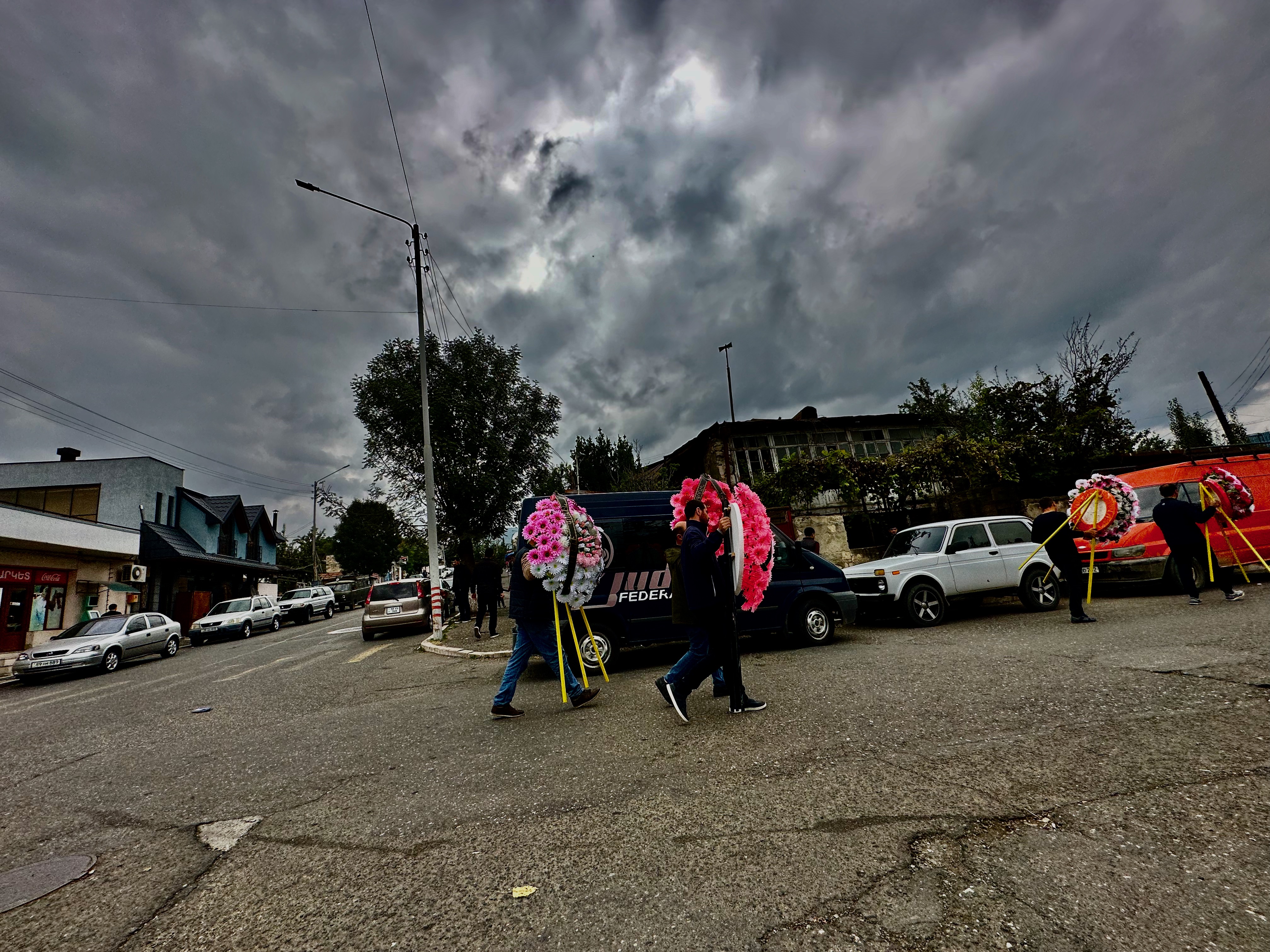 23 September 2023 | Marut Vanyan
Life had become unbearable; the last food supplies were running out—the only things left were grapes or potatoes that the villagers had somehow managed to bring into the capital. The city was deserted; there was no roaring of motors, and only the echoes of people voices and the barking of dogs rang through the streets. The tolling of church bells grew ever louder. Appeals to the UN and other international organizations yielded no results; the only remaining "tribunal" was God. Everyone shared a single prayer: "Deliver us from this terrible plight."
The priest was trying to encourage people with his joke: "Have you eaten today?"
Howeveve, It is hard to kill one's hunger with a small piece of lavash dipped in wine.
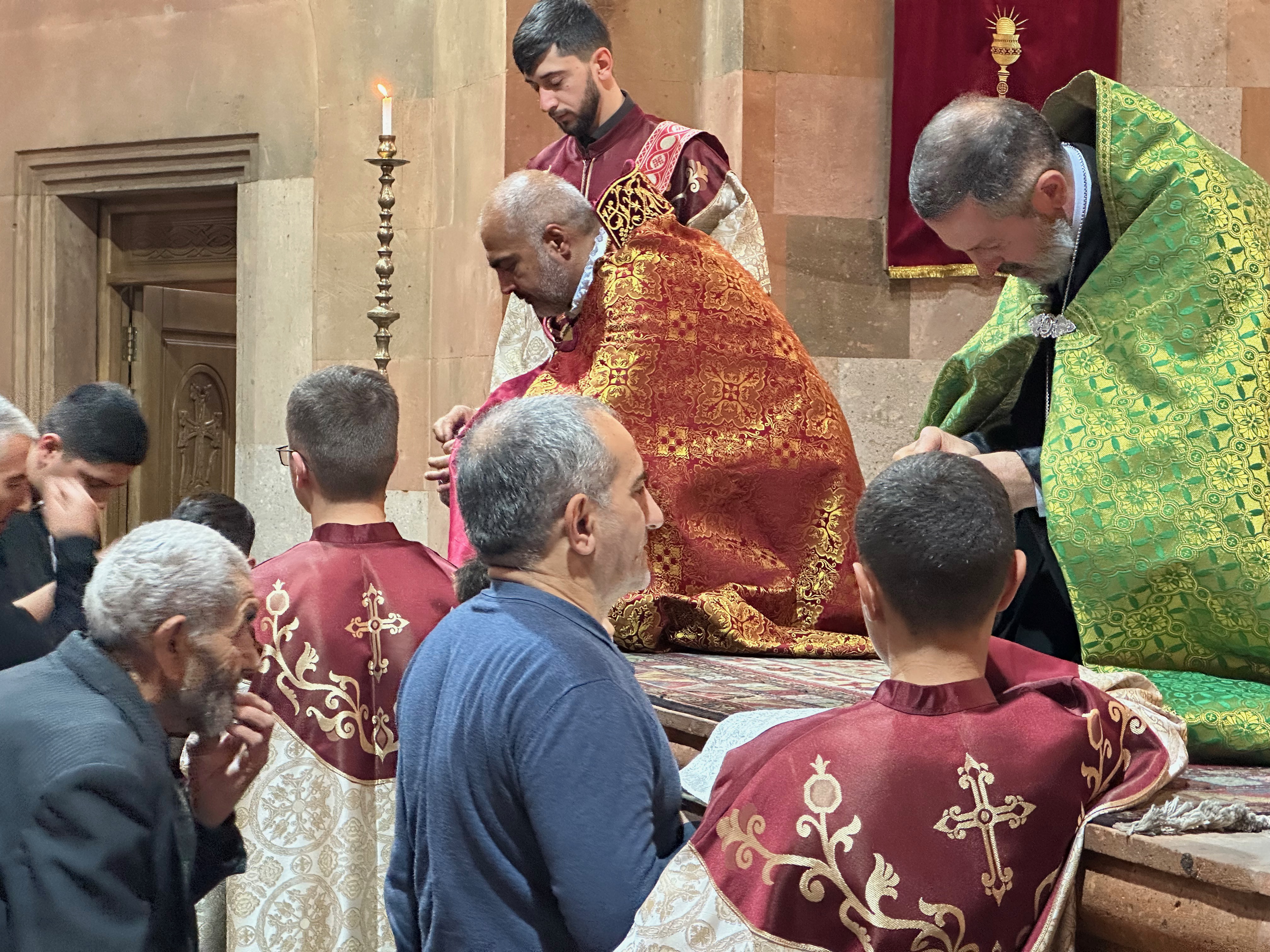 Stepanakert. 17 September 2023 | Marut Vanyan
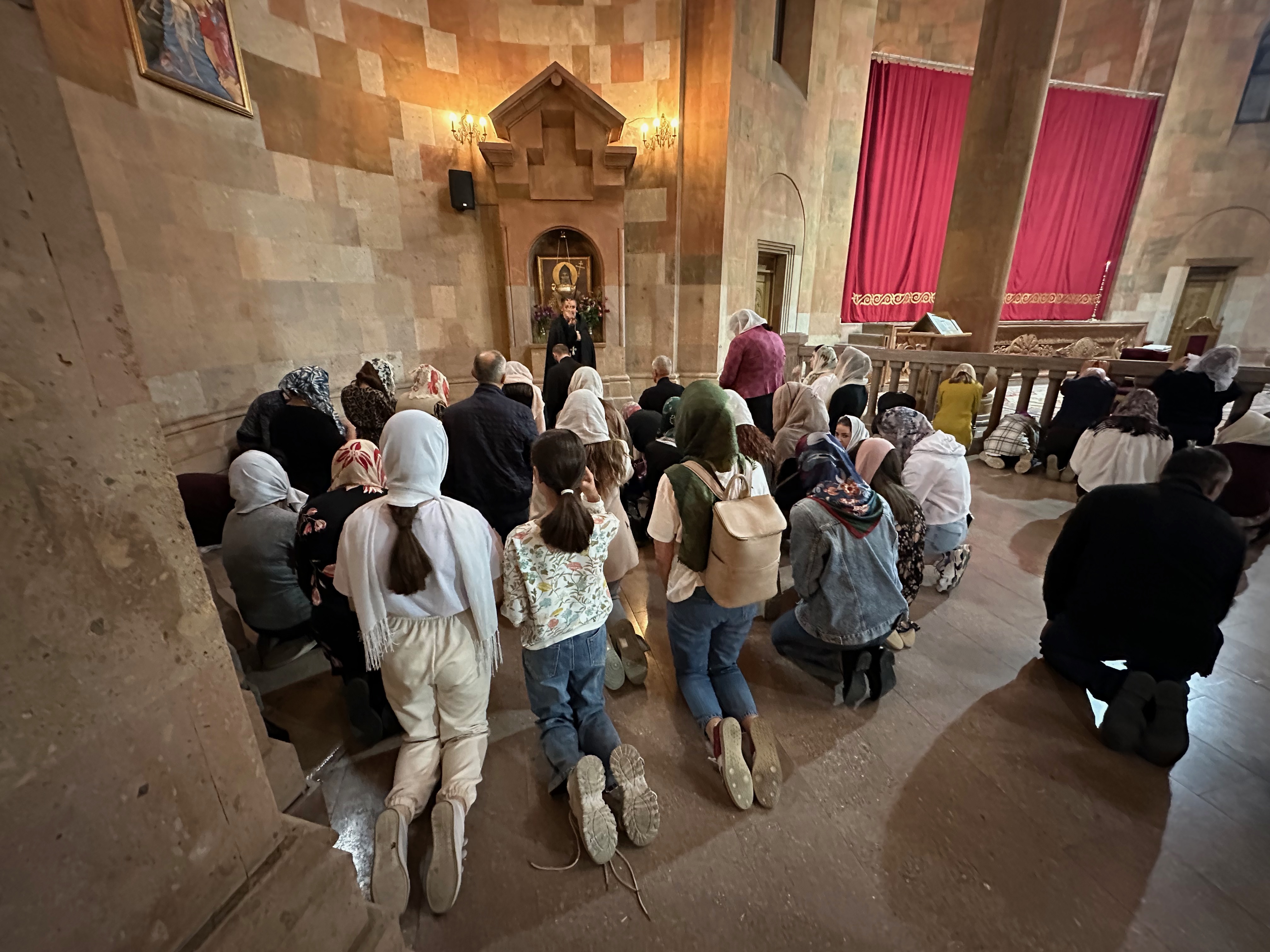 Stepanakert. 17 September 2023 | Marut Vanyan
Out of pity, people would let their dogs free; the animals would sniff through the trash bins but find no bones. Gaunt dogs with their ribs showing roamed the streets everywhere.
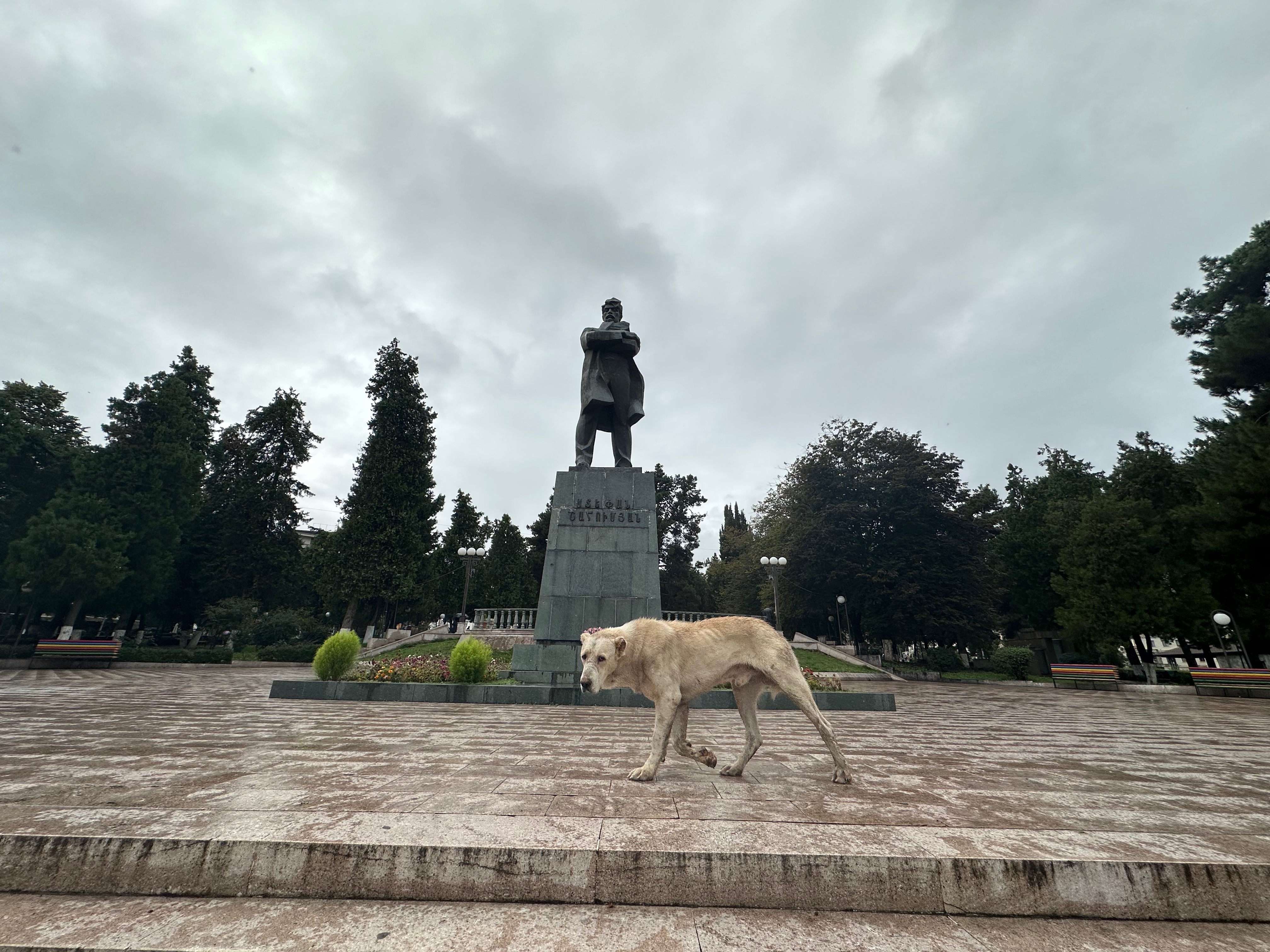 Stepanakert. 17 September 2023 | Marut Vanyan
Stepanakert Hospital
This was the only place with electricity, and the hospital is located right next to the cemetery, on the Shushi-Stepanakert highway. I was there charging my phone. Battles was countinuing, wounded soldiers were constantly being brought in. When I was charging my phone, there was no one inside. The last person I saw was a nurse who, in a state of panic, was talking on the phone to her daughter, saying that everyone was leaving... Computer monitors had been placed face-down on the tables so that the blast wave wouldn't break them. A moment later, a doctor came up from the hospital basement—wearing bloody medical gloves—and angrily asked me, "Who are you? What are you doing here?" I think he was actually glad to see me, even though he spoke harshly. "I’m a journalist, and I’m charging my phone, doctor" I replied. "You’d better go down to the basement and help," the doctor said.
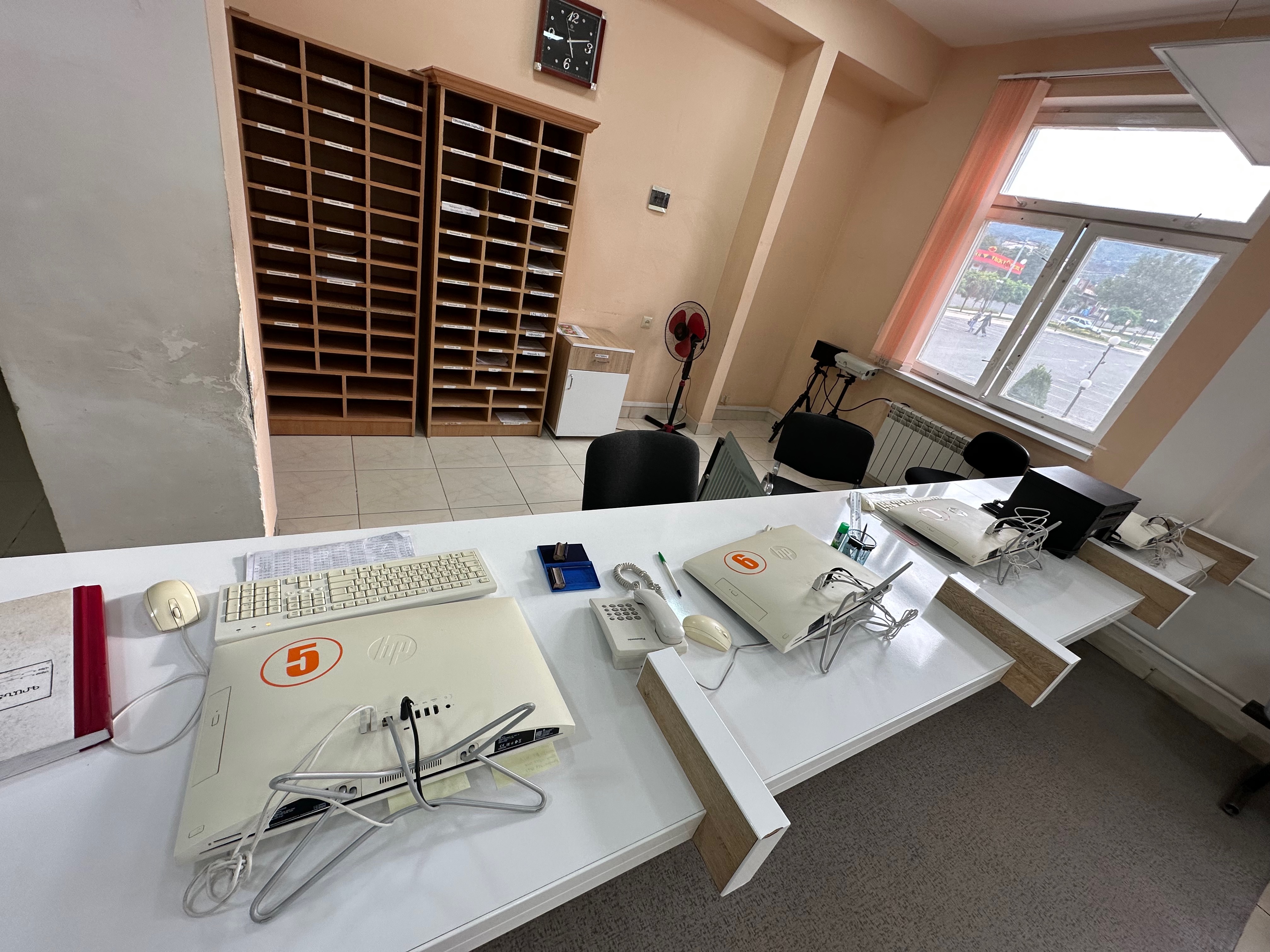 19 September 2023 | Marut Vanyan
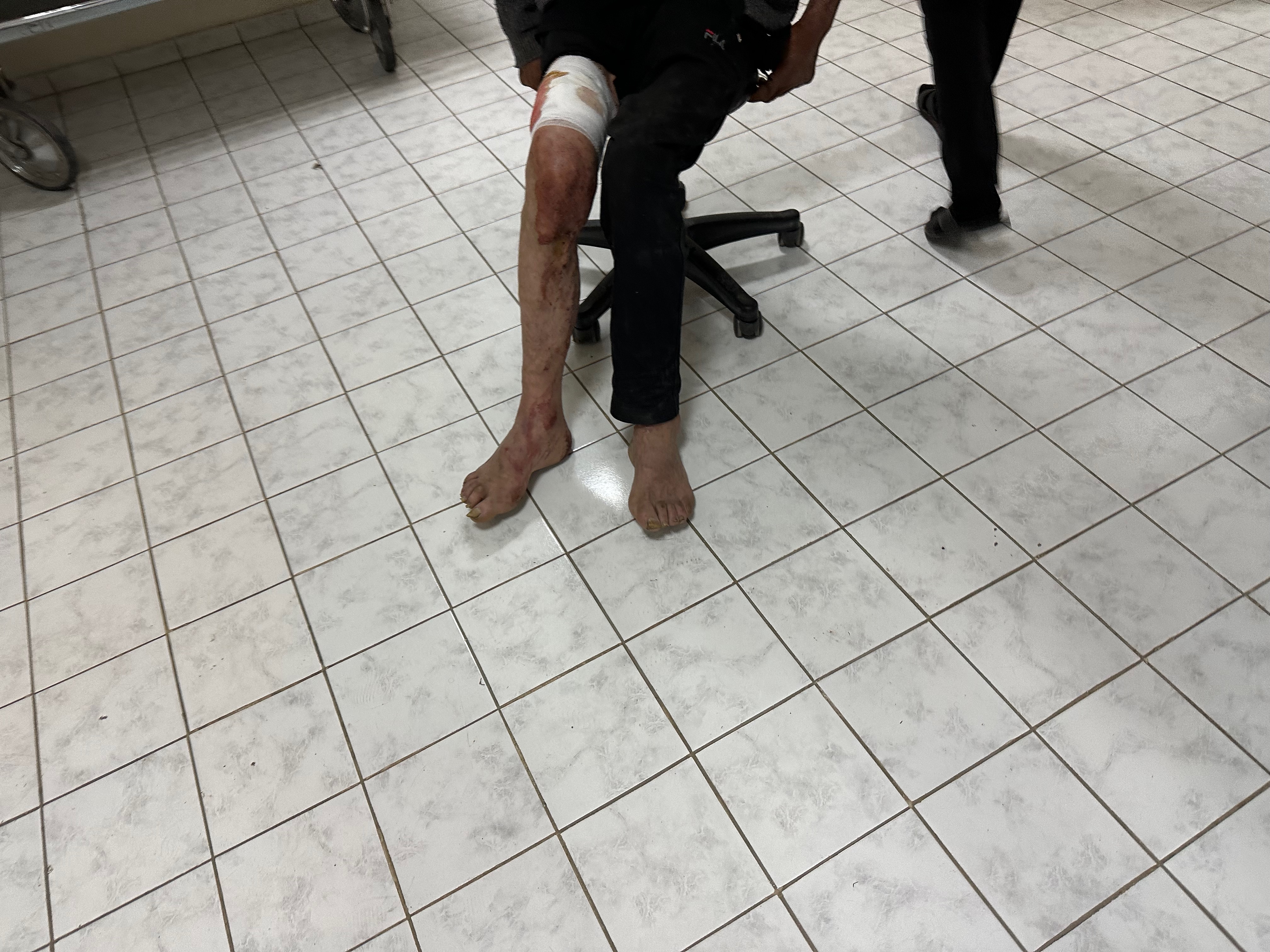 19 September 2023 | Marut Vanyan
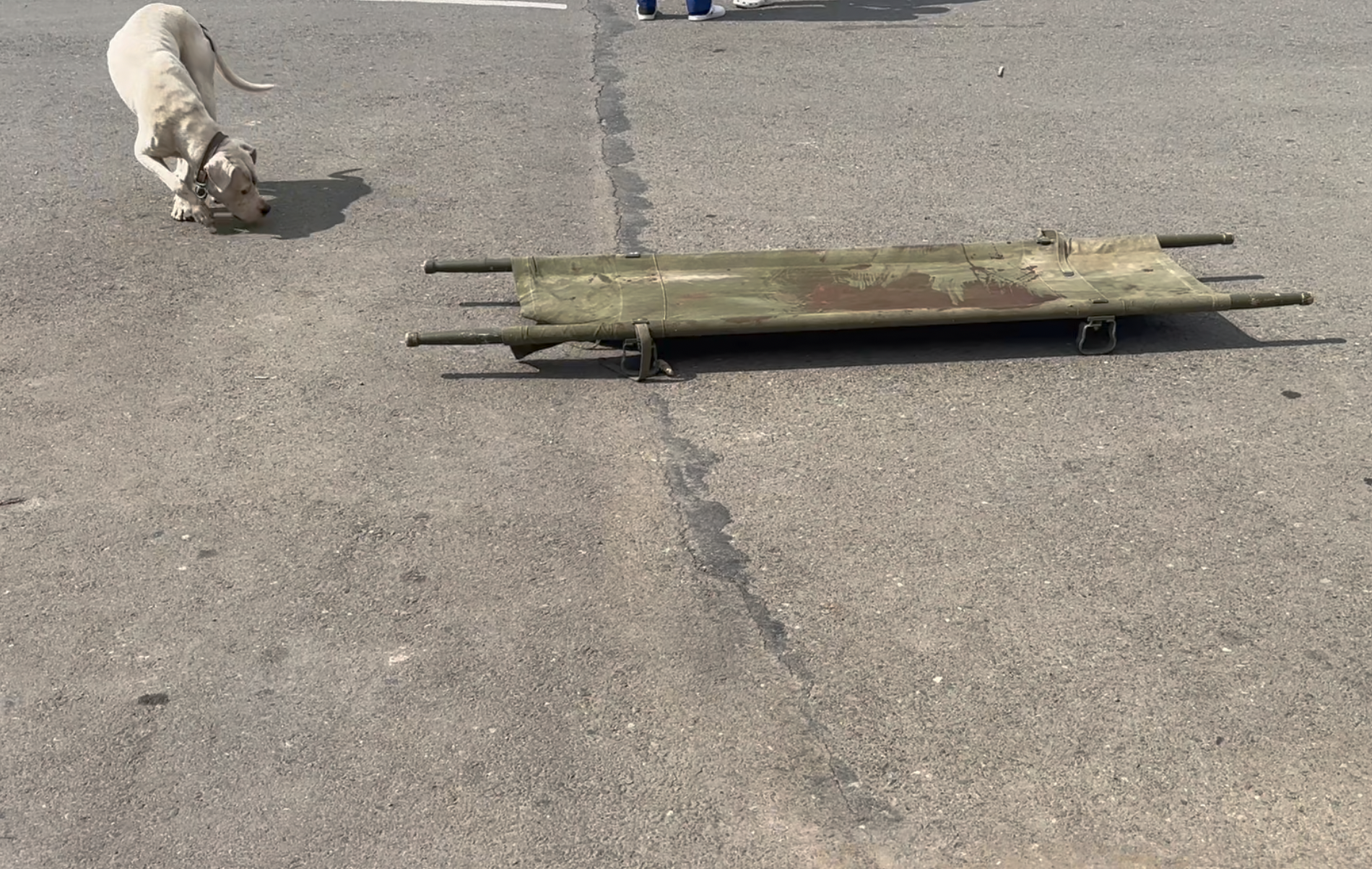 19 September 2023 | Marut Vanyan
Consequences
Fallen soldiers were buried at night; only a few people would carry out the burial to avoid drone strikes. Since September 20, the sounds of wailing, the sharp scent of ammonia, and the roar of excavators filled the cemetery. It was hell.
I remember a man and a woman who came to the Bratskoye Cemetery and were searching in bewilderment for the spot where their son was buried. "The Rescue Service said their staff buried him here," said the fallen soldier's father.
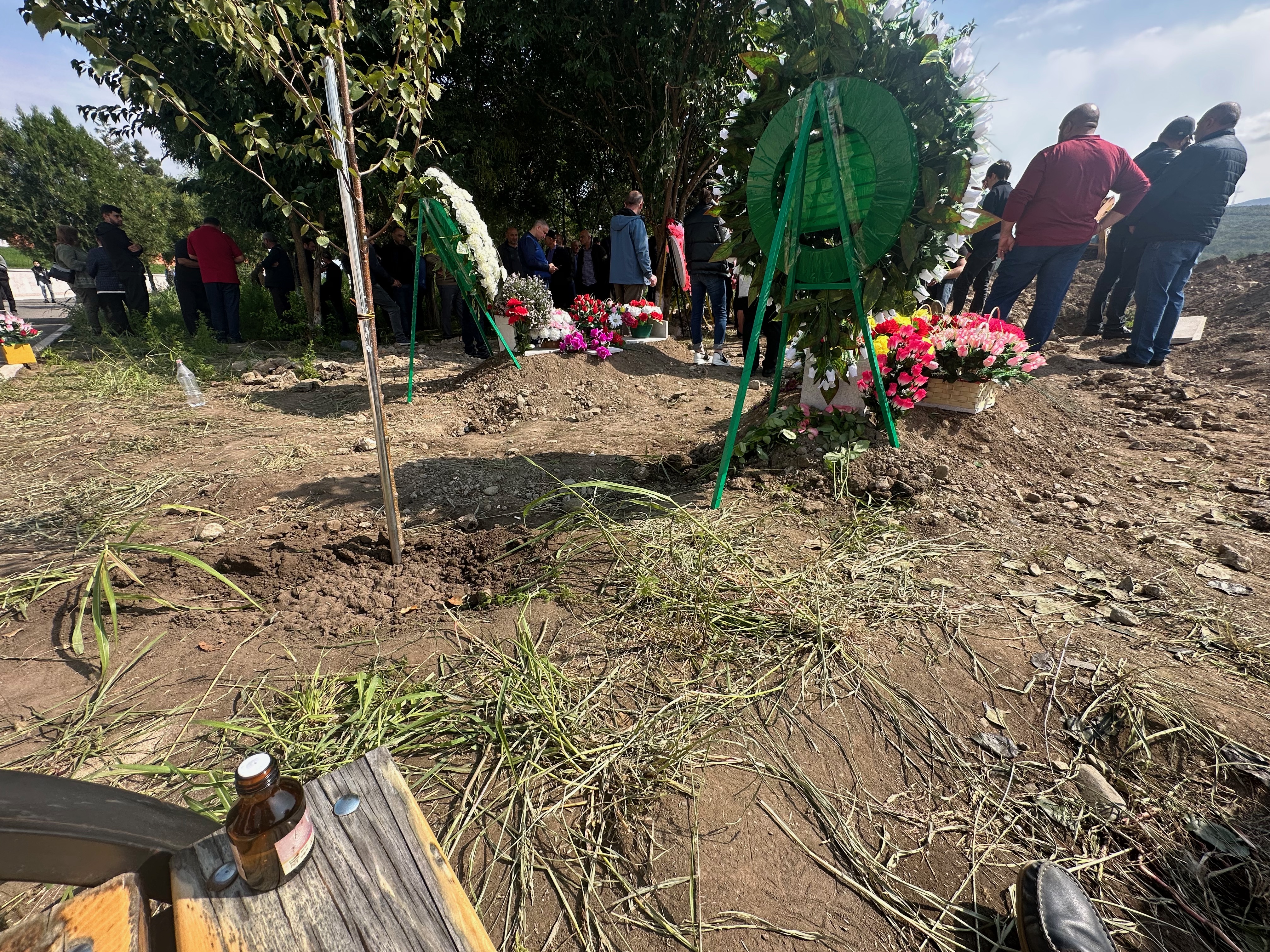 Stepanakert. 24 September 2023 | Marut Vanyan
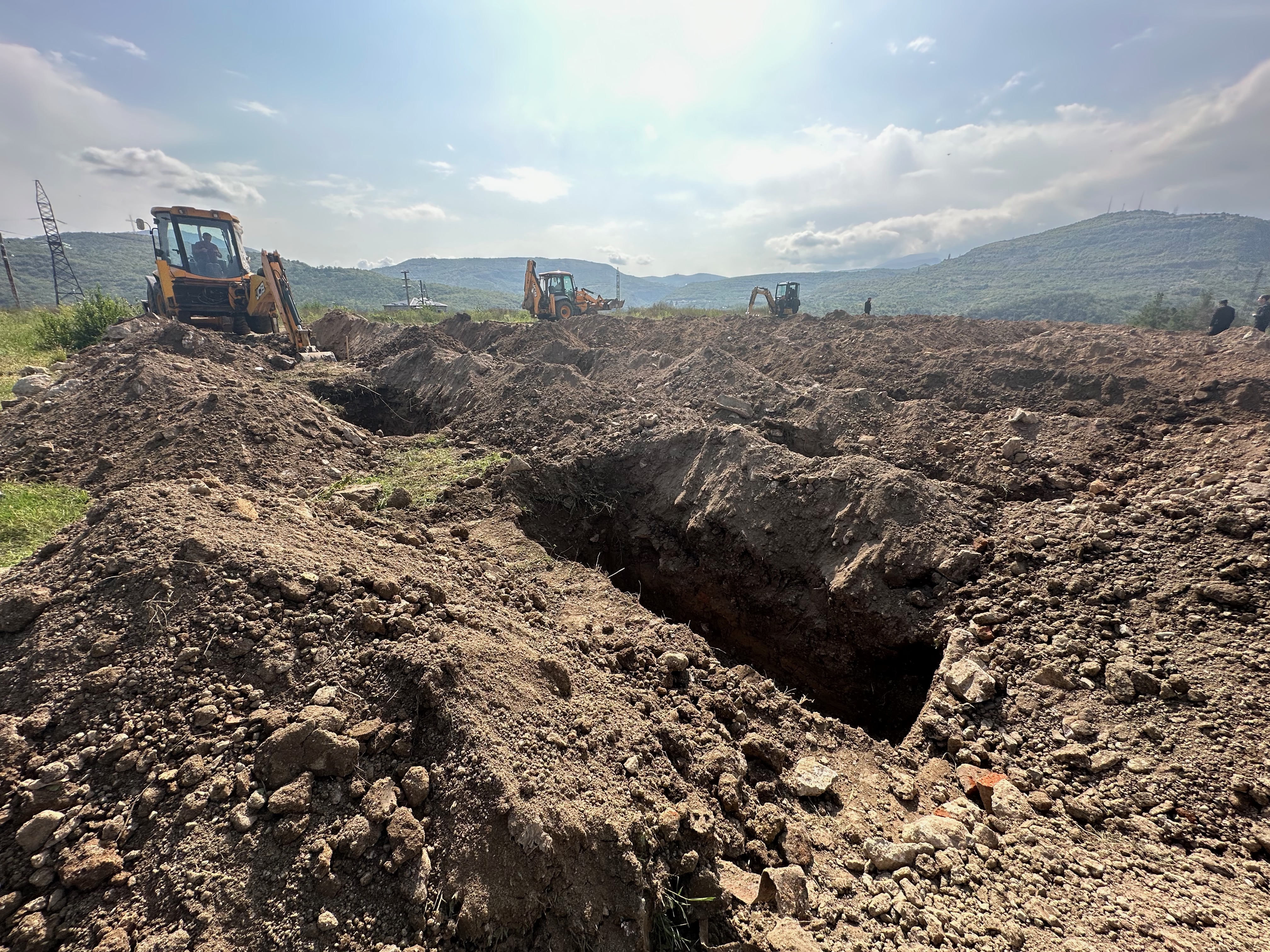 Stepanakert. 24 September 2023 | Marut Vanyan
To be continued. Thank you very much for your support.