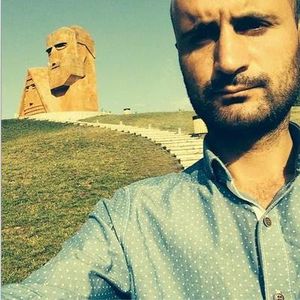

On September 19, 2023, I had hidden with my laptop on my lap in my four-room Soviet-era apartment in Stepanakert. I had been living there alone since my two sisters and brother got married. After the 44-day war in 2020, the sound of explosions had triggered a sort of defensive instinct in me; that is why I was sitting next to the concrete pillar that supported the four floors above. It still haunts me to this day (recently, in a church in Goris, I saw a child with a balloon approaching the lit candles; I knew it was going to pop, yet my acoustic startle reflex kicked in.)
It was midday. Just then, thunderous explosions began to blast out, followed by the sounds of drones and Kalashnikovs. Sirens started wailing in the air. Terrified women and children were running from the upper floors down to the basement—the very same basement where I had spent my childhood during the First Karabakh War in the early 90s. The same thing was happening all over again, decades later. At that moment, I received a call from the BBC: "Can you tell us what is happening in Nagorno-Karabakh?" they asked. I hold the iPhone out from the balcony and say, “Listen for yourselves.” “Please go to a safe place,” says the BBC journalist.
Instead, I walked to the Brothers' Cemetery—the location closest to the city of Shushi, which had come under Azerbaijani control following the 2020 war and from where Stepanakert, the capital of Nagorno-Karabakh, was being shelled. I was filming while hiding behind gravestones and cypress trees. I had previously been to the very spot where the shells were landing, and I knew those were Armenian combat positions tasked with defending the capital. It was clear to me that no one would survive that bombardment. I was not mistaken. The next morning, I met a soldier (an old man) carrying a machine gun with the bullet chain slung haphazardly over his shoulder; who said, "Everyone has been killed."
The sound of artillery blasts was followed by the staccato rattle of Kalashnikovs. It was clear that close-quarters combat was underway in the gorge.
There was no electricity in the city, and everyone was in the basements; the city was lit up only by the explosions of artillery shells that continued throughout the night.
My cousin and I had gone to charge our phones using diesel generators when, on our way back, shells began exploding around us. "Stay close to the wall, stay close to the wall," I kept urging.
When we got home, children and moms in the basements were wailing and weeping. We went up to the third floor and fell asleep to the "tune" of the artillery, deluding ourselves with the hope that it was the Armenian army’s artillery firing and that there was no danger. But we were simply too exhausted; sleep overcame us.
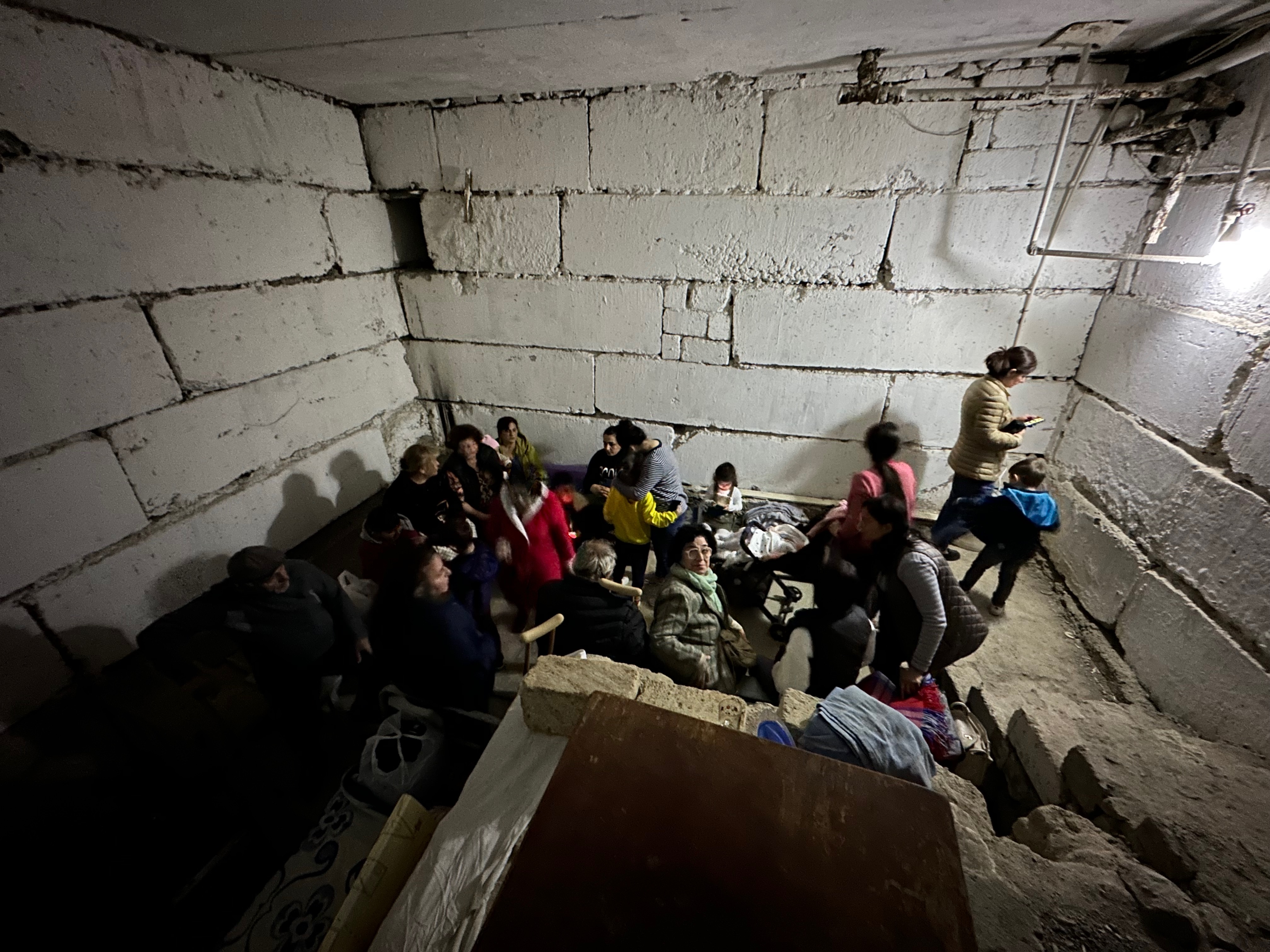 Stepanakert, 19 September 2023 | Marut Vanyan
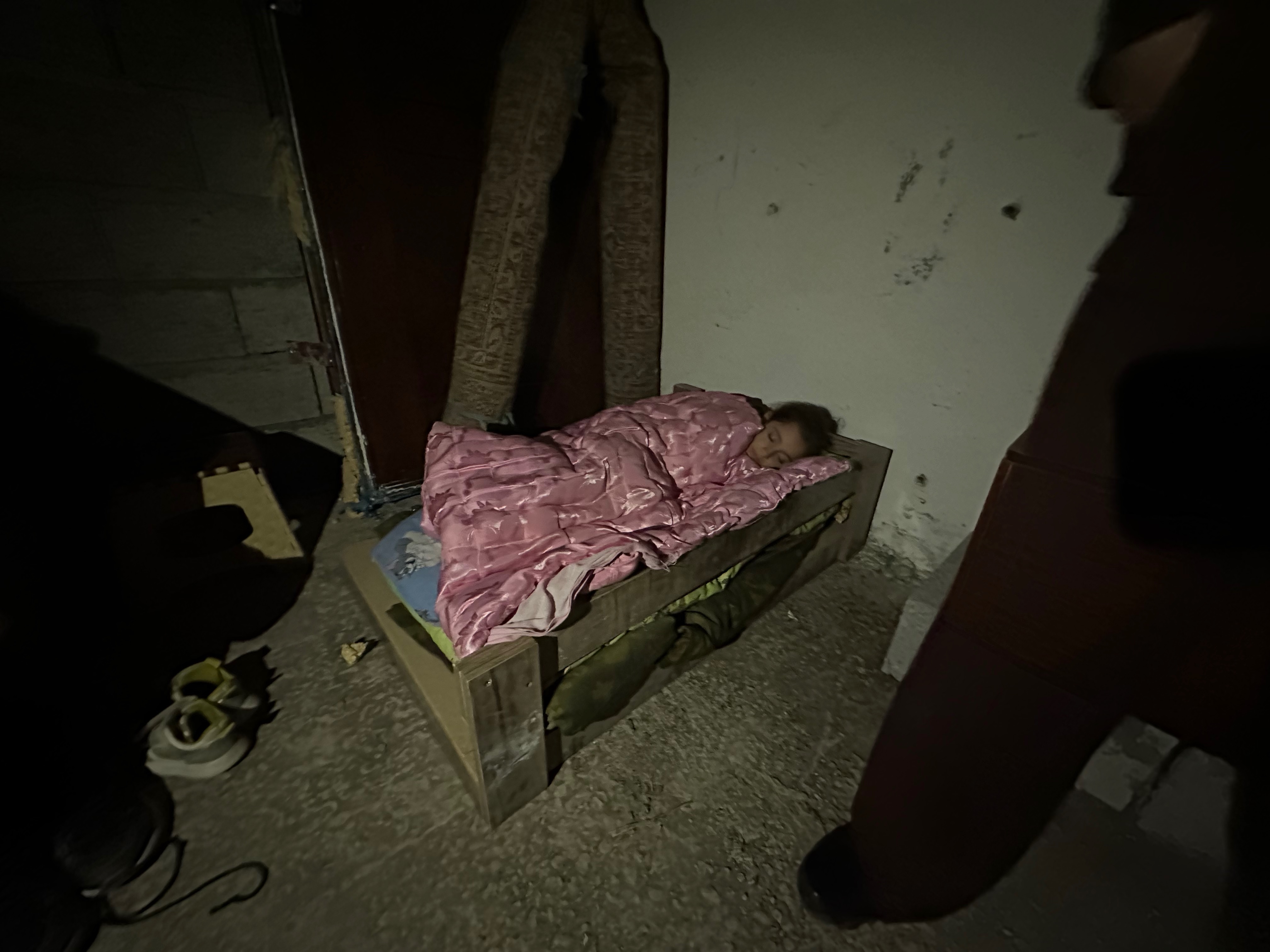 Stepanakert, 19 September 2023 | Marut Vanyan
Erica (the sleeping little girl) is currently in Abovyan, next to Yerevan. She says she remembers and misses their home in Stepanakert and wants to go back there. Her mother, who is originally from Abovyan but had been living in Stepanakert, says that it was in Stepanakert that she felt good and free. "I was breathing freely there; I even miss the days of the blockade," she says.
The shelling, which began around noon on September 19, continued until the end of the following day.
Unlike during the 44-day war of 2020, in 2023 Russian "peacekeepers" barred foreign journalists from entering the region. Nevertheless, they would confirm that in 2020, hospitals, the maternity, kindergartens, and schools in the capital, Stepanakert, were shelled. The same occurred in 2023. This is what the city center looked like on September 19, 2023.
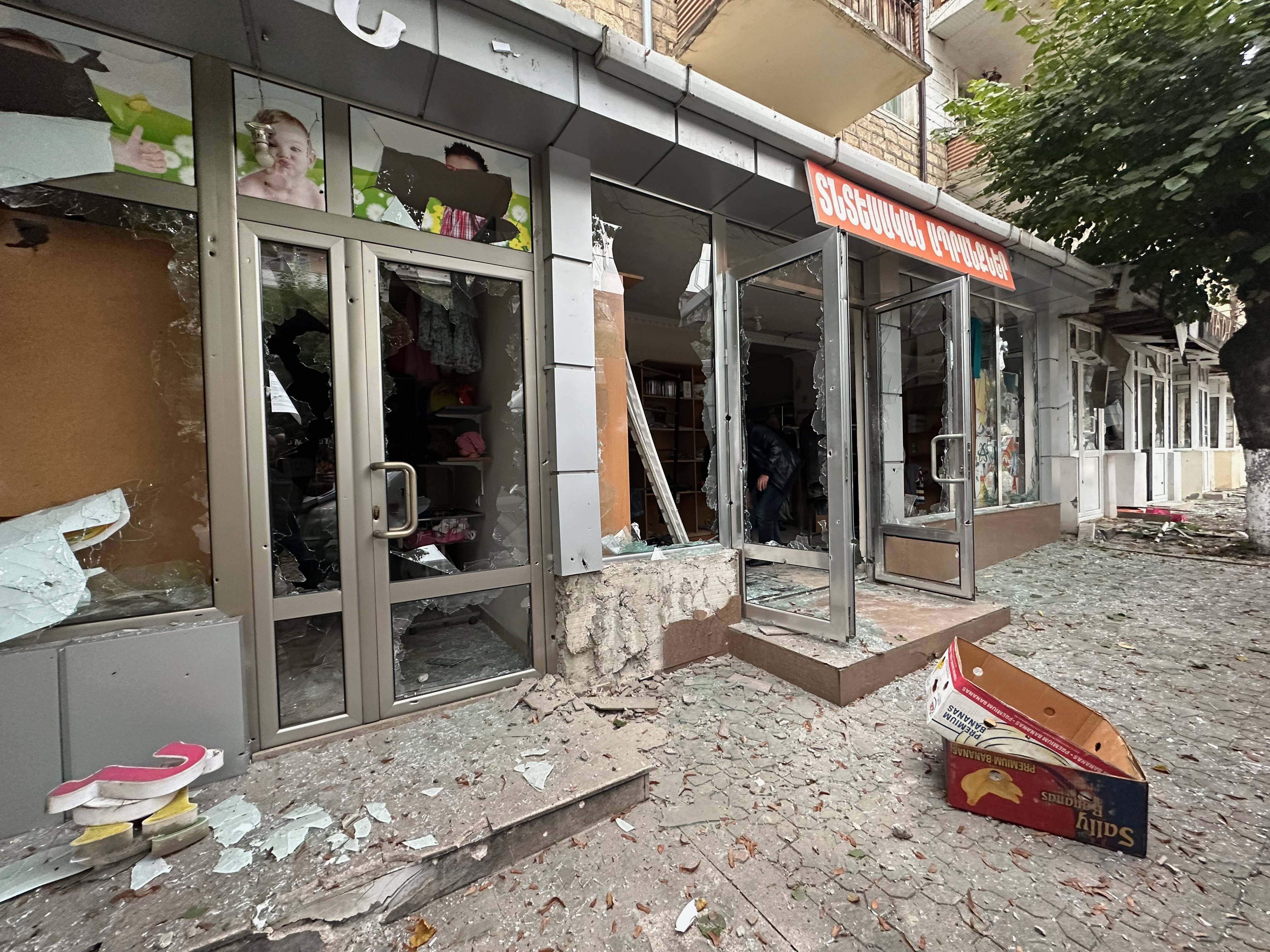 Stepanakert, 19 September 2023 | Marut Vanyan
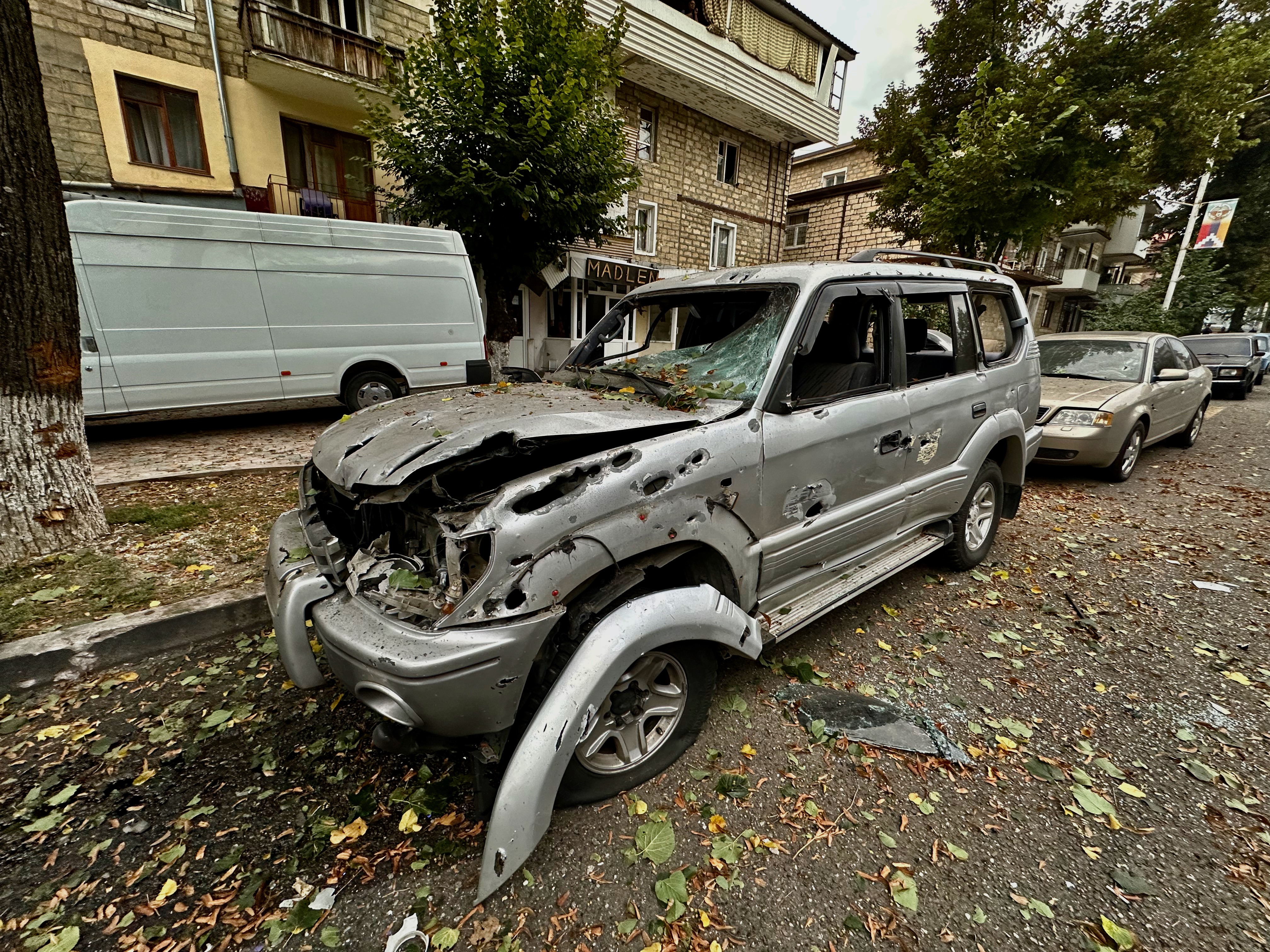 Stepanakert, 19 September 2023 | Marut Vanyan
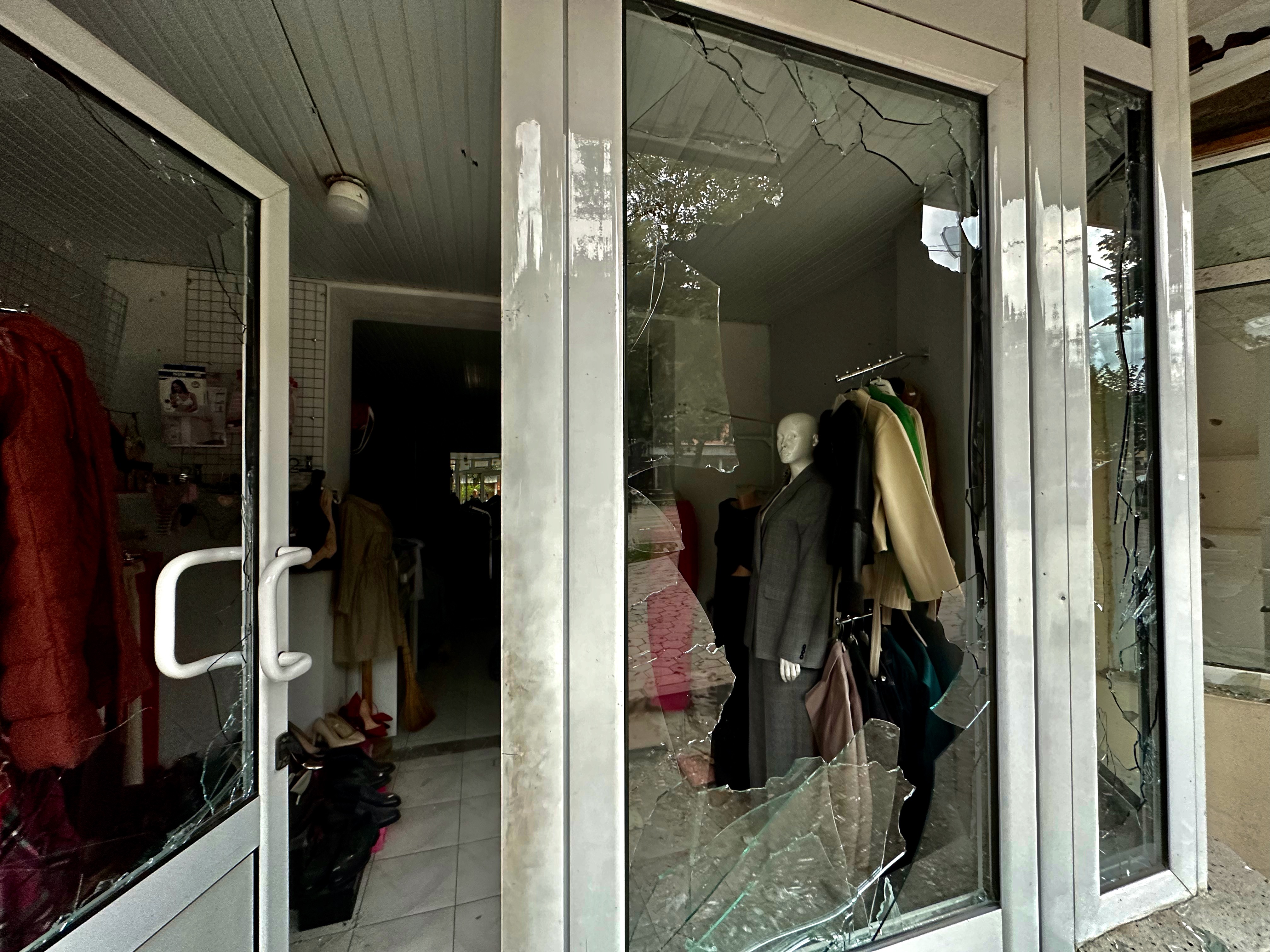 Stepanakert, 19 September 2023 | Marut Vanyan
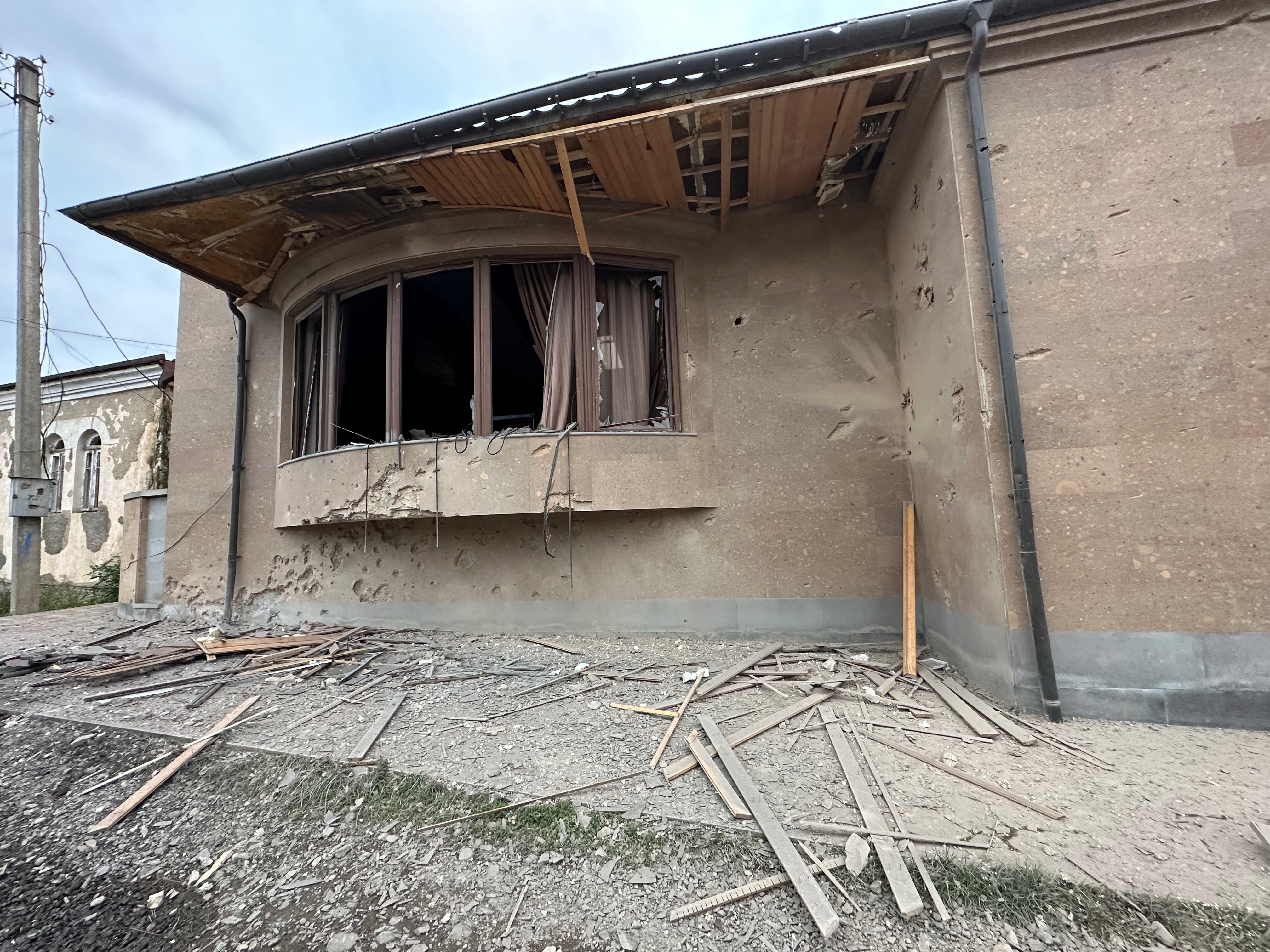 Stepanakert, 19 September 2023 | Marut Vanyan
It was no longer safe to go to the outskirts of Stepanakert; the area had fallen under the control of Azerbaijani troops. At night, campfires glowed in the nearby forests. Residents had gathered in the church basement. What do these children have to say?
-- Hello, children.
-- Hello.
-- Where have you come from?
-- We came from home.
-- Why?
-- Because there is a war.
“The windowpanes have shattered,” says their grandmother. “And the houses have collapsed,” adds her grandchild.
The suburbs of Stepanakert had already become under the control of Azerbaijani soldiers. Residents of the neighbourhoods had been evacuated and had taken shelter in the basement of the Stepanakert church. This is the very same Holy Mother of God Cathedral that the Azerbaijani authorities have demolished recently.
I tried to get as close as possible to that neighborhood—where my sister’s house was located, too. It was a feeling very much like watching horror movies when I was young. My legs refused to move. The houses were completely empty, and the shops, naturally, were closed. Only the rare car or Russian peacekeeper military vehicle would pass by.
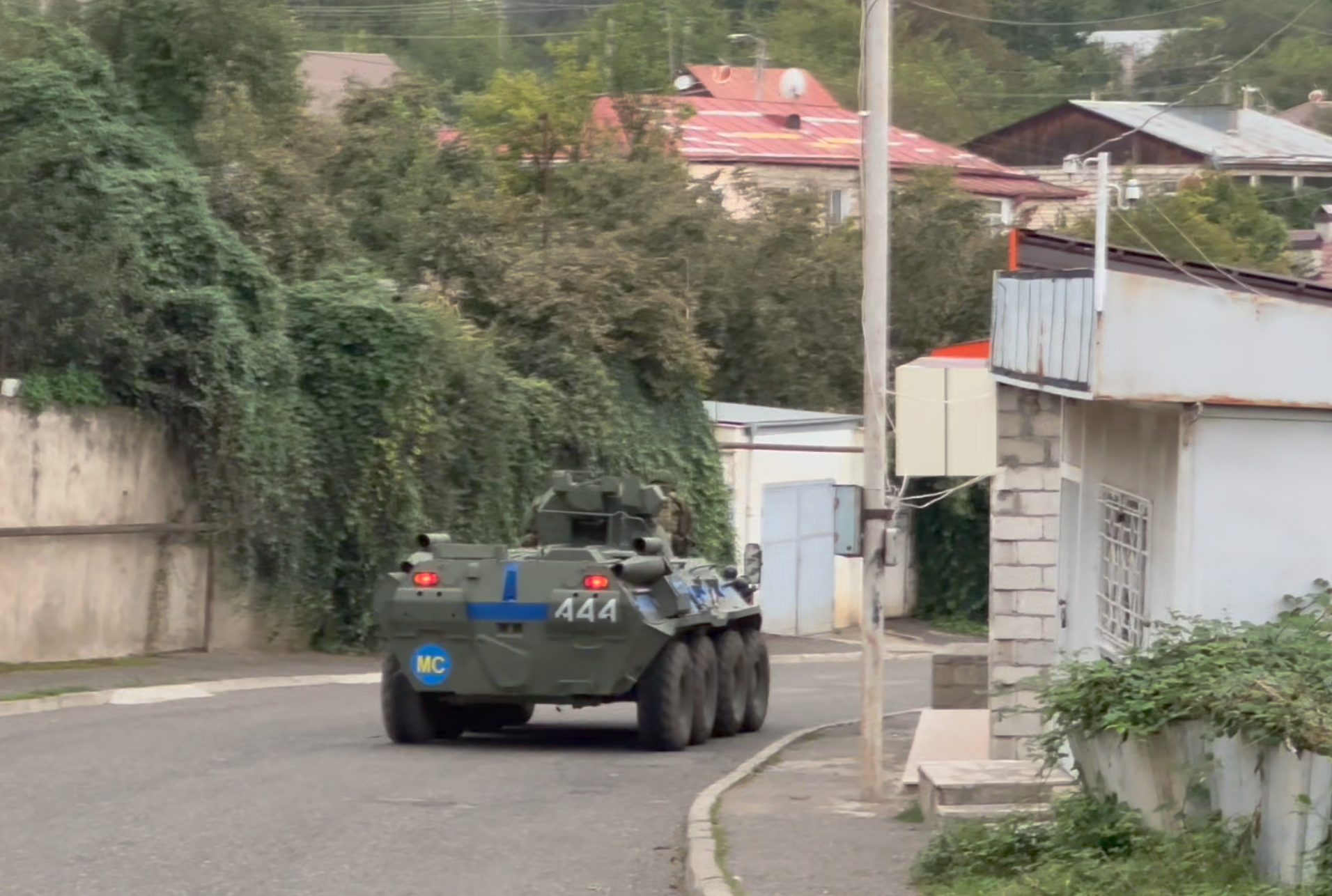 22 September 2023, Stepanakert. Snapgrab from a video | Marut Vanyan
The reservoir supplying water to the capital city was located in an neighbourhood that had come under Azerbaijani control. Rumors circulated at the time that they had thrown a cow into the reservoir, poisoning the water. Even though the story was untrue, people were still afraid to drink running water and instead collected water in plastic containers from nearby water sources.
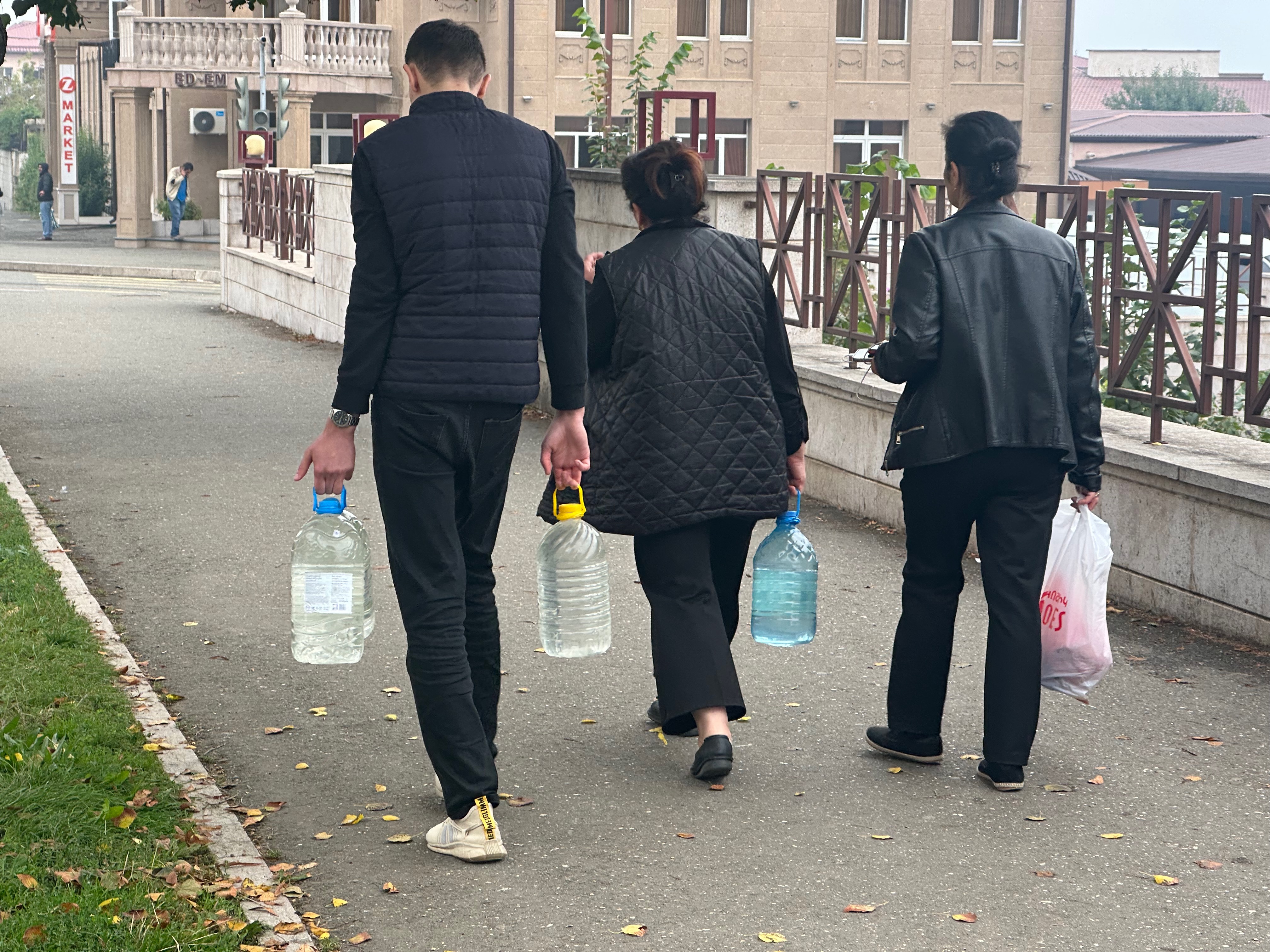 Stepanakert, 19 September 2023 | Marut Vanyan
Essentially, the capital, Stepanakert, was the only part of Armenian Karabakh/Artsakh that remained. Almost all the villages and settlements had come under Azerbaijani control. Villagers reached the capital however they could. They were placed in schools—like this grandmother, who has to sleep in this "bed" made from school chairs.
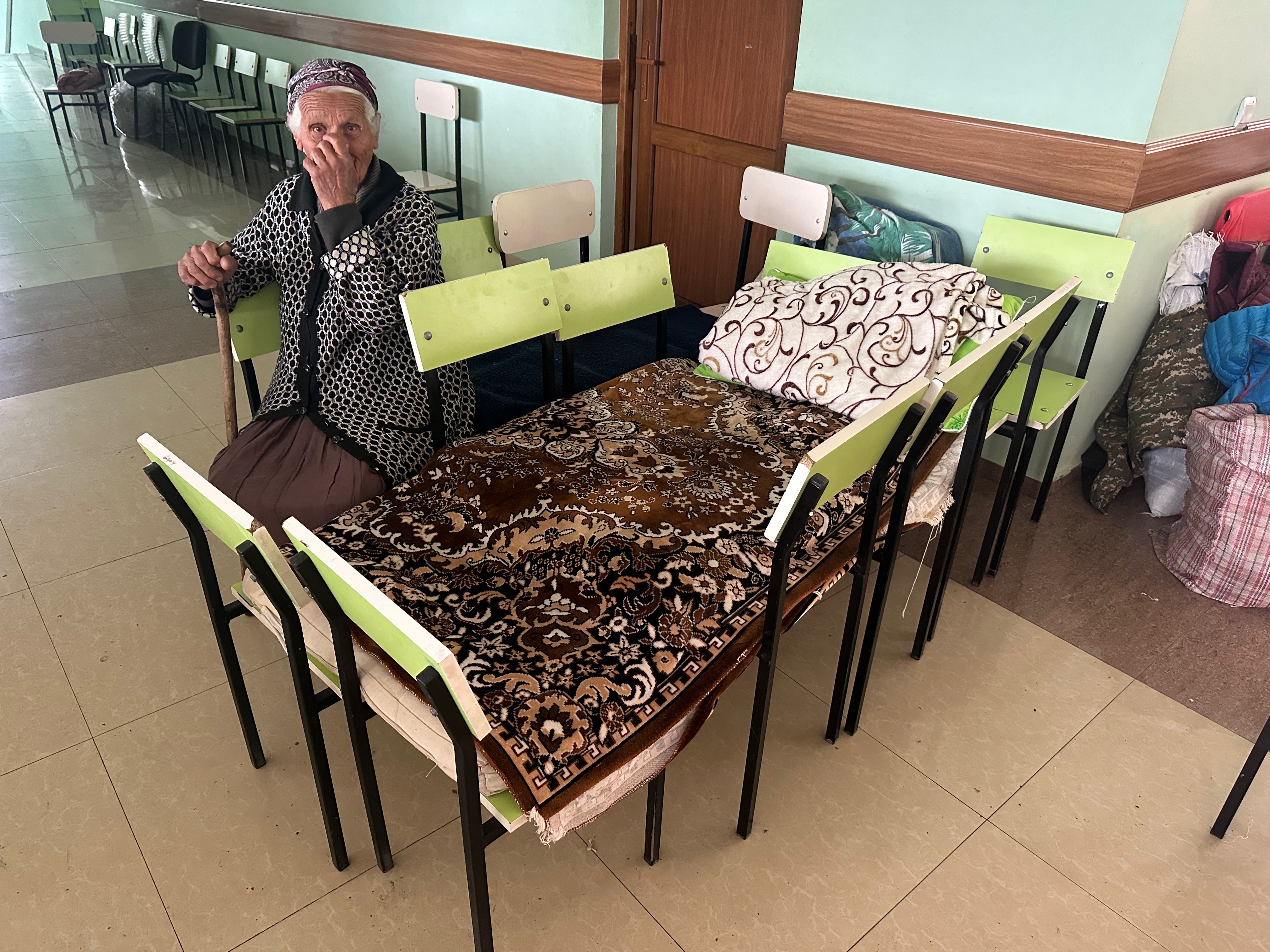 22 September 2023 | Marut Vanyan
My neighbor, Mrs. Venera, has placed some salt on the ground on a plate right in front of our apartment, supposedly to bring happiness and good fortune. Anyway, I am not superstitious.
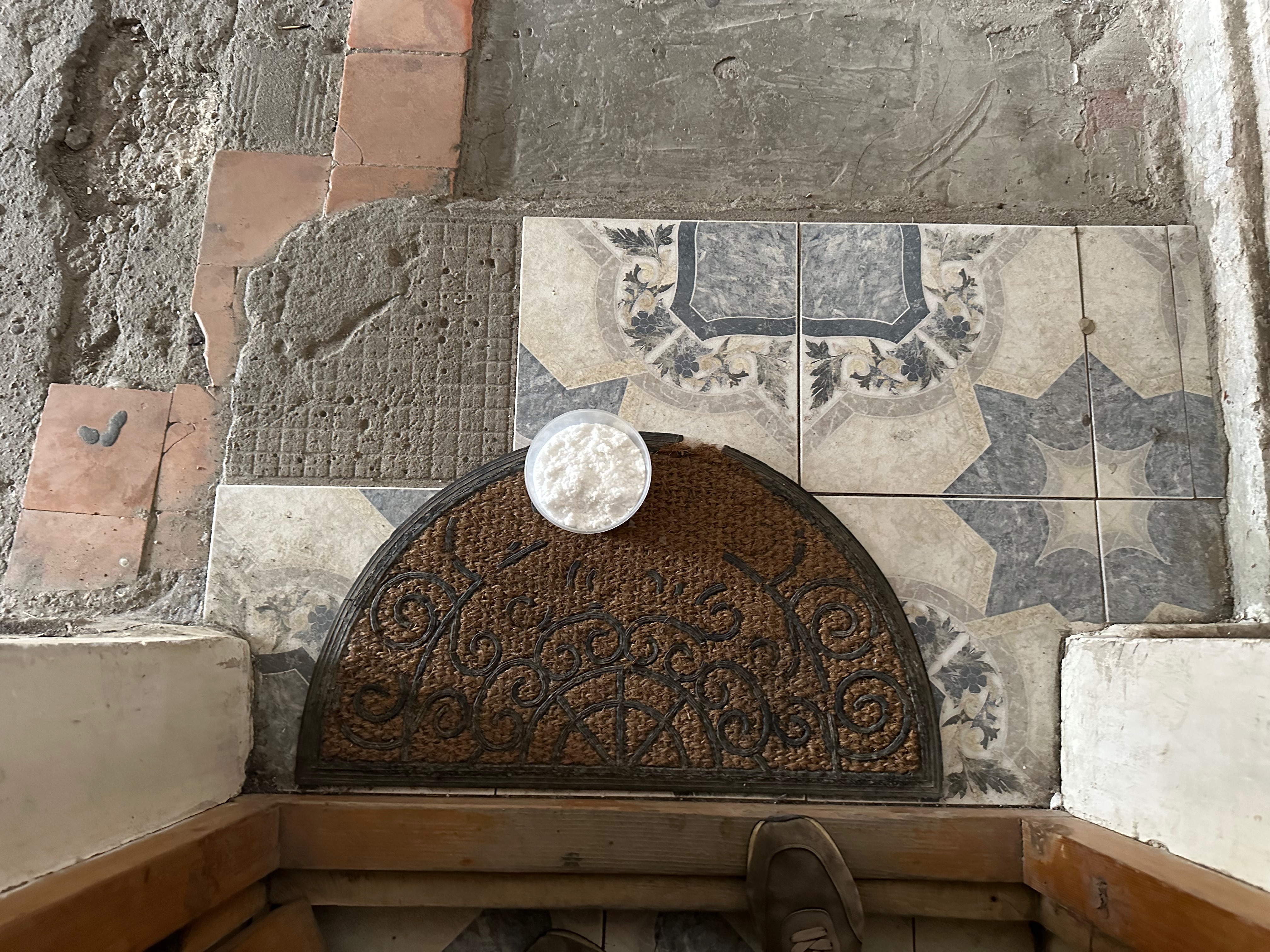 23 September 2023 | Marut Vanyan
The funeral of a little child who died from the explosion of an artillery shell.
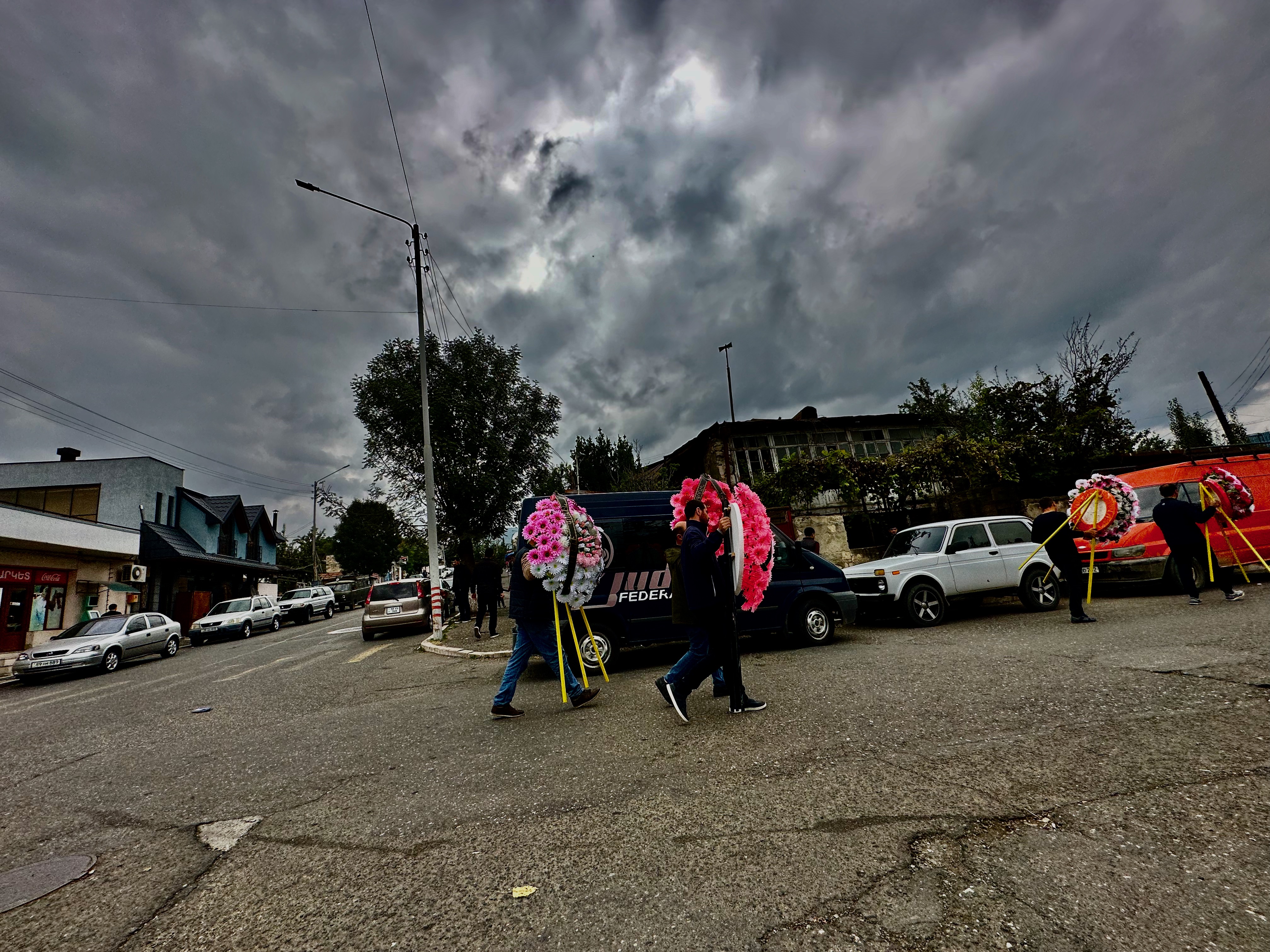 23 September 2023 | Marut Vanyan
Life had become unbearable; the last food supplies were running out—the only things left were grapes or potatoes that the villagers had somehow managed to bring into the capital. The city was deserted; there was no roaring of motors, and only the echoes of people voices and the barking of dogs rang through the streets. The tolling of church bells grew ever louder. Appeals to the UN and other international organizations yielded no results; the only remaining "tribunal" was God. Everyone shared a single prayer: "Deliver us from this terrible plight."
The priest was trying to encourage people with his joke: "Have you eaten today?"
Howeveve, It is hard to kill one's hunger with a small piece of lavash dipped in wine.
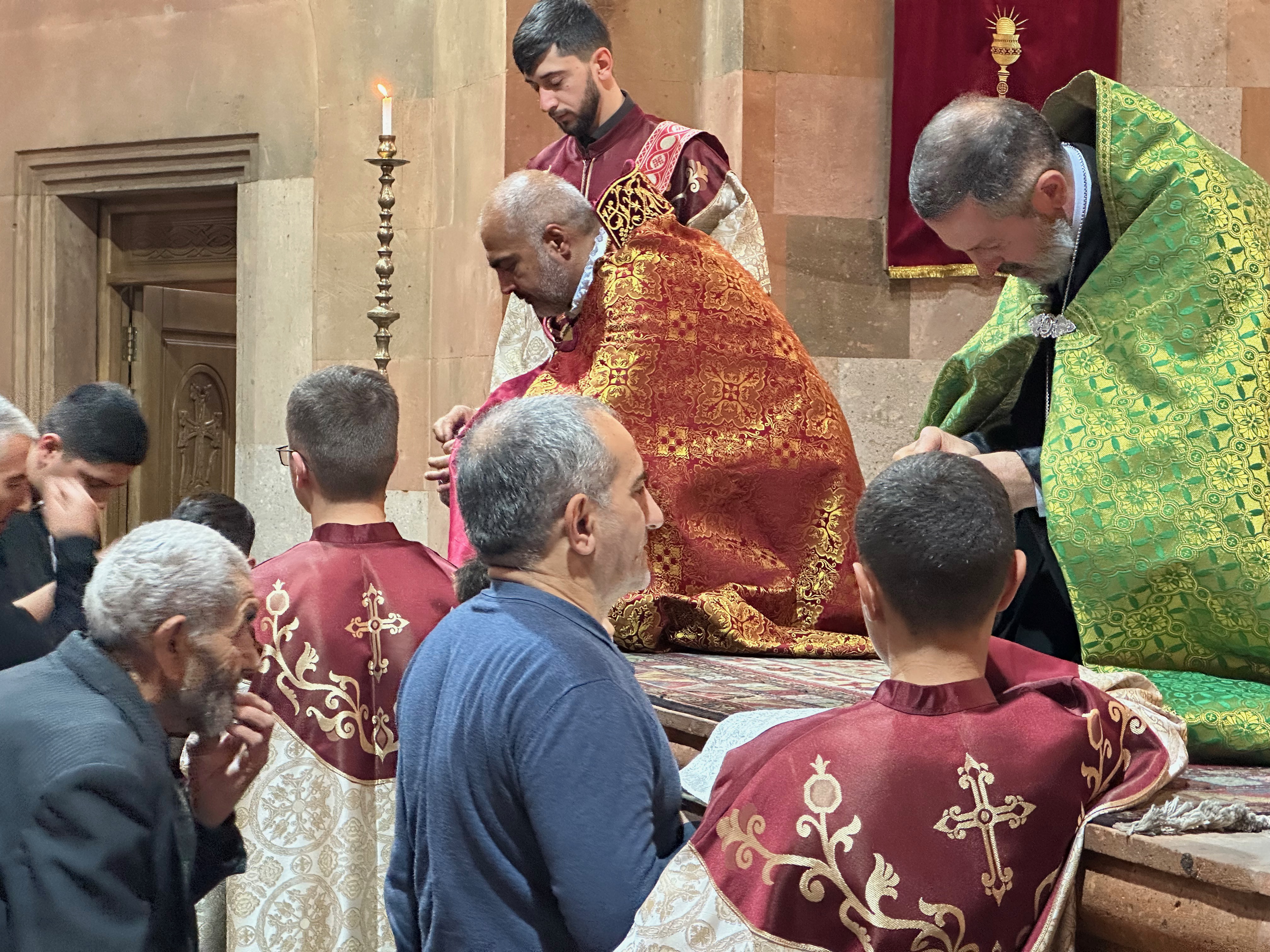 Stepanakert. 17 September 2023 | Marut Vanyan
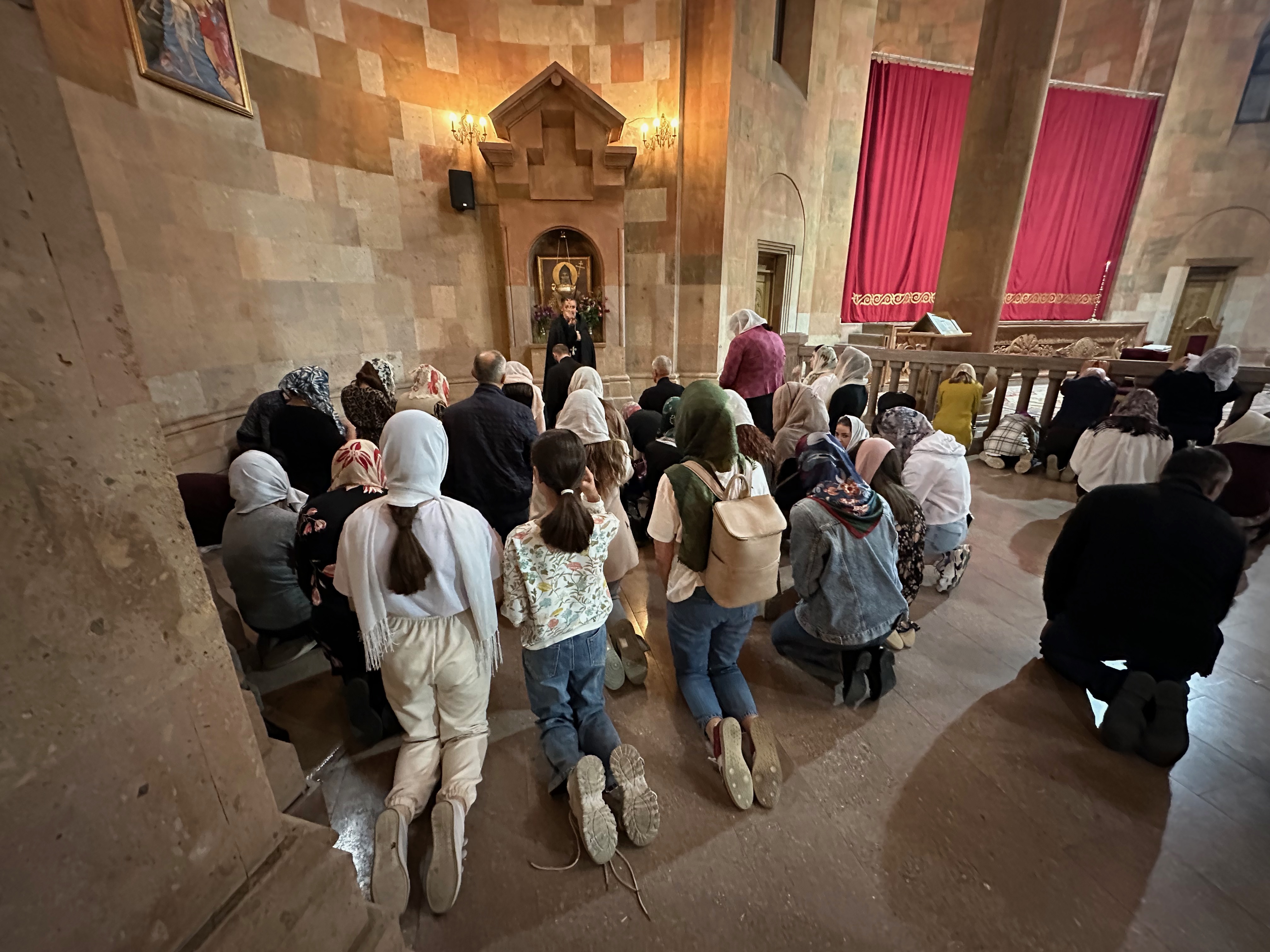 Stepanakert. 17 September 2023 | Marut Vanyan
Out of pity, people would let their dogs free; the animals would sniff through the trash bins but find no bones. Gaunt dogs with their ribs showing roamed the streets everywhere.
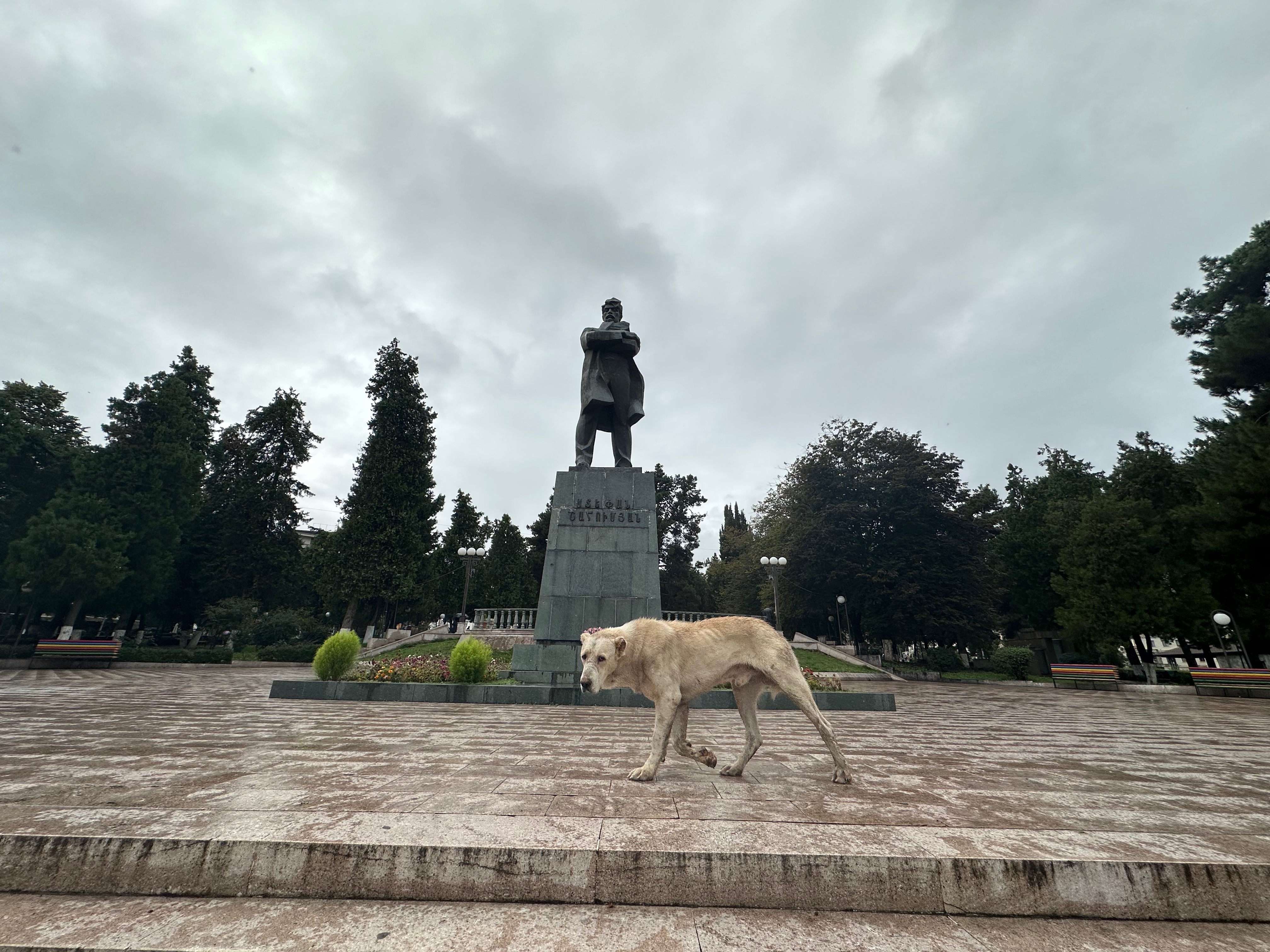 Stepanakert. 17 September 2023 | Marut Vanyan
Stepanakert Hospital
This was the only place with electricity, and the hospital is located right next to the cemetery, on the Shushi-Stepanakert highway. I was there charging my phone. Battles was countinuing, wounded soldiers were constantly being brought in. When I was charging my phone, there was no one inside. The last person I saw was a nurse who, in a state of panic, was talking on the phone to her daughter, saying that everyone was leaving... Computer monitors had been placed face-down on the tables so that the blast wave wouldn't break them. A moment later, a doctor came up from the hospital basement—wearing bloody medical gloves—and angrily asked me, "Who are you? What are you doing here?" I think he was actually glad to see me, even though he spoke harshly. "I’m a journalist, and I’m charging my phone, doctor" I replied. "You’d better go down to the basement and help," the doctor said.
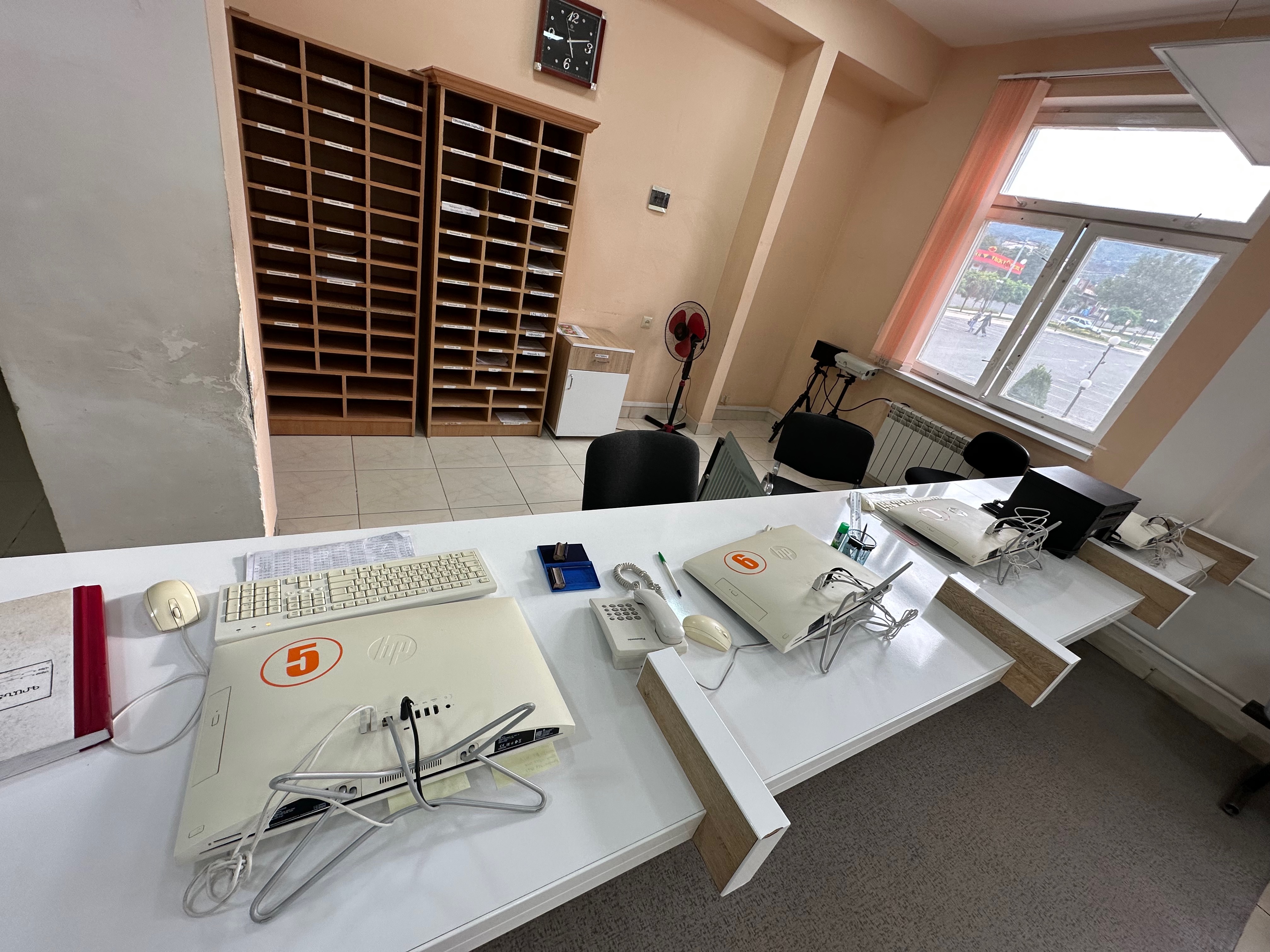 19 September 2023 | Marut Vanyan
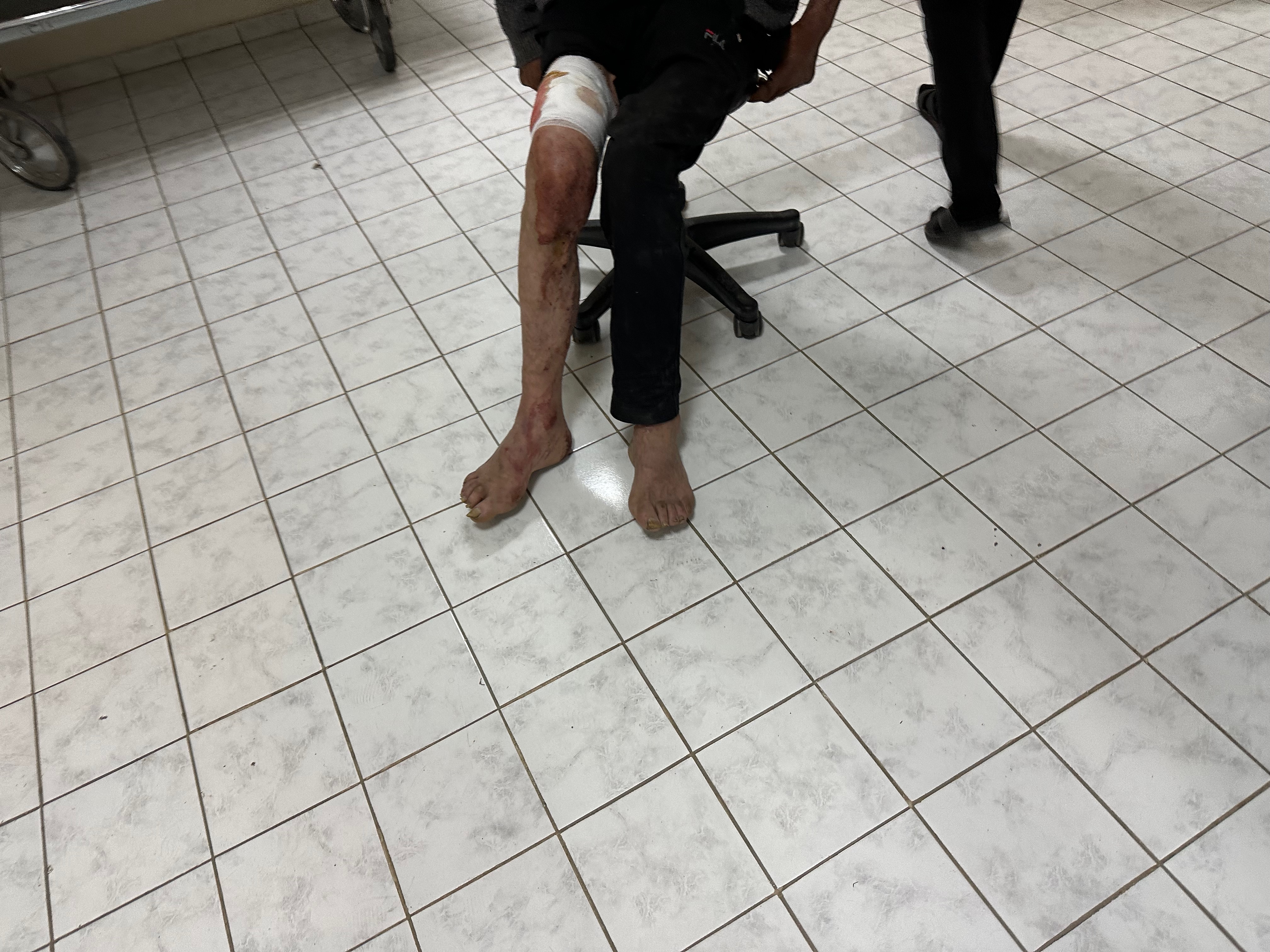 19 September 2023 | Marut Vanyan
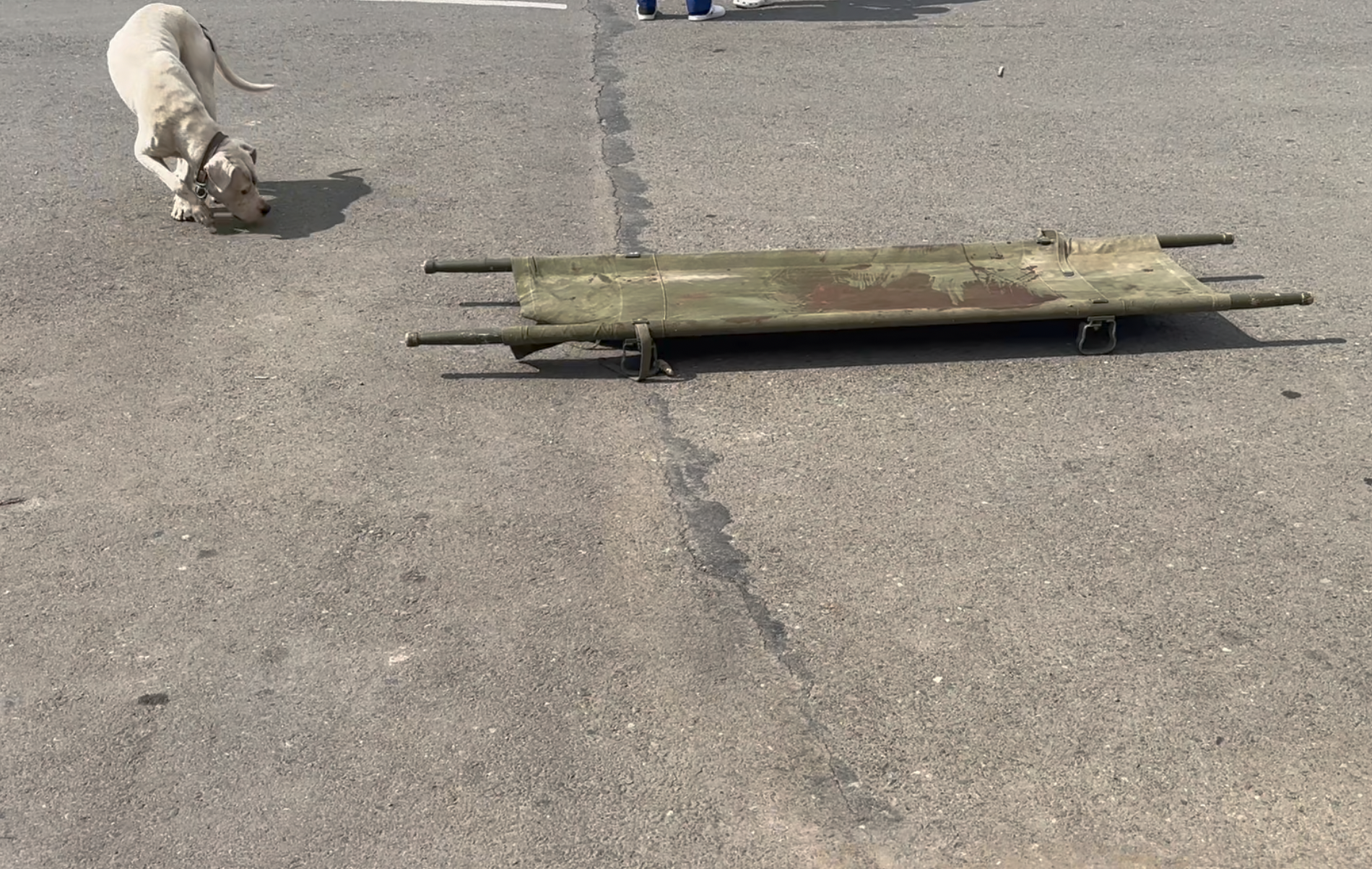 19 September 2023 | Marut Vanyan
Consequences
Fallen soldiers were buried at night; only a few people would carry out the burial to avoid drone strikes. Since September 20, the sounds of wailing, the sharp scent of ammonia, and the roar of excavators filled the cemetery. It was hell.
I remember a man and a woman who came to the Bratskoye Cemetery and were searching in bewilderment for the spot where their son was buried. "The Rescue Service said their staff buried him here," said the fallen soldier's father.
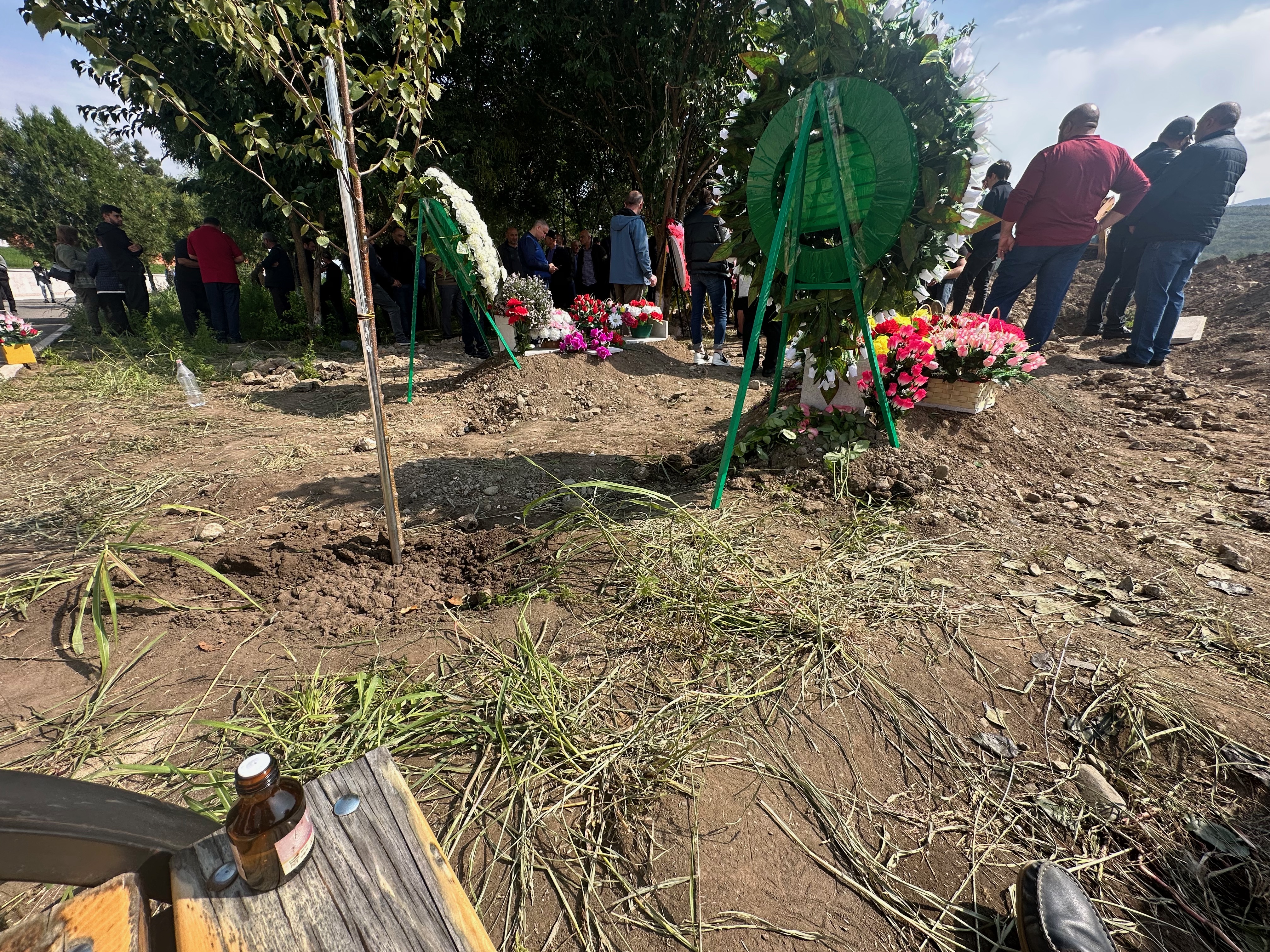 Stepanakert. 24 September 2023 | Marut Vanyan
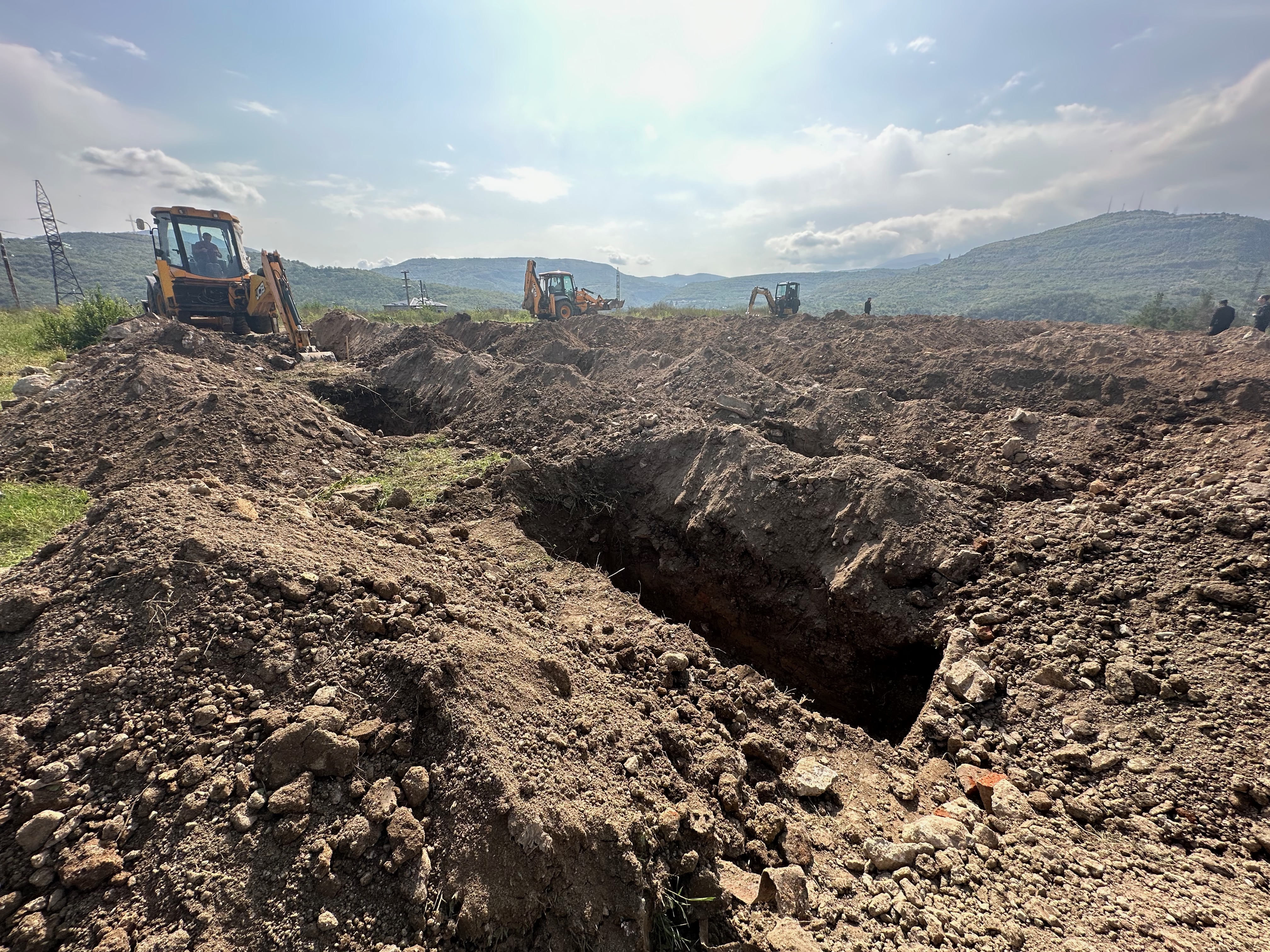 Stepanakert. 24 September 2023 | Marut Vanyan
What September 20, 2023, Was Like in Stepanakert
For some reason, on the evening of the 19th, I went to the Brothers' Cemetery. The old traditions—like the one forbidding visits to the cemetery after dark—no longer mattered. In the distance, I spotted a mound of earth with a man standing beside it, looking like a ghost. It was my army sergeant; beneath the mound lay his fallen comrade, and his sister was lying over the grave, mourning in tearless silence. My sergeant was murmuring words like a prayer—reminiscent of the prayers of sectarians who speak in tongues. Yet he wasn't a sectarian; as far as I recalled, he had been a complete non-believer during our army days. In any case, a half-empty bottle of cognac sat on a square white stone—the kind used to craft a cross before the final monument is erected.
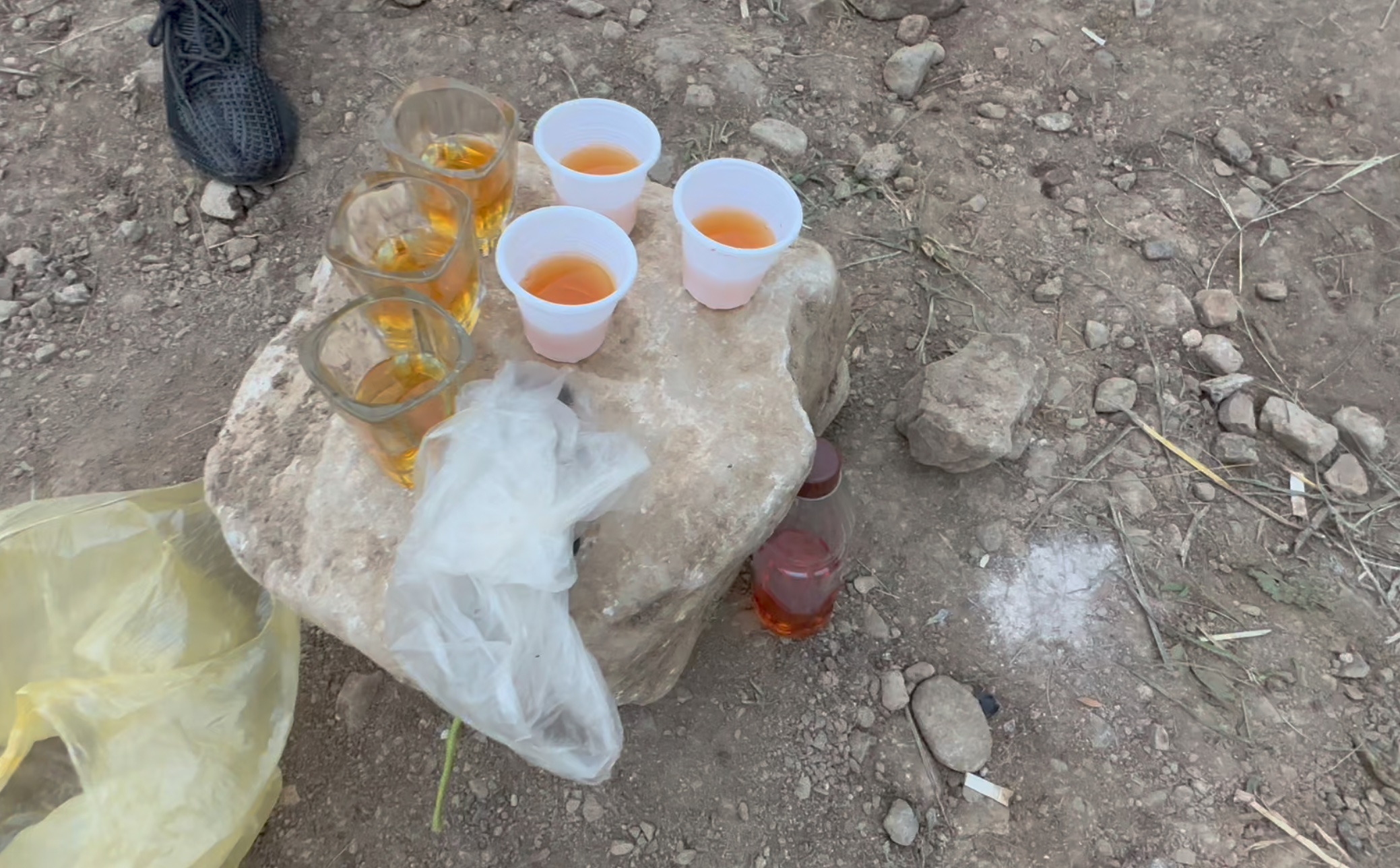 Stepanakert. September 2023 | Marut Vanyan
"Please, understand me my brother—I don't want this, can you understand that?, I don't want this," my sergeant stammered, his words disjointed. 'He’s losing his mind', I thought. At that time, there were no fresh flowers, as they too used to be imported from Armenia, and the blockade had made it impossible to bring them in alongside food and medicine. Only plastic flowers adorned the graves of those who had been identified, found, and laid to rest. "To a beloved father" or "From friends" were the messages written on the black ribbons. Above stood the well-maintained headstones of the boys who fell in the 2020 44-day war—bearing their photographs—while below lay the headstones from the April War (2016). Higher up still are the graves of those who perished in the First Artsakh War (early 90s)—including my cousin; his burial remains vividly etched in my childhood memory (I recall how he used to tease my homemade gun—fashioned from an iron bed-frame rod for the barrel and a rubber band for the trigger, typical "toys" for children of the 90s). The brothers' cemetery had grown larger. To avoid drone strikes, many were buried at night by just a handful of people. By morning, however, the fear was gone—let come what may; everyone was at the Brothers' Cemetery. The sound of wailing was everywhere. "I can't even bring myself to press the camera shutter to take a picture," says Davit, the photographer. It was a sunny autumn day, yet filled with lamentation and uncertainty.
There was a strange atmosphere in the square. Who were these young men carrying assault rifles but dressed in civilian clothes? Yellow buses and a truck were parked in front of the Presidential and Government buildings. Were they leaving? No one said anything definite. Where was the mayor? Perhaps we could clarify something with him. In the government building's corridor, old men, women, and children sat dozing on the benches. These were villagers who had somehow managed to reach the capital. Others, looking lost, asked where the school was. "Come with me, Grandma," said Tsovik, the Artsakh TV host, guiding them to School No. 1. The cannons had fallen silent, but what now? What was to be done? No one knew. Women and children had emerged from the basements in the Artsakh neighborhood in Stepanakert. The smell of smoke hung in the air, but it wasn't the pleasant scent of woodsmoke from the forest. What kind of bonfire is that in the courtyard? Are the children having fun? I wondered. But no—Ms. Asya explained that they were burning documents and photographs for safety. The night before, we had spotted flames at the neighborhood’s boiler house and called the Rescue; to our surprise, they answered on the very first ring. Both we and the Rescue workers approached the fire, only to discover that Army archives were being burned. Smoke and ash are everywhere in the city; it is no longer the clean Stepanakert scented with linden trees. One person is packing their belongings, another says they are leaving tomorrow; street cleaners are sweeping, someone is selling cigarettes, another is hanging out laundry, while others simply sit in the gazebos. You can’t make sense of it—what kind of day is this? What is this "peace" really about? It was as if everyone was harboring a secret they didn't want to share, yet it was obvious that something very strange was going on ('writings on the wall').
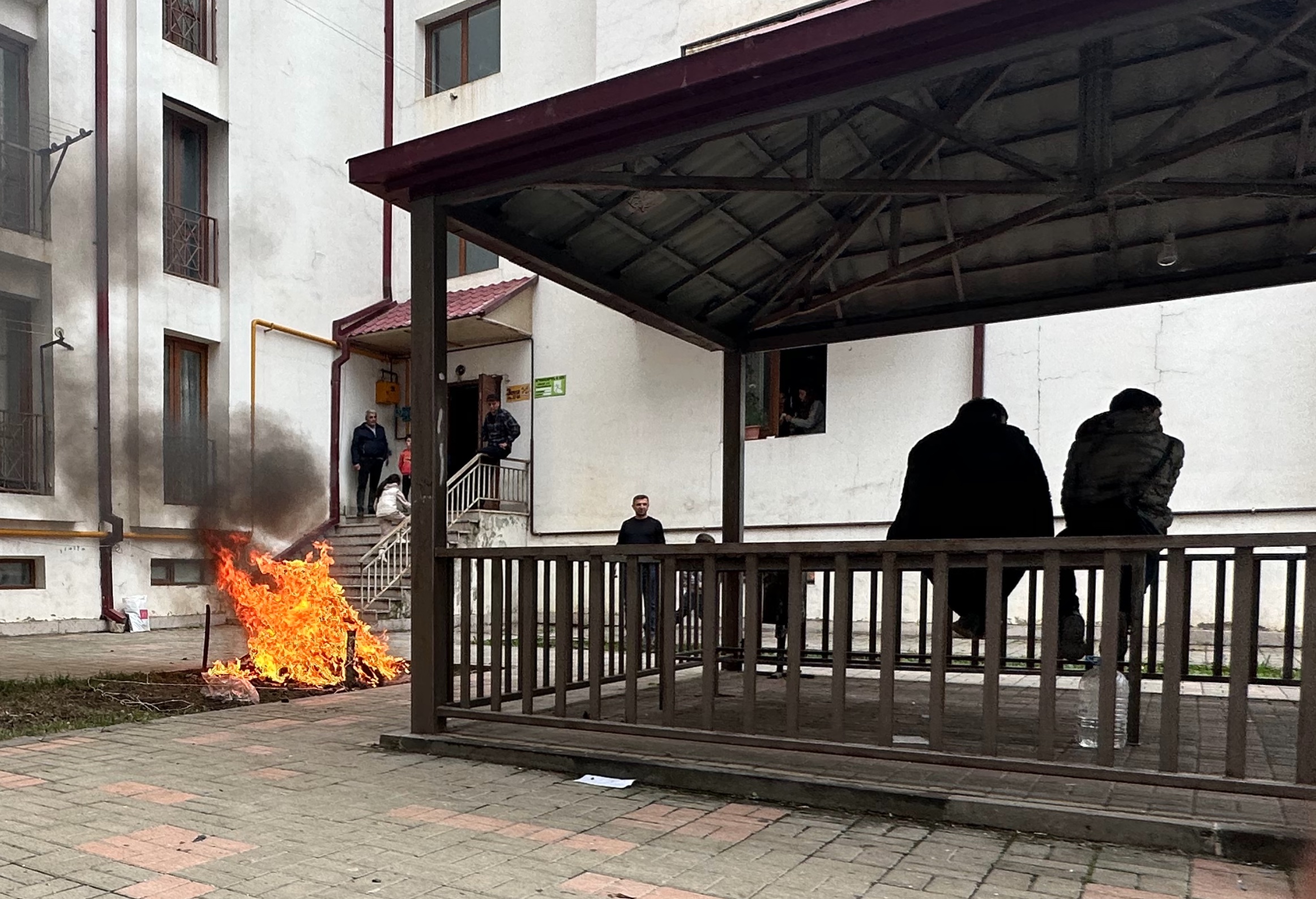 Stepanakert. September 2023 | Marut Vanyan
Upon returning home, I found my uncle’s entire extended family gathered there—the daughters, their husbands and children, and the fathers and mothers in-laws—who had spent the night in their cars. "Why are you sleeping in the cars? The house is empty," I asked. "Well, who’s actually sleeping?" the older men replied.
The villagers had brought along whatever they could. There was honey and meat in a large pot, but the most important thing—bread—was missing. Anyone who was in Stepanakert during the blockade can attest to how food would appear in abundance one moment and vanish completely the next; it was a cycle of feast and famine, yet the need to eat remained constant every day.
Stepping inside my home, I looked at the walls. "What should I take? Everyone else is packing up their belongings," I thought. I had forgotten about the family albums; I had even forgotten to grab the camera an Armenian-American friend had given me as a gift. I simply wrap my laptop in a jacket and wait, ready to go.
It was a time of utter uncertainty—the Armenians of Karabakh/Artsakh had "five days of life left," and it was a case of "survive however you can."
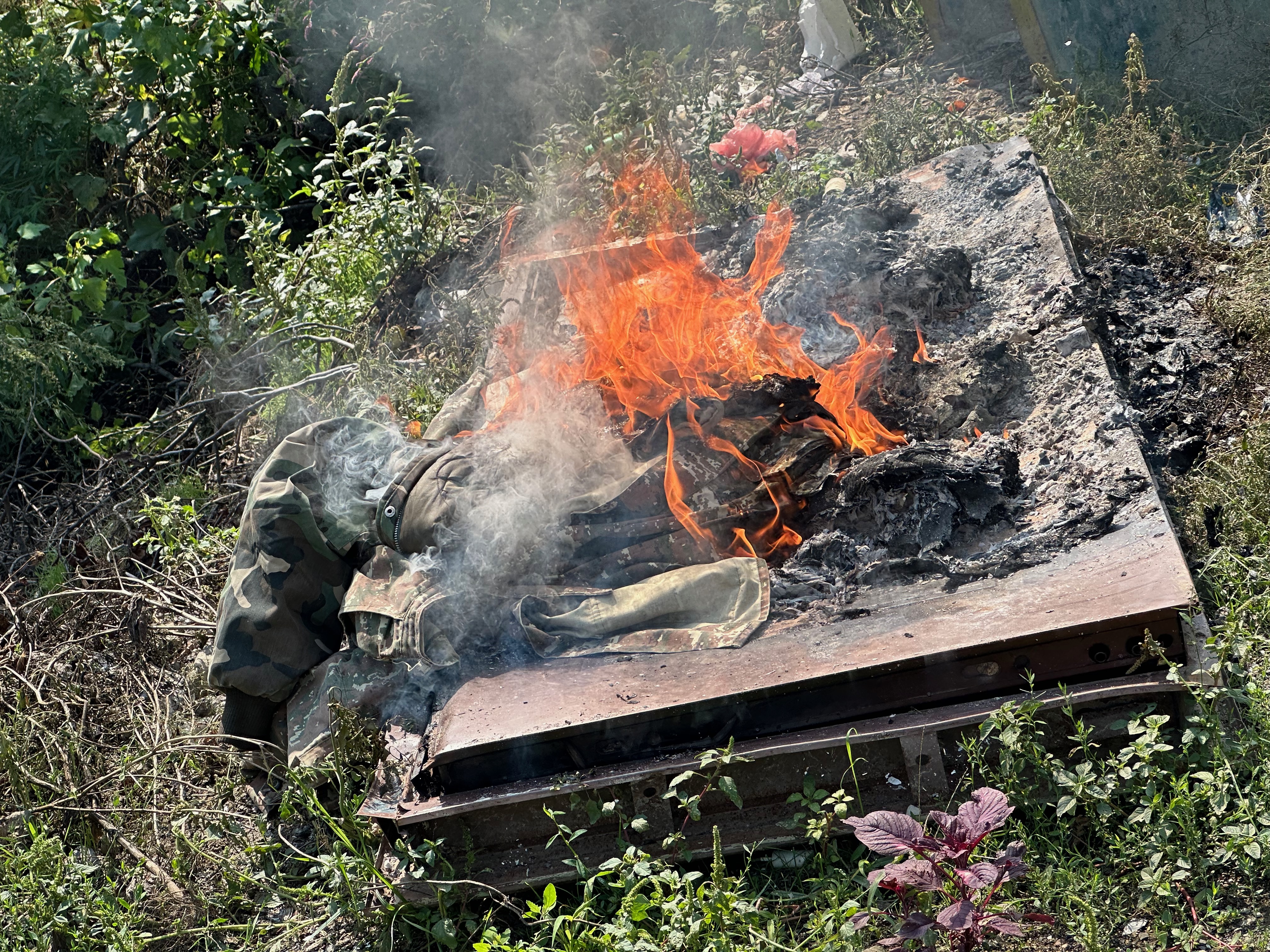
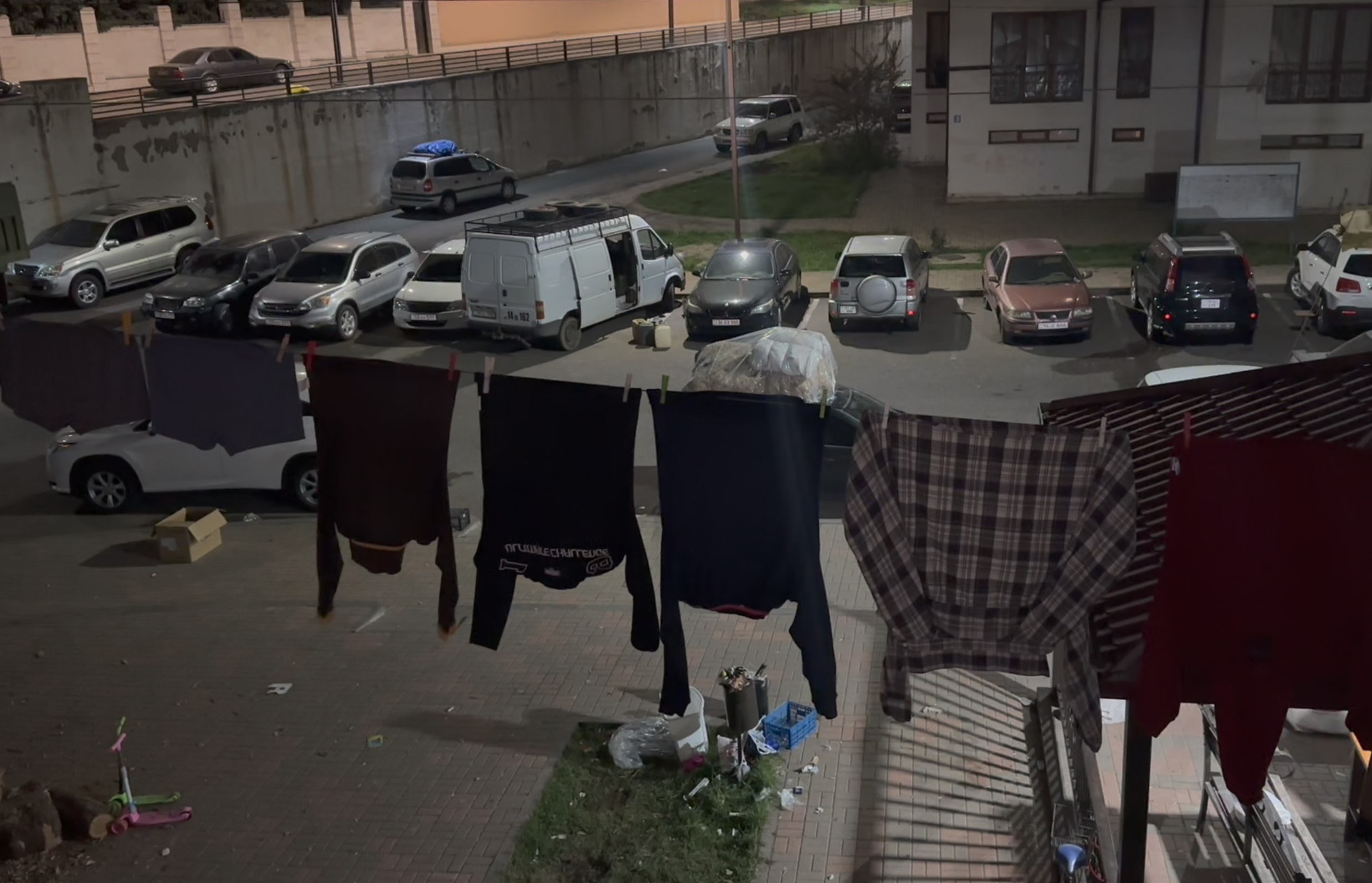 Stepanakert. September 2023 | Marut Vanyan
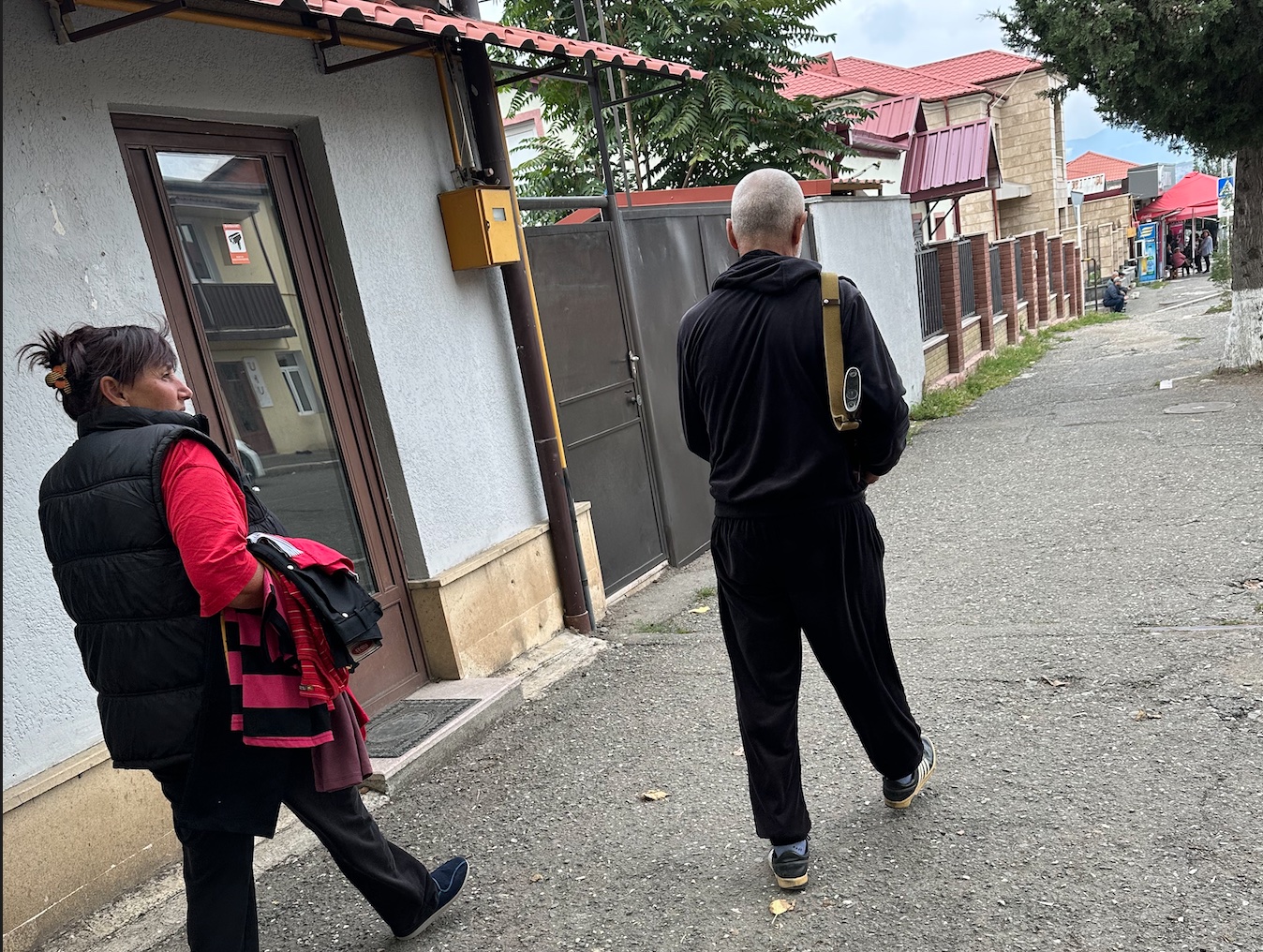 Stepanakert. September 2023 | Marut Vanyan
Goris. 25 September 2025. The Beginning of Woes
Three years later, early in the morning, a white flock have alighted on the tall populus trees in Goris. Clearly, the upper branches of the trees are not the most comfortable spot for them: the bugling birds fly off and return to the branches.
Goris wakes up late. It’s Indian summer in the town. The sun rises here at 7 o'clock, from Nagorno-Karabakh/Artsakh. "Is Goris just a 'stopover' for you?" I wondered, drawing a parallel between the birds and the NK/Artsakh Armenians, and if I recall correctly, I laughed aloud. I hadn't even finished my morning coffee yet.
It was not dark humor, far from it. Coincidentally, those populus trees stand exactly where the NK/Artsakh Armenians had “alighted ” on 25 September 2023, in and around that grey, Orwellian-style House of Culture in Goris. Of all those NK/Artsakh Armenians, only Mrs. Yerjanik remains here today; she bakes zhengalov hats (type of flatbread stuffed with finely diced herbs) nearby to earn enough to pay her rent. The other day, Mrs. Yerjanik also shared a story about birds. "When I hear their chirping in this garden, I wonder, 'Could those be the sparrows from our tree or our roof?'" she said, visibly moved.
I was sitting in that same garden yesterday morning in Goris, when a woman greeted me and asked how I was. "I'm fine, and you?" I replied, though I couldn't recall her name. The NK/Artsakh Armenians would confirm that we sometimes forget even the names of acquaintances, classmates. Just recently, I ran into a former classmate in Etchmiadzin; she tried to ask if I remembered her name. I did remember, Sinara. I even remember her dad, Garik, who used to drive us for picnics back in 90s.
That morning in Goris, another memory came to mind as I walked past the Red Cross vehicles. Our home in Stepanakert was next the ICRC Office, and these vehicles inevitably brought those memories flooding back. During the NK’s blockade in 2023, I met Leonid, who was working for the ICRC; as we exchanged a few words, he said, “You know what happened yesterday? An old man asked, ‘If I give you my watch, couldn't you take it to a watchmaker in Yerevan to get it fixed? Only your vehicles can cross the Hakari Bridge.’” Leonid shared this with a look of surprise. “People have no foot to eat, yet this man’s worry is his watch,” he said. We laughed and parted ways.
"I am really tired; I need to sleep. let’s go home,” a girl sitting on a bench in Yerevan said to her friend beside her. But where you should go, my dear NK/Artsakh Armenian? Is it the hostel room you’re renting? Or the home of that man from Masis, who has partitioned off "your" room from his own with a sheet of plywood? Or your relative’s home, where they say, "Come, have a bite to eat," and you interpret it as, "Well, how long can I stay here?" And who would have thought that a casually tossed-out "let's go home" could wound so deeply?
Is there anyone, especially in Armenia, who would say it is possible to live according to the biblical precept, like the birds of the air? They will definitely lie. Living in Armenia one must think about money every day. Everyone does. Yet for the NK/Artsakh Armenians, the situation is far more complex; they cannot afford not to think about money, the month flies by, and the landlord is coming. “You know, life in Tel Aviv life is a race. There’s money, but a lot of stress as well” a colleague of mine used to say. In Armenia, there’s a race, a frenzy, and stress as well, but there isn’t no money”, I say.
“It’s just a roof over one’s head, not a proper apartment; just open the websites and see what an Artsakh Armenians can actually buy with the allocated funds. In the past three years, only 4,000 families have managed to purchase a home using the certificate. Does that figure tell us something, or not? We know about the skyrocketing surge in real estate prices and rental rates driven by migration flows. Dear compatriots, the people of Artsakh are the ones suffering the most in this situation. People’s circumstances are truly dire,” Gegham, The Human Rights Ombudsman of NK.Artsakh said yesterday. But Mr. Stepanyan, a speaker needs a listener. That is to say, they do listen, but that is the only thing they do.
“The other day, I sat down and calculated how many millions of drams I’ve paid the landlord over these three years. He’s bought a shiny car. As soon as the month ends, he parks in the courtyard: ‘Money...’ My husband and I work day and night. My 16-year-old son works as a laborer in a shop here. At the end of the month, we hand over our entire family budget to him, scrounging up a little extra from here and there to add to it,” says a woman from NK/Artsakh. “You know what the wors is? He could easily tell us to ‘vacate the house’ any day, and we wouldn’t know where to go,” she adds.
“We can’t even afford the rent in Goris anymore; I’ve moved to Verin Shen,” says Mrs. Yerjanik. “Oh... we’re done for; everything is lost,” she sighs.
“Where should I go? How can I visit my son’s grave? I envy those whose sons are buried in Yerablur (Yerevan); at least they have a place to lay flowers,” says another woman from Nagorno-Karabakh/Artsakh.
It was exactly this day in 2023 that these trgic stories began for NK/Artsakh Armenians that continue to unfold, with new ones. But their problems were "solved" long ago, and there is big fish to fry in this region: TRIPP and AI, the Middle Corridor, the “blank pages” of Gandzasar, the "Bridge of Peace" which collapsed recently, 81st session of the UN General Assembly in New York, Will Armenia join sanctions against Iran, Mehriban Pashayeva flew to Ibiza on her husband's (state) plane, Erdoğan praises Allah, morning headlines in Armenia.
Yet, unlike the NK/Artsakh, the white flock of birds know where they are going and when they will return. They have no need for rulings from international courts.
I am in the closest town to Stepanakert (Goris), yet I do not know what is happening there. Unreachable, like the moon. Just the other day, during the Great Debate show on Armenian Public TV they were accusing one another of killing Karabakh: "You killed Karabakh," "No, you are the ones who killed Karabakh," "Azerbaijan killed Karabakh"—with a third party seeking a "golden mean." It was unbearable to watch.
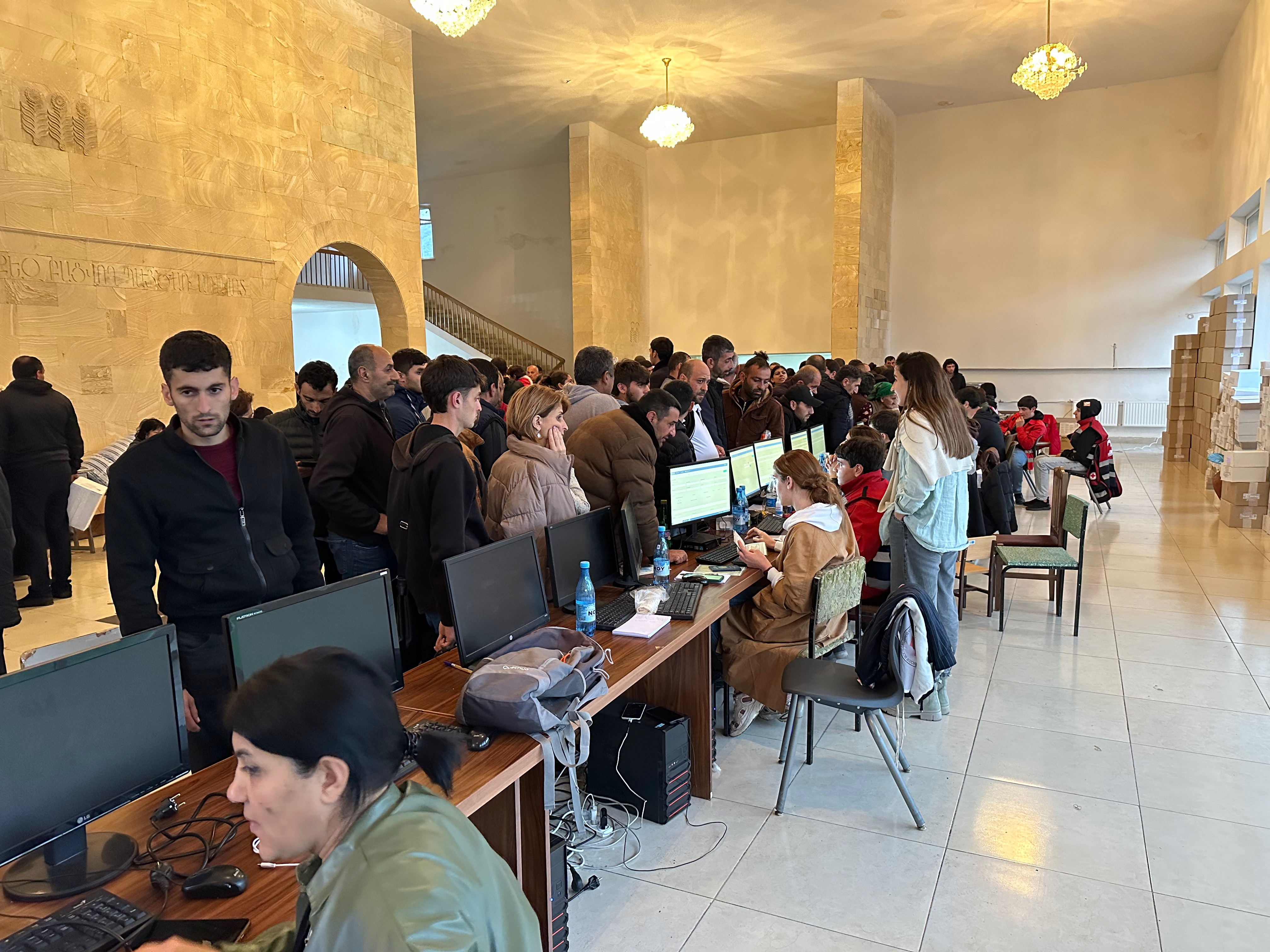 Thus, the Armenians of Nagorno-Karabakh/Artsakh found themselves in Goris with refugee status. 26 September 2023 | Marut Vanyan
"Have we still not reached that cursed Hakari?" came a grumble from the vehicle that had brought me to Goris on September 25-26. The road to Shushi was still open, but the growing number of trucks piled high with bedding and assorted belongings already foreshadowed the looming disaster. As we neared the Hakari Bridge, traffic ground to a halt. Drivers would alternately hit the gas and brake—accelerate, stop, accelerate, stop. Some were changing tires, others had lost their way, and some were cursing into the void; one person was passing a loaf of bread out the window to another, while someone else was searching for medicine. Chaos.
I was lucky that a cool-headed army officer was the one driving me to Goris.
“I didn’t see anything like this even in the first Karabakh war... We smashed the pharmacy windows... There’s nothing left; there’s no doctors around... The hospital... My two sons, I have no idea where they are... Haykazov...” A call from Stepanakert comes through to our car. Silence. Then gas again—moving forward a meter.
Another call from the same person. "They’re running, burning—it’s hell, I’ve never seen anything like it... The fuel tank exploded..."
Silence falls again. ""There’s no one left alive; I know this base inside out. Essentially, it’s an atomic bomb. There are two fuel tanks there, half-buried in the ground," the serviceman explains—or perhaps he is reminding himself. Then, looking ahead, he assesses the situation: "The burns are severe. There’s a foam-based treatment—it needs to be applied immediately," he says. But I knew full well that in those days, you couldn't even find bandages or cotton wool in the pharmacies. "Why didn't they deliver fuel to the gas stations so people could fill up properly?" The serviceman points out the oversights, but it is already too late.
We hadn’t reached Hakari yet. It was dark and rain. We hear shouting. A young guy uses his phone to light up the traffic jam and yells, “Back up! Make way, everybody back up...” But how can one overcome a traffic jam stretching for tens of kilometers? The ambulance was transporting those injured by burns.
Days later, the fire had "spread" on Facebook: "Edwin too? Rolan too? Kristina’s son too...?"
To be continued. Thank you very much for your support.