

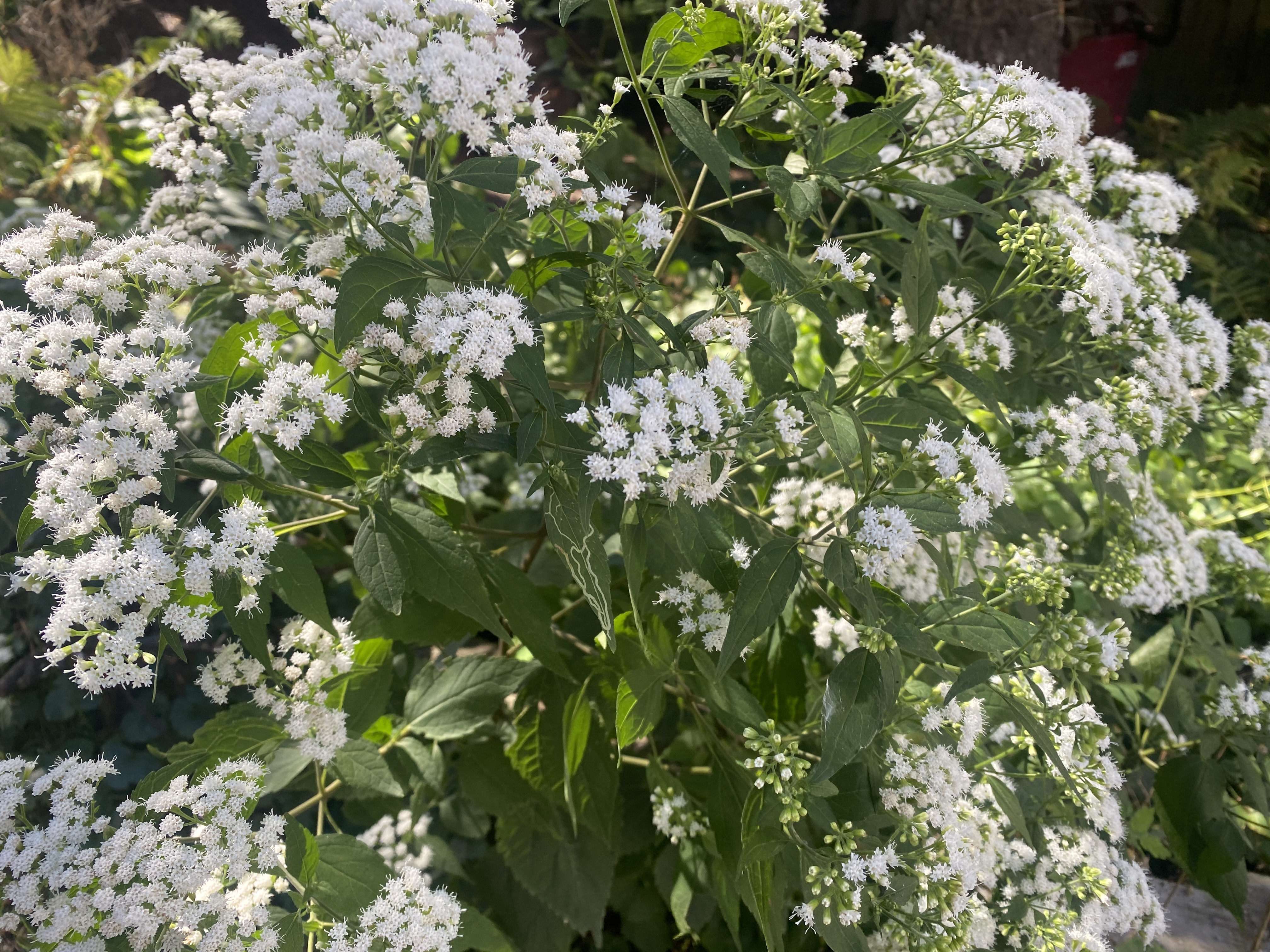
There is a fall plant that is beautiful to behold. Unlike marigolds, that odd plant that always seems to cost more than a car when shopping for a pot of them at the Homeless Depot, the resilient snakeroot is the fall plant of fall plants. It is a native American species, a prairie plant. And like a lot of prairie plants, it also seems to thrive in areas where most plants will not. It hangs around the shade; it hangs around the sun. It comes up in the cracks of curbs, sidewalks and alleys. It festoons the neighborhood with its tiny, but brilliant white flowers.
I always thought the plant got its name from the myriad, snakelike roots. It is a tough plant to pull out of the ground for that reason. And, if you have soil that has been disturbed, say a new flowerbed or excavation, in comes the snakeroot to take over.
However, the name came from the idea that the plant could cure a snake bite. There is a mild toxicity to the plant. Farmers were quick to rid the plant in pastures as it could contaminate milk and sicken cattle.
I never remember seeing snakeroot as a kid out in the wide-open farmland of Woodstock. But here in Chicago, the prairie, like the coyote, has adapted to the urban setting. Snakeroot is somewhat the plant herald of fall. The blooms will remain bright and cheery until the first flecks of snow descend from the sky.
And as other flowering plants have now done their deed and gone to seed, like the 8-foot-tall cup plant, the sunflower, the blazing star, the false indigo, butterfly weed and milkweed, all that is left now are the most stubborn and hardiest of plants. And, in spite of all efforts by man to get rid of snakeroot, she remains there in the city. Here in my backyard, the plant is scattered throughout.
And, as funny as it seems, there is that farmer part of me that wants to clear it out, keep it from spreading. That “needs to be managed” by me to perhaps placate my ego. Make me feel like I had a part in its being there. I know it sounds strange, but the fact it decided to grow wherever and however challenges that notion. So, lately, I look at it, admire the bees still going to work in its blooms. I look at my backyard, now overgrown and unkempt. But oh, far more beautiful than any effort on my part. I hang up my farmer hat and walk around in humble wonder of a pretty plant with such a sinister sounding name.
Martin's other blog can be read here.