

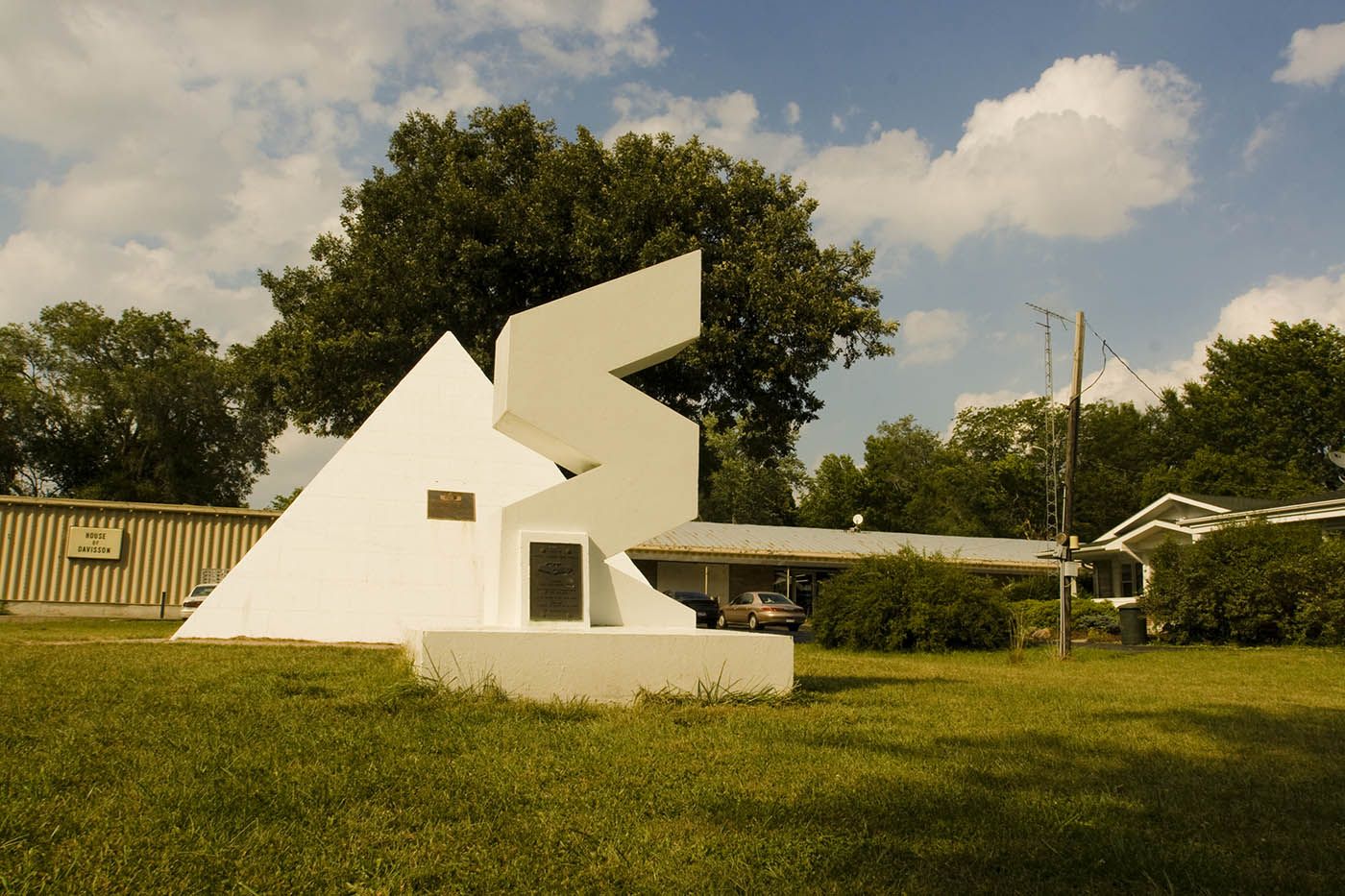
 Over the weekend, one story brought a smile to my face. In Seward, Nebraska, a time capsule that had been buried for 50 years was opened. Artifacts (including a car) from 1975 were viewed. Letters that parents had written for their children were finally read. And cassettes of voices long gone were heard as if it was, well, 1975.
There’s something very cool about time capsules, I think. Especially the ones that, like the time capsule in Seward, are created deliberately to reach out to the future. The idea of showing that future how we were when we were living. The acknowledgment of our mortality is what makes a time capsule so important. We know we probably will not be around to see it opened. However, when a capsule is opened, it is as if we are able to briefly give voice to who we were and how we were thinking at the time.
There are inadvertent time capsules, such as the tomb of Tutankhamen. Such time capsules usually are created to help others make their way to the afterlife. Such tombs in Egypt or even in Mayan pyramids give us a glimpse into what people were thinking at the time. While not directly reaching out to address us, they do address us none the less.
Sometimes mother nature gets in the act. I always think of the discovery of mammoths frozen in Siberia as sort of a time capsule. Or the famous Otzi, the Iceman. His body being discovered gave us a look into a late Ice Age man. We know what he looked like, what he ate, even how he dressed. That too is the past reaching out to us as a time capsule. Again, that sort of “time capsule” doesn’t allow us to know what Otzi was thinking or what he would even want to tell us, almost 4000 years later. Perhaps he would say, “don’t go hiking alone.”
What made the Seward time capsule so interesting was that it was deliberately set to be opened in 50 years. It is easy to see that some people, children at the time, were able to delight in connecting with what they had enjoyed back in 1975. One person read a letter from his mom that she had written for him to read in 2025. In the letter, she told him how much she hoped he did well in life and how proud she was of him. What a wonderful idea to reach out to those we love and give them something to look at and marvel over.
I always like to think of the mini time capsules I give myself. For example, if I save some money for a project or did a task that helped me save time months or years later, I look at that as sort of a time capsule. That Marty from the past reaches out to the Marty of the present. I call these “mindful time capsules” in the sense that they are deliberately directed to the benefit of the future.
That got me thinking about the native American idea of “Seven Generations.” That idea is that our life conduct needs to be done with the well-being kept in mind of those seven generations removed from us. So, in many ways, our actions are time capsules then. What we do now has a direct impact on those who come after us.
It is no wonder then, that capsules not only have a bit of nostalgia attached to them, but they also represent a bit of responsibility. While the Seward time capsule is definitely having something that evokes nostalgia, our daily “time capsules” of actions can either make or break the world.
What I mean is that if we were to treat each day as a time capsule of action, our intention in the moment will be going far into the future. And while that sort of time capsule may not come with such fanfare as the Seward time capsule, it is even more significant and important.
READ MARTIN’S OTHER BLOG HERE.