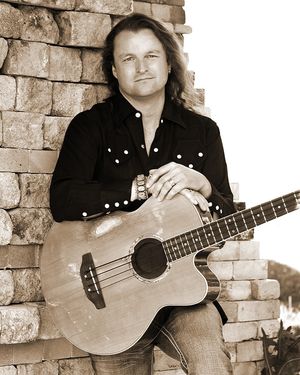


Mike and Nancy McCarthy are not your average moose hunters.
Well, I am not either.
I am a moose geek.
I was determined to see a moose during the latest Switchback tour to Winter Park, Colorado. The McCarthy’s were kind enough to humor me in my quest. Mike was my English teacher back in high school and we had a chance to rekindle our friendship. His wife Nancy and I also knew tons of folks from McHenry County and so, it was a joy to walk and talk about the old days. But quietly, as we were looking for moose.
We met at 7 a.m. last Wednesday in the lobby of the Vintage Hotel to walk a quick ten minutes to the Jim Creek Trail. At the trailhead, there was an ominous warning poster from the Colorado Department of Wildlife: ATTENTION! MOOSE IN THIS AREA! It was a great looking poster, almost as attractive as the Chicago Department of Streets and Sanitation poster: ATTENTION! RATS IN THIS ALLEY! When the sign goes up, there’s probably good cause one will either see a rat or a moose. I was psyched.
Part of the trail was a beautiful boardwalk with Jim Creek running in several gushing streams underneath. The first part of the trail was especially created for handicapped to enjoy a chance in nature. Along the trail were vast amounts of willows--prime food and hiding places for any moose there might be. The creek was really running strong, as melt-off from the mountains surged down from above the tree line.
I thought about how interesting it was to name the stream Jim Creek. I wondered who Jim might be and why would anyone settle on naming a creek after the first name of some guy. Jim is a bit more dignified it seems than Larry Creek or Bob Creek, but still, here in Colorado, with all the splendor of the natural world, one would want some sort of Native American name or a name like Coldwater Canyon Creek, perhaps. But Jim Creek was what it was called, and I had to accept that to a moose, it didn’t matter what the creek was named.
The sun was starting to crest the mountains and high up in the forests, golden sunlight slowly worked its way down the hills, lighting up the trees in a golden hue. One could stand still and see the march of light, slowly warming up the forests for another day. The warmth was welcome, for it was cold and we could see our breath as we walked the loop that took us along the boardwalk and past the willows.
Willow is some of the favorite moose food out there. And it was the fact that Colorado had such willow that led to an amazing thing back in 1978. Moose were brought in from Utah and Wyoming. Acles Acles Shiras was not around in Colorado. It was the introduction of such a large herbivore that at the time was considered an amazing achievement for the ecology movement.
Colorado loves its moose as all around Winter Park. There are signs with moose on them, hats with moose on them, jackets with moose on them and hundreds of t-shirts as well. For a moose geek, it doesn’t get any better. All one needed to see was the real thing, munching on some willow.
But we didn’t.
The scene was idyllic, we were the only humans around and yet, there were no moose that first day. There were plenty of signs that elk and moose were around. Hoof prints in the wet, marshy soil, droppings here and there. There was even some bear scat on the ground, though Mike McCarthy insisted it was dog poop out too long. (When it comes to debating bear scat, sometimes one has to humor the old English teacher.) The fact was that there were no gangly bogtrotters that could be seen. I suspected that they were probably about ten feet into the willows, watching us carefully go by, talking sotto voce.
The first day out we were skunked when it came to moose. The only moose I saw was on a license plate of a camper from New Hampshire.
We decided to give it a try the next day. Again, we set out from the lobby at 7 a.m. and soon were back to where the boardwalk trail through the willows split from the Jim Creek trail, that worked its way back up into the high country. We were going to take this trail up toward tree line, or at least as far as we could go in our footgear. We all were wearing gym shoes, which for the lower boardwalk loop was fine. But further up the mountain the trail in spots was saturated, sponge-like from all the meltwaters. In spots the trail was a shallow stream and one had to pick their way from rock to log to rock. The Jim Creek Trail starts in earnest once you cross a Forest Service access road. This road is fairly wide, sand and gravel affair and campers and RVs would pull up on the shoulder and camp for the night, overlooking the moose willows around the boardwalk trail. A dam was in place along the creek, which crossed under the road. This dam was the property of Denver Water. Denver Water’s imprint was the most prominent feature of the boardwalk/willow area below the road. A big water pipe bisected the area, bringing thousands of gallons of water east to the mile high city. It was an ugly reminder that here, in this wild area, mankind is at work, tapping the resources for the millions of people who live along the Front Range, some 40 miles to the east.
We headed from the dam and onto the trailhead. A sign was posted with an adopt-a-trail donor’s name prominently displayed: Bullwinkle J. Moose. Someone had a great sense of humor, I thought. For about 20 minutes we slowly threaded our way up past willows and creek on one side and thick forest steeply rising up the hill. Here, the sun had yet to make its presence known and our breath would rise in clouds as we stopped every so often, unaccustomed to the altitude. At one point, I saw movement far up the trail. I froze as something the size of a house cat scurried out of view. It was encouraging to know that I saw something larger than a squirrel. But it wasn’t a moose and soon, our hike further up the mountain left us cold, and our feet in danger of getting soaked. The only noise that could be heard was the roar of the creek that was off to one side of the trail. The McCarthy’s decided to head back to the hotel. I stayed on the trail, quietly threading my way up the mountain.
Walking alone, I felt very exposed to any sort of creature that might enjoy meeting me. Mountain lion or a bear would easily turn the adventure into some sort of nightmare. And stories of people being attacked in Colorado by lions were fairly commonplace. I took more time to stop and take note of the surroundings, watching for any movement. The higher I went on the trail, more Grimm-like the forest became. And magically, like such a fairytale, the trail itself surrendered to snowmelt, which rushed down the temporary creek bed it had become. Finally, reluctantly, I turned back and headed for the hotel, running out of time.
I had a brief surprise when the critter I had just a glimpse of earlier turned out to be a pine marten. We ran into each other, the marten carrying a freshly caught squirrel in its mouth. I fumbled for my cell phone and managed to get a brief film of it dashing up the hill, breakfast on its way to a family of martens, perhaps. It was nice to see such wildlife, but alas, no moose.
Later that day at the hotel, I had heard that a woman was jogging along near the trailhead when she ran headlong into a mother moose and calf. Excited by such a report, I suggested to the McCarthy’s we meet at 6 a.m. for a final attempt to see a moose. We all knew it was now or never the next day, our last day in Winter Park.
Native Americans believed that one never saw an animal. An animal would choose to reveal itself to you. If you walk in the woods enough, you can understand that is very much the case. For all our bravado as being the top tier species, in the forest we are merely bumbling interlopers.
We walked along the boardwalk trail in silence. All that could be heard was the sound of Jim Creek. Some fresh bear scat was on the trail. Mike and I looked at each other, our eyes silently debating if it was indeed bear scat. We moved along, Nancy taking up the rear of our trio as we slowly headed toward the wide service road. It was Mike who stopped me from walking past a young bull moose, perhaps about 50 yards off the trail. It was eating willows and minding its own business, the dark shape of its body perfectly blending in with the upturned tree roots near the willows. We all fumbled for our cell phones and quietly started filming the bull. He looked to be about two years old, his antlers, velvet and still undeveloped in places. My guess is that this fellow still hung around where its mom was. Mom had long ago literally kicked him out of home, having a new calf to worry about. Such young moose are loners. They will hang by themselves or with another bull until the rut starts in late September. He wasn’t bothered by our presence, and I watched carefully to see each twitch of ear, or any hackle of hair raised on the neck that indicated he was. We kept a good safe distance and backed further down the trail as he slowly made his way along the buffet line. He was magnificent to see and I was overjoyed to reconnect with my favorite animal.
I had first learned about moose from Dr. Margaret Altman, who was a deeply respected expert on moose and elk populations in Jackson Hole, Wyoming back in the late 1960’s. It was a chance meeting, years ago because I had stumbled on a winter kill of a cow moose. She died that winter, with a green canvas collar still around her coyote-nibbled neck bones. I came across her carcass when we were heading to fish with my dad and brothers on the Buffalo River out near Moran. My discovery of the collar was brought to the attention of Dr. Altman, who had collared that moose as part of a project. Such data was important, as there was a good chance, she would have never known what happened to that cow moose. She invited my siblings and the “moose-boy” to meet her and was especially delighted to know I was a moose-geek.
And I learned something very important from Dr. Altman. The fact someone could spend their life doing nothing but being around moose was an eye-opener for me. Though I wouldn’t do that, especially since I lived in Illinois, it was enough to make me understand that whatever I did later in life, I had to do with the same passion that Dr. Altman had. In so many ways the moose became symbolic of my own aspirations, my love of Wyoming and that wilderness that keeps one humble. It represented in many ways my own pursuit of music. And with a bit of persistence and luck, the McCarthy’s and I were there on a chilly June morning, in the presence of an ambassador that chose to reveal himself to us.
Like this post? Here's another post for this week from Marty.