
This past weekend, I had some Switchback shows out in Iowa. A lot of driving was necessary, but the weather was clear, crisp and full of that beautiful fall blue sky. Luckily the majority of the travel was along two-lane roads.
There is something special about the two-lane roads out in Iowa. For all the perception of Iowa being a “flat” state, a good part of it is actually rolling farmland, with bits of woods and wonderful streams and rivers. Every so often, there are tiny towns. Some of them show the struggle that is evident in rural areas--boarded up shops, dilapidated and unkempt homes. Then there are towns that seem set on self-improvement--buildings painted and a coffee house, a boutique of some sort and even some public art displays. A town can tell you a lot about the people living in it, even when driving through at 30 miles per hour.
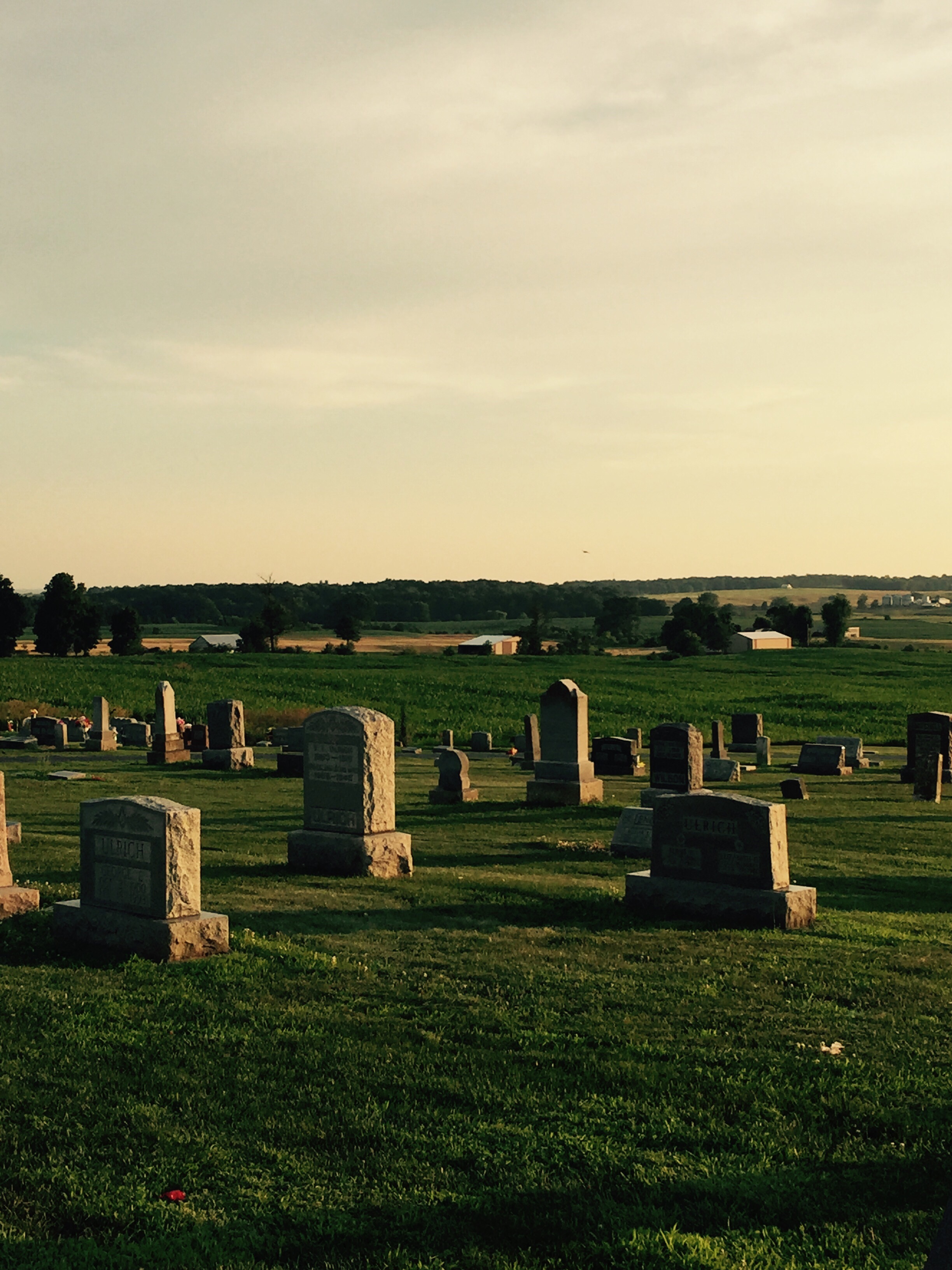
There’s another thing that sits out in rural Iowa. Small, prairie cemeteries. These can show up in the most incongruous of places. For example a patch that has been carefully plowed around in the middle of a vast corn field. Or a corner intersection of a gravel road with no town in sight for miles. I often think about these little cemeteries, often saying a prayer for those people in them. For most of those people were immigrants to this land. They started a cemetery here and there because they had no idea of what would be where. Sometimes, they were able to nestle one alongside a church and then both the church and the cemetery became derelict. You see that too, driving along the small roads. Other times, there will be a well-kept and immaculate cemetery. Again, out in the middle of nowhere, but with an old iron fence around it and orderly headstones. Someone is taking care of it, and I always guess that it has to be a descendant of those people who first started farming.
I think about those people. What they saw when they arrived. The fear, the hopes, the sheer will to make everything work because they couldn’t afford to fail. Those people, usually from an ethnic group, like Germans, Swedes or Irish. At least clinging to some sense of community and maintaining that community even in death. These little places of rest that must have been something of a declaration of sorts. That they could have a real cemetery, afford real granite stones and even get a fence around that piece of prairie seems so hopeful as well.
Those people, what would they think of us today? Our world is the direct result of their gamble. We, their descendants who drive those two-lane roads. What do we do to sink roots into the soil? What do we gamble with in hopes of a better future?
That is why I feel sad when I go by a cemetery that has been clearly forgotten. Grass halfway up the tombstones. A fence that has partially succumbed to corrosion. A forlorn oak tree, bearing silent witness to the people who are buried there. Where are the descendants of those people? Where are the keepers of their hopes, their dreams? Isn’t that supposed to be us?
Eventually we all die and our humanity desires that something remains. That is why we have cemeteries in the first place. But the message that most cemeteries carry, that of hope and dreams undertaken before the undertaker, those small prairie cemeteries say so much about the people in them and we, their descendants.
Do they matter? Or, even more chillingly, do we matter?
Do we keep the faith they entrusted to us? Do we maintain a world of freedom, democracy and the belief that the next generation will be better off than ours? Are we just too busy, too distracted and too selfish or self-loathing? Do we understand that like it or not, we have been entrusted with making things better for the future? We literally have “one foot in the grave”, that is life. We are those prairie cemeteries-- small, well-kept or lonely, lost and forgotten patches, watched over by a lone oak and visited only by the moon.
READ MARTIN’S OTHER BLOG HERE.