I’ve been working quietly on Lucky Earth for a while, and only recently it started to feel like something real is emerging.
The idea was simple from the start - not to build another travel guide, but something that actually helps you make better decisions before a trip. Not “top places”, but real signals: what’s happening, what might change, where things can go wrong.
So I built a live map where you can open different cities and see a short, practical snapshot - risks, crowds, logistics. The kind of information you usually only realise after something goes wrong. You can try it here: Open the Lucky Earth map
Recently, I added something more serious behind it.
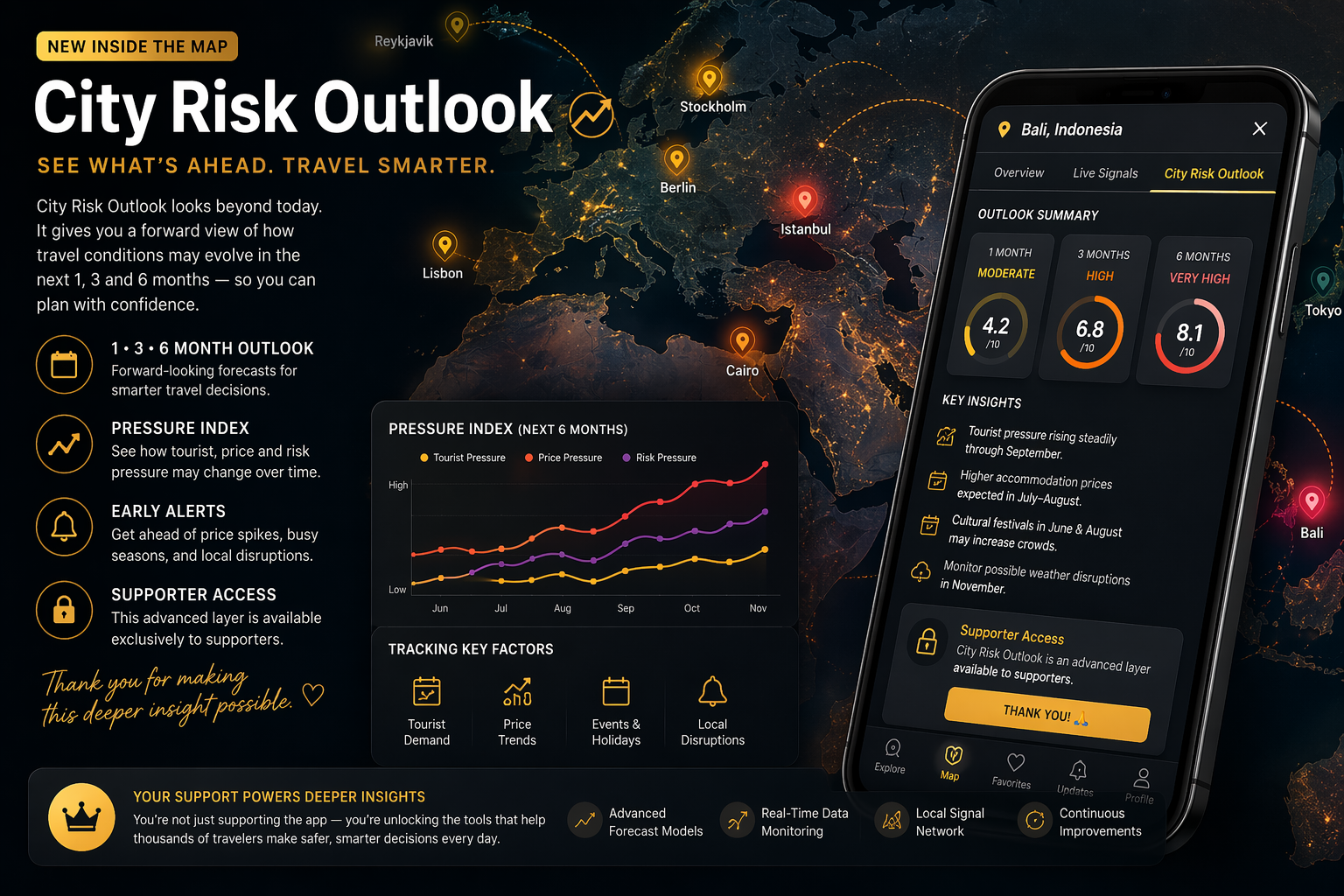
Inside the map, there’s now access to a deeper layer - a forward-looking analysis that looks beyond the moment and tries to map what’s building over the next 1–3–6 months. It combines live signals, recent patterns, and broader context to highlight where pressure is increasing, where disruptions are likely, and where conditions are quietly shifting.
It’s not visible as a separate “tool”, but in reality it’s powered by a much heavier internal system that I originally built just for my own use. Now I’m slowly opening access to it through the map.
At the same time, the Android app is already live, with signals, quizzes and a few experimental features that I’ll keep improving: Download Lucky Earth
Everything is still evolving. I’m building it step by step, testing things in real time, sometimes fixing things right after they break. But it’s getting closer to something genuinely useful.
If you try the map and feel there’s value in it, you can support the project. I’ve set up a simple “buy me a coffee” page, and in return I’ll open access to deeper layers of the system - including extended forecasts, more detailed monitoring, and early access to new cities and features.
It’s a bit unusual, I know. But right now it’s the simplest way to keep building without slowing everything down.
And if not - no worries at all. Even just taking a look and sharing your thoughts helps more than you might think.