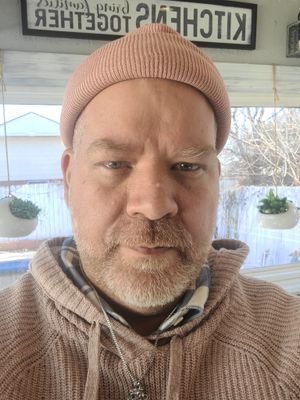

“There are no words.”
This phrase has appeared over and over in comments, messages, and spoken to me in person. “I don’t know what to say.” is another variation on the theme, and while it seems trite, it actually strikes deep at something in the situation that I only recognized yesterday.
There literally are no words.
None.
Not one single word in the english language even begins to try to describe what we are going through.
We are a nameless, faceless mass of humanity, subjected to such an unspeakable tragedy that no one has dared to coin a phrase to describe it.
While divorcee, widow, widower and orphan all exist to describe the separation in vital, meant to be life giving relationships, there is no name for a bereaved parent, or even sibling.
When I thought of this, I was tempted to think I was the only one noticing this, after all, I’d never heard it mentioned, but this is a fantasy for young people encountering new things to them,and assuming they are the first. I am not.
In fact, many have stumbled across it. One, a professor from Duke university, attempted to bring a term from sanskrit, vilomah, into usage, but unless you’ve looked this up, you’ve never heard it.
We don’t want to hear it. No one does.
It was the horror that stalked nameless through my mind before this. Every father I saw depicted as losing a child brought an involuntary, “I hope I never experience that.” to my mind, or often even to my lips.
It seemed surreal.
But it’s not. In fact, by the age of seventy, more than one in seven parents will have experienced the death of their child in their lifetime.
It’s a category that fifteen percent of us will go through, yet we cannot face it long enough to name it. It’s too painful, before it can even share its name, we are pulling back, afraid to look this horror in the eye for fear we too will be forced to experience it. As if naming this phenomenon would be like uttering “Blood Mary” three times in a mirror, summoning the demon to inhabit your own life.
Even finding yourself here, there is no desire to identify with this circumstance. To do so is to pity yourself, let alone think of anyone else feeling anything but pity for you. When I think it, “I’m a dad who had to bury his son.” I’m immediately sorry for myself.
It isn’t that we don’t want the empathy, it isn’t even, that I mind being pitied to some extent, at least I’m not invisible, but there will come a day when I hope that those around me can see me without seeing my pain. And that day will come, and I will likely mourn the loss of this non identity, this nameless category I’m so easily identified with now.
Labels are a human habit. They help us wrestle with things, categorize them, know how to react, think and feel about things that may be too complex without a name.
Many times it’s an excuse to not wrestle with ideas, though. Think of terms like “liberal” “conservative” “fundamentalist”. They reduce a person, or sometimes an entire population of people to a single word. A word we believe defines the single greatest factor, the permeating world view of those individuals.
What do you feel when you hear the words widow, widower, orphan? What images come to mind? For me, this category, of course, summons a young, blonde english urchin with a tin cup, “Please sir, may I have some more.” from Charles Dickens classic, Oliver Twist. But a whole host of faces surrounded by black, with tear stained eyes, caskets, long black limousines, and a host of other images parades by right behind it, stopping traffic as we all watch and thank whatever we believe that it is not us on that day.
Labels give us power. We often feel they give us the right to discount and dismiss the people behind them. After all, the label safely separates us from them, names them as part of “the other” a foreigner to our way of thinking, not someone we have to worry with, or take into consideration.
We think of our selves as so different from them, and yet. Just like any of us, under the right circumstances might find ourselves wearing any of those labels in the eyes of others, any of us can become the nameless.
I didn’t apply for this status. No one asked me. It wasn’t even a case where I left a box checked by default because I didn’t read the “Terms of service” on my life closely enough. Nothing in me ever wanted this. I still don’t.
And yet, here I am, having terms like, brave, wise, and strong applied to me for something I have no choice in. I can go through, or I can go under, and those are the only options. There is no back. There is no undoing. There is no “courage” which is having a choice and choosing the hard thing.
But I am still Noah’s father, and maybe this is the thing I’m wrestling with. While he ceases to be, where time and space are concerned, I do not. I am every bit as much a contributor to the DNA that was my son as I was a month ago, while he was still breathing. Still turning in finals at 3 AM the morning before he died. I am still in that reality.
So maybe, that name still fits. Maybe it just carries an asterisk? Father *bereaved
Or, as I’ve been thinking of myself since this idea occurred to me while going through the stop light at Northwest 10th and May avenue, a place I’ve been countless thousands of times in my life, headed to my brother’s to pick up my youngest, Eli, with his mother in the car. “Father-interrupted”
“There is no word for it,” I said, to her, but not really to her. “If you lose your wife, you’re a widower, if you lose your husband you’re a widow, if you’re parents die you’re an orpahn, but there’s no word for what we are now.”
She’s very wise. “Because it’s not supposed to happen.” was her only reply.
But here, is my question, without a name, how do we label this conversation? WIthout a name for this category that embraces 1 in 7 people who will ever have a child born who shares their essence, how do we talk about it?
Because it’s a big thing, and being nameless and faceless means that we are, after a time, invisible. And while it is extremely similar to other losses I have faced, in its nature,and the practical aspects of wrestling your mind into acceptance, and adjusting to your new reality, it is also completely foreign.
I knew what it was to lose a mother, so losing a grandmother was familiar. I had lost a grandmother, grandfathers were no harder. When I became the oldest in my family line at the age of 46, it was not a surprise that losing my father was shocking, but survivable.
This is new. This is different. I am now a father interrupted. I was prepared for my son to go through hard things. I’ve walked with two children through marriages, watched one have her first two children, and walked with one of those through a divorce.
I’ve spent sleepless nights in hospitals, wondering, with Noah, if this would happen, but not ever really believing that God would “allow” it, although I’m fairly certain that isn’t how this works at all. But, I never considered what it would mean to actually have my fathering cut short, to be in a place where I feel there is another soul out here that I should feel connected to, and yet.
Pater-interrumpo, father cut short. Relieved of duty, but feeling no less obligation. No object for my fathering, and yet, it goes on in a thousand little decisions and actions I’ve taken in the past month, with more to come.
I cannot even imagine this for my wife. I’ve noticed, and mentioned many times, that the connection between mother and child is an inherently more intimate one than father and child, at least it is so for birth mothers, I’ve little experience with adopted mothers, the amazing, often heroic people who choose to pick up these tiny lives nature has not obligated them to care for, and none the less, make it their life work. But, I know about as much about becoming a mother as one man can know, having watched my mother bring 6 siblings into the world and being by my wife’s side through 8 births.
Noah was truly bone of her bone and flesh of her flesh. She knit every cell of him inside her body at great personal cost to her physical being. The disconnection must be excruciating, and I see the evidence of it every day since.
As a parent, we are always aware of our children, even from thousands of miles away, and in the days leading up to our awareness of Noah’s death, we’ve found evidence that something in us knew.
Not knowing where a child is, like if, for example, your nineteen year old daughter goes on her first real date with a foreign man she met on a dating app, and still hasn’t checked in at one in the morning with you or any of her siblings, and you cannot get her to answer her phone because she’s left it in her car, terrifying.
It will make you do crazy things, like get in your car and go looking for her using the less than highly accurate tracking software provided by the cell carrier you share.
You give up so much in the name of parenting. Your sleep, your own comfort, the ability to roam the world, responsible only for yourself, only to have it cut short, before you’ve really completed your part in their preparations. Like being fired from a job so deeply embedded in your identity that you keep showing up every day, for years, expecting to hear it was all a mistake.
And maybe it was. But, the reality is, this interruption, this disconnect in the relationship is permanent. Whether wires got crossed in some heavenly office somewhere, and the number called as Noah’s was called by mistake or not, I am now nameless, Father Interrupted, vilomah, bereaved, and all of the rest, but in the end, I am still also just simply, “Noah’s dad.”
Miss you buddy.