Supplì in Rome, seadas in Sardinia, and the foods that tell my story.
Some foods only make sense where they’re born
There are foods that taste completely different when you eat them in the place they come from.
Think about a slice of Sachertorte eaten on a snowy night in Vienna.
Or a pastrami sandwich, standing at the counter of a New York deli.
Or the full experience of a buttery, flaky croissant, still warm, inside a small boulangerie in Paris, maybe in the 3rd arrondissement, maybe with crumbs everywhere.
Now.
Let’s be very clear.
Supplì must be eaten in Rome.
There is no debate.
If you don’t know what a supplì is yet (first of all: book a flight to Rome now), let me introduce you properly to one of the most essential Roman pleasures.
A supplì is a fried rice croquette, filled with ragù sauce and a heart of mozzarella. When you open it, the cheese stretches like a telephone wire. In fact, Romans used to call it supplì al telefono for exactly this reason. Very poetic. Very cheesy.
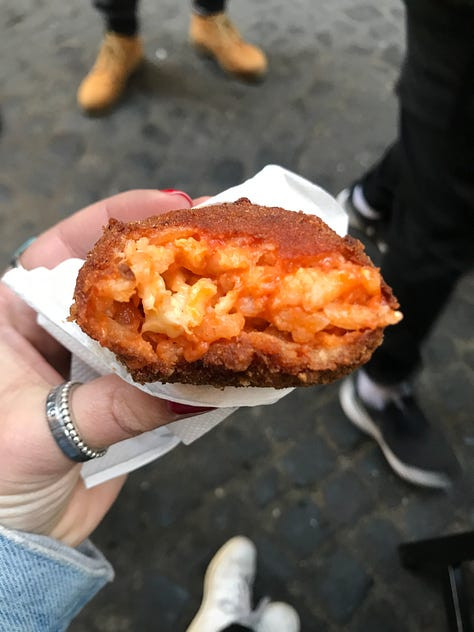
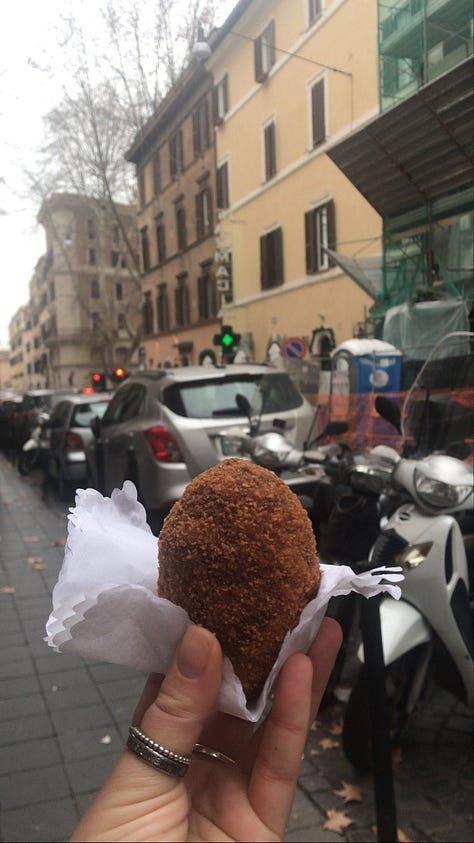
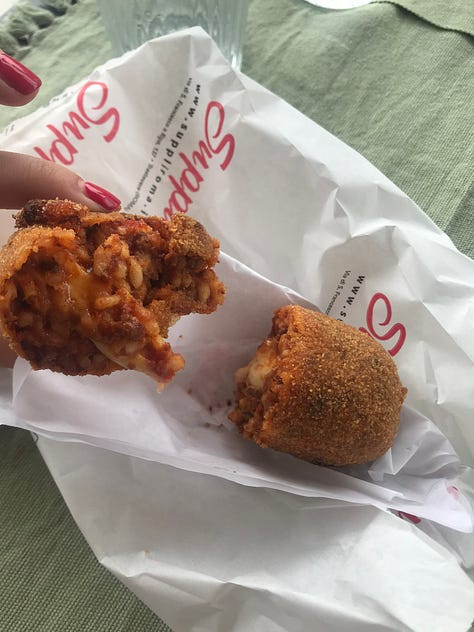
Supplì yummy
There are no official or certain sources about how supplì was born. No manuals, no recipes written in stone. But the most believable story, and the one that makes the most sense, connects its origins to the arrival of French troops in Rome in the early 1800s.

An old Roman friggitoria, where frying was already serious business
Romans eat supplì standing up, often at the counter of a forno or a rosticceria.
One is never really one.
It’s usually “let’s take one” that turns into “ok, maybe two”.
Supplì is eaten before pizza, after pizza, instead of lunch, or simply because it’s there.
Every day, in Rome, thousands of supplì are made and eaten. We don’t count them. We don’t need to. They disappear too fast.
You can find versions with cacio e pepe or amatriciana, but the ragù one is the real rule. The one that burns your fingers. The one you have to wait for. The one you remember.
You can eat fried rice anywhere in the world.
But supplì belongs to Rome.
It won’t surprise you to know that I always try to include a taste of supplì in my food tours. It’s my absolute favorite Roman street food, and I want everyone to love it at least as much as I do. If a supplì doesn’t appear on a tour, it’s only because my favorite spots happen to be closed: I would never grab one just anywhere.
Golden, oily, and absolutely finger-licking, supplì is the undisputed king, the real star of our walk through Rome.
If you ever get the chance to come to Rome and taste one (and whenever you feel like it, you can always book one of my tours), let me share what, for me, is the most Roman way to eat it.
You’ve just been to a pizza al taglio spot or a friggitoria. They have just fried your little masterpiece and placed it in a simple white paper bag, meant to absorb the oil, even if your hands are already a bit shiny.
Now take this small but powerful treasure and walk to Santa Maria in Trastevere. Head straight to the fountain that rules the square and claim a spot on its steps. Now, a little history for your fingers-to-lips moment: tradition says this is the oldest fountain in Rome. Its original form dates back to the time of Augustus, and it was moved here by Pope Nicholas V for the Jubilee of 1450. It’s fed by the Acqua Alsietina, which Augustus had built in 2 B.C. to supply his naumachia (yes, that’s right, the artificial lake for mock naval battles in Trastevere).
Not the oldest aqueduct in Rome, but still full of stories.
Only then, you may take out your little sinful pleasure.
While people walk by, amazed by the beauty of the church standing proud in front of you, you’ll be the happy ones. The slightly greedy ones. Enjoying the supplì, the square, and the joy of Rome moving all around you.
This, my friend, is the way to eat a supplì in Rome.
Speaking of small fried joys
Speaking of small fried joys, I can’t not mention another extraordinary creation. A rich, indulgent little parcel this time coming from Sardinia, the other place I call home. Much of my family is from there, and I spent endless summers on this island full of art, magic, and incredibly good food.
Seadas are one of Sardinia’s most iconic desserts.
They are large ravioli made of semolina dough, filled with fresh sheep’s milk cheese, fried until golden, and then served hot, usually with honey poured on top, or sometimes sprinkled with sugar. In my family, I used to ask my nonna for both, because… yes, why choose?
Sweet and savory together. Crispy outside, soft and melting inside. Traditionally, they are eaten at the end of a meal, especially during celebrations or family gatherings. They arrive at the table simply, no decorations needed, just warm, shiny, and impossible to ignore.
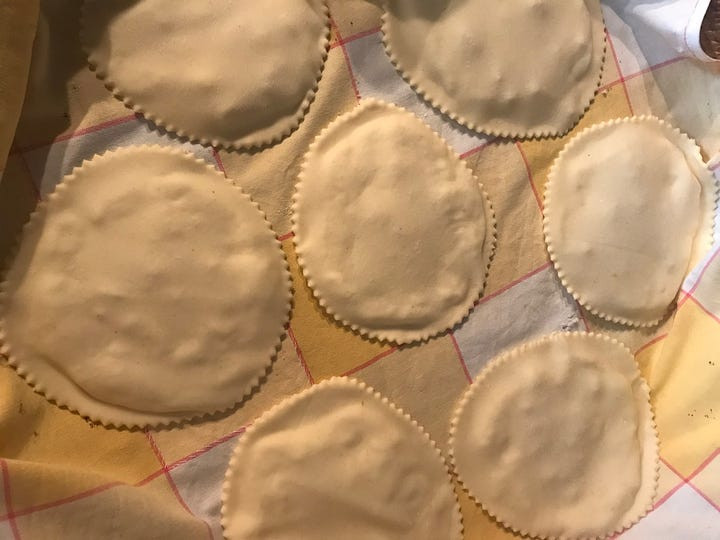
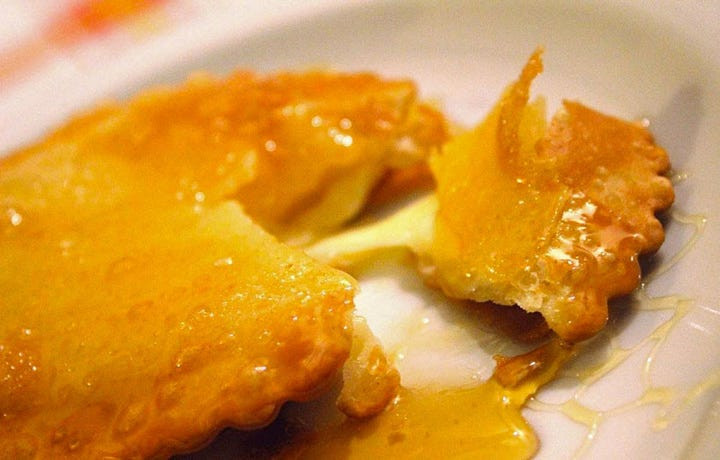
Seadas
I was about five years old when I remember my maternal grandmother making them from scratch. That was probably my first unofficial cooking class. We were in the small village where my mother was born, a place with about 2,400 people. To give you an idea, that’s roughly the number of people inside Madison Square Garden or the Franklin Music Hall in Philadelphia. Yes, very small.
(If you’re curious about “the unexplored Sardinia,” I’d recommend this episode of Anthony Bourdain. And whenever you’re ready, you can always start planning your next visit with me.)
This tiny village sits right in the heart of Sardinia, one of Italy’s most visited regions in summer, and still deeply underrated in winter. My memories place me sitting in front of the fireplace, warm on my face and completely frozen on my back, while seadas were being prepared in the kitchen.
Two dishes. Both popular. Both far from luxury hotel tables. And yet, for me, they are perfect representatives of Italian food culture. Little indulgent bites that tell a piece of who I am and where I come from.
With fried love,
Manu