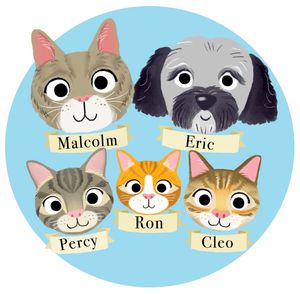

Friends!
Many of you have noticed that, although Percy, Cleo and Ron are siblings, they have distinctly different personalities. And then there’s me… I have a personality that is very much my own. We all live in the same house though - so why do we all behave so differently? I’ve been investigating Cat Behaviour!
A cat's behaviour is shaped by a mixture of instinct, learning, personality, and early experiences. Two cats raised in the same home can have completely different habits - one may greet everyone at the door, while another prefers to watch quietly from the top of the stairs. Like people, every cat has its own unique character, which is one of the reasons they make such fascinating companions.
Here is a list of both common and less common cat habits that I have observed, along with the science behind why cats do them.
1. Kneading ("Making Biscuits")
Cats rhythmically push their paws into blankets, cushions or people.
Why?
Kneading begins in kittenhood when kittens knead their mother's belly to stimulate milk flow. Adult cats continue the behaviour because it makes them feel relaxed, safe and content. They also have scent glands in their paws, so kneading leaves behind their scent.
2. Purring
Cats often purr when being stroked or resting.
Why?
Purring usually signals happiness and relaxation. However, cats also purr when frightened, injured or in pain because it may help soothe themselves. Some research suggests the vibrations (around 25–150 Hz) may even aid healing of bones and soft tissues.
3. Slow Blinking
A cat looks at you and slowly closes its eyes.
Why?
This is often called a "cat kiss." Slow blinking is a sign of trust because closing the eyes leaves a cat temporarily vulnerable. Returning the slow blink can strengthen your bond.
4. Head Rubbing
Cats rub their head or cheeks against you.
Why?
Cats have scent glands around their face. By rubbing against you, they mix your scent with theirs, marking you as part of their trusted family group.
5. Bringing "Gifts"
Cats sometimes leave mice, birds or toys for their owners.
Why?
Female cats naturally teach kittens to hunt by bringing home prey. Domestic cats may extend this behaviour to their human family, especially if they think you need help learning to hunt!
6. Chattering at Birds
Cats make clicking or chattering sounds while watching birds.
Why?
Scientists aren't completely certain. It may be excitement, frustration at not being able to catch prey, or instinctively mimicking prey sounds.
7. Zoomies
Sudden bursts of running around the house.
Why?
Cats are natural sprinters. Zoomies help release built-up energy, particularly after sleeping for long periods.
8. Sleeping Most of the Day
Adult cats often sleep 12–16 hours daily.
Why?
Wild cats conserve energy between hunting sessions. Domestic cats have inherited this behaviour even though their meals arrive in bowls.
9. Sitting in Boxes
Cats seem to love cardboard boxes.
Why?
Boxes provide warmth, security and hiding places where cats can observe their surroundings while feeling protected.
10. Following You Everywhere
Some cats shadow their owners around the house.
Why?
This can be affection, curiosity, or simply because you've become part of their daily routine.
11. Staring at Empty Spaces
Some cats appear to watch invisible things.
Why?
Cats have excellent hearing and vision. They may detect insects, distant sounds, tiny movements or changing light that humans cannot perceive.
12. Sleeping with One Eye Slightly Open
Some cats don't fully close both eyes.
Why?
This allows them to remain partly alert while resting - a survival instinct inherited from their wild ancestors.
13. Covering Their Food
Cats may scratch around their food bowl after eating.
Why?
Wild cats sometimes bury leftover food to hide its scent from predators and rival animals.
14. Drinking from Taps
Many cats ignore fresh water bowls but love running water.
Why?
In nature, moving water is generally safer than stagnant water. Running water may also smell fresher.
15. Sitting on Laptops
Cats often lie directly on keyboards.
Why?
Laptops are warm and are receiving your attention. Cats frequently choose whatever seems most valuable to you.
16. Grooming People
Cats lick their owners' hands or hair.
Why?
This is called allogrooming and is a social behaviour that strengthens bonds between members of a cat family.
17. Sleeping on Your Head
Some cats choose your pillow.
Why?
Your head gives off warmth and your breathing is usually calmer than the movement of your legs, making it a comfortable sleeping spot.
18. Rolling Over and Showing Their Belly
Cats expose their tummy but don't always want it stroked.
Why?
Showing the belly demonstrates trust because it exposes vulnerable organs. However, trust doesn't necessarily mean an invitation to touch.
19. Eating Grass
Many cats nibble grass outdoors.
Why?
Grass may help digestion, provide nutrients like folic acid, or simply satisfy curiosity. Some cats also vomit afterwards, which may help remove indigestible fur.
20. Talking to Their Owners
Some cats seem unusually chatty.
Why?
Adult cats rarely meow to one another. Meowing has largely evolved as a way of communicating with humans. Different meows can mean greetings, requests, complaints or demands for food.
21. Sleeping in Strange Positions
Cats can sleep upside down or twisted into unusual shapes.
Why?
Cats have exceptionally flexible spines and loose shoulder joints, allowing them to rest comfortably in positions that would be impossible for most mammals.
22. Watching You in the Bathroom
Many cats follow owners into the bathroom.
Why?
Bathrooms are small, predictable spaces where they know you'll be stationary for a while. It's also an opportunity for companionship.
23. Tail Quivering While Greeting You
Some cats vibrate their tail upright when they see someone they love.
Why?
This is a strong sign of excitement and affection. In some cats it also accompanies scent-marking behaviour.
24. Sleeping with Favourite Toys
Cats sometimes cuddle soft toys.
Why?
Toys can become comforting objects, especially for indoor cats. They may represent prey or simply provide emotional security.
25. Choosing One Favourite Person
Some cats bond most strongly with one individual.
Why?
Cats often form their closest attachment with the person who best understands their body language, respects their space, provides consistent care, or spends the most relaxed time with them.
So there we have it! Between us, Cleo, Percy, Ron and I exhibit many of these habits, but they aren’t many that we ALL do. Which of these habits does your cat have? Do let us know!
With lots of love,
Malcolm xx