
Thank you for listening to the Making Lemonade Podcast!
Please remember to subscribe, share, review, rate and, if you can, support the making of this podcast by donating here on BMAC, or by becoming a member of the Lemonade Makers. You'll find information on how to do that at the top of this page.
I'd love to hear from you - your thoughts and reflections on what you've heard (things you've liked/haven't liked, things you'd like to hear more/less of), your own experiences, and suggestions for people who you think would make brilliant guests.
You can contact me by emailing [email protected] or by messaging me on...
Instagram or TikTok - @markmakeslemonade
Twitter/X - @immarkosullivan
Jacob’s Links:
Website and Social Links
https://www.facebook.com/jacobnordby/
https://www.instagram.com/jacobnordby/
Creative Self Journal Gift
https://www.jacobnordby.com/creative-self-journal-gift/
If you've been affected by anything you've heard in this episode, please take care of yourselves, and consider visiting (or contacting) any of these organisations:
www.mind.org.uk
https://www.samaritans.org
TRANSCRIPT
[00:00:00] Hi everyone. Before we jump in a note on our content this episode contains themes and discussion that might be upsetting or triggering for some listeners. Please check the show notes for more detailed descriptions And look after yourself.
Hi everyone. My fellow Lemonade [00:00:30] Makers. How are you doing? I can't believe it's September already. It feels like this year has just flown by and I also can't believe that this is episode 20 of Making Lemonade. Can't believe that. Wow.
And thanks so much for your continued support of the podcast. Just by listening to it, you're supporting it, talking about it, sharing it, all of that stuff is, is just so helpful for Thank you.
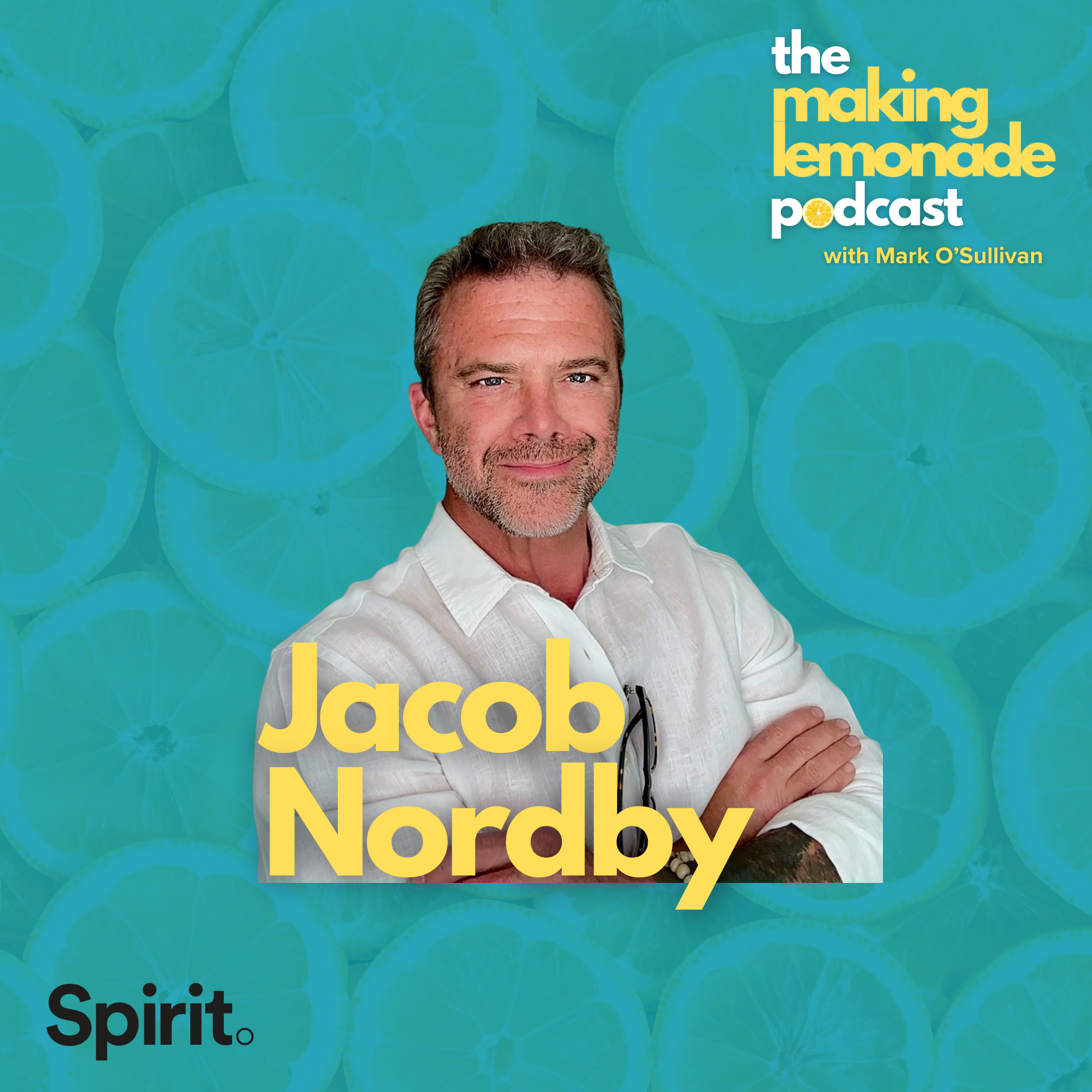
In today's episode, I am talking to [00:01:00] Jacob Nordby, who is an author and a creativity mentor, which is pretty cool job title really. And Jacob has his own personal story, like everyone I talked to of how he arrived at his own lemonade and. I mentioned he's an author. He's written an incredible book called The Creative Cure, and you'll hear in the podcast, I say that I'd only just received it when we actually, um, did the recording. But it's a few weeks on now and I've managed to read, not all of it yet, because I'm one [00:01:30] of those people that takes ages to get through a book. and I often have about five books on the go at once that I'm moving equally slowly through. But what I have read of it, I've really enjoyed, and we talk about the book and how it came about in this episode.
Hope you enjoy it.
So take me back to the beginning of your journey. What, what was your life like before you, you started doing this work?
I. [00:02:00] Well, probably like yours, mark, it goes all the way back to before I remember my name. I was born to formerly hippie parents who took a hard right turn before I was one years old and, um, joined a fundamentalist Christian cult and moved here to Idaho from California where I was born.
And um, so I was raised in a very. Severe environment. My mother's magical, my father's very talented, but inside of the confines of that group, we, I didn't see a television show till I was 25, for [00:02:30]example. Um, didn't wear a TA t-shirt outside the house till I was around 25. Yeah, 25 was kind of a big year.
That's when I left that church. And I'm telling you that just to say there was a, there was a lot of early there were a lot of early messages that. I internalized about who I am, about the world, about my place in it. And frankly, I spent most of my childhood feeling like I didn't belong here. Mark uh, I didn't experience some of the trauma that you have talked about so much on your website and your shows.
But I [00:03:00] experienced a lot of other kinds and, you know, it's, it has given me this kind of, this lifelong. Hunger to get to the bottom of these things and to, well, you know, like Carl Jung says, um, until we bring what's unconscious to consciousness, it will control our lives and we will call it fate. And I just wasn't happy with this idea that I had to keep going along, sort of caroling off the sides of.
Traumatic experiences I couldn't even see. And it kept affecting me. [00:03:30] It kept bringing me down, um, and so yeah, that, that began very unconsciously at first, but that began to lead me down this path, leaving that religious group I was part of and really seeking for some other version of connection outside of religion, for example.
Then I began to just bump my head. I, I like to call it the invisible furniture mark. It's, you know, like we have these homes that we live in our lives, and many of us have. They're just jammed with invisible furniture, almost like [00:04:00] we're psychological hoarders, we don't even realize, you know? But we get used to adjusting and contorting ourselves and playing small just so we can get through a day without bumping our head and shins on things we can't see.
And so I've, I felt like I was having a lot of that in my life. I see you nodding your head.
That's such an I've never heard it described in that way, but I know. Oh, I think my, uh, mic did something strange there for a second. I've never heard it described in that way, but I can, I think I absolutely understand [00:04:30] what you're saying.
Um. That stuff that is so present in our lives without actually physically being there. But the, as you say, we sort of contort ourselves around. We get used to, it's almost like, you know, the, the analogy of when someone who, who's experiencing some kind of mental health issue won't go to a doctor or won't go to get help, and you say, yeah, but if your leg was broken, you, you'd go and get something done, wouldn't you?
And it's. It feels like the kind of [00:05:00] thing of, oh no, I'm fine. Yes, my leg is broken, but it's, it's fine. Yeah. You know, it's just, yeah, just it takes me three times as long to get anywhere. That's all. Yeah.
Yeah, exactly. And then of course I'm gonna say we, but just make it very personal. I developed a lot of coping mechanisms and survival strategies that I began to, or sort of just didn't know any better than to assume was just my personality.
This is just who I am. Being plunged into some really deep [00:05:30] introspection about age 35 mark. I, I had started a mortgage company and several other companies, and everyone thought I was so successful really, you know, just moved into this big, beautiful house. But I was waking up at about 3:00 AM every morning, just feeling terrified, just like a wreck inside.
And so my inner world didn't match my outer veneer at all. Um, I got invited to a meditation retreat and um, this was the fall of 2007 and I agreed to go [00:06:00] because I hadn't ever learned to meditate before and I thought that would be, everyone talked about it, you know, Deepak Chopra, different people. I was reading like.
Meditation's really good. So I thought, well, I should learn to do this. So I, I, I signed up for this thing and then I went up a couple of hours away, up into the mountains. And when I opened the door of this cabin where this retreat was being held, it was, uh, very apparent to me I was not in Kansas anymore, which is a us saying not, I'm not, not in my familiar ground anymore.
And, um, turned out to be a shamanic. Retreat. It turned out to be a [00:06:30] Shamonic initiation. It turned out to be a shamonic initiation using DMT, which I had never had any substances before, so I've been there, but it was that interesting. I've
been there.
You've been there? Okay. Yeah. Oh, say more if you want.
No, no, no, no, no, no.
Go for it. We'll talk about that afterwards. We'll talk.
Okay. I, I don't run into all that many now. Now it's more in the common experience being talked about a lot more, but back then it was very secretive and it was that. In recovery movements. They talk a lot about that [00:07:00] moment of clarity, mark, and there were several other people who had never experienced this before there, but for some reason it hit me exactly in that spot where my chink in the armor was, where I wasn't holding it all together and where I felt like a wreck and afraid and this expansive experience of just being broken wide open for the very first time.
I experienced, just for a few moments, I experienced existence without. Abject fear, and I wouldn't have [00:07:30] described myself as a fearful person, but when I experienced the contrast between walking through life, carrying this load of anxiety and sub, you know, um, latent depression, that I didn't even, wouldn't have even been able to acknowledge much less talk about, I had that experience of contrast, like, oh my God, there's a way to be that isn't always afraid, and so that really began to turn my life. And then the mortgage meltdown of 2008 came and [00:08:00] actually wiped everything out. So I, I had this gift. It was a terrible, frightening, painful gift at the time.
Yeah. But also I look back and it's like, that was the thing that allowed me to kind of start over. So I moved to Austin, Texas with my then wife and three little kids. I had no idea who I was or where to start. Mark. Um, I started eventually I got two or three part-time jobs, none of which were in the field I had been in.
I, I didn't feel capable of really anything. I didn't know anything about Complex PTSD. I didn't know [00:08:30] anything about true burnout or nervous breakdown, but I was experiencing those things. And so during that time, I began reading and working with Julia Cameron's book The Artist's Way. Okay. You're familiar with it?
I am. I am. Yep. Yeah. And that began to really bring me home a bit more to myself, mark, and help me get my feet back on the ground as I did those morning pages. And I would sit there and I had this job at a warehouse and it, I was the only one there. I would run boxes back to the government office, but I would come back and it'd be long stretches [00:09:00] between box orders.
So I would sit there and do these morning pages, sometimes going onto eight or nine or 10 pages and just, you know, reigning tears on the paper. And it began this process then of little by little. Realizing that even though I was experiencing a lot of brokenness, I myself, inside of there am not broken.
Wow. That is, that is, that is quite a journey. Um. Just, I just want to say something about one of the first things you said there, which is, and I, I know you weren't suggesting this for a second, [00:09:30] but I've never been a sort of trauma hierarchy sort of person at all. You know, we all, we all go through our stuff, don't we?
And, and it's all relative to us. I know, I don't need to say this to you, but I, you know, I'm, I'm gonna say it anyway because, you know, people say. People do say to me quite regularly, oh, I haven't been through what you've been through. I said, my response is, I haven't been through what you've been through.
And it, it doesn't matter. You know, what it looks like or sounds like or feels like. It's all [00:10:00] stuff, the stuff that creates that invisible furniture that you talked about, which I really, I love that. I love that idea that you've given me, can I dive a little bit more into your, your childhood? I mean your, your parents going from, I'm guessing a very kind of free lifestyle if they were hippies I'm imagining it was very free to this very rigid [00:10:30] lifestyle. Were, did that happen? After you were born, did you say? Or before. And do you rem do you have any, um, memory of, of how they were before that, that point?
No, I think I was about six months old when they made that switch. And I've asked my mother quite a bit about this Mark like what happened? How did that shift happen? And she said, you know, we were. Children of the sixties, um, we were rebelling against the. Inauthentic [00:11:00] machine world, we didn't want any part of it.
We thought we could drop enough acid to change the consciousness of the world overnight. And she said, we got scared. You know, by the time I came along in 1973, uh. My mother had been right there in the middle of Haight Ashbury, mark, right there. Wow. In the middle of it happening, you know. And um, she said, when you were born in 73, by then the party was ending.
People were having children, people were, um, overdosing on drugs and dying. There was, there were race riots, there was [00:11:30] all this going on. She said, we just felt so crushed. Because we had been so idealistic, so we made this switch and we were really looking for something that felt real. She didn't wanna go back to the Catholicism of her childhood and.
My father was similar in that way. Um, and so they were really looking for security for certainty of some kind, you know, they were refugees from this. Like, so they found this group that looked a lot like, little House on the Prairie or something from an old, from the olden days. And it just felt, they felt [00:12:00]like, oh, here we go.
These people aren't playing the game the same way. Um. And I wanna say that despite the fact that it's kind of an oddity and there were, there are big holes in my cultural references. You know, I don't know a lot of the television shows that were, uh, what most of my peers were watching. But aside from that, and aside from the, well, there's plenty so.
The belief that we are broken, that we are intrinsically, essentially sinful, for example that goes all [00:12:30] the way to the bone, you know, and if that be, that message is repeated over and over again as a child and during a child's formative years, they begin to see themselves as unworthy, as broken as all those things.
And that was celebrated. So there were plenty of things in that environment that were really harmful. I will say though, that after a lot of years of letting go and I would never want to return to that group or that kind of lifestyle, but I also have been able to see and find some [00:13:00] medicine in it.
And I love or let's call it making lemonades of it. I no longer see it as only this black pit of pain and restriction and all of that. I really look back and go, wow. I was given a very different kind of. Childhood. I didn't ever watch television, so I read books, I did things creatively. I went outside and played, you know, and so, uh, it's interesting to look back at all of that and.
To not for a moment turn away from, these were the things during formative years, while the cement was still [00:13:30] wet in my psyche, that formed my perception of myself and the world. And some of those things to this day, I'm still working with to let go of or to work around. But, um, also I look at it, there's, there are a lot of gifts in that.
Experience, and I feel like I've been given these things as possibly a way and not in some cosmic, the divine plan. Like, here, here you go. But, but however it works. I've had these experiences and it's really an honor. [00:14:00] Uh, I take it as such sacred ground when people show up and begin to open up about the things that hurt them and that shaped them and the things they would love to let go of, you know?
Yeah. Yeah. I get what you're saying so much. Yeah. And it's a question. It, it is something that I've discussed a lot on this podcast with people. The first episode that I did with, um, a really amazing guy, a broadcaster here called Nick Campbell. We, he, he was also a, um, a [00:14:30] survivor of sexual abuse.
One of the questions that I posed him, and I don't, I don't remember planning to ask him this, but it, it just came up in the conversation, which was, you know, if you could go back and have it not happen to you, would you? And I asked it because, and. Everything I've been through, everything each of us have, has been through, has brought us to this place now.
It's been a step on the journey, hasn't it? Yeah. And yes, there are so many things I wish weren't part of my experience and [00:15:00] weren't part of my life and so many, so many things I wish I wasn't carrying with me still. But I also, I like the person I am now and so kind of everything that's happened. Yeah. Has contributed to that and I, so I, I, I absolutely get what you're saying about that.
Yeah. Even in the least comfortable, darkest Yeah. Parts of our experience, there's, there's often something that, that we [00:15:30] can take and we can use in some way.
Your listeners can't see the little tears in my eyes when you said, I like who I am.
Yeah, no, I can see that day you are set.
What an amazing thing to be able to say after all of that.
You know? I like who I am.
Oh, well, I, I, um. It is, I dunno if you do this, I sometimes forget the power of things. You know that because you and I we're having conversations in this sort of space, aren't we? You know, [00:16:00] all the time and Yeah, sometimes I. It takes someone else kind of reflecting back to you, kind of what's being said to make you go, oh yeah, that is quite big, isn't it?
Yeah, no, that is, that's, yeah, that's quite huge. No, I get that.
Profound shift. Yeah. And, and I realize that, uh, I'm not the interviewer here, but I'm so curious. So, so Mark, did you, would you say that was a pretty big journey for you to get to a place of being able to even say that and mean it? [00:16:30]
Oh yeah.
Yeah, completely. And, you know, it's not a. I wouldn't say it's a constant thing. It's not like, sure, it's not, like with everything, it's not like you get up to a ledge on the mountain and, and you're there. Are you? It's kind of, yeah. You know, I walk along the ledge and slip off and, and, um, you know, go to a, a ledge lower down and then have to scramble back up again.
But yeah, no, it was, it, it was a journey and it still is. It still is a journey. Absolutely. Yeah. I,
I really [00:17:00] love that what you just said about it's not a level you reach that you then never descend from or fall back from. I think that is such important message. This year I've gone through some really big, uh, changes.
Let go of a major business project. Had to work, walk through some really deep burnout. And I think it's probably part of my formative years mark, this overachiever thing that says I have to, you know, if I'm engaged in something I love, I have to just burn it all down. And so I've, you know, when I say [00:17:30] burn all down, like all my energy, all my everything goes into a thing.
And so I've, I've had to walk through some months this year of, of exhaustion and, and at times depression, you know, and what you just said, it's just so good. I've had to remind myself, no, you haven't been busted down a grade. You haven't lost anything. You're just having a feel of everything very deeply right now and, and, and walk through it.
But it can be confusing and scary when some things, it feels like, oh, I've already dealt with that. They come [00:18:00] back around in some other form, you know?
Yeah. It's not like a video game, is it? You're not just, oh, oh, I completed level 32 ages ago. Why am I, why is it making me go through the cavern again? Um, exactly.
I wasn't really a gamer, but I feel like I can use that analogy. Um, can I ask you, you described that period around sort of 2008 and the burnout and everything that was happening for you then what was that like? How did you [00:18:30] know that, that things weren't right? Things weren't good for you?
How did that feel?
Oh, I mean, terrifying Mark. And again, I think the, I, I know, I knew back then, I knew nothing about trauma, nervous system research, any of this. I didn't know anything about it that, that really plunged me deeply into a lot of that work. Um, and research and learning and then applying it. But, I mean, I think the easiest way to say is I just felt broken.
I couldn't understand why I wasn't able to perform [00:19:00] anymore. I didn't have any understanding of, you know, adrenal fatigue or, or, or any of, you know, cortisol burnout, any of these things. And so I just couldn't figure out what was the matter with me. I had, I had lost a bunch of weight, like 70 pounds, and so everyone looked at me as like, you're healthier than you ever been.
You look amazing. All of those things there came one day. Uh, when I simply couldn't go back to the office and I couldn't explain it, I couldn't and I couldn't explain it. I told my mother back then [00:19:30]that I, I, I wished I'd had a heart attack or a car wreck or something. So at least people understand there'd be a good excuse.
You can, you know why I can't function. Yeah,
yeah. You can label that
easily.
Yeah.
Yeah. Yeah. I just stopped functioning Mark and I, I kind of, I remember having all of these images back then. I felt as if, as though I was sitting on the train tracks and the train was coming at me and I knew it. And I, and I wasn't tied down, but I couldn't get up and move.
That's how it felt.
Yeah. No, I can, I can, I can relate to that. And you said [00:20:00] about this meditation retreat. Did that happen around that same time?
That happened a year before.
And was that something that you'd have done before? I know you said it was sort of completely out of your comfort zone, but what, how did that come about and what was it about that invitation that spoke to you?
Wow, it's so interesting you ask that because it's, there was something, there was some quality about the invitation that. It felt different to me. [00:20:30] It wasn't just, and actually I was a little afraid of it, mark, and it didn't make much sense because I'd heard that meditation is, chill. You be quiet and, and relaxed.
So I couldn't understand why I felt afraid. My first book, the Divine Arsonist I wrote as I was on the other side of that, but, you know, kind of still working through parts of it, deconstructing and things and, um, and I, so I described it in that. Book as if a gong had gone off inside. There was this big sort of reverberation inside that says, I have to do this.
Um, [00:21:00] and no, I hadn't played around with any substances plant medicines or otherwise at that point, I don't think at all. So this was very, uh, I was tabular rossi. I showed up without any experience or expectation about what might happen. Um, and, and you know, a lot of people have asked me, you know, it's, it's very popular now and with the big podcasters, Joe Rogan and different ones talk about it all the time.
And so a lot of times right now there's almost the pendulum has swung so far the other way. It's almost as if everyone assumes that they should go and do some heroic dose [00:21:30] of psilocybin or DMT or something. And, and people come have asked me that over the years. I'm like, oh, oh, de definitely not, I mean, not saying you should or shouldn't.
But I think it's very individual and I think that people who are dealing with a lot of unresolved trauma, um, and maybe some. Either they do or don't know about some psychological issues. They should really spend some time with a mental health professional before they go in and experience something like that.
It can be intensely destabilizing. For me it was that it gave me [00:22:00] a lens on. How far off track I was in my life and how I was carrying around this, well, I call it ill fitting armor that I had put on, trying to fit in, trying to succeed, trying to be successful, all these things. And that gave me a, a little glimpse mark of who I really am inside of the armor.
And it was this beckoning, it's this, come, come home, come get to know me, get to know yourself. Wow. Yeah, and so [00:22:30] that. You know, I, I like to, the, the unions, uh, love their mythology. They like to say like, the first part of life is the Iliad is the going out and this, and as we are being called home, we then have to make the choice if we're actually gonna come home to ourselves or if we're gonna stay out there, you know, continuing to build more ego structures you know, as we go.
And so that for me was kind, it was a bit early. I was about 34, I think, but, but still it was, um. It was on time. It, it became this invitation to begin the, the [00:23:00] journey home.
Hey everyone.
Just before we get back to the episode, I wonder if I could ask you a favor.
Every week I'm getting messages from people who are just discovering the podcast, which is so wonderful, but you can help more people to discover it by doing a couple of things. The first thing you can do is share it on whatever social media platforms you're on. The second thing you can do, [00:23:30]and this is so important, is leave a review on whatever service you listen to your podcasts on.
If you could also leave a rating, and if that could be five stars, that would be great. And when I say five stars, I do mean if it's out of five, obviously if it's out of a hundred, don't leave five stars because, um, that won't look great. and the third thing you can do, which would be such a massive help, is join the people who are helping support the podcast by clicking on the link to buy me a coffee, where you'll find show notes for each episode and also. [00:24:00] A place where you can buy me a coffee or a couple of coffees, or even join the people who are becoming lemonade makers supporting the podcast on a monthly basis.
If you can do any or all of that, I'd be so grateful. And now let's get back to the episode.
You just casually dropped in there a few moments ago. Oh. You know, that's when I wrote my first book. You know, so many people say, oh, you know, one day I'm [00:24:30] gonna write that book, I'm gonna do it.
You've written a few books. Am I right in saying and I'd love to talk to you especially about the creative cure. Um. That is the right name, isn't it? I didn't make that up. Yeah. Good. Yeah, you Do you ever do that thing where you say something you think, is that it? Or did I, oh, for sure. Did I make that?
I think again, another middle-aged brain thing. I think. So what led you to writing your first book? What was the process there?
So [00:25:00] Mark at, at age 10, I had told my parents, um, I came out in the living room because we didn't watch television, so I was always reading, but I put the book down. I was reading, walked out in the living room and told my parents I want to become a writer.
And, um. You know, I've, I've become aware now after I've worked with so many people and, and writers over the years that, that my experience is a little unusual in that they were very supportive. They didn't say, oh, you're, you can't do that, or You won't make money on it. They, they, they said, oh, that's wonderful.
I was about 10 years old, I think. And, um, and so they were [00:25:30] supportive and they said, okay, now it's time to brush your teeth and go to bed. So I did and pretty much forgot that calling for most of my adulthood, mark And, um. When I moved to Austin, I had no plans of becoming a writer. I began to write some, and then my father had given me that copy of the Artist's Way, Julia Cameron's book and his name, his signature was on the spine of it.
Uh, it was the gift box set and he said, son. Take this with you someday I'm gonna want it back. And so when I took it with me to [00:26:00] Austin, it was in some box and I, I don't know what happened the morning I decided to take it with me to work. But I saw it sitting there and I said, well, maybe, maybe I should take this along.
So I did and I started reading and, um. You know, I began to just have this emotional break, breakthrough and break down and opening, and the morning pages, the process of really listening to myself on paper like that, it began to stir this I, I should probably. Write about this experience. I'm going [00:26:30] through this, the struggle and the, the insights and all of that.
My father would've called himself a blocked creative, I'm pretty sure. And, um, years and years later, uh, the way life happens, I ended up befriending Julia Cameron and, um, and so. We're actual friends now, and, and I've worked with her in large groups of people and there've been times on stage. I've told this little story and say, I, I never got to give my father his book back because he died, uh, a couple of years after that.
[00:27:00] But I feel like, I feel as though I get to give it back to him by sharing, uh, Julia Cameron's work, but also what's been beneath it, which is this call. For us to reconnect with who we really are. And by the way, when people talk about creativity, uh, a lot of times we have it in our culture. Uh, we have it very sort of compartmentalized to writing or some, some version of the arts or, you know, maybe, um, uh, engineering or something is creative.
But a lot of people shut themselves off from it and they're like, I'm just, I, the most common phrase I hear is, [00:27:30] I'm just not that creative and Mark. The thing I would love to posit here is that your creativity, our creativity is our life force. It's like a sap in a tree or the blood in our bodies. It's meant to go everywhere.
It's meant to inform and enliven everything. And so, a lot of people I work with, uh, it's a difficult. Mental construct to let go of that says, my creativity is only worth something [00:28:00] if I can make a lot of money with it. Or my creativity is only worth something if it's coming out in one of these, you know, sort of classical avenues.
Beginning to invite people into seeing themselves and their lives as what I love to say to people, and it's been said several different ways, but becoming who you really are is. Your greatest creative project. It all starts with that. Everything else is an expression of that. So it might be a book, it might be the dinner you serve.
It might be [00:28:30] this beautiful relationship you have with your shoulder or your partner whatever it might be. If we can show up with who we really are, it brings artfulness into our lives. And that means it brings a deeper sense of joy and it means that we begin to have, especially for those of us who have had to question this deeply.
And I've run into people who haven't, mark, and it's always so fascinating to me to run into people who haven't questioned whether they matter deeply. Those of us who have had that core question, that [00:29:00] wound of saying, I don't, I don't know if I matter. As we exercise more and more of who we really are, our creative nature in our lives, we begin to see ourselves reflected in these small moments and we begin to notice I do matter.
I my life matters. And it's not, we're not waiting for a book to become a bestseller, or we're not waiting for the world to recognize us as some creative genius. We begin to notice that these moments of love, these moments [00:29:30] of. Aliveness with ourselves and with nature and with other people. They begin to be these mirrors that say I matter not in some hubris field.
I am the king of everything, but no, I actually matter. My presence here matters. It matters. Oh, wow.
Yeah. I'm a bit, I'm a bit speechless after that, which is very unusual for me. Um. You know, what you, what you're saying there about creativity and, and people who, and I know so many people [00:30:00]who say, oh, I'm, I'm not creative.
I, I'm not a creative person and like you, I'm, I'm, I, you know, I try to say to people. Everything you do is a creation. Every decision you make, every thought you have, every time you turn left or right you are, you're creating something. You are, you're creating the next sort of step of your journey.
There's that thing, I dunno if you do this ever in, in your, in your work I do it, especially when I'm working with young people, which is. I, if there's a window in the [00:30:30] room we're working in, we all go and stand by the window and I say, right, look out, just in your mind, just describe to yourself what you can see, you know?
Yeah. And it's usually buildings and maybe a car and, you know, a lamppost or, uh, you know, um, uh, a glass window somewhere. And just pointing out the very obvious thing, but it's, but sometimes we need these things pointed out, don't we? That everything you can see started [00:31:00] life as an idea in someone's head.
Yes. That's so powerful, isn't it? That wouldn't, yes. We think, oh, everyone's got a car, there's, uh, we're gonna be in a car if we're gonna go somewhere, we're gonna get in a car to do that. Cars only exist because of ideas and thoughts in someone's head. That window that closes, that keeps the warm air in or the cold air out or vice versa, only exists because someone thought of it and then someone took what that person had thought, and they [00:31:30] thought, but if we do this to it and improved it in some way and et cetera, et cetera, et cetera, such a powerful thing, isn't it?
Yeah. I mean, we're sitting here looking at each other from thousands and thousands of miles away. And we take it for granted. This is a miracle. This is incredible. Yeah. I mean, when you and I were both children, mark, none of this was even a available. None of
it. No. Well, unless you watch, um, star Trek, um, you know, 'cause they had everything.
[00:32:00] I'm annoyed actually. I, I feel like I was sold a lie by back to the future. Part two because. We don't have hover boards, we don't have flying cars. Yeah. We were lied to, I dunno if you saw those or if you, if you missed those, Jacob, but we were lied to.
Yeah. I think that gen, I think Gen X we're, we're, we're mostly a disappointed generation because we were really given a lot of promises about the future.
Oh. We were told so much was gonna happen, [00:32:30] and even, and oh, and in fact wasn't. Wasn't the future in back to the future part 2 20 25? I may have made that up. Oh my God. In which case we've, you know, we've been deceived. The dis the level of deception is hideous. Oh. I feel all down now. No, I don't.
By the way, I, you mentioned this before, I know you're, you're a comedian, you'd, I love the laughter we're sharing right now. And I think that a lot of people who have been through [00:33:00] traumatic experiences in their lives, uh, some of the funniest people I know including my siblings. I'm one of, I'm one of six or seven and, um.
And, uh, we, when we get together, the laughter is so intense and I, I think it's interesting that people who have worked through healing a lot of trauma, laughter is genuinely a, a beautiful healing mechanism. It can be, you know,
yeah, it's so true, isn't it? I call it I call it my sanity valve. You know, it's the thing where in.
[00:33:30] Awkward tense, horrible moments. You know, if I can go let a bit of that steam out I'm gonna do it. And I would say 99 times out of a hundred it's the right thing to do. And just very occasionally I completely get it wrong. Yeah. But no that's always been my, my way through things. So. This is so fascinating, Jacob, and it's weird, isn't it?
I've, so I don't talk much about this on this [00:34:00] podcast, and I, I, in my mind, I'm going, I dunno if to include this bit or not, but I'm going to tell you, I. Uh, I went and did a therapeutic therapy assisted psilocybin retreat in Holland in a couple of years ago. I'd never done any psychedelics before, and more recently I've, I've taken DMT and had an experience with that and both have.
Expanded my mind and my healing as well. Actually, you know, the [00:34:30] psilocybin dose I did with these amazing therapists over two days was just mind blowing. I'm gonna, I must get your, if you're happy to either your email or your cell phone number because I'll send you something. I recorded it all and I'm gonna actually be releasing it as another podcast, but I've got this little kind of taster that I'd love to share with you if you're happy for me to do that.
Yeah. But I and as I say more recently, I've done DMT, but I've, it's made me, no, it [00:35:00] hasn't made me, it's led me to a much more spiritual place than mm-hmm. And I was brought up in a Roman Catholic family, you know, very Okay. Rigid, maybe not as rigid as what you experienced, but coming back to that, that.
It's very different. It's a very different form of spirituality. Mm-hmm. Um, I realize a couple of things. I realized how important letting go of things is, and [00:35:30] you've mentioned it a couple of times there, but I also, I'm really alive and alert now to, to the right message at the right time. And so much of what you've said in this conversation is resonating with me so much about where I am right now and what's happening for me right now.
I probably won't include this bit in the thing, but I just wanted to say it because it's, it's just weird, isn't it? How the universe kind of brings you the right things at the right time. [00:36:00] That's, that's my kind of set of beliefs anyway, you know? We should definitely have a time to talk about the MT sometime soon though.
That would, I'd love to talk about that. That's, um, that's been a very interesting journey. So let me. Let me ask you about your, your book, the Creative Cure, which I, I must tell listeners I received, I very kindly, um, was sent a copy and it only arrived yesterday, so I haven't had time to read it yet. But I had a [00:36:30] flick through this morning and I'm already really excited about, about reading it.
Te tell me about that book and about how it came about and, and what it's for and who it's for.
Hmm. Several years before that book came out, I wrote a book called Blessed Are the Weird, A Manifesto for Creatives. Oh, I love that. Um, that one that one came from releasing a small poem. Uh, blessed are the weird people and that.
Poem where [00:37:00] really I was really surprised, mark, I'd put a lot of things out. I wrote it when I was in Austin. I was driving down the road and this began to come to me. So I pulled over, I think I found an old envelope under the seat or something, and literally wrote this thing down. And then I put it out on social media and it took off.
Blessed all the weird people, the poets and misfits and mystics and heretics, and. Painters and troubadours before they teach us to see the world through different eyes. And, and, and it, I I, I was astonished by the number of people who showed up and it's like, oh, yes, this rings true for me. I thought [00:37:30] I was writing it just for myself.
And so I eventually wrote that book. I didn't realize at the time when I was writing it that I was really writing it to people who are neuro divergent, um, including myself. I was writing to people who are highly sensitive, who are um, have often felt or seen themselves as oddball as outside. And what was interesting is, um, a lot of people would come to me and say, I really loved that book.
I don't think. I don't think I'm creative though. I [00:38:00] don't. You, you wrote that book for creatives, for the weird ones, for the obvious. You know, I don't think I'm creative. And that began to hurt my heart more and more, mark, to hear that that refrain over and over. I'm not that creative or I'm not a creative at all.
And I began to realize I need to write a book that would be more of an invitation to everyone rather than just those who self-identify as, oh, I'm an artist, or I'm a, I'm an, I'm an oddball, I'm an outsider. Um, and so that was really the heart. Behind why I wrote this one, the Creative Cure. And [00:38:30] during that time as I was writing it, I was going deeply into my own trauma healing in ways I hadn't ever been before.
And that was humbling and revealing in so many ways. Um. I had been studying psychology and all kinds of things for a long time, but this one brought me really home to myself. I wasn't just talking about this is what other people have experienced. I, I had to look in that mirror very closely, you know, and so the publisher ended up cutting out quite a bit of my, my trauma research and things like that.
But this book really [00:39:00] was written to invite people to reconnect to who they really are inside. And. To see themselves differently, to see themselves as the artists of their lives. Even if it never manifested in the form of them picking up a paintbrush or singing a song or anything like that.
There's so many other ways to be in, in that space and that flow. And so that was what was really behind that book, was this invitation to say no in our world. And I think that it's I think this's [00:39:30] a feature of where we are at the. In the development of, you know, the industrial era and the post-industrial era, many of us previous to that, mark, previous to that becoming such a ubiquitous experience for humans, we were more of us were generalists.
We could, you know, make things, uh, many more people saw themselves as artists because there wasn't all this pressure to put it into distribution system and make money from it. It was more just for the joy of doing it, you know, and there was a lot more community about [00:40:00] in these experiences cooking and making music and art and all that.
And so as a result, many of us now. Have specialized our way out of the fuller experience of being human. And it's not that any of us needs to know how to, you know, weave baskets or make cloth or any of these things necessarily. But we have so much more available to us and many of us have put ourselves in this cramped experience of life that we say, well, the best I can do is work in a beige cubicle [00:40:30] and um, take a couple of weeks vacation every year.
Well, you're European. I think you get a little more vacation than America's often give ourselves. Apparently
we do, apparently.
Uh, we, we would do well to adopt that, but, um, yeah live these mundane, sort of, uni colored lives that don't feel very satisfying. And I, I'm not here to tell anyone what they must do to express themselves, mark.
I simply want to invite them to begin knowing that who they are inside of all of that is valuable and it's [00:41:00] worth expressing and it's worth experiencing.
I love that
so
much. Because it's all about, like you say, reminding, pointing out how unique and valuable and necessary each of us are. Yeah.
Yeah. I think we all need a reminder of that from time to time. How does it feel for you? Making this work, sharing it, knowing that it's out [00:41:30] there and it's helping people, and it's touching people's lives. How does that feel for you and how and how does it feel for you that it's come from your own, your own difficulties and challenges?
What does that mean for you?
Well, I would love to say that when, when we publish a book, we suddenly feel completely worthy and competent and all that, I would say, well, you know, you've, you've produced and published many things, mark. So I could, I know your laughter [00:42:00] is like, you understand what I'm saying?
Yeah. It's, um, I, you know, mark, I, I still struggle with feeling, uh. Lack of worth a fair amount of the time. You know, it's interesting. It's like, for me it's a daily practice almost of reminding myself that, um, that I'm okay of telling myself the truth. Those old thought forms, those, those, those old, uh, structures in our psyche that that happened, that were embedded before we even knew our names in a lot of cases.
And then were reinforced over time. They, they often still [00:42:30] rise up as this. Like, no, this isn't worth anything. That I want to be very candid about that. 'cause if your listeners ever wonder my, you know, if I could ever do that than my life and everything would be solved. The answer is no.
What it's given me is a lot more patience with that practice of coming home. And then there are moments, mark. And sometimes it's the moment, like what we're sharing right now where we're talking about these things and I get reminded [00:43:00] of how important they are. You know, you say it in your way and I hear that it's like, yes, thank you.
I needed to hear that again. Um, when I'm working with people one-on-one and we're going back and having dialogue with older parts of themselves and they are getting glimpses. Of their actual wholeness, of their actual worth. Or in groups when I gonna feel the energy come together and there's this dawning experience of, oh, this [00:43:30] relief, this safety, this feeling of gratitude.
I wouldn't trade, I wouldn't do away with any of my past experiences or what has led me to come to this kind of work because those are just priceless moments.
Yeah. Yeah. Yeah. And like we said earlier, all of those experiences and challenges have brought you here.
Yeah.
Who you are doing what you're doing.
I'm so honestly, so excited [00:44:00] about reading your book, um, and, um, and about exploring. Everything that you've, you've put into that and finding out more about you, Jacob. I always ask a question a bit like this at the end of these conversations, which is. If you had a message for someone listening to this who is going through something, whatever it is, whatever, whatever it looks like, whatever flavor it [00:44:30] is, but it's challenging, it's difficult.
It's dramatic. Any or all of those what message, what one message would you want them to take away from hearing this podcast?
I am pausing 'cause I don't have anything glib. Um, I feel like we're all in this world right now to one degree or another, going through the unthinkable in many ways. Um, the, the rate of change, it's so easy to feel small and insignificant and to feel worthless, honestly. I want to invite everyone who's listening right now [00:45:00] to take a deep breath and put your hand over your heart, really.
And feel that heartbeat and just know that is your, that's your life force beating away, keeping you alive, keeping you here. You have experiences you have. You have persistence. You have gifts that you haven't yet even developed or shared. I want you to know that you matter.
I want you to know that the way you keep showing up, [00:45:30] even in those areas that feel so possibly insignificant, you are making a difference whether you even know it or not. So thanks for being here.
Oh, Jacob, that's such a beautiful note to end on. That's such a gorgeous thing to say. I know. I know that people hearing that are gonna really appreciate it. And to hear your story of, of what you've experienced, what you've been through, and what's come out of it, and your honesty that there isn't a magic wand.
And, we, [00:46:00] we haven't reached that legend. Everything is fine now on, at the top of the mountain. It on it goes on, it goes but. We are going on, we are carrying on. Yeah. I love that. I love that. .
Oh, that was such a lovely chat. Jacob is a really lovely, lovely, genuine guy who I [00:46:30] enjoy talking to massively.
I'm gonna be putting some links as ever in the show notes that you can find in the description of each episode. and that includes links to Jacob's work. Thank you for being here for episode number 20, and I'll see you next time on Making Lemonade. Making Lemonade is presented and produced by me.
Mark O'Sullivan Music is by Dan Brees, and [00:47:00] additional support is from Ian Cullen.