

Elon Musk is one of the most recognizable entrepreneurs in the world.
People know him for Tesla, SpaceX, X, Neuralink, and his increasingly ambitious plans for artificial intelligence and space exploration.
But behind those headlines is a much more unusual story.
Before the rockets, electric cars, and billions of dollars, Musk was a teenager writing computer code, sleeping in startup offices, and taking enormous financial risks on ideas that many people considered unrealistic.
Here are 20 lesser-known facts about Elon Musk that reveal a different side of his journey.
1. He Sold His First Video Game at Just 12
Long before becoming a billionaire, Musk was already writing software.
At approximately 12 years old, he created a simple space-themed video game called Blastar.
He eventually sold the game’s code for about $500.
The game was primitive compared with modern games, but the story is remarkable because Musk was already experimenting with software and business as a child.
Imagine being 12 years old and already selling something you programmed yourself
2. His First Major Company Wasn’t Tesla or SpaceX
In 1995, Musk and his brother Kimbal co-founded Zip2.
The company developed software for online city guides and helped newspapers bring local content onto the early internet.
This was before Google became dominant and when the commercial internet was still in its early stages.
Four years later, Compaq acquired Zip2 for more than $300 million.
That sale gave Musk the capital to pursue something much bigger.
3. His Second Big Internet Idea Started as an Online Bank
After Zip2, Musk didn’t immediately build a rocket company.
He entered online financial services.
In 1999, he co-founded X.com, an internet financial-services company.
At the time, the idea of sending money through email and managing finances online was still relatively unusual.
X.com later merged with Confinity, the company behind a money-transfer product called PayPal.
PayPal eventually became the company’s name.
Decades later, Musk would buy Twitter and rename it X.
The name therefore wasn’t actually new to him.
4. He Was Already Thinking About Online Payments in the 1990s
The original X.com was surprisingly ambitious.
Customers could open an online account and receive money electronically.
The company even used referral incentives to encourage people to invite friends.
At the time, this was happening when many people were still uncomfortable with the idea of conducting financial transactions over the internet.
What seems normal today was considerably more unusual in 1999.
5. He Didn’t Start SpaceX Because He Was Already a Rocket Engineer
Musk’s entry into the space industry is one of the strangest parts of his career.
SpaceX was founded in 2002.
Before that, Musk had become wealthy primarily through internet companies.
He then decided to enter one of the most technically difficult industries on Earth: orbital rocketry.
SpaceX’s early history eventually led to Falcon 1 becoming the first privately developed liquid-fueled rocket to reach Earth orbit in 2008.
That achievement came after several failed attempts.
6. SpaceX Almost Ran Out of Money
The early years of SpaceX were extremely risky.
After multiple Falcon 1 failures, the company was under enormous financial pressure.
The fourth Falcon 1 launch in 2008 finally succeeded.
NASA subsequently awarded SpaceX a major contract for cargo resupply missions to the International Space Station.
Without that successful launch and subsequent NASA support, the history of SpaceX could have looked very different.
7. Tesla Was Already Around Before Musk Became CEO
A common misconception is that Musk personally founded Tesla from scratch.
Tesla was founded in 2003 by Martin Eberhard, Marc Tarpenning, Ian Wright, JB Straubel, and others involved in its early development.
Musk joined the company’s board in April 2004 and became its CEO in October 2008.
His role in Tesla’s history is substantial, but the company’s origin predates his CEO position.
8. He Studied Both Physics and Business
At the University of Pennsylvania, Musk earned degrees in physics and business through Wharton.
That combination is interesting because much of his later career has involved translating technical ideas into commercial companies.
His businesses have repeatedly operated at the intersection of engineering, finance, manufacturing, and technology.
9. He Was Involved With OpenAI at the Beginning
Before the current AI race between companies, Musk was involved in the founding of OpenAI.
OpenAI began in 2015 as a nonprofit research organization.
Musk was one of its early supporters and helped contribute funding.
OpenAI says that less than $45 million was ultimately raised from Musk during the nonprofit period, while other donors contributed more than $90 million.
Today, Musk runs a competing AI company, xAI.
That’s quite a change from his position in 2015.

10. He Left OpenAI in 2018
Musk left OpenAI’s board in February 2018.
According to OpenAI’s account, disagreements later developed over the organization’s structure, control, and funding strategy.
OpenAI says Musk wanted significant control over a proposed for-profit structure, while the organization rejected giving one individual unilateral control.
Whatever interpretation one takes of the dispute, the historical fact is simple:
Musk went from being involved in OpenAI’s beginnings to becoming the founder of one of its competitors.
11. He Eventually Built Another AI Company
In 2023, Musk founded xAI.
Its stated goal is to develop AI systems that help humans understand the universe.
One of its first major products was Grok, which was announced publicly in November 2023.
xAI described Grok as an AI system designed to answer questions while incorporating real-time information from the X platform.
So Musk’s AI story has essentially gone full circle.
12. Neuralink Is Trying to Connect Computers With the Brain
One of Musk’s less visible projects is Neuralink.
The company is developing brain-computer interface technology designed to interpret neural signals.
Its PRIME study investigates an implant and surgical robot intended to allow people with paralysis to control external devices using brain signals.
This isn’t science fiction anymore.
It’s an actual clinical research program.
13. Neuralink Performed Its First Human Implant in 2024
In January 2024, Neuralink reported its first human implantation.
The company said the participant was able to use the system for activities including playing online chess.
The implant was part of Neuralink’s PRIME clinical study.
The technology remains investigational, but the milestone marked a significant transition from laboratory experiments toward human clinical testing.
14. His Companies Cover an Unusually Wide Range of Industries
Most entrepreneurs specialize.
Musk’s companies have operated across:
electric vehicles
batteries
rockets
satellites
social media
artificial intelligence
brain-computer interfaces
underground transportation infrastructure
solar energy
Tesla’s own biography of Musk lists his roles involving Tesla, SpaceX, SolarCity, Neuralink, and The Boring Company, among others.
It’s an unusually broad collection of industries for one entrepreneur.
15. He Also Founded The Boring Company
In addition to rockets and electric cars, Musk became interested in underground transportation.
This led to The Boring Company, an infrastructure company focused on tunneling and underground transportation systems.
The idea came from a frustration with traffic and the limitations of traditional road infrastructure.
It’s another example of Musk taking a familiar problem and approaching it through engineering rather than incremental improvements.
16. SpaceX’s First Major Success Was Much Smaller Than Starship
Today, SpaceX is associated with enormous rockets.
But its first orbital rocket was Falcon 1.
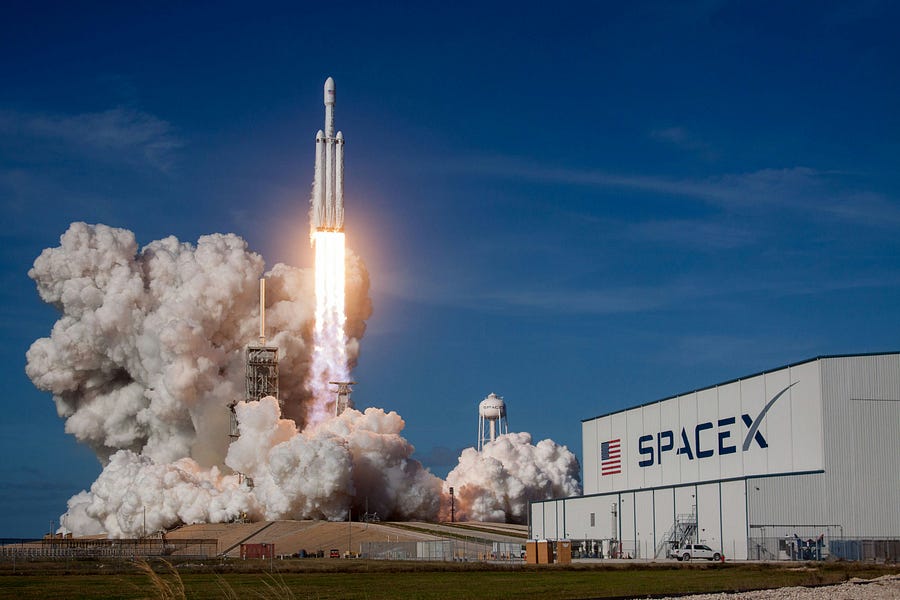
Compared with today’s Falcon Heavy and Starship systems, Falcon 1 was tiny.
Yet that small rocket accomplished something historically important in 2008: it became the first privately developed liquid-fueled rocket to reach Earth orbit.
Sometimes the most important technological milestones start with surprisingly small machines.
17. SpaceX Didn’t Become Successful Overnight
SpaceX was founded in 2002.
Its first Falcon 1 flight didn’t happen until 2006.
The company experienced multiple failures before achieving orbit in 2008.
That means the story often told as:
“Musk founded SpaceX and revolutionized rockets.”
leaves out an important part.
The company spent years failing, redesigning, testing, and trying again before its technology worked reliably enough to transform the commercial launch industry.
NASA later described SpaceX as a major commercial launch provider and highlighted its development of reusable rockets.
18. Musk’s Original Career Path Could Have Been Very Different
Musk originally pursued physics and business rather than aerospace engineering.
His early career was centered around software and internet businesses.
The transition from internet entrepreneur to rocket-company CEO is therefore unusual.
He effectively moved from:
Websites → online payments → electric cars → rockets → AI → brain-computer interfaces.
Very few entrepreneurs have made that many major technological transitions.
19. One of His Most Important Assets Wasn’t a Company
Before SpaceX became successful, Musk’s previous companies had already provided him with capital.
Zip2 was sold to Compaq for more than $300 million.
PayPal was later acquired by eBay in a deal worth about $1.5 billion in stock at the time.
Those exits gave Musk the financial resources to pursue much more capital-intensive projects.
In other words, his early internet businesses helped finance the later experiments that made him famous.
20. His Story Is Really a Story About Repeatedly Changing Industries
Perhaps the most interesting fact about Musk isn’t a single number.
It’s the sequence.
He started with computer programming.
Then online publishing.
Then digital payments.
Then electric vehicles.
Then rockets.
Then solar energy.
Then tunneling.
Then brain-computer interfaces.
Then artificial intelligence.
Each industry is difficult enough to build an entire career around.
Musk repeatedly moved into industries that required completely different technical knowledge, teams, regulations, manufacturing systems, and business models.
And that may be the most unusual part of his story.
Not that he became famous.
Not even that he became wealthy.
But that he repeatedly tried to enter industries where he was initially an outsider.
The Bigger Question
Elon Musk’s story is often presented as a story about money.
But money alone doesn’t explain the sequence.
The more interesting pattern is technology.
The internet.
Payments.
Electric vehicles.
Spaceflight.
Artificial intelligence.
Brain-computer interfaces.
Different industries, but a similar underlying idea:
What happens if technology makes something dramatically cheaper, faster, more accessible, or completely different?
Whether every prediction succeeds is another question.
Some do.
Some don’t.
Some are still being tested.
But that willingness to repeatedly enter unfamiliar technological territory is one of the defining features of Musk’s career.
And perhaps the strangest part is this:
The Elon Musk story isn’t finished yet.
The companies he is involved with are still working on technologies that, if successful, could change industries that barely resemble the internet companies where his career began.
From a $500 video game written by a 12-year-old to rockets landing themselves and computers interpreting signals from the human brain, the journey has been anything but ordinary.
✨ Enjoyed this story? Let’s make more happen together! ✨
Hey there! I’m a passionate writer and a full-time computer engineering student, juggling my studies and my love for creating content.
Writing and sharing my thoughts with you all brings me so much joy, but truth be told, being a student can be financially tough at times.
If you find value in what I create, and if my words have ever inspired, entertained, or helped you in any way, I would be incredibly grateful for your support.
Even the smallest donation makes a huge difference — it helps me keep going, create more, and focus on doing what I love. 🙏
If you’d like to support my journey, you can buy me a coffee here:
→ https://buymeacoffee.com/luna0
Your generosity truly means the world to me. Thank you from the bottom of my heart! ❤️😊