
As a history teacher, I’ve always felt that one of the hardest things is getting students to truly connect with the past. Textbooks often reduce something as complex as the period before World War I to dates and facts, or focus mostly on the war itself - on the battles, the casualties, and the failures of diplomacy.
But shouldn’t we be going deeper into how societies build such tensions that people end up killing each other? While it’s important to remember the sacrifices of our ancestors, we also need to learn how to prevent such tragedies from repeating. That’s why The Great Gambit focuses on the period before the war—the critical decisions and tensions that led up to it - so students can explore how different choices might have shaped a different outcome.
By understanding the complexity of these events, students gain insight into how history often repeats itself, equipping them with the critical thinking skills needed to apply these lessons to real-life challenges.
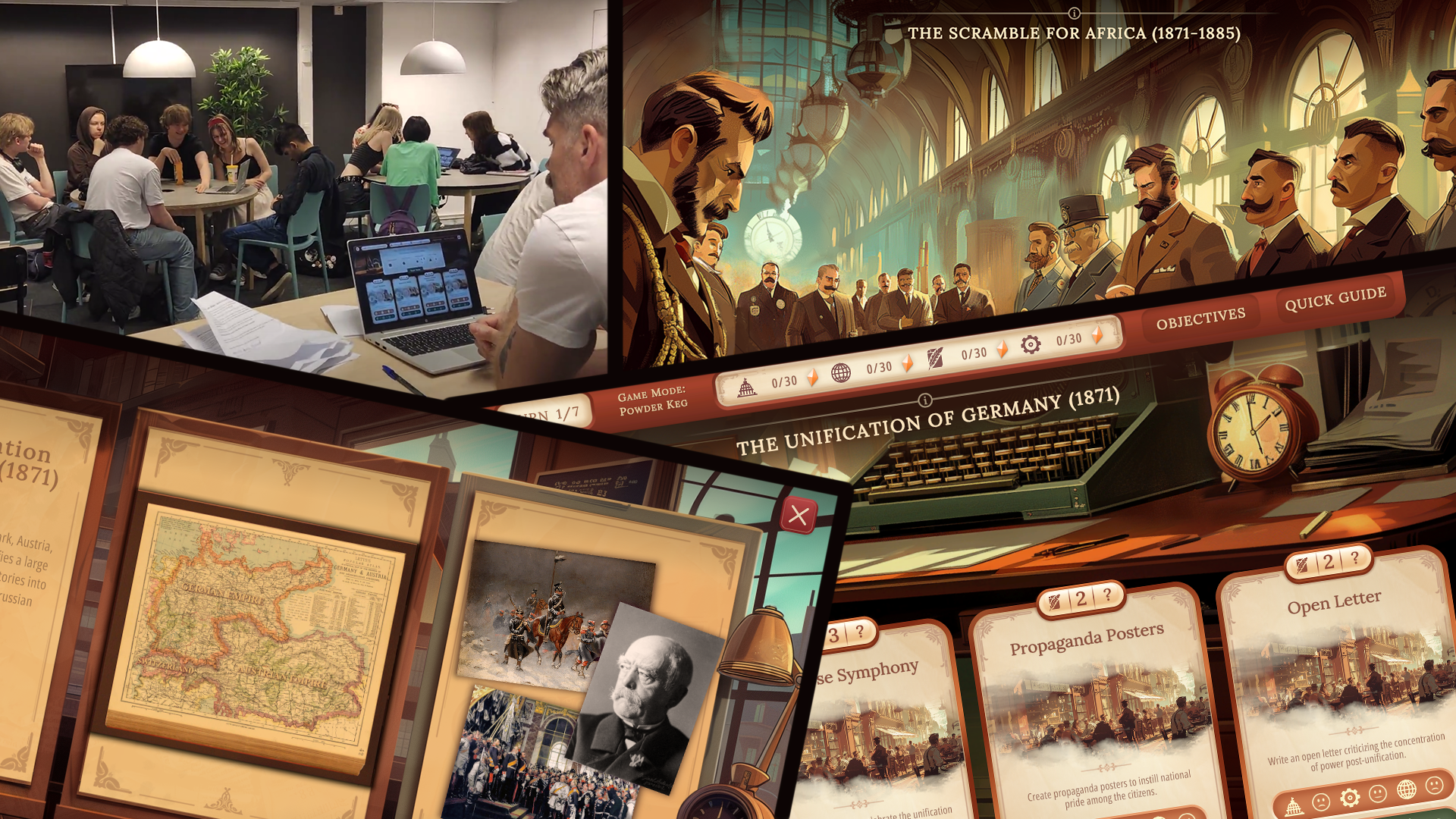
That’s why we created The Great Gambit. It’s a tool designed to help students not just learn about the lead-up to World War I, but experience it. This card-based simulation allows students to step into the shoes of political leaders, workers, and citizens in pre-war Germany, making decisions that impact the course of history. They see firsthand how challenging it is to navigate competing interests and conflicting pressures.
We’re not here to replace the teacher - you’re still the expert. But The Great Gambit gives you a way to spark deeper conversations and help students engage in a way that traditional lessons sometimes can’t. Instead of sitting through a lecture, they actively participate, exploring what could have been done differently and asking themselves hard questions about responsibility, choices, and consequences.
It’s designed to be easy for you to integrate into your lessons. In just four 80-minute sessions, with minimal prep and a few laptops, your students will dive into a dynamic historical scenario that encourages collaboration, critical thinking, and communication - skills they’ll carry with them well beyond your classroom.
We believe this approach is more important than ever. Today’s world isn’t so different from pre-WWI Europe in many ways. By engaging students in these historical dilemmas, we hope they’ll not only understand the past better but also be more thoughtful, responsible citizens in the future.