

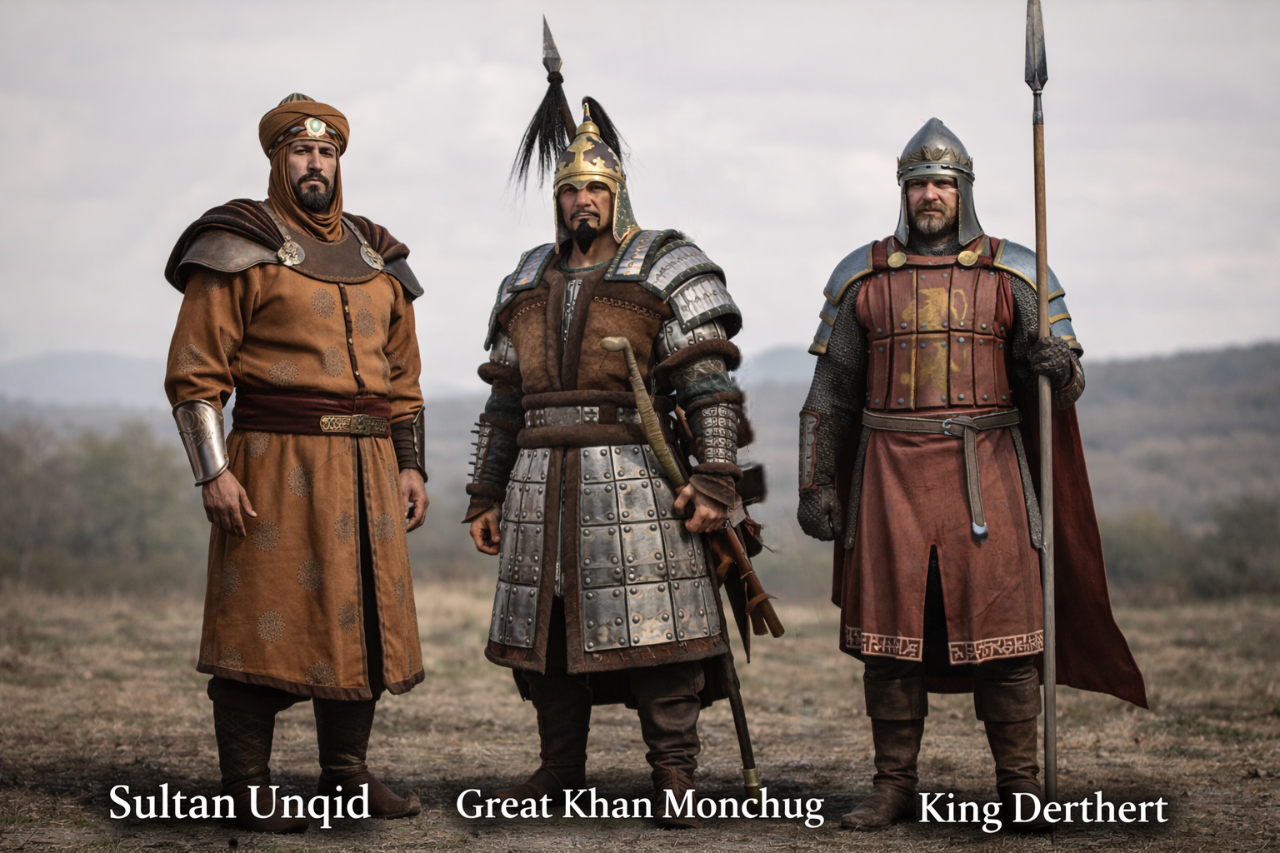
Philosophy Behind Noble Titles by
In the vanilla game, there is a subtle attempt to use titles, but they are mostly hidden. They appear only in character descriptions and for a few rulers and select lords — particularly within the Empire — and they carry no real weight in terms of progression. The goal here was to bring titles to the forefront and give them meaningful relevance at the gameplay level.
These titles have already evolved between versions 0.4.2 and 0.4.3, largely influenced by feedback from the Nexus member dejan07nk. They remain subject to further adjustments and refinement, but for now, the system stands as follows.
Culture
One of the core goals of Lowborn is to make the player feel their social ascent.
Titles are not just mechanics — they are language, identity, and recognition within Calradia’s world.
This article explains why each title was chosen, its historical inspiration, and how it fits the mod’s hierarchical system.
Base Hierarchy in Lowborn
All cultures share the same mechanical hierarchy:
Governor – Delegated local administrator (In this mod, this title applies to the leader of non-noble Tier 1 clans with fiefs)
Clan Member – Minor noble within a house
Clan Leader – Head of a noble house
Castellan – Lord of a castle
City Lord – Lord of a city
Heir – Recognized dynastic heir
Grand Lord – Regional high noble
Ruler – Cultural sovereign
In the future, I plan to add another Emperor level for the End Game. For those seeking to unite a large portion of the Empire, along with its diverse cultures, under their rule and who knows, perhaps unify the cultures by calming their tensions...
The function is universal.
The names define culture and identity.
Vlandia – Western Feudalism (Norman / Frankish)
Vlandia represents classic Western European feudalism, inspired by Norman and Frankish systems.
Bailiff
Royal local administrator, common in medieval England and France.Sir / Dame
Recognized knights, the foundation of feudal nobility.Master / Lady
Head of a noble house, below the high aristocracy.
“Master” is used intentionally to mark the transition between knight and baron.Baron / Baroness
Feudal lord of a castle.Count / Countess
Lord of a city and surrounding territory.Duke / Duchess
High regional nobility.Prince / Princess
Dynastic heir.King / Queen
Supreme ruler.
Vlandia follows a clear and recognizable feudal ladder.
Empire – Late Roman / Byzantine
The Empire is administrative and imperial, not feudal.
Titles emphasize state authority rather than feudal lineage.
Curator / Curatrix
Civil administrator of lands and estates.Dominus / Domina
Literally “Lord/Lady,” a recognized noble without high office.Tribune / Tribuna
Political or military official; clan leader with institutional authority.Praetor / Praetress
High magistrate, used here as castle lord.Archon / Archontess
Urban governor in Byzantine tradition.Consul / Consula
High state authority, representing regional grand nobility.Despotes / Despotess
Authentic Byzantine title for imperial heirs or close family members.Emperor / Empress
Centralized absolute ruler.
The Empire rules by bureaucracy and imperial offices, not feudal contracts.
Sturgia – Slavic / Rus Tradition
Sturgia draws from Slavic and Varangian Rus structures.
Vogt / Vogtin
Local administrator under foreign influence.Druzkin / Druzkina
Member of the druzhina, the ruler’s noble retinue.Druz / Druza
Leader of the druzhina, clan head.Boyar / Boyara
Traditional Slavic aristocracy.Knyaz / Knyaginya
City-ruling prince.Duke / Duchess
Functional equivalent of a great regional prince.Prince / Princess
Dynastic heir.Grand Prince / Grand Princess
Historically accurate supreme Rus title.
Battania – Celtic / Tribal
Battania rejects formal feudalism.
Leadership is based on prestige and tribal authority.
Keeper
Guardian of land and people.Fian / Fiana
Elite noble warrior.Warden / Wardess
Clan leader and territorial protector.Chief
Lord of a stronghold.Chieftain / Chieftainess
Regional ruler.High Chieftain
Supreme tribal leader.Prince / Princess
Hereditary successor.High-King / High-Queen
Legendary Celtic supreme ruler.
Aserai – Islamic Medieval World
Inspired by medieval Arabic-Islamic governance.
Wali / Waliya
Provincial governor.Sharif / Sharifa
Noble of respected lineage.Sayyid / Sayyida
Clan leader with social and religious authority.Sheikh / Sheikha
Tribal or local lord.Emir / Emira
Urban or military ruler.Vizier / Viziera
High political authority.Prince / Princess
Recognized heir.Sultan / Sultana
Sovereign ruler.
Khuzait – Mongol / Turkic Steppe
Titles are clan- and military-based, not feudal.
Darugha / Darughachi
Imperial-appointed administrator.Arban / Arbana
Basic social and military unit member.Noyan / Noyana
Clan commander and leader.Tarkhan / Tarkhana
Privileged noble warrior.Tark / Tarkha
Territorial ruler.Khan / Khatun
Great tribal lord.Beg / Begum
Noble heir below Khan.Great Khan / Great Khatun
Supreme steppe ruler.
Nord – Scandinavian
Simple, warrior-centric hierarchy.
Reeve
Local administrator.Karl / Karla
Free noble commoner.Jarl / Jarla
Clan leader.Lord / Lady
Castle lord.Earl / Erla
Regional ruler.High Jarl
Supreme noble.Prince / Princess
Heir.King / Queen
Sovereign.
Conclusion
Titles in Lowborn are not cosmetic flavor.
They exist to:
Reinforce cultural identity
Make social progression intuitive and immersive
Provide narrative weight to rank advancement
Make the player feel their rise from lowborn to ruler
You do not simply become noble.
You earn your place in Calradia’s history.