

Most conversations about performance anxiety focus on what happens in the moment -- breathwork, mindset, communication. What almost no one talks about is what happens in the 16 hours before the moment.
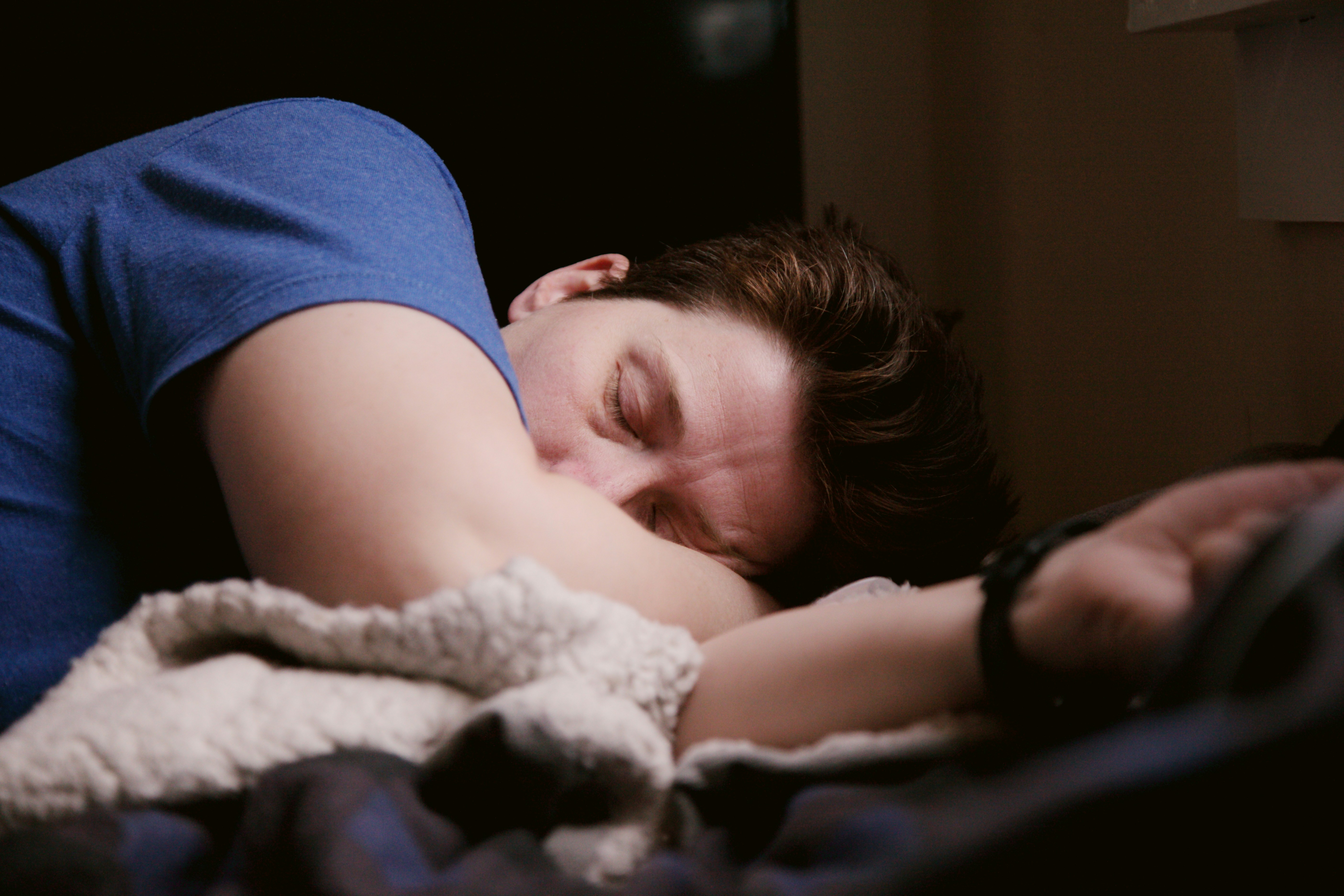
Sleep is one of the biggest amplifiers of performance anxiety that most men are completely overlooking. Not because the connection is subtle; it's actually quite direct but because it doesn't feel directly connected when you're living it.
You're tired, things are stressful, and when an intimate moment doesn't go well, you blame the anxiety, not the week of poor sleep that made the anxiety harder to manage.
Let me make the connection explicit.
Why Your Nervous System Is More Reactive When You're Tired
Sleep deprivation doesn't just make you feel groggy. It specifically affects the systems that regulate stress response and emotional reactivity.
Your prefrontal cortex; the part of the brain responsible for rational appraisal, impulse regulation, and measured decision-making is one of the most sensitive structures to sleep loss. Even a few nights of inadequate sleep meaningfully reduces its ability to regulate the amygdala, which is the brain's threat-detection centre.
In plain terms: when you're sleep-deprived, your threat system is running hotter and less regulated. Cues that you might handle easily when well-rested: a slight change in physical response, a brief distraction, a moment of uncertainty land with more force. The amygdala fires more aggressively. The stress response activates faster and more completely.
For performance anxiety specifically, this means that the threshold for triggering the spiral is lower. The pattern that's already present becomes more accessible, more automatic, and more difficult to interrupt. You're not more anxious because something is more wrong. You're more anxious because your regulatory capacity is reduced.
The Cortisol Connection
Sleep loss has a direct effect on cortisol ~ your primary chronic stress hormone.
When you sleep well, cortisol follows a healthy rhythm: it rises in the early morning (which is part of what wakes you up), peaks mid-morning, then gradually declines through the day. When you sleep poorly, this rhythm gets disrupted. Cortisol levels stay elevated in the evening exactly the time when you're most likely to be in intimate situations.
Elevated evening cortisol means your body is in a low-grade stress state when you're trying to connect with a partner. The "rest and receive" mode your arousal system needs to operate is being actively competed against by your stress chemistry.
This is a physical reality, not a mindset problem. You can have perfect intentions and a clear head, and still have a body that's running on the wrong chemistry because you've slept badly for a week. Recognising this removes the self-blame and points you toward what actually helps.
The Pattern Observation That Most Men Find Uncomfortable
When I started paying attention to my own pattern, the correlation between sleep quality and intimate difficulty was embarrassingly clear.
The weeks I slept well: consistently, not perfectly were almost never the weeks things went sideways. The weeks I was short on sleep, waking frequently, or just generally behind on rest? Much harder. More anxious before. More difficult to interrupt the spiral. Recovery after rough moments took longer.
This is anecdotal in my case, but it aligns exactly with the research on sleep and emotional regulation. And when men in similar situations track this honestly ~ looking back at the weeks that were hardest and asking whether those were the weeks with poor sleep, the correlation is usually uncomfortable to acknowledge because it suggests a simple variable that's been overlooked.
Try this: look back at your last month. Which weeks were hardest? Were those the weeks with poor sleep, high stress, or significant schedule disruption? The answer usually points somewhere useful.
What Inadequate Sleep Actually Looks Like
This isn't about whether you sleep eight hours. Sleep quality matters as much as quantity, and chronic mild sleep debt is far more common than people realise.
Signs that sleep is a relevant variable for you: you rely heavily on an alarm to wake up, you feel unrefreshed after waking, your mood in the early morning is consistently low, you use caffeine to get through the afternoon, you sleep significantly longer on weekends. Any of these suggest your body is not getting the recovery time it needs.
The good news is that sleep improvement is one of the most accessible interventions for performance anxiety. It doesn't require a therapist or medication or a complete life overhaul. It requires a few consistent habits.
Practical Starting Points
You don't need a perfect sleep routine overnight. You need one or two consistent changes that shift the trajectory.
The single most effective starting point, supported by sleep research, is a consistent wake time. Not bedtime ~ wake time. Pick a time and hold it within 30 minutes, seven days a week. Your body's circadian rhythm anchors to your wake time more than anything else. Consistent wake time stabilises cortisol rhythm, improves sleep quality, and typically starts showing effects within a week or two.
The second high-impact change: protect the 45 minutes before sleep from screens and stimulation. Not because blue light is the devil. The evidence on that is overstated but because that window is when your brain needs to start downshifting from the day's pace. Anything that keeps the brain engaged and activated in that window delays sleep onset and disrupts the early sleep cycles that handle the most important restoration.
These two changes alone, held consistently for two weeks, often meaningfully shift the anxiety baseline.
Key Takeaway:
Chapter 4 of “Performance: Unlocked” covers sleep and the other physical factors that quietly amplify performance anxiety in detail, with specific actions. Available as an instant download in my Shop with a small investment.