

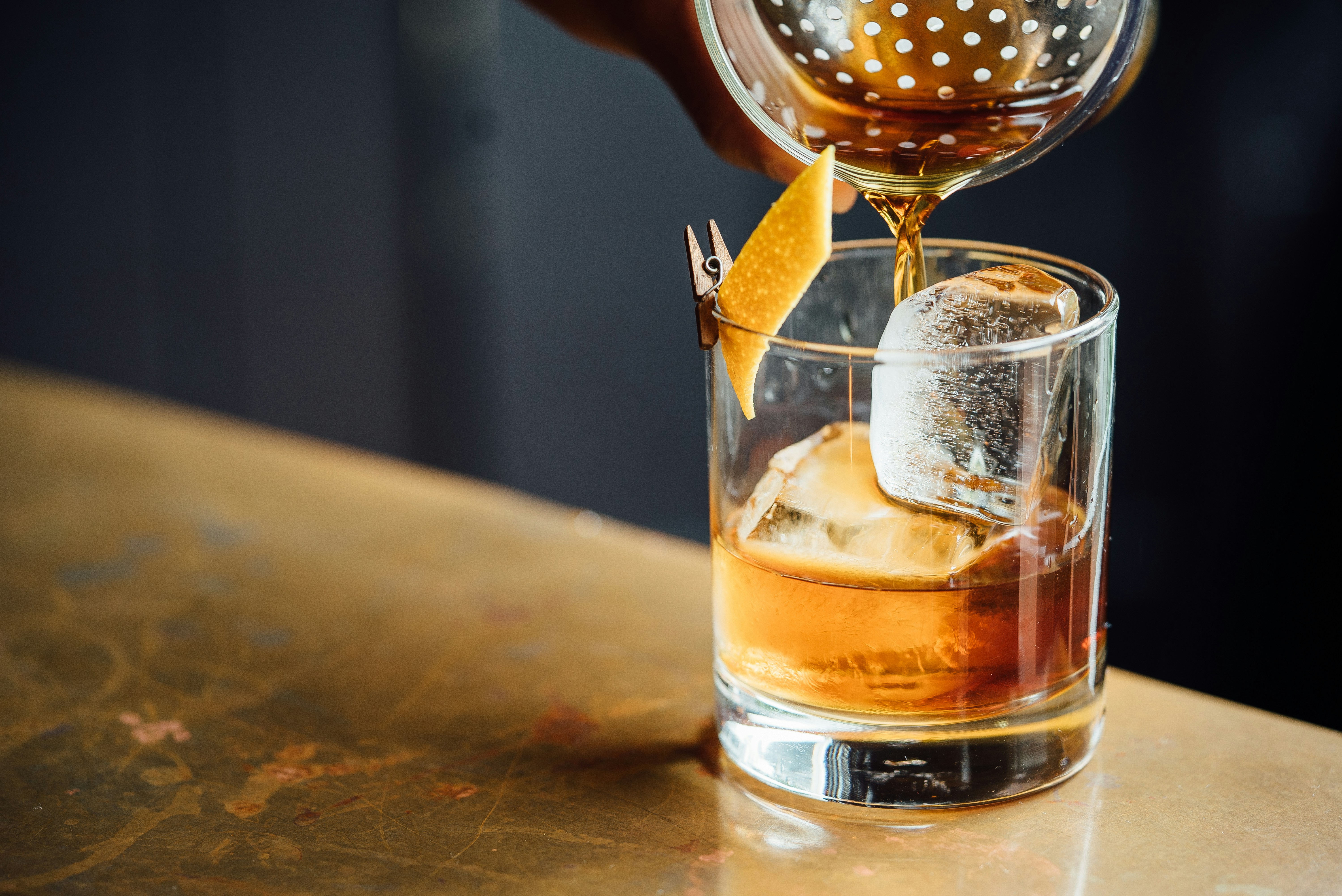
“A drink or two to take the edge off “ It’s one of the most common approaches men use when they're anxious before intimacy.
It feels logical. Alcohol loosens inhibitions, reduces social anxiety, makes it easier to be present and confident.
For some men in some situations, a small amount of alcohol does provide some short-term ease. I'm not going to pretend otherwise.
But here's what that logic misses: alcohol's relationship with sexual performance, especially for men already dealing with performance anxiety, is much more complicated than "it relaxes you." And for many men, it creates more problems than it solves.
What Alcohol Does to Your Body's Response
Alcohol is a central nervous system depressant. That's why it creates a relaxed feeling: it slows down neural activity across the board.
The problem: the "across the board" part is not selective. Alcohol depresses the exact neurological processes that physical arousal depends on. Specifically, it reduces peripheral blood flow regulation, blunts nerve sensitivity, and interferes with the neural signalling that sustains physical response.
Even moderate drinking of two standard drinks measurably affects response latency (how quickly and firmly arousal develops), sensitivity (how strongly stimulation registers), and stamina (how well the physical response sustains). These effects vary by individual, but the directional effect is well-established in the research.
For men who are already on an anxious baseline, alcohol's depressant effect on sensitivity and response creates the exact thing they're trying to avoid: a less robust, less reliable physical response. Which then triggers the monitoring loop. Which makes things worse.
The Second Layer: What Anxiety Does With Alcohol's Effects
Here's the part most discussions miss. For men with performance anxiety, the problem isn't just what alcohol does to the body. It's what the anxiety does with those effects.
When a man who's already primed to monitor his body's response notices that things feel "different": slightly blunted, slightly slower than usual; his threat-detection system interprets that as a warning sign. The monitoring activates. The proof loop engages.
Now he's dealing with both the direct depressant effect of alcohol on physical response and the performance anxiety spiral triggered by noticing that his physical response feels different.
This is the stacking problem: instead of alcohol solving the anxiety, it creates its own secondary trigger. "Is it working? The drink was supposed to help. Why isn't it helping?"
That second layer of anxiety is often worse than the original.
The Confidence Trap
There's a more insidious version of the alcohol issue that's worth naming: the way it can undermine confidence over time even when it "works" in the moment.
If you consistently use alcohol to get through intimate situations, you're building a conditional confidence; one that depends on having a drink first. Your brain starts associating intimacy with "I can only do this with alcohol," which is both untrue and ultimately limiting.
Worse: if you have a difficult experience while drinking, the alcohol becomes part of the failure narrative. "Even drinking, things went wrong." That's a particularly demoralising version of the pattern.
And if you avoid finding out whether you can handle intimate situations without alcohol, you never build the evidence that you can. The anxiety about sober intimacy grows. The dependency on the crutch deepens.
The Honest Experiment
I'm not going to tell you never to drink. That's not realistic and it's not the point.
The point is to get clear data on what alcohol is actually doing for you specifically. And the only way to get that data is to run an honest experiment.
For your next three intimate situations, create a 4-hour buffer between drinking and intimacy. Not a lifetime no-alcohol rule.
Just three situations.
Notice what's different. Is the anxiety actually worse without the drink? Is the performance better or worse? Does removing alcohol create a problem, or does it actually give you cleaner access to your nervous system regulation tools?
Most men who run this experiment honestly are surprised by the results. Some find the anxiety is worse initially but manageable and that the physical response is actually better. Some find very little difference. The rare few find that alcohol was genuinely helping in a way that wasn't creating secondary problems.
The data from those three situations is worth more than any general advice, including this post.
A More Reliable Alternative
The thing that alcohol is trying to do ~ reduce anxiety enough to allow ease and presence can be achieved more reliably and without side effects through proper breathing.
A 5-minute Breath Reset before intimacy (4 counts in, 6-8 counts out, sustained) shifts your nervous system from threat mode toward ease mode using your body's own chemistry. No depressant effect on physical response. No secondary anxiety trigger. No dependency being built.
It takes practice to become accessible which is why you practice it when you're calm, not just when you need it. But once it's in your toolkit, it does the job better than the drink.
Key Takeaway:
Chapter 4 of “Performance: Unlocked” covers alcohol, nicotine, medications, sleep, and the other physical factors that quietly fuel performance anxiety. Chapter 5 has the breathwork alternatives. Instant download in my Shop at a small investment.