

A Deep-Dive Investigation
This interesting blog is the first written by a member of our team, Taya Whitney Brown from Texas, USA
Here is a summary of the case so far: Let me know if there are questions.
Press enter or click to view image in full size
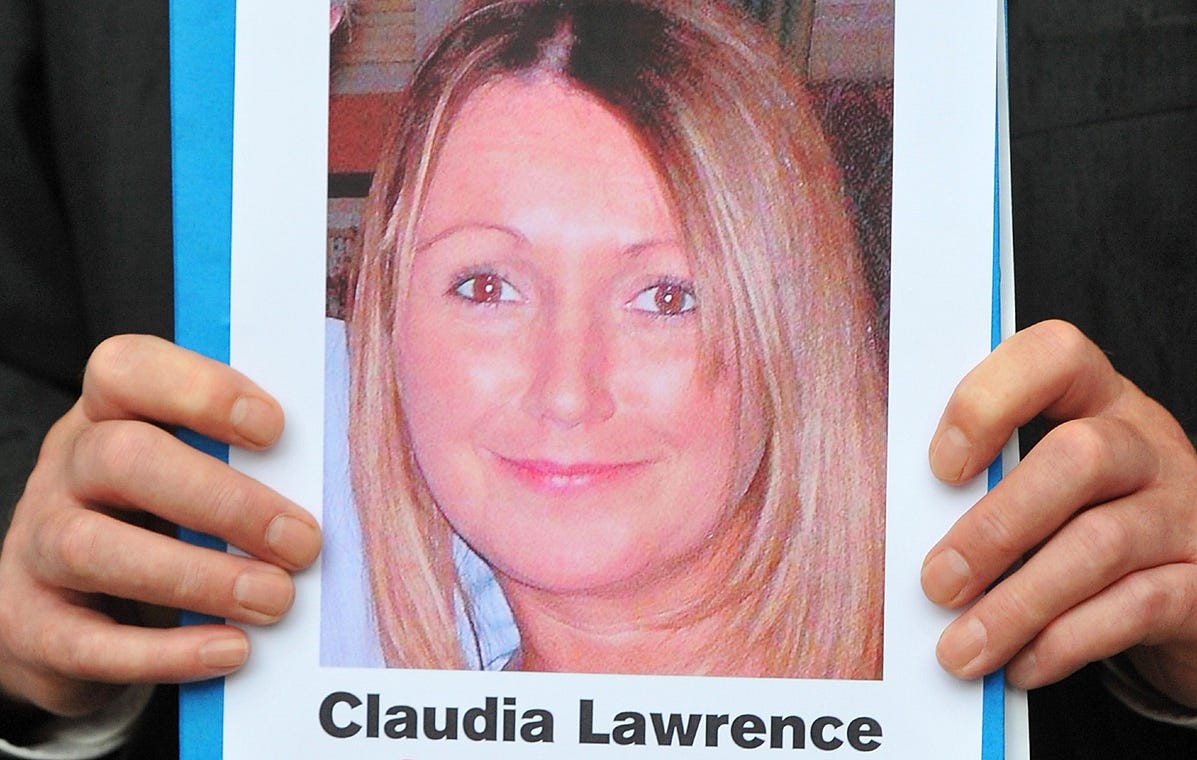
Claudia Lawrence, a 35-year-old chef at the University of York, vanished in March 2009 from the Heworth area of York, England.
She finished work on 18 March 2009, walked home, spoke normally to both parents that evening, and exchanged her last known text message at 21:12 (9.12 pm). She was expected at work at 06:00 on 19 March but never arrived.
Her phone stayed active in the Heworth area until 12:10 pm on the 19th, when it was manually switched off and never used again. Inside her house, everything looked normal — bed made, dishes in the sink — but her phone, work rucksack and hair straighteners were missing, while her handbag, passport and bank cards were left behind.
There were no signs of forced entry or obvious struggle.
Police quickly came to believe Ckaudia had been murdered, likely by someone she knew rather than a stranger.
Over the years, North Yorkshire Police have arrested multiple people within her social and work circles, and searched locations including the Sand Hutton Gravel Pits (a drained lake operation in 2021). No one has ever been charged, and no conclusive evidence has been found.
The main working Hypothesis remains that Claudia was killed by a known associate linked to her personal relationships, and crucial information is still being withheld by people in her orbit.
More recently, her preserved house in Hewsworth has apparently suffered multiple break-ins, with items moved and fingerprints recovered, which has added unease but no definitive breakthrough.
Structured deep dive on Claudia Lawrence’s case with as much detail as I can.
1. Who was Claudia Lawrence?
Name: Claudia Elizabeth Lawrence
Born: 27 February 1974, Malton, North Yorkshire, England
Age at disappearance: 35
Occupation: Chef at the University of York (Goodricke College, Roger Kirk Centre)
Home: Terraced cottage on Heworth Road, Heworth, York, approx. 3 miles from work (bought in 2007).
Personal/social life (relevant only because police focused on it):
Described as sociable, with an active social life centred on local pubs, particularly The Nag’s Head close to her home.
Police later said she had several “covert sexual relationships”, some with men who were married or in relationships; her family knew little about this side of her life. This became a major focus of the investigation and media coverage.
She had holidayed in Cyprus several times and was thought to have looked at job opportunities there; some of her contacts there became part of the inquiry.
2. Last confirmed movements (18 March 2009)
Morning and afternoon — at work
06:00 — Starts her shift as a chef at the University of York’s Roger Kirk Centre.
14:00 — Finishes her shift.
Shortly after 14:00 — Seen on CCTV leaving the college on foot.
Return toward home
15:00 — Captured on CCTV passing a shop on Melrosegate near her home; also seen by a neighbour. This is the last independent visual sighting of Claudia.
Evening phone activity
During the evening, she speaks to both parents by phone:
She and her mother, Joan, talk about upcoming Mother’s Day plans. Joan later described her as relaxed and normal.
Claudia says she is at home and will go to bed early because she has an early shift at 6:00 the next day and will have to walk (her car was in for repair).
20:23 — Sends her last outgoing text.
21:12 — Receives the last incoming text, from a man in Cyprus, according to later police statements. No further contact after this is confirmed.
From 21:12 on 18 March, there are no confirmed sightings or communications from Claudia.
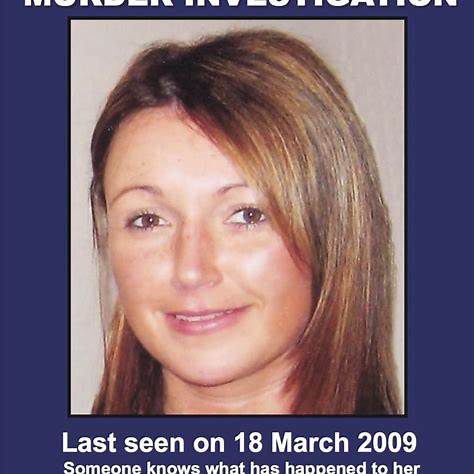
3. What’s known about 19–20 March 2009
19 March — the day she was due at work
She is scheduled to start work at 06:00.
She does not arrive. Her manager calls her mobile; it rings but diverts to voicemail. No further action was taken at that time.
She is supposed to meet friend Suzy Cooper at The Nag’s Head that evening. Claudia never shows, which Suzy finds very out of character.
Suzy makes multiple attempts to reach Claudia on the 19th and again on the morning of the 20th, with no success, and begins contacting mutual friends, including landlord George Forman of The Nag’s Head.
Mobile phone data
Cell-site analysis later showed her Samsung SGH-D900 phone remained in the Heworth area on 19 March.
It stayed powered on until 12:10 pm on 19 March, when it was deliberately switched off; it has never been used since.
20 March — discovery that she is missing
Friend Suzy calls Claudia’s father, Peter Lawrence, to report concern.
Peter contacts her manager and learns she has missed work on both the 19th and 20th.
Peter and pub landlord George Forman go to Claudia’s house, using Peter’s key.
Inside, they find:
The house is neat and orderly.
Bed made.
Unwashed breakfast dishes in the sink — suggesting she may have eaten breakfast at home.
Handbag, purse, bank cards, and passport are all inside the house on the table.
Missing items:
Her mobile phone
Hair straighteners
Her keys
Her work rucksack that she usually used to carry her chef whites
That combination led police to suspect that she left home as if going to work around 5:00 a.m. on March 19, but never arrived.
14:00, 20 March — North Yorkshire Police (NYP) formally notified, and she is logged as a missing person.
Initially, police believed she was not “vulnerable” and might have gone away voluntarily, so the early response was relatively slow. Within five weeks, after pressure from the family and lack of any trace, the case was upgraded to suspected murder.
4. Key physical evidence and sightings
At the house
No obvious signs of forced entry or struggle.
Everyday possessions and her handbag were left behind, suggesting no planned trip away.
Missing rucksack, phone, and straighteners — items you might carry when leaving for work or going to stay overnight somewhere.
Route to work
The only CCTV on her most direct route was at Melrosegate Post Office; footage for the early morning of 19 March does not show her. She could have taken another street or passed outside the camera’s narrow field of view.
Phone
Present on a mast in the Heworth area until 12:10 pm on 19 March, then switched off — interpreted as a deliberate act by someone physically with the phone.
Vehicles & unidentified man
During the later review, police highlighted:
Silver Ford Focus (1998–2004 model) seen on CCTV on Heworth Road. Its brake lights come on as it draws level with Claudia’s house, suggesting possible interest in the property. The driver has never been conclusively identified.
Astravan (light commercial van) parked outside Claudia’s home at about 9 p.m. on 18 March — driver not identified.
Unidentified man in CCTV near the rear alley by her home on 18 March at 19:15 and again early on the morning of 19 March (around 5:07–5:50 a.m.). Police have appealed multiple times for this man to come forward; it’s not known if he ever has or if he was ruled out.
DNA and forensic work
In the 2013 Major Crime Unit review, with updated forensic techniques:
New fingerprints were found in the house.
A man’s DNA was recovered from a cigarette butt in Claudia’s car.
These finds gave police new investigative leads but did not result in charges.
5. Investigation phases
5.1 Original 2009–2012 investigation
Key avenues considered by NYP:
Voluntary disappearance / new life
The idea that she left to be with a new partner or take a new job.
Dismissed because she had strong family ties, no evidence of planning, and left critical items (passport, cards) behind.
Accident or medical emergency on the way to work
Route checked early; no trace of Claudia or her belongings. Dismissed
Random attack by a stranger / possible serial killer
Reports of men acting suspiciously in Heworth around that time were investigated.
Known serial killers with any connection to the area were checked and discounted.
Attack by someone known to her (police’s main working theory)
Criminal profilers suggested her personal relationships and secret affairs likely hold the key.
Police said some people were “reluctant and less than candid” in interviews.
Focus on men she knew socially (pubs) and romantically, and on people in Acomb and Cyprus linked by phone activity.
Other key activities:
Crimewatch reconstructions and large-scale appeals; over 1,200 information calls.
Cyprus line of inquiry:
Claudia had multiple connections on the island; the last text she received was from a man in Cyprus.
Officers travelled there to interview people she knew and investigate possible job plans.
“Rusty white van”:
Police sought a driver seen trying to talk to women near her route to work in the days before her disappearance; he has never been publicly identified.
Searches around the Heslington / University area:
A children’s play area, muddy track, and a nearby field were searched based on information that later appears to have been a hoax. Nothing significant found.
By 2013, the case had stalled.
5.2 2013–2016 Major Crime Unit review and reinvestigation
In 2013, a new Major Crime Unit (MCU) was formed in Harrogate and assigned, among other cold cases, the Lawrence investigation.
Key developments:
Re-examination of the house using advanced forensics → new prints and male DNA in her car.
Cell-site analysis showed she spent time in Acomb in the weeks before she vanished, something which the landlord of The Acomb pub denied.
New Crimewatch appeal (2014) releasing/resharing:
The silver Ford Focus CCTV.
The Astravan outside her house.
Footage of the unidentified man in the alley.
Arrests during this period (no one charged)
All of the following were arrested, interviewed, and later released without charge; some were arrested on suspicion of murder, others for perverting the course of justice. I’ll keep this high-level to avoid re-broadcasting unproven allegations against private individuals:
A 59-year-old male colleague at the University of York, who lived near her home and had given her lifts to work. House(s) searched and car seized; released from bail with no charge in November 2014.
The landlord of a pub in Acomb (where she’d drunk in the weeks before vanishing) was arrested on suspicion of perverting the course of justice, after police excavated part of the pub’s cellar; he denied any involvement and was released without charge.
Four men who were regulars at The Nag’s Head were later arrested on suspicion of murder. In 2016, the Crown Prosecution Service declined to prosecute due to insufficient evidence.
Police repeatedly complained that some people close to Claudia had not fully cooperated and that vital information was still being withheld.
After the CPS refusal in 2016, this second investigation largely wound down.
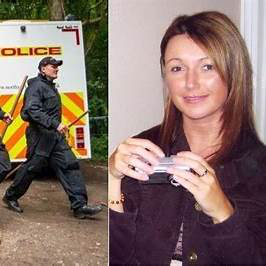
5.3 2017–present: “Reactive” photo charge and further searches
Since 2017, NYP has classified the case as reactive, meaning they pursue new leads but no longer have a full-time, large active team. They stress that the inquiry is not closed.
Sand Hutton Gravel Pits search (2021)
In August–September 2021, police conducted a major search of the Sand Hutton Gravel Pits, around 8 miles NE of York.
Actions included:
Draining at least one lake.
Use of ground-penetrating radar and cadaver dogs.
Fingertip searches of the lakebed and surrounding woodland.
The search was triggered by “new information” police did not detail publicly; nothing of significance was found.
“She’s in the water”, note (2022)
In early 2022, a small bouquet and a laminated missing poster of Claudia were found near a beauty spot. On it was a note in block capitals saying “SHE IS IN THE WATER” with arrows pointing in a direction, plus a separate “God bless her” note.
The location has not been publicly specified, but is believed to be in North Yorkshire and not necessarily at Sand Hutton.
Family spokesperson Martin Dales confirmed the tribute and said it might or might not be meaningful, urging continued public vigilance.
Police stated they know who left the note and do not consider the person relevant to the investigation. Some reports suggest he is an older man who claimed to be a psychic.
Reported break-ins at Claudia’s preserved home (2025)
Claudia’s mother, Joan, has reported what she fears are multiple intrusions into Claudia’s long-preserved house in Heworth:
A pair of Claudia’s underwear suddenly protrudes from a wardrobe.
A pink raffle ticket on the kitchen floor.
Video cassettes moved from under the stairs to the bedroom.
Forensic teams reportedly attended, seized items including the underwear, and found fingerprints, though no suspect has publicly been linked to these.
Age-progressed AI image (2025)
In late 2025, a new AI-enhanced age-progressed image of Claudia at about 51 years old was released by the International Investigation Missing Persons (IIMP) with forensic specialist Marcel van Adrichem, to try to trigger new leads.
The case continues to be treated as a suspected murder, but police say it remains solvable and hope the renewed publicity may prompt someone to finally come forward.
6. Suspects and persons of interest (publicly known, but no charges)
Important caveat: No one has ever been charged in this case. Everyone arrested must be treated as innocent in law. I’ll summarise categories rather than amplify names.
Men from her immediate social circle (Nags Head / York pubs)
Several men who drank with her, socialised with her, or were acquaintances were arrested on suspicion of murder or questioned for allegedly withholding information or perverting the course of justice; all were released without charge.
Work colleague(s)
A male colleague who had given her lifts, lived near her, and was reportedly friendly with her was arrested on suspicion of murder, then released, with no further action.
Pub landlord in Acomb
Arrested on suspicion of perverting the course of justice; his pub’s cellar was partially excavated; he insisted his only link was that she had been a customer. Released without charge
Cyprus contacts
Men with whom Claudia had relationships or job discussions in Cyprus were questioned; no one was publicly named as a suspect or charged
Christopher Halliwell (serial killer)
Former detective Stephen Fulcher suggested in his 2017 book that there might be similarities between Claudia’s disappearance and Halliwell’s crimes (e.g., women vanishing on or around 19 March, abducted while walking).
However:
Halliwell was living in Swindon, Wiltshire, at the time, not York.
His father’s link to Yorkshire (Huddersfield) was geographically distant and somewhat tenuous.
Wiltshire Police say CCTV shows him buying petrol in Swindon on the eve of Claudia’s disappearance.
Both Wiltshire Police and NYP say there is no direct evidence linking him to Claudia’s case.
Claudia’s mother has said police haven’t proven or disproven his involvement, but officially, this link remains speculative only.
Because of defamation concerns and the fact that no charges were brought, it’s safest to treat all of these individuals as questioned and cleared; the evidence in the public record does not prove any one person’s guilt.
7. Main theories
I’ll group “every theory” into big clusters that recur in police statements and reputable analyses; online forums go far beyond these, but most of that is unverified speculation.
7.1 Voluntary disappearance
Idea: Claudia chose to vanish to start a new life, perhaps abroad (e.g., Cyprus).
Support often cited:
She had contacts in Cyprus and had looked into work there.
Problems:
No evidence that she arranged travel, and her passport, cards, and handbag were left behind.
She was close to her family and had plans for Mother’s Day; nothing suggests she intended to cut contact.
No confirmed sightings or financial activity after 19 March 2009.
Status: Police have effectively ruled this out.
7.2 Accident on the way to work
Idea: She left at ~5:00 a.m. and suffered an accident or medical collapse on her route.
Evidence against:
An extensive search of the route and surroundings found no body, belongings, or signs of an incident.
Her phone stayed in the local area and was turned off at lunchtime — inconsistent with a simple accident early morning.
Status: Ruled out early on.
7.3 Stranger abduction / opportunistic attack
Idea: Claudia was attacked by a stranger (possibly a serial offender) while walking to work.
Points in favour:
It was still dark around 5 a.m.; a lone woman walking 3 miles is inherently vulnerable.
Reports of men behaving oddly in the area in days before her disappearance, and appeals over a “rusty white van” approaching women.
Counterpoints:
A careful offender would still leave some trace; the total lack of forensic evidence might suggest someone who had time and privacy with her (e.g., lured or admitted).
Police assessed known serial killers and discounted them. They’ve repeatedly stressed they favour a known-person offender.
Status: Always possible, but not the police’s leading theory.
7.4 Someone known to her — “jealous partner / secret relationship” theory
This is the primary police hypothesis.
Core idea: Someone Claudia knew — possibly a lover, ex-partner, or someone connected to an affair (such as a jealous spouse/partner of a man she was involved with) — harmed her, likely either:
Luring her out of the house on the evening of 18 March, or
Intercepting her at or near home early on the 19th.
Evidence and reasoning:
Profilers emphasise that most murder victims know their killer, and that their personal life and secret affairs are the probable key.
Police spoke of building a “rogue’s gallery” of men she had relationships with, and later said some people had not been honest or forthcoming.
Phone and social patterns show she was very punctual and reliable; for her to miss work without contact suggests someone forcibly intervened.
Lack of signs of forced entry or struggle could fit:
She chose to leave the house to meet someone she trusted (no struggle inside)
Or admitted someone she knew, making it easier to control the scene.
Variants within this theory:
Angry partner/ex-partner from York.
Married lover or someone whose spouse/partner found out.
Someone from the Cyprus circle with a UK presence.
None of these variants has publicly available evidence strong enough to point to a specific individual, which is why we’re still here 16+ years later.
7.5 Disposal in water / Sand Hutton / “She’s in the water”
Idea: Claudia’s body was disposed of in water — perhaps in the Sand Hutton Gravel Pits or other local lakes, pits, or rivers.
Why do people consider this:
2021 Sand Hutton Gravel Pits search involved draining lakes and using sonar and cadaver dogs, suggesting police had some intelligence hinting at water disposal.
The “She is in the water” floral tribute and note in 2022 reinforced that theme in public imagination, even though police say the author is not a suspect.
Police view:
They have not confirmed any specific water site as likely.
The 2021 search ended with “nothing significant found”.
Status: A plausible body-disposal method, but no proven location and no link to a known suspect.
7.6 Christopher Halliwell serial killer theory
Idea: Claudia was one of multiple victims of convicted double murderer Christopher Halliwell.
Reasons some raise it:
Victims such as Sian O’Callaghan and others disappeared on or around 19 March after walking alone, paralleling Claudia’s situation.
Halliwell has been discussed as potentially responsible for a cluster of unsolved female disappearances and murders.
Evidence against:
He lived in Swindon; any link to Yorkshire relied on his late father having lived in Huddersfield, not close to York.
CCTV reportedly puts Halliwell in Swindon the night before Claudia vanished.
Both Wiltshire Police and NYP say there is no direct evidence connecting him to the case.
Status: Interesting from a pattern-analysis standpoint, but officially a rejected theory by the police.
8. Major unresolved questions
These are the big “sticking points” that keep investigators and followers of the case frustrated:
Where did she actually disappear from — inside the house, on the doorstep, or en route?
The evidence suggests she appeared to leave for work on the 19th, but there is no CCTV or eyewitness confirming she did.
It’s equally possible that something happened late evening of the 18th, and the scene was staged to look like she left for work
Who is the unidentified man on CCTV near the alley on 18/19 March?
If he knew Claudia or was loitering with intent, he could be central. If he were a random passerby, he might still have seen something. We still don’t know.
What is the story behind the silver Ford Focus and the Astravan?
Both could be innocent; both could relate to surveillance, contact, or disposal.
What exactly are the withheld pieces of information police are convinced exist?
Officers have insisted that someone in her circle knows more and is choosing not to tell them — but we don’t know who or what.
Do the alleged break-ins and movement of items in her preserved house have any real investigative value?
They could be:
Disturbing but unrelated acts by a morbidly curious intruder.
A person obsessed with her case.
Or, more darkly, someone linked to her disappearance revisits the scene.
So far, police have not announced any breakthrough from the forensics.
9. Current status
Legal status: Claudia is still officially a missing person, but the case is treated as a suspected murder.
Arrests: Around 12 people arrested over the years, none charged.
Investigative posture:
Since 2017, “reactive” — major reviews finished, but any new tip or piece of evidence is assessed and, if necessary, actively pursued.
Public outreach:
Ongoing appeals from NYP and from Claudia’s mother, Joan.
A recent AI age-progressed image aims to reignite public recognition and tips.
Going forward, I will :
Build a side-by-side matrix (e.g., “Theory vs Supporting Facts vs Problems vs Status”), or
Do a tight day-by-day timeline (with exact dates and actions, including media and police events), or
Compare this case structurally to another UK case you’re working on (like Suzy Lamplugh or someone else).
Just tell me which format you want me to spin up.
Our very sincere appreciation and thanks to Taya Whitney Brown for this excellent piece of work. We look forward to bringing more from her soon.
If you wish to discuss this case or any other confidentially, then email us: [email protected]
You can join our Facebook group, Unsolved Case & Missing Persons Team, by clicking THIS LINK
You can join our in-depth case review Discord Community by clicking THIS LINK
Please help us to help our charities by hitting BUY ME A COFFEE, thank you
See you soon