

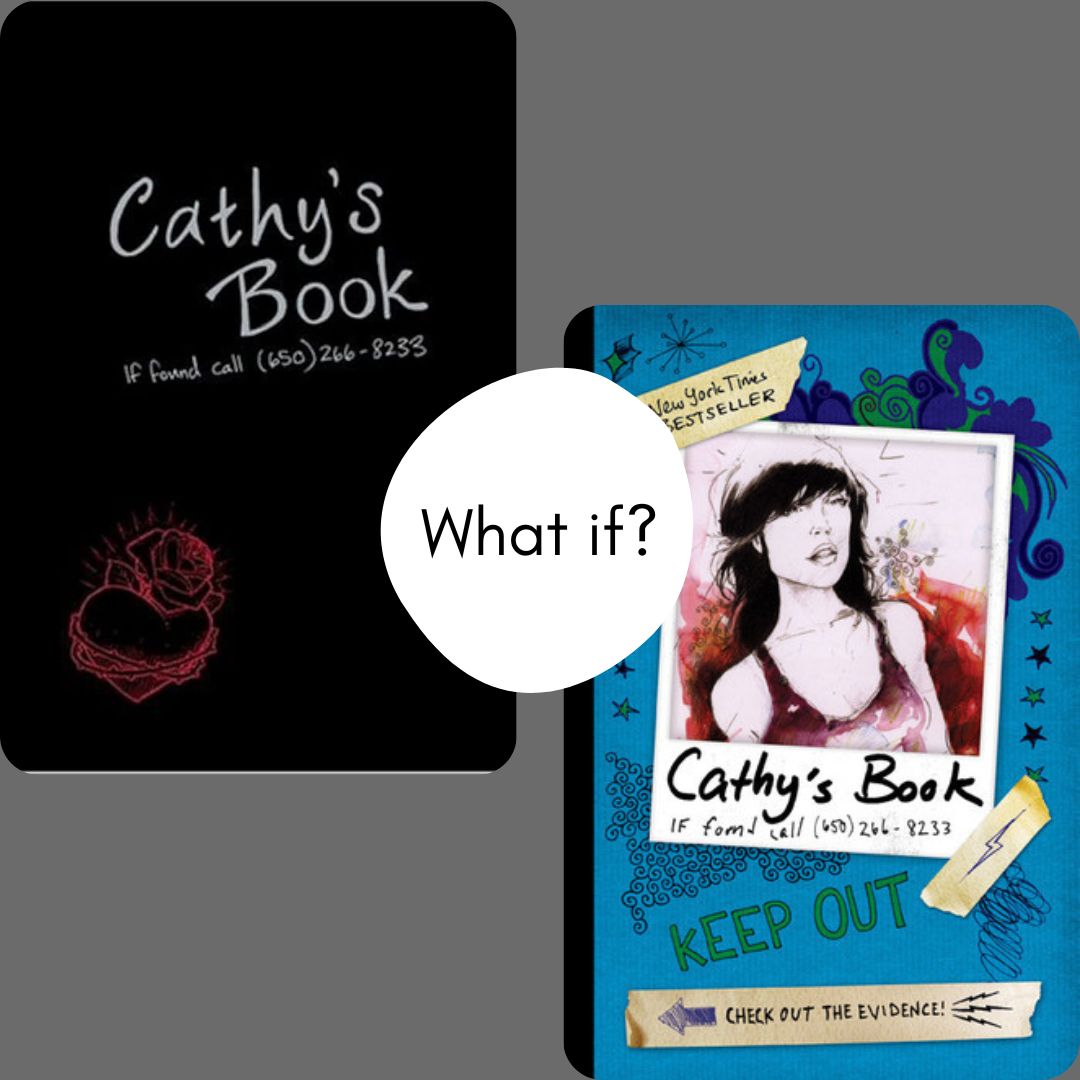
 I vividly remember finding Cathy's Book in a grocery store checkout line with my sister. Such an impulse purchase. The marketing on the back cover had snagged our attention. It promised an unusual reading experience: physical clues inside the book, the entire book sealed in shrinkwrap cellophane to protect the contents.
We came home, ripped it open, and discovered a small, white, understated pocket/envelope tucked into the book's front matter. Inside was an assortment of evidence: Polaroid photos with a clue written on the white space below, business cards, notes, a valet ticket with a time stamp, maybe twenty different items, each one unique, specific, laden with details. We were so excited by the possibilities of solving the mystery through these clues. We fought over who would read it first. In a matter of days, we had consumed it all.
Published in 2006 by Running Press, Cathy's Book: If Found Call (650) 266-8233 was written by Sean Stewart and Jordan Weisman. The plot, part thriller, part mystery, and part romance, follows a teenage girl as she tries to unravel a mystery, and invites readers to participate by examining the evidence. According to Publishers Weekly, the original sold around 120K copies by 2010, a genuine commercial success. Two sequels added 59K and 34K more copies sold to the series. For a time, it even landed on the children's NYT bestseller list for chapter books.
Largely, I had forgotten about this book. No trad house would dare to do this in the modern age. Too expensive. But with the rise of indies taking on sprayed edges, selling direct from their websites, and looking for ways to set themselves apart from the competition, my brain circled back to how the idea could feel fresh again for today's audiences. What might it look like to think about a book in three dimensions? What if your reader could step a little further into your story world, thus catapulting your book above the rest in its genre?
For a contemporary YA mystery about a missing girl, imagine a page torn from a yearbook, a movie ticket stub, QR codes that lead to your website for a clue, a restaurant receipt that means something, a handwritten note slipped inside a cell phone case. A true examination of the evidence.
For a time travel novel, imagine letters from another century, historical maps, old newspaper clippings, or documents that connect the two eras.
For a religious adventure that takes place across different continents, imagine maps, architectural blueprints, reproductions of old manuscripts with burned-looking edges, or fictionalized archives that deepen the journey's experience.
For a rom-com about chefs, think recipe cards for dishes in the story, a menu from where they had their first kiss, or a ticket from a gondola trip they took together to reach the restaurant kitchen at the top of the peak.
Honestly, the possibilities are limited only by your imagination.
Something else of note: in a world saturated with digital content, how amazing would it feel to take a step back and help your readers find joy in the tangible? Readers are craving this (as evidenced by some authors creating serialized chapters sent out via snail mail). Everything old is new again.
There is, of course, a practical side to this consideration. A book with unusual physical components is likely best suited to a special edition sold directly by the author or a limited portion of book sales through their website. And then there is the creation and printing of extras, along with their costs and the time it takes to create them. As a crafty person, this possibility excites me more than daunts me.
This also doesn't have to mean creating an elaborate evidence packet or spending a fortune on extras. Three or fewer thoughtfully and carefully chosen objects can make the experience stand out and be memorable. The extras may deepen the narrative, add texture to the fictional world, or be something readers would simply love to have.
I love the idea that authors may consider this possibility at the conception stage of a manuscript:
What objects belong in the story?
What might exist just beyond the story?
What could a reader hold, unfold, examine, use, or discover that would make the story world feel even more alive?
You don't have to build a book like Cathy's Book, but you can borrow the idea, its innovative spirit, and the absolute joy it brings readers. If this sparked any ideas for you and your situation, let's talk. I can tell you all about Cathy's Book and how I still remember the experience to this day.
✨ A thought exercise: If someone loved your novel enough to want a little more of its world, what could you give them to expand the experience? Leave your genre and some ideas in the comments below.