

I wrote about the Systems 1 & 2 thinking process last week. You can read it here: https://buymeacoffee.com/knightofdelta/the-hard-work-thinking
I conducted a social experiment to see how people would react to a view that I posted in two different ways. Most of us are aware of the events that occurred last week. The cofounder of a tech firm was in the line of fire from an ex romantic partner. This event prompted people to dig into the cofounder's historical tweets, revealing certain messages he had posted.
I thought he was unlikely to return to X, but then I expressed my view in two different ways.

Link to the first post: https://x.com/knightofdelta/status/1989080920113213526
Because the post was concise and to the point, it garnered a lot of engagement. Additionally, because it went strongly in one direction, there was pushback from many people. This post was an invitation for people to engage in System 1 thinking. Do I agree with the view? It was a simple yes-or-no question, which is binary—those who disagreed provided reasons for their stance. As I mentioned last week, we prefer not to waste mental energy if we can avoid it, so many fell into the trap of confirmation or representative bias.
Here is the second post
 Link to the second post: https://x.com/knightofdelta/status/1989107287231779302
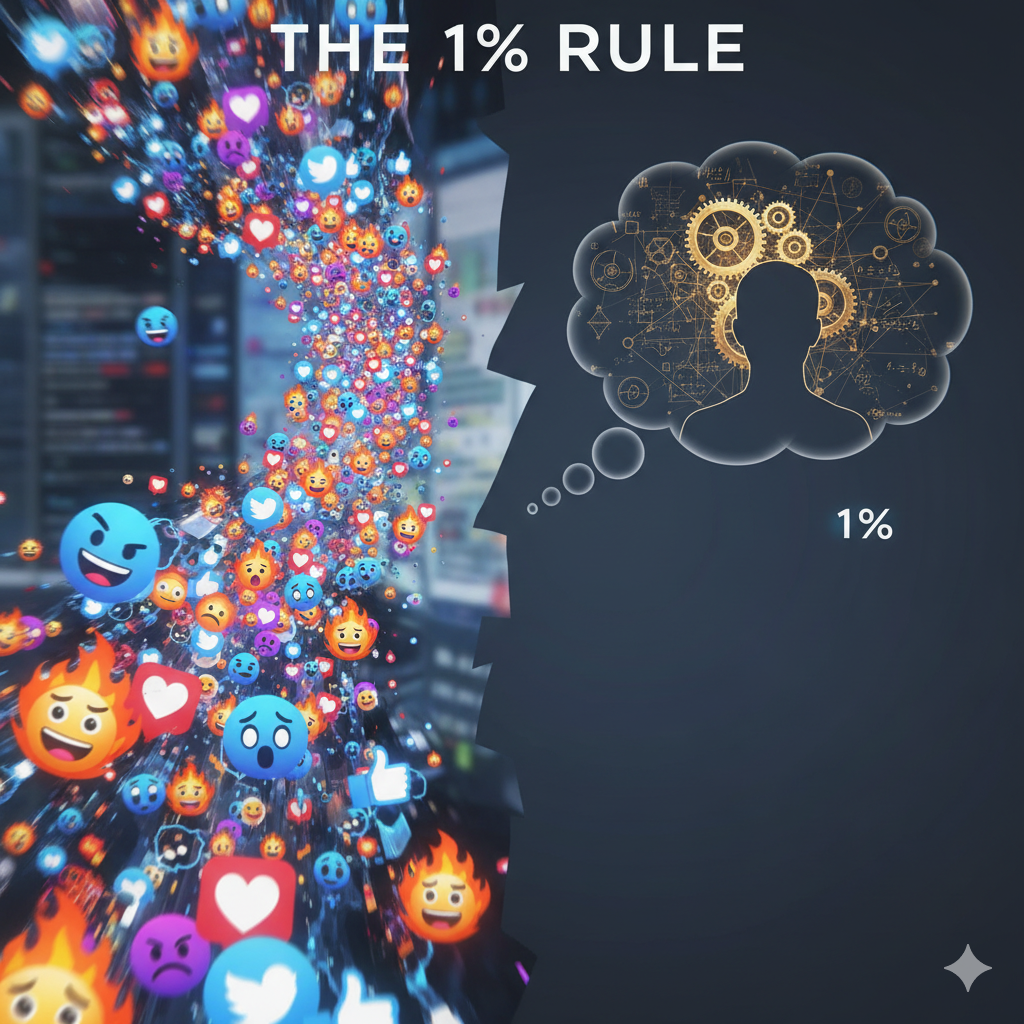
There was virtually no pushback here. I explained the rationale behind my view on why the cofounder would not return. The post got only 1% of the engagement of the first post. Anyone who wanted to counter it would have engaged their System 2 thinking. That was more difficult to do and was not worth it, so they abandoned it and moved on.
If this is anything to go by, we can infer that roughly 1% of the population actively engages in their System 2 thinking process. The remaining 99% use it solely for survival, with no other purpose in mind. This assertion is to reiterate that the bar for being an outlier is actually quite low. All you need is just a little effort.
This leads to two practical applications of this experiment.
First application: This explains the mechanics behind why bad news travels fast. Bad news activates the System 1 process. It hits hard and sparks conversation immediately. But if the bad news is debunked, it gets very little exposure because it simply means that you have to walk back the process of arriving at all the conclusions you had made from the initial news. You will need to engage your System 2 thinking process, which is not always enjoyable. Then no one talks about it, and the correction does not go far. For the correction to be effective, it must spark another round of controversy to overshadow the initial bad news. For those interested in public relations and crisis management, this is a strategy you can always deploy.
Second application: You can use this strategy to convince people if you find yourself in a high-stakes situation. Our default process is to appeal to emotions or try to bluster. You can always engage your System 2 process to reframe the entire conversation or event to suit your agenda.