
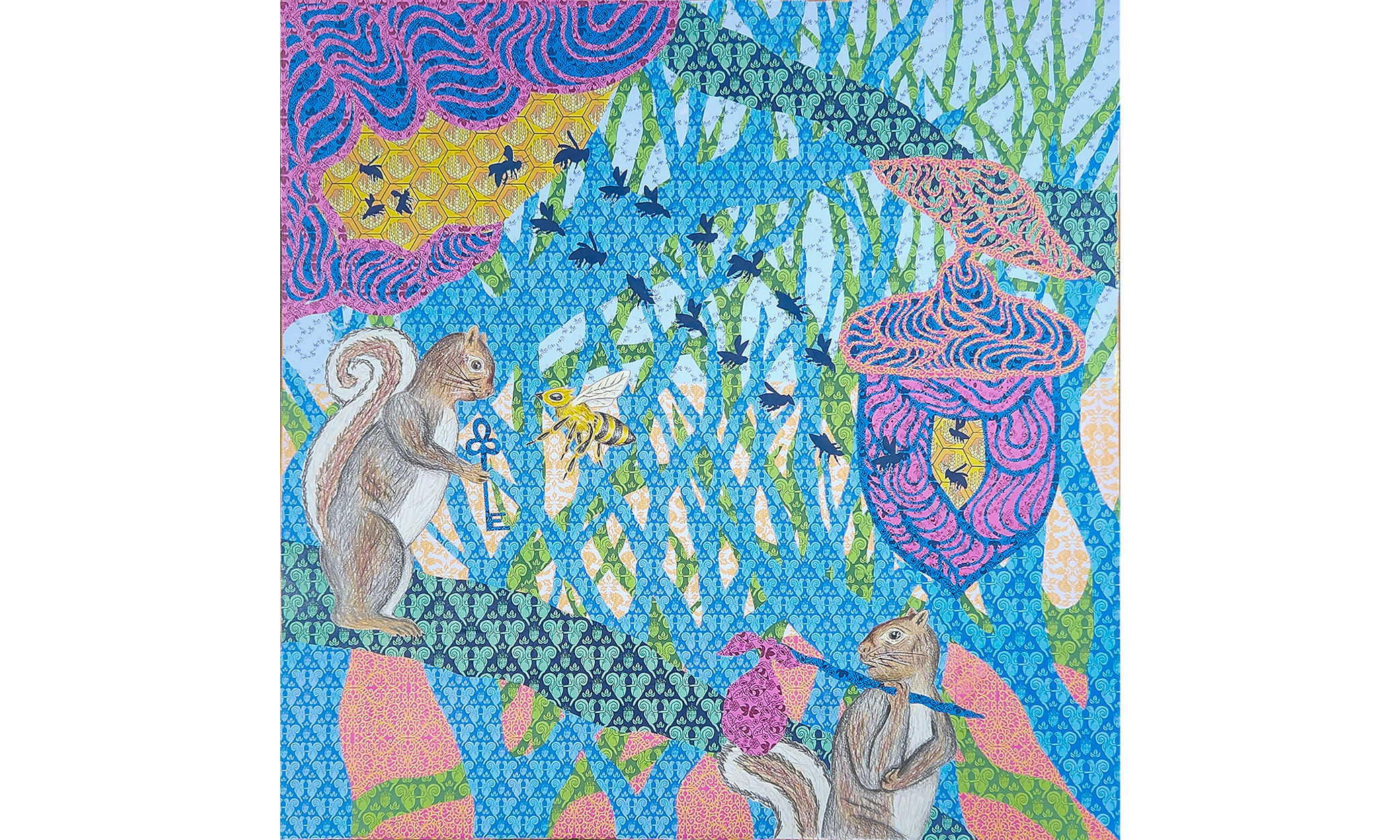
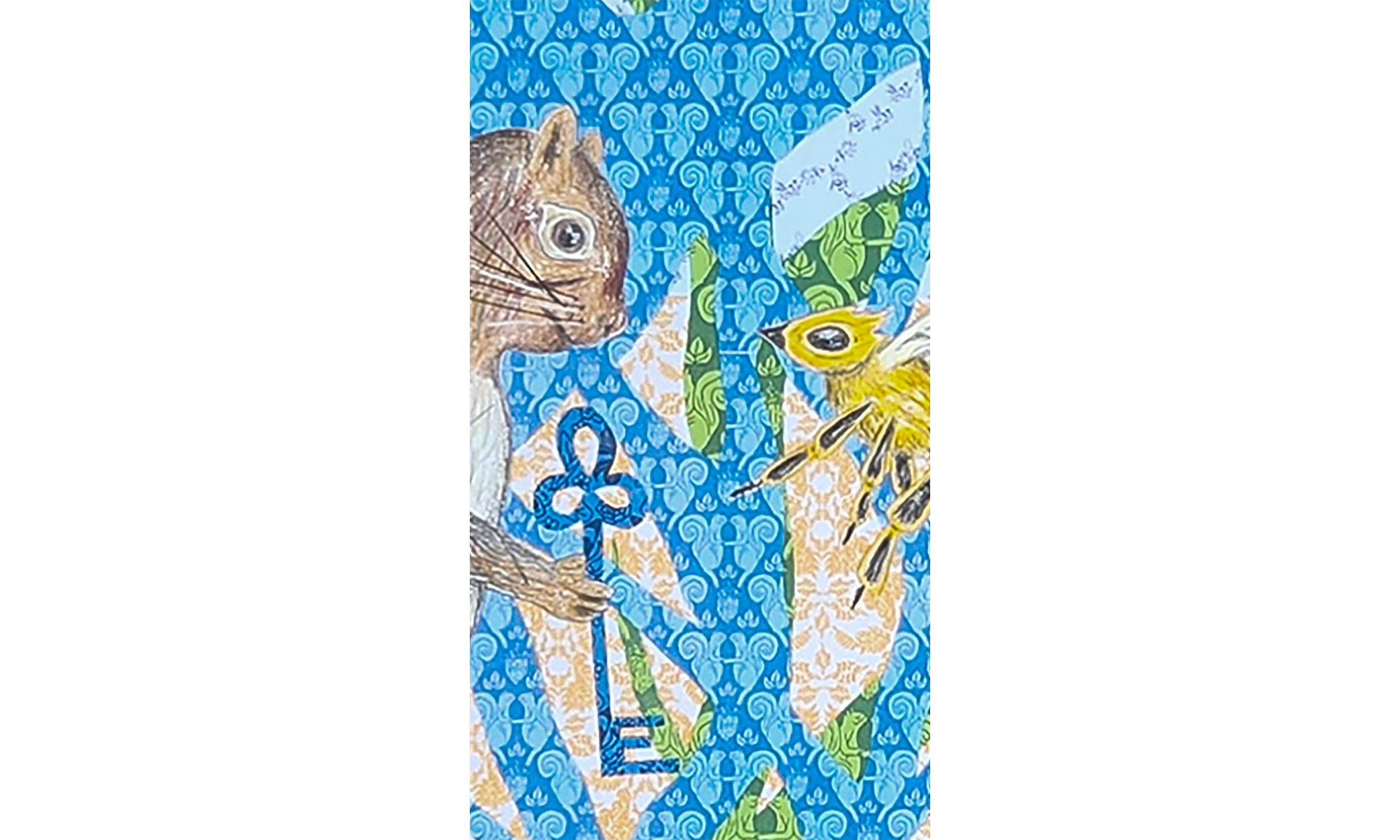
 Must It Bee?: the fourth movement of Beethoven's last quartet in F Major, collage and colored pencil on canvas, 20x20 inches, $800.
squirrel vs bee and fish vs bear
The meditation with Beethoven about the difficult resolution I shared on Monday has had me thinking all week!
It opened up some grand epiphanies within myself about the nature of vulnerability, both artistic and in general.
But I need to back up and explain this collage first.
Here we have come full circle. The squirrel who stole honey from the bee is now making it up to him by giving him the key to his own home.
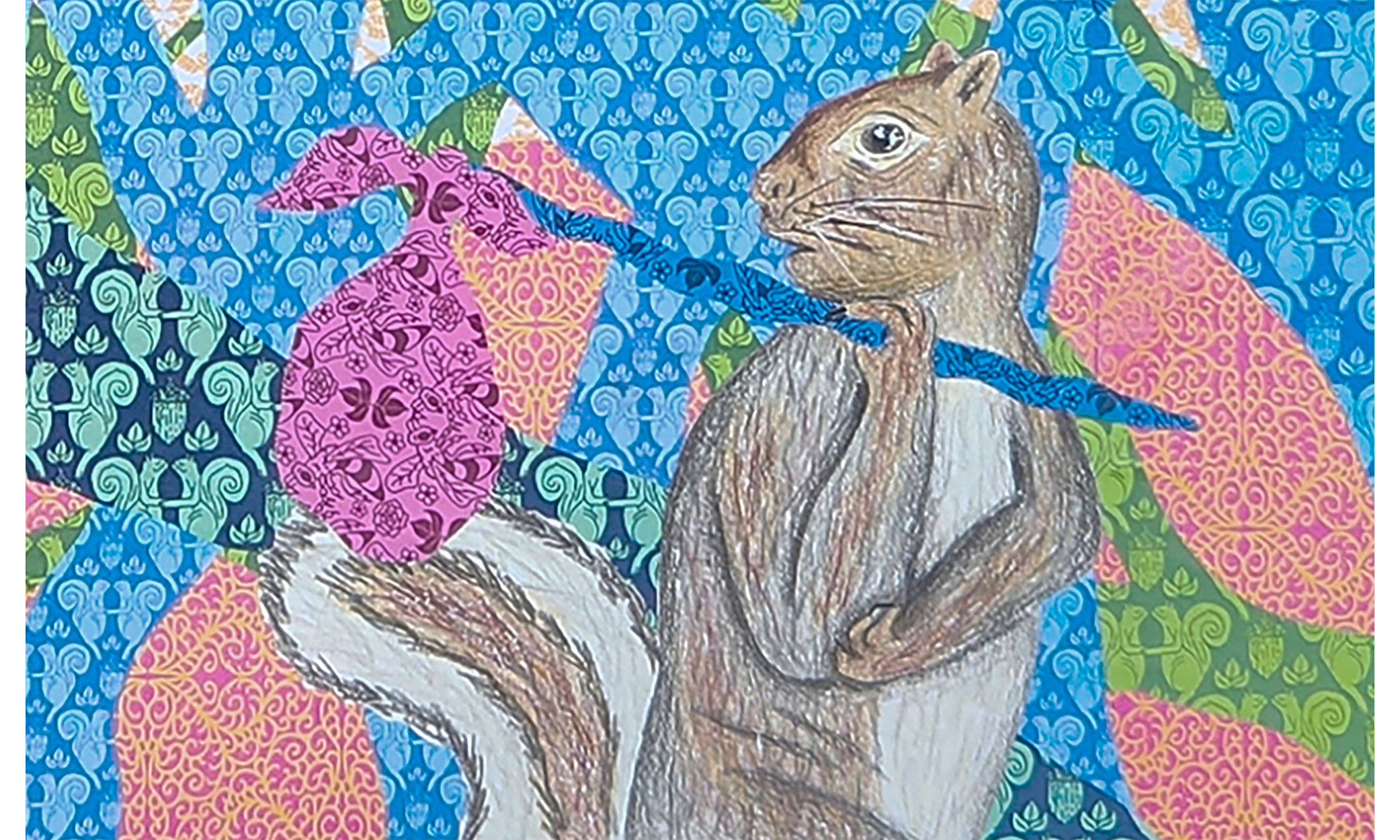
The bees are moving into the acorn, or maybe the squirrel just hired the artist bees to redecorate, sending the squirrels to move out for only a short while.
I'm leaving it semi-vague on purpose because both scenarios highlight different versions of a difficult resolution.
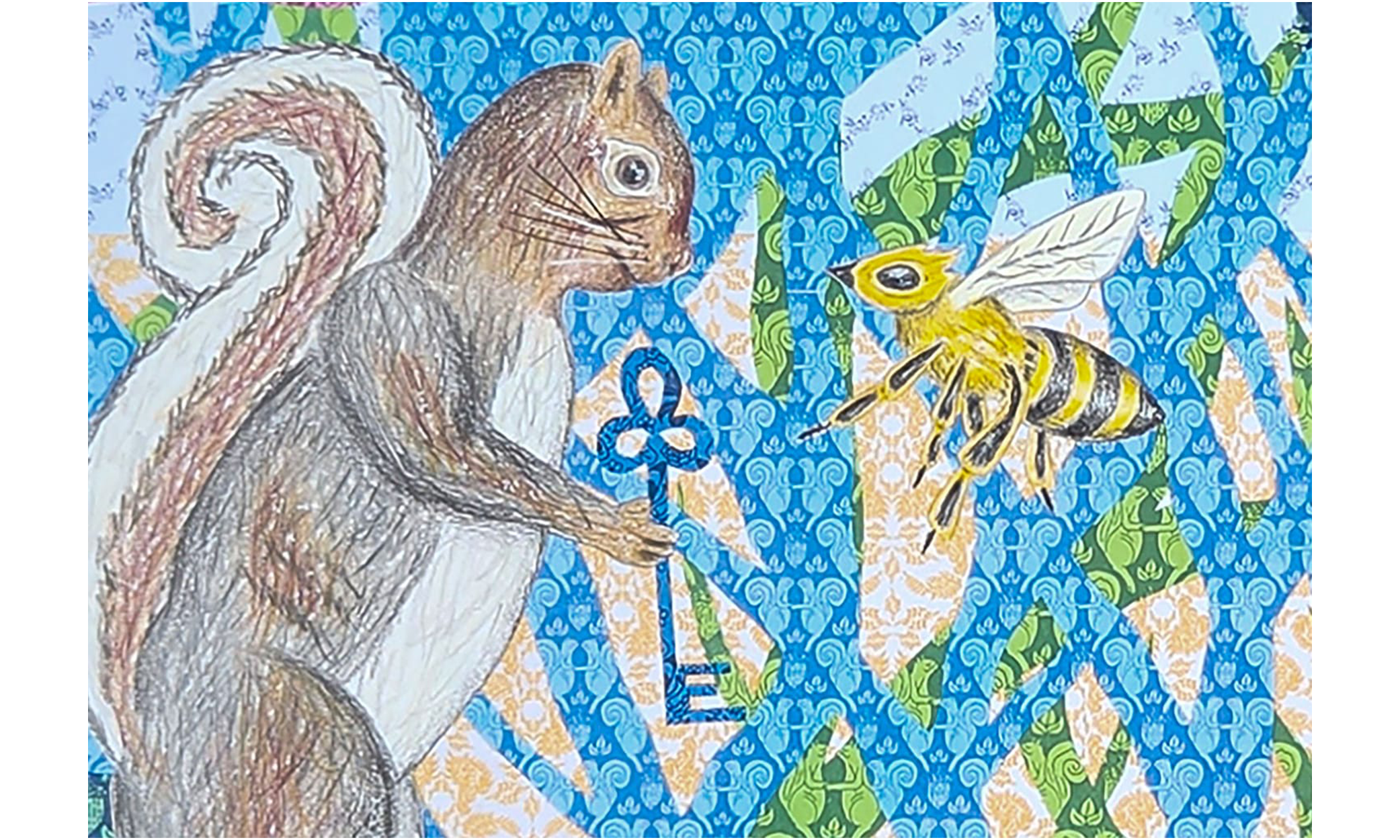 It takes great resolve to make up for a past mistake, to rectify your own karma with a huge act of generosity and sacrifice, and doing so makes you incredibly vulnerable.
Taking this kind of accountability, as the squirrels are doing if they are giving up their home, is one of the most difficult decisions anyone can possibly make,
and yet the sacrifice and generosity is so great that the joy of giving such a gift can feel equally as great. It has to be a heartfelt gift though.
As one great yogi said: give me a gift "only if you can give it with all the delight of a child feeding a dog, because I don't want to have to pay for it later." Apparently the karma of accepting a begrudging gift would also be something to avoid.
These squirrels don't look terribly happy about their choice, but maybe they are just concerned about the bees redecorating.
What if the bees don't do a good job? What if it's not to their taste?
Even such smaller decisions can be difficult if we have to trust someone else. Whenever we choose to trust we become vulnerable.
 I once mentioned that The Last Quartets series has been a practice in gearing up for a much larger collage series of collage triptychs on all of Beethoven's symphonies next year.
The idea behind the symphony triptychs is to consider a different aspect of heroism with each one, since Beethoven's symphonies have so often been discussed in heroic terms.
This idea has shifted in a very interesting way while listening to and playing with his string quartets.
The heroism of his symphonies exists in the chamber music too, but it feels like a hard won kind of heroism: not the kind that comes out of recklessness, or privilege, or ego, but from the bravery of defiance that is born from an excess of vulnerability.
You could call it a cover up in a way, maybe a "fake it till you make it" kind of attitude, but to understand it we need to look at the role of trust. How do artists trust their audience?
Trust is always easier with a smaller group. Usually we can disclose more of our own personal feelings because we feel safer in a pub with just a few friends, and would say things we wouldn't necessarily say in a banquet hall full of people.
Art is much the same way, especially music.
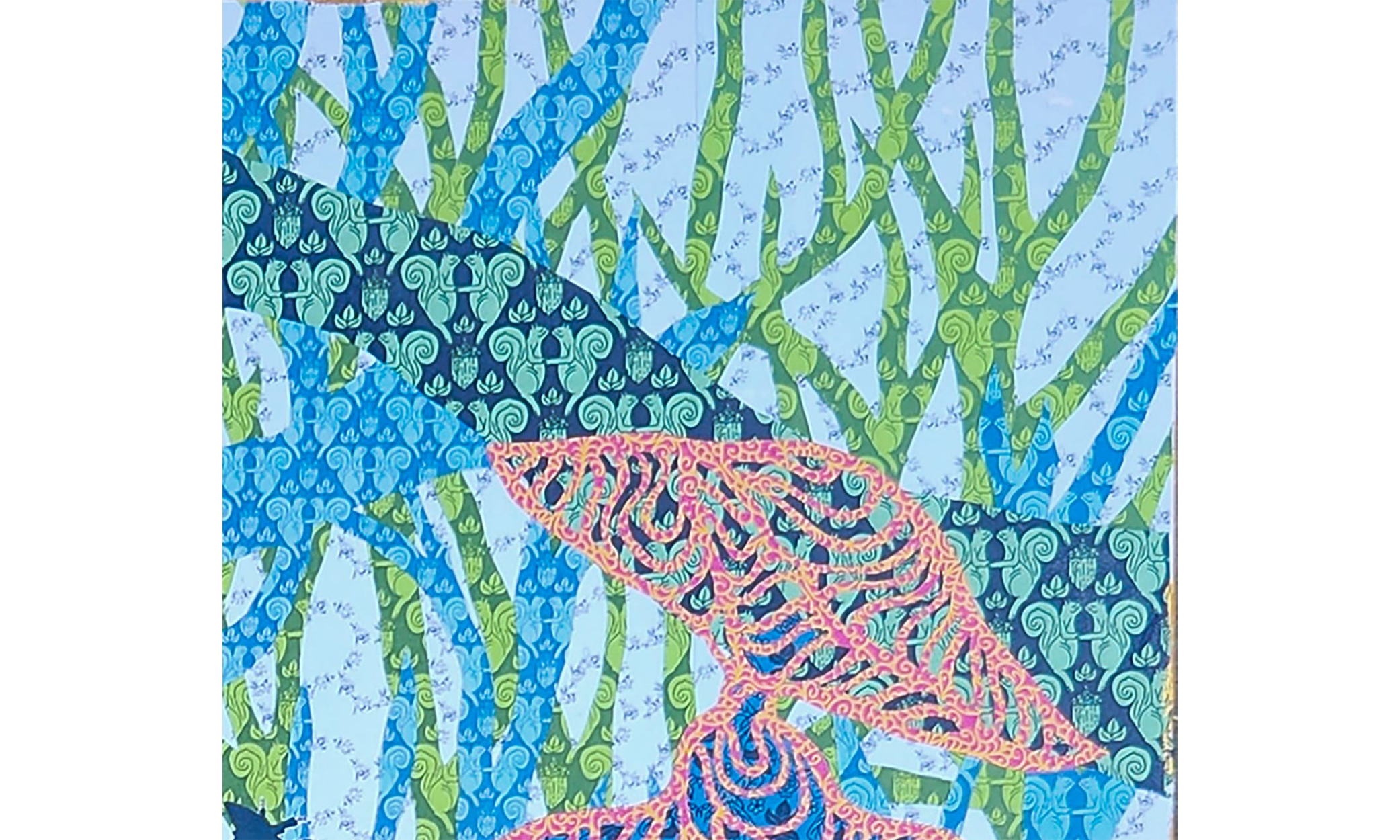 Think about it. Would you feel safer expressing your scariest feelings in a string quartet or a symphony? In the former you have not only fewer people playing the music, but also fewer people listening, since chamber music is for a smaller room.
A symphony would be played by many players in a much larger space. How would that influence what you feel comfortable saying in your music?
This is probably why so many people claim that Beethoven said so much more in his string quartets, and they're probably not imagining it.
Maybe that right there is the difficult resolution: should I really be saying this through my art, and should I be saying it in this form or in another?
Who will be listening and how will it be received?
Ultimately, the relationship between artists and fans is built upon trust just like any other relationship. Can the fans trust that they will like what their favorite artist does next? Can the artist trust their fans to remain fans even when they experiment with their style?
 As I sat in the lobby for my cataract surgery consultation (talk about trust!) a video was playing showing bears catching salmon and gobbling them up.
Odd choice, but my brain still had to go somewhere existential with it. I thought about how I would like to be a bear. I have been a fish too long after all.
Then I wondered from the standpoint of reincarnation: would a past life as a fish enhance your incarnation as a bear, and would a past life as a bear enhance your incarnation as a fish? What would be the influence of such past life experiences?
I don't have an answer to that, but it brought my mind back to the idea of vulnerability. Of course I would rather be the stronger and more ferocious creature. I get tired of feeling like I'm swimming against the current, easy prey for whoever can catch me. I think most of us feel that way.
It just made me wonder how my vulnerabilities inform my particular flavor of fierce. Likewise, if Beethoven is a fish swimming in chamber music waters, but shows up as a bear in his symphonies, what is the influence of one upon the other?
In a way it hearkens back to the moth collages and those thoughts about hiding and emergence.
Well, with that we're done with Beethoven's last quartet, but there is still one more stand alone movement to discuss.