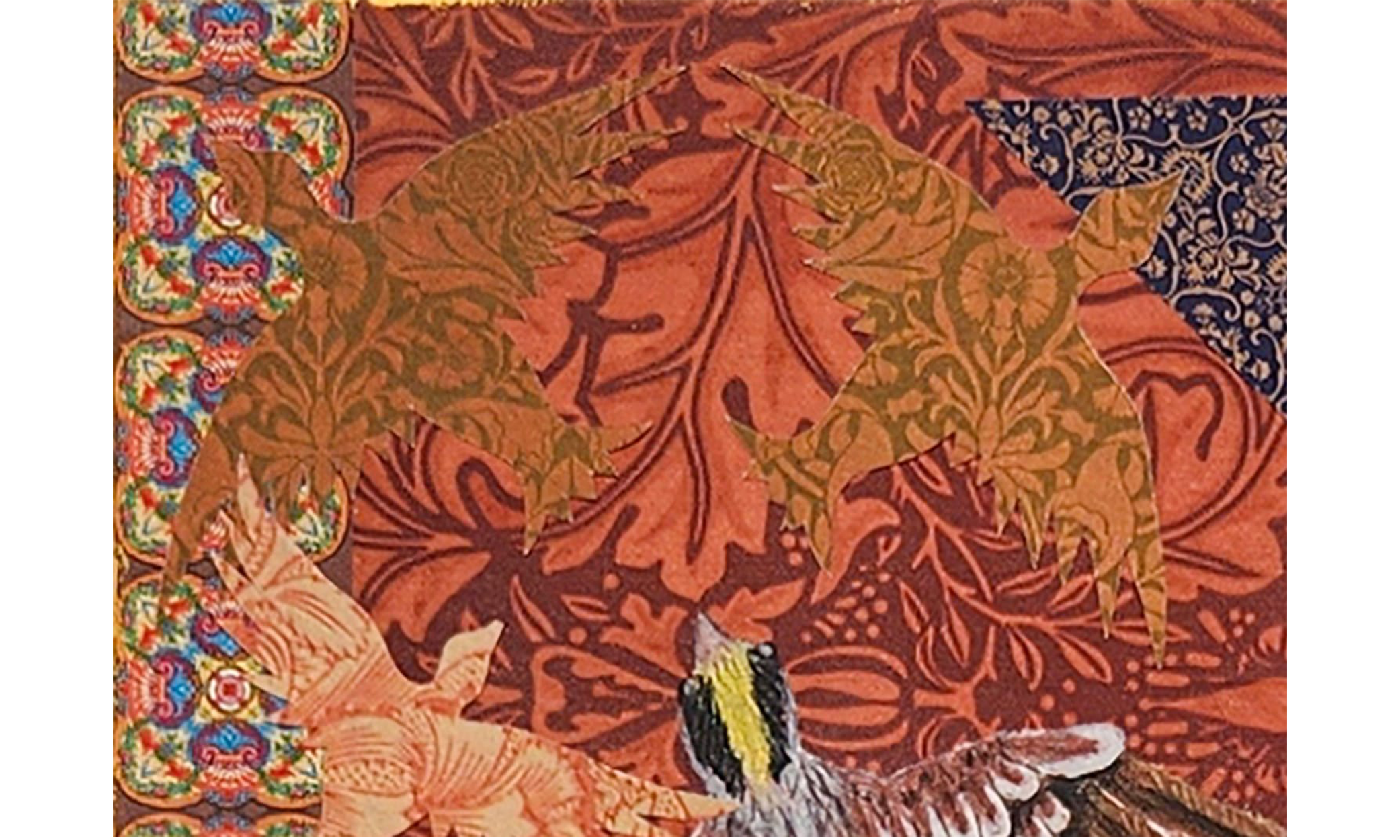

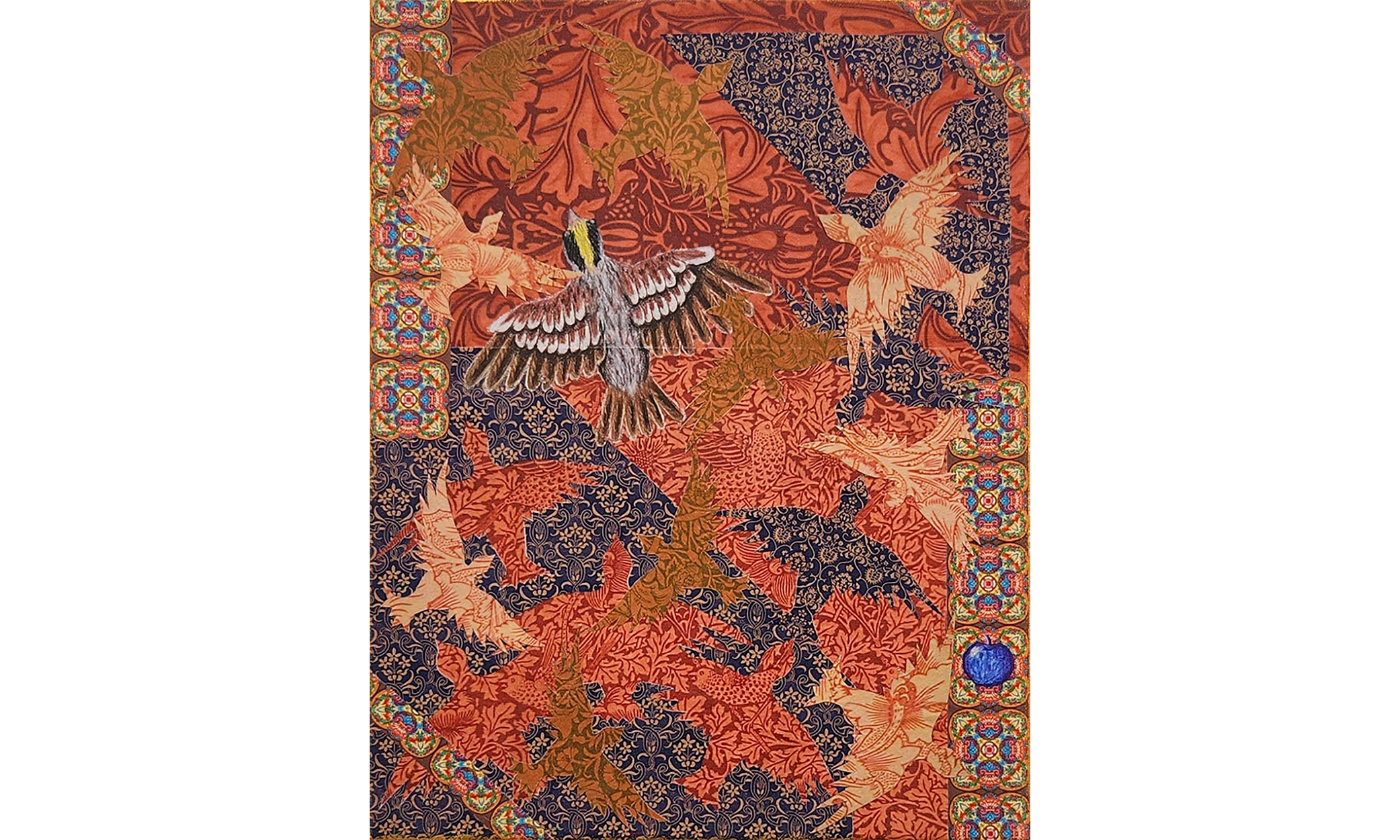
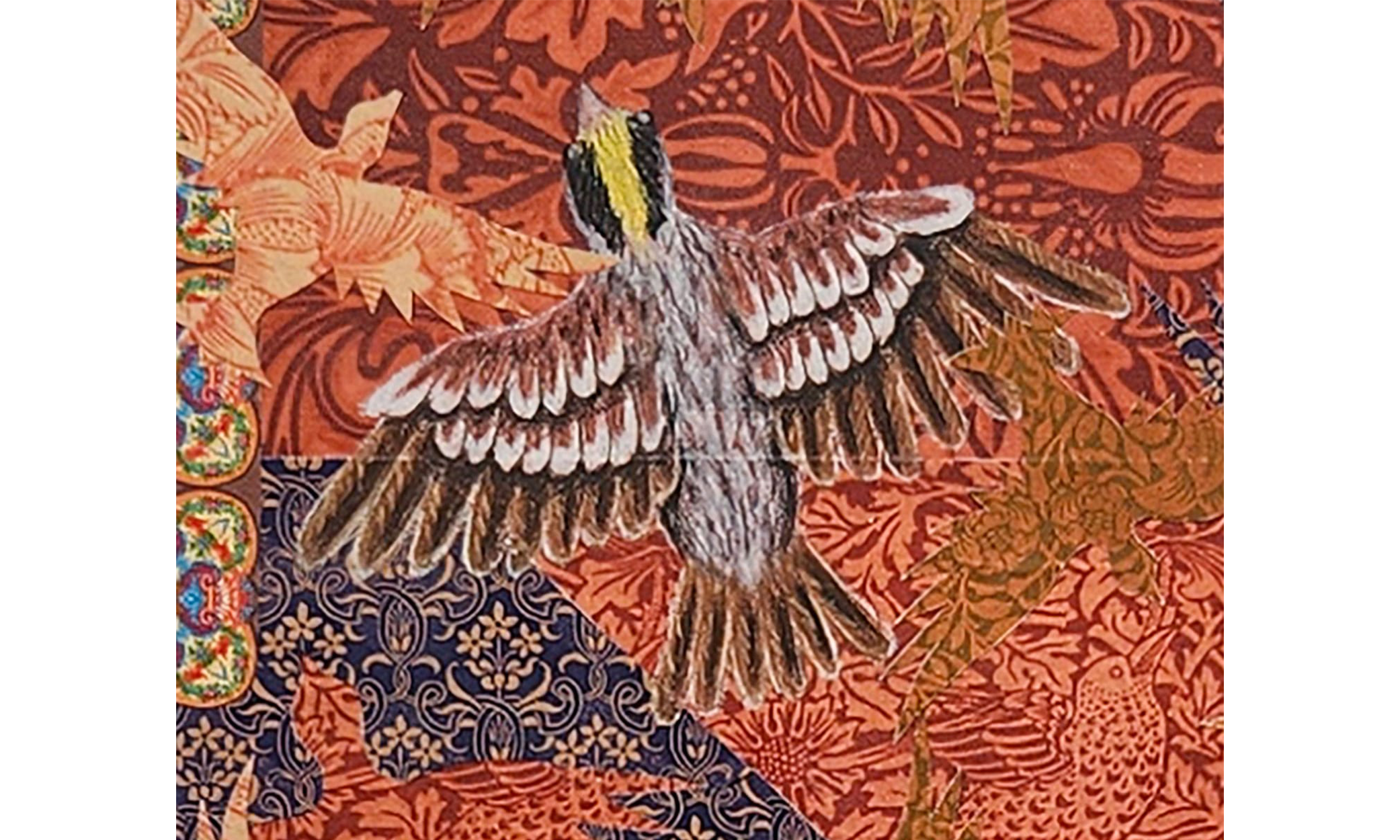
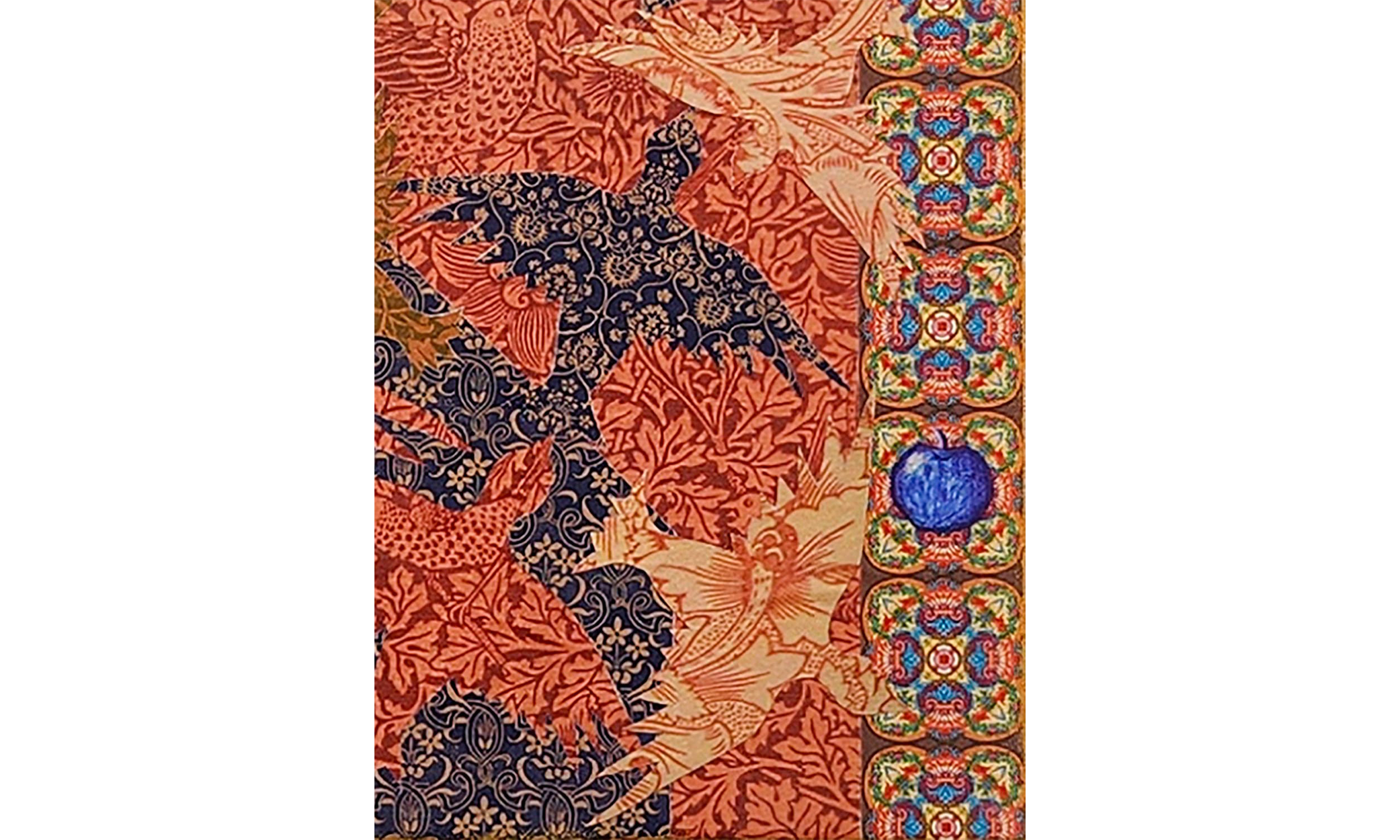
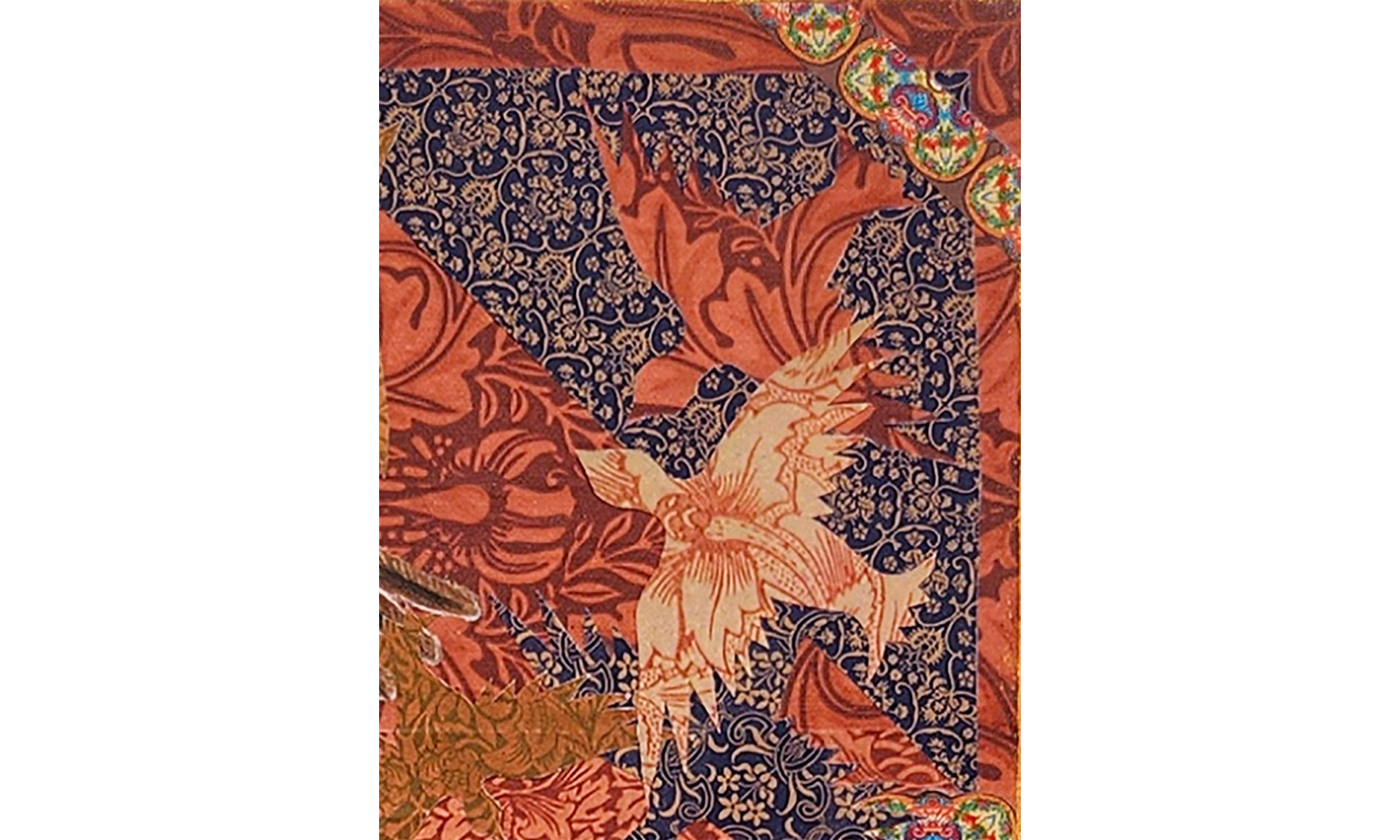
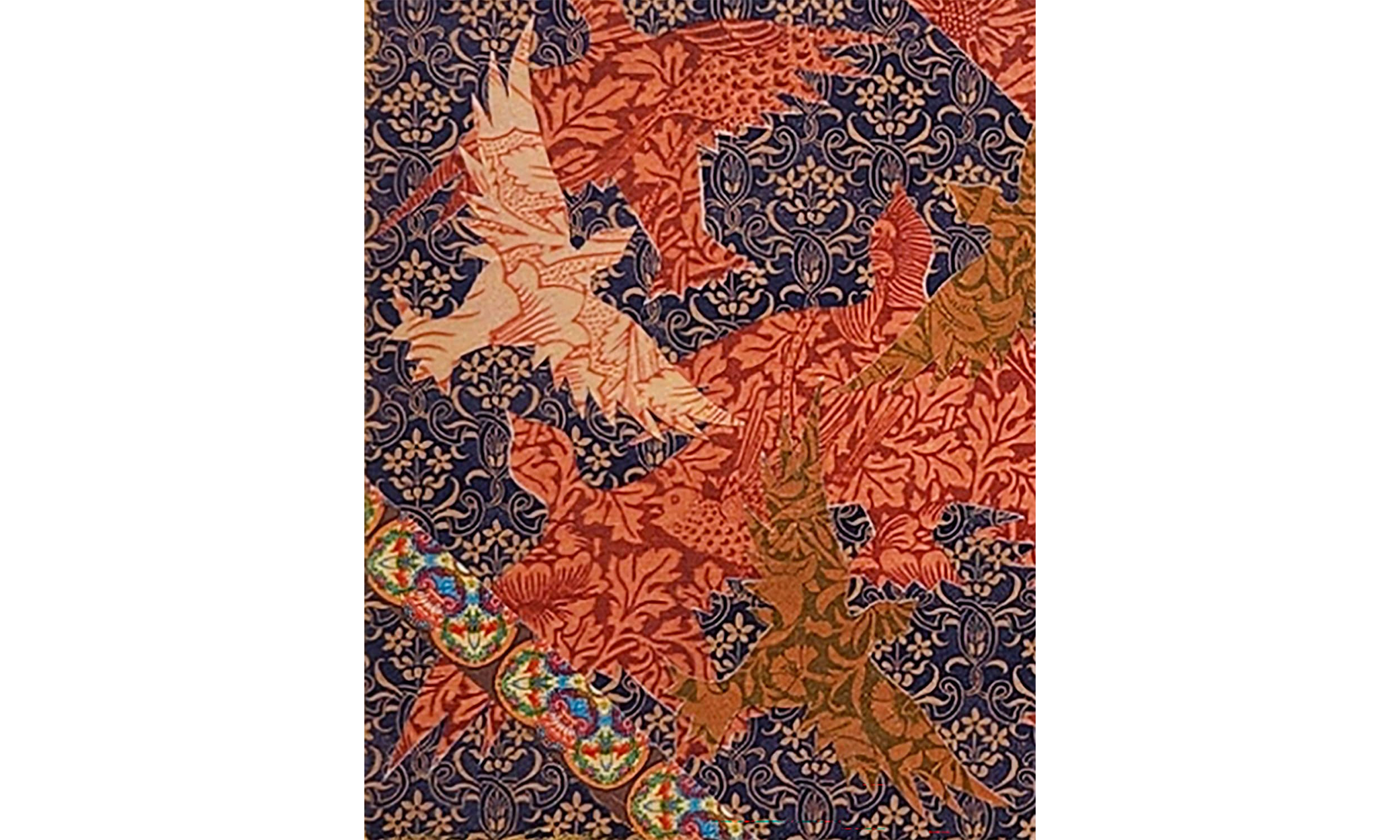
 Getting Heavier 11x14 inches, collage and colored pencil on canvas, $308
dancing on that line
Orange Red, between sacral and root chakras, Scorpio, D flat Major, Invitation to the Dance
Welcome to another liminal chakra! Orange red is a color that could be associated with the space between the root and the sacral chakras.
The root chakra, or Muladhara, is what governs your sense of survival and stability in the rainbow chakra system. The sacral, which we talked about last time, is in charge of sex and creativity.
So what might a space between those things look like? I see it as the feeling that your survival depends on getting laid!
Not actually of course, in fact what we tend to call your "sex drive" isn't a drive at all. We won't actually die without sex, unlike a lack of food or water. Touch, however, is a different story.
There is such a thing as "skin hunger," or touch starvation, and there has been research that found that babies who weren't held or cuddled tended to die. Skin hunger affects adults as well, if less severely.
 In the 12 color system I'm using as a metaphor for falling to earth and incarnating, orange red is associated with the musical key of D flat Major.
Rudolf Steiner associates D flat Major with Scorpio in his tone zodiac, and here is the poem Steiner wrote about Scorpio in his work called Twelve Moods:
Existence consumes the being,
Yet in being, existence is held.
In activity, growth disappears,
In becoming activity pauses.
In worlds that prevail and punish,
In the chastening that shapes and forms,
All-being sustains the beings.
Essentially, living causes death, but we are all sustained in our connection with God, and we can recognize God within one another. We all need connection, and if we can't get it from other people we could get it from God...I guess.
The modern ruling planet of Scorpio is Pluto, otherwise known as the god of the underworld. Pluto presides over things like death, shadow work, and resurrection.
But in classical astrology Scorpio is ruled by Mars, the planet of sex and aggression.
This means that the traits we attribute to Scorpio now are a mix of both planets.
 Thus Scorpio has a reputation as a very intense, sexy, deep, and kinda scary zodiac sign. Fittingly, Halloween happens during Scorpio season.
Right now Venus is in Scorpio, but now she's retrograde.
That might look like going deep inside yourself and finding all your unmet needs, finally realizing how hungry you are, and then trying to figure out if you should become a werewolf over that or not.
Just me? Well, maybe.
Closer to the point here, this intersects nicely with the liminal chakra idea of seeing physical touch as a need when perhaps before you have denied it, and if you have denied it chances are good that society's ideas about propriety made you do so.
We're lucky to live in an age where there's less societal pressure to deny those needs, but that wasn't always the case.
When we think about prudish olden times we realize that people have always had to find creative ways to touch each other...for survival.
One of the favorite ways to do that was through dance.
Dance has a history of getting ever more scandalous and "dirty," and this seemed to reach a tipping point in the early 19th century with the invention of the waltz.
 Yes, long before twerking there was waltzing, a pearl clutching dance where the man actually had his hand on a woman's waist. The horror! Waltzing was as scandalous as it was popular, and popular because it was scandalous.
And that brings us back to D flat and a piece of music by Carl Maria von Weber called Invitation to the Dance
Notably, we usually hear this piece in an orchestrated version when it was originally written for piano.
Apparently Hector Berlioz was putting on Weber's opera, Der Freischütz, in Paris, but French opera required a ballet crammed into the middle. Berlioz decided to orchestrate some of Weber's other music to fit this requirement, but put it in D Major because it was easier for an orchestra to play.
There's actually something lovely about hearing it in its original form.
Invitation to the Dance is a waltz, and because it's a very intimate form of dance it makes more sense as a more intimate piano piece. The small scale makes it feel more like a conversation between two people and less like a group.
The introduction, before the waltz really starts, is a conversation between a man and a woman where he asks her to dance with him. Weber explains this conversation measure for measure.
 Then we have the actual dance, which is kinda crazy. It feels like a choreographed Fred Astaire and Ginger Rogers routine. This all leads to what seems like a very obvious ending. The dancers are panting, the audience is clapping.
But it isn't the ending at all. The conversation picks back up. The man says, "thank you for the dance," and the lady says something like, "my pleasure, I hope we can do this again once my heart stops pounding like a squirrel in heat," (I presume) and they go their separate ways.
So why might Weber have chosen D flat for this? Here's what Christian Schubart said about D flat in 1806, a mere 13 years before Invitation to the Dance was written,
"A leering key, degenerating into grief and rapture. It cannot laugh, but it can smile; it cannot howl, but it can at least grimace its crying.--Consequently only unusual characters and feelings can be brought out in this key."
That sounds strangely like Scorpio.
In the early 19th century the tuning systems for keyboards were in a state of transition, so composing a piano piece in D flat, while becoming more common, would have been risky. Depending on how someone's piano was tuned it could sound great or bizarre to awful.
Might that choice of key say something deeper about this piece? Possibly. If it does it could say something about the intentions of the characters doing the dancing. Maybe they're not that innocent? The music certainly seems to run through the gamut of emotions.
What's interesting is that while there had been many waltzes written for piano before, this is probably the first piece written to be more about waltzing than it is to be waltzed to. It's a depiction of the social dynamic of dancing instead.
Ravel's La Valse, originally written for orchestra in 1919 but later arranged for piano, is similar in this regard. I recently heard Yulianna Avdeeva play this live in the solo piano arrangement, and it was thrillingly bonkers!
It's interesting to listen to these two pieces side by side to hear how the form of the waltz, and its symbolism, evolved over those 100 years.