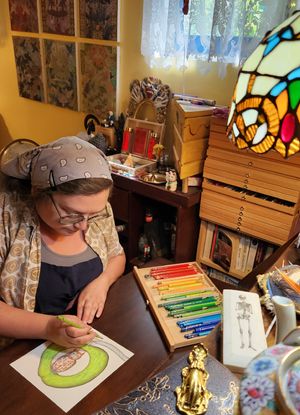

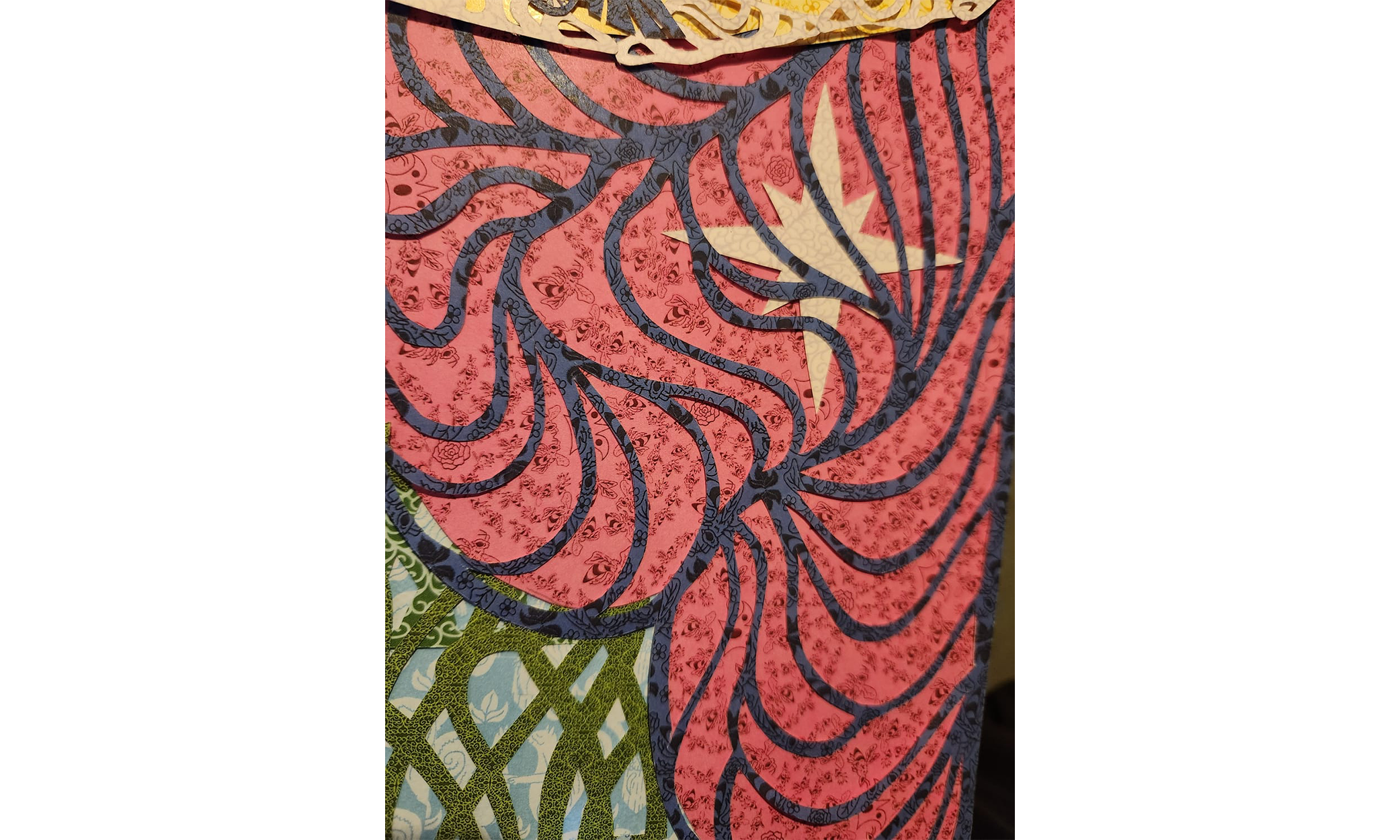
 A peak of the collage in progress for the replacement finale of Beethoven's opus 130
devourer of time
It's time for our last meditation with Beethoven, and this time it's on that replacement finale for his string quartet opus 130 I talked about here.
We were in a row boat at night, and Ludwig, looking older now, had the oars. It was like the ending of the movie Immortal Beloved. The stars were reflected in the sea, but the focus was on the full moon.
“Ludwig, this all looks so familiar! Franz and I go out on the star dappled sea like this so often," I said.
“It is a lovely and ubiquitous poetic metaphor from my time. I loved it too.”
I ran my finger over the reflection of the moon, scattering it in ripples.
“This is the only way we can touch the stars,” Ludwig said. “We can only play with the way they are reflected within us. Look there,” he pointed up. “That is my favorite star.”
I looked at its reflection in the water and poked it before looking up. “Sirius? Why is it your favorite?”
“Because it is the brightest. It alone can hold its own beside the full moon, and it is dependable in the darkest times. I think I love this star more than the moon itself.”
“Ah, the inconstant moon that monthly changes in her circled orb!”
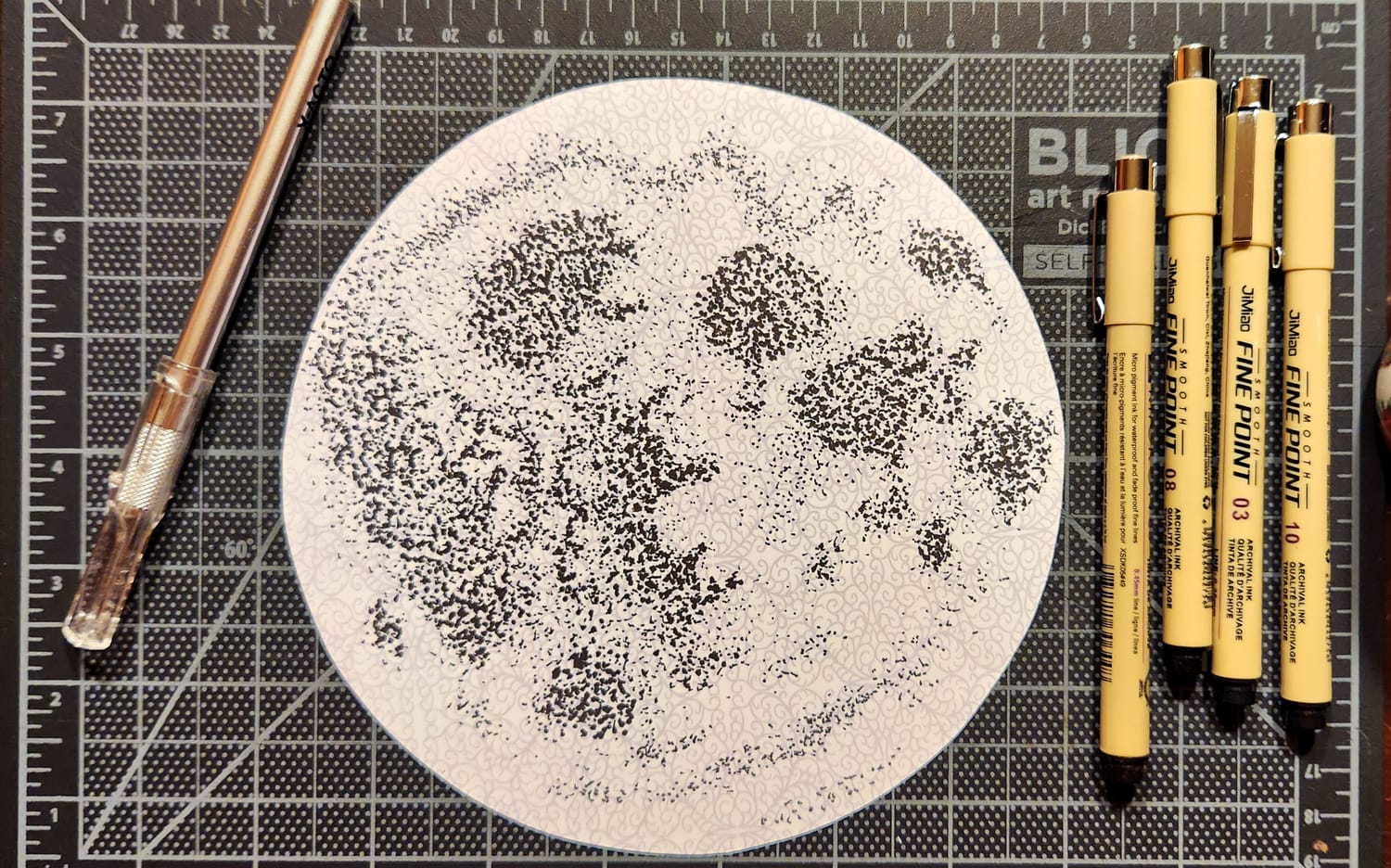 Full moon made with stippled fine liner on patterned paper.
Ludwig chuckled, always an appreciator of a Shakespeare reference. “But what does this have to do with the replacement movement for the Grosse Fuge?” I asked.
“I think of it like this. The quartet with the fugue is like the moon. It continually waxes up to that point. In that final fugal movement we are faced with such dazzling light we can barely see. As brilliant and wonderful as that can be, it failed an important test.”
“What’s that?”
“Music is only as good as it can be played. If no one can play it then it can’t really exist as music. I realized my publisher may have had a point, especially since I could never hear what it might sound like outside my own head.
"What’s the point of a finale that can’t be played? As much as we appreciate light, it is no good if it makes us blind. The quartet with the new finale is more like my favorite star. It will always be there for you in your darkest moment when you need it most.”
“But in my era we have access to recordings. How might that change your view about it?” I asked, surprised by Ludwig's humility.
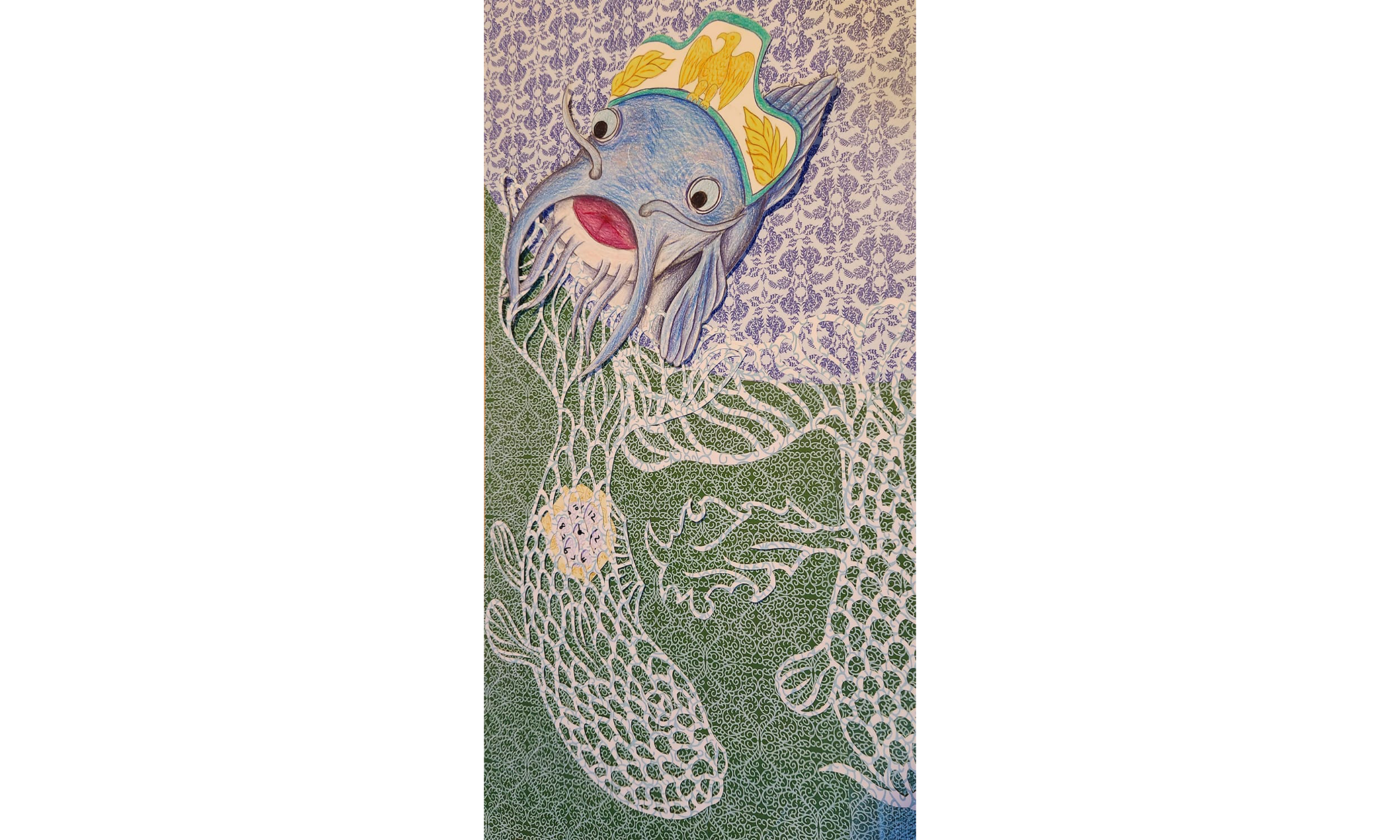 A catfish as Zeus, freaking out about a swallowed clock.
“And what an incredible thing that is! The Grosse Fuge is still difficult for most people to comprehend, even as a listener, so the analogy holds. I was so bent on self expression that I often didn’t consider what my audience might actually need from me.”
“I never would have expected you of all people to say something like that! I appreciate your Grosse Fuge, though it did take me a while. I’m glad I can choose to listen to either version of this quartet.”
“And I think it was a wise decision on my part to provide two versions," Ludwig said, conveniently ignoring the fact that it wasn't his idea in the first place. "Now you have access to the moon or the stars depending on your whim.”
“I admit I think the last three chords of the replacement movement sing out 'It Must Be!' in much the same way as the end of your last full quartet.”
“That sums up how I felt about writing it. At the time it did feel like just another chore, just one more thing I had to do, and yet, I experienced a sense of joyful nostalgia in returning to quartet writing again so soon after vowing to give it up.”
I sighed and said, “Well, I’ll be sad to give up these meditations with you.”
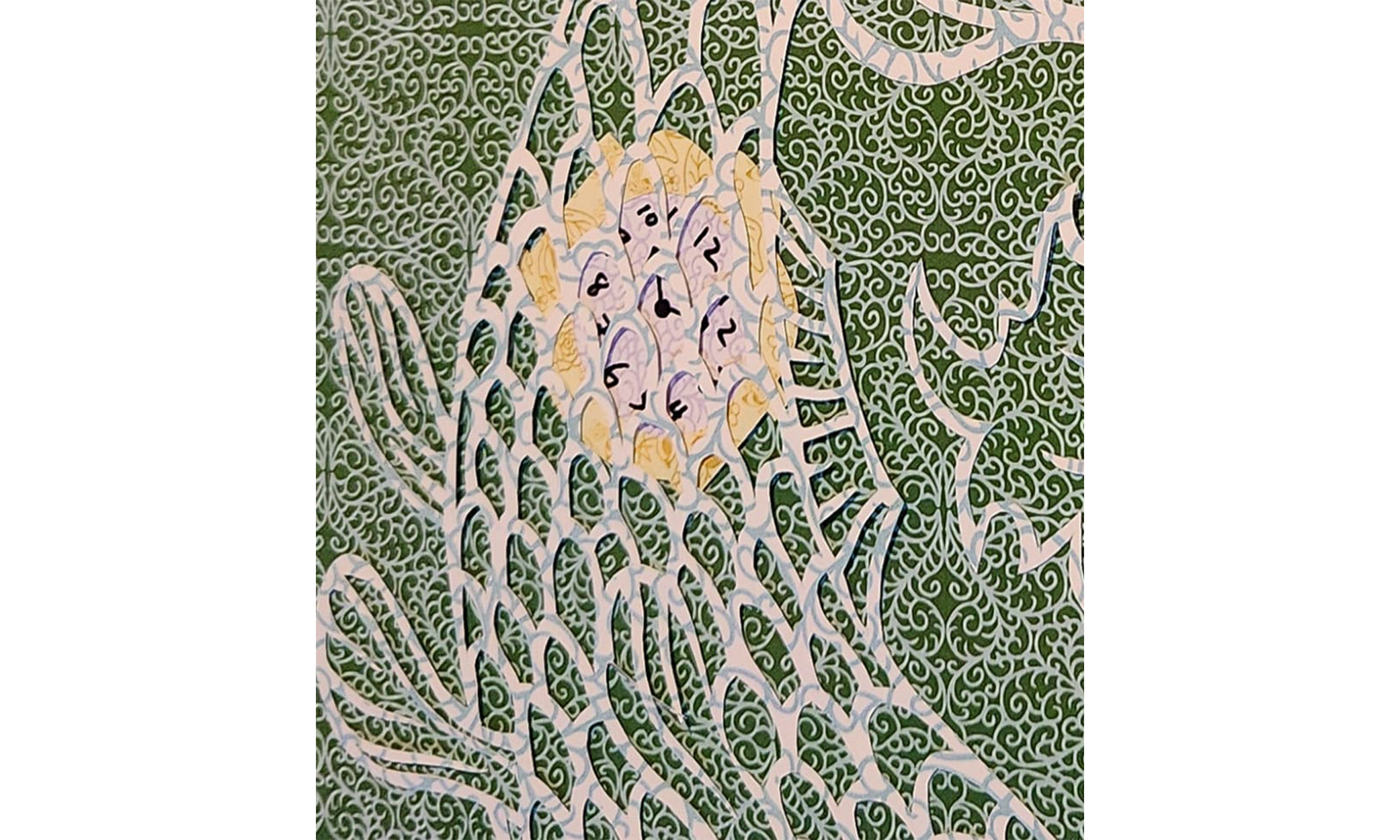 “Who said you have to? Here, a little parting gift, with an invitation to return.” Ludwig handed me a gold pocket watch.
As I was pondering what this might mean, a giant fish hopped out of the water and gobbled it up. Ludwig was laughing heartily at this, but I was rather distraught.
“Devourer of Time!” I hollered at the fish, wondering then if it might be an incarnation of the goddess Kali.
“Loss can also be a gift. You compared my string quartets to fish,” Ludwig explained, “and so this fish eating up your time is also part of the gift. Music is such a fish, a way to lose time, a way to heal the wounds time itself has inflicted.”
Ludwig gestured once more to the sky reflected in the sea. “When we can see ourselves in the music we feel less alone, and we can only experience this insight when the music is allowed to speak the raw vulnerable truth.
"That was my most sacred duty as a composer. The Grosse Fuge allowed me to speak my own vulnerable truth, but it wasn’t a sea that many others could swim in.”
“I would call that ‘the bear in the quartet,’ such a grand statement of defiance!” I said with wonder.
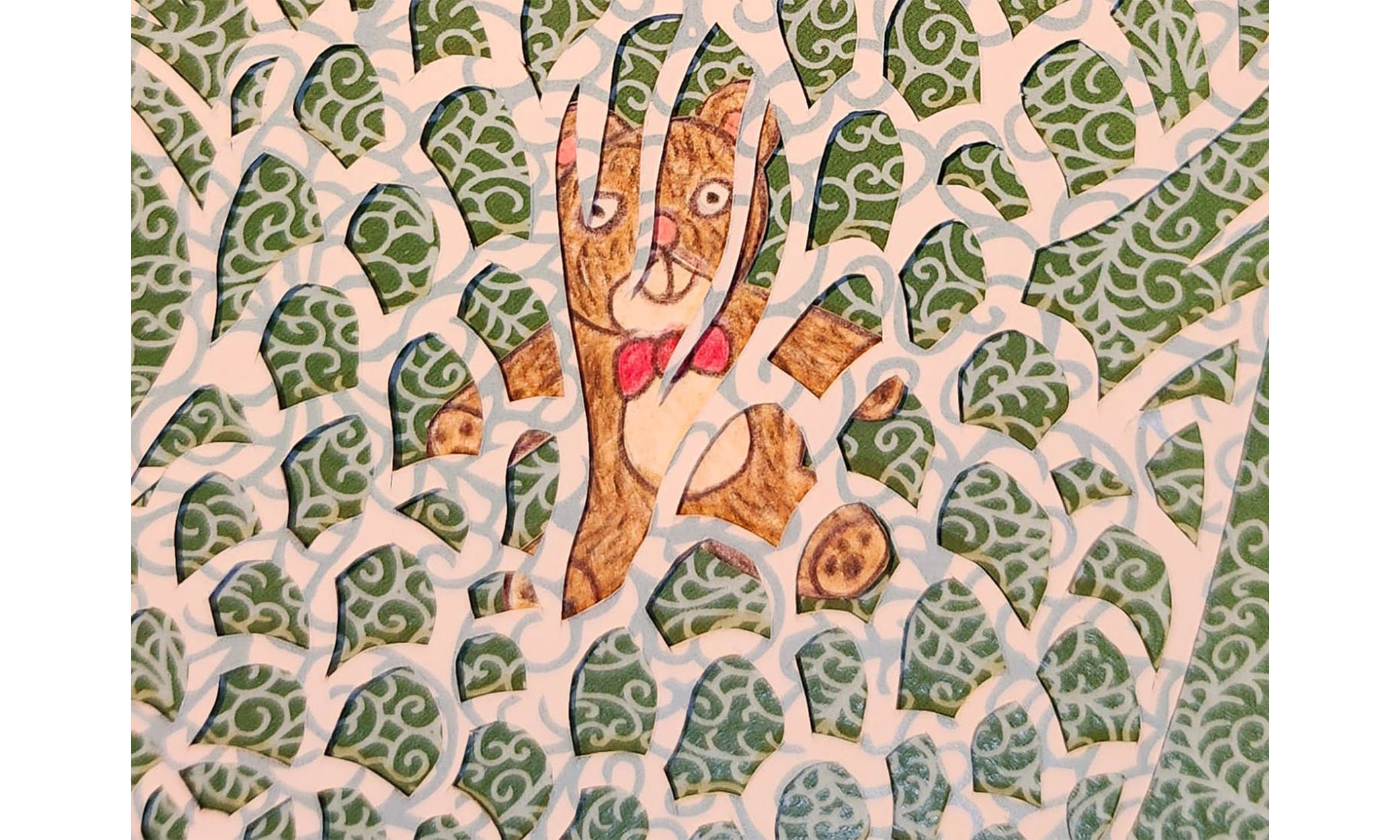 The bear in the quartet.
"I'm certainly still proud of it!" Ludwig said. "Of course artists need to express themselves, otherwise why would we bother coming to earth to create at all? But it's not all about us."
"The divine is always expressing itself through us, rejoicing in the diversity of its own creation," I joined in. "But how does one balance creating for oneself with creating for others?"
Ludwig looked thoughtful and replied, "I think you should take note of what your Franz told you. 'The purpose of life is to love however you feel moved to do so in the moment.' Just don't forget that expressing yourself is also a form of love."
"I think too that we are often bad at predicting what others will like," I said. "So what choice do we have other than to create what we feel like creating?"
"Like you said, what we create is just the divine working through us. All art is a gift, but not all art is a gift for you."
"So, cattle and asses don't need fugues. Got it," I said with a wink.
"Exactly," Ludwig smirked as we rowed on.
These scenes of the stars in the sea recur throughout my Little Mushroom Trips book series: meditations on the song cycles of Franz Schubert. You'll find one in Winter From Above and one in Turning the Philosopher's Stone. The next book will have a plethora of them since almost every poem contains a different view of the same metaphor. Look for that one in early December!