
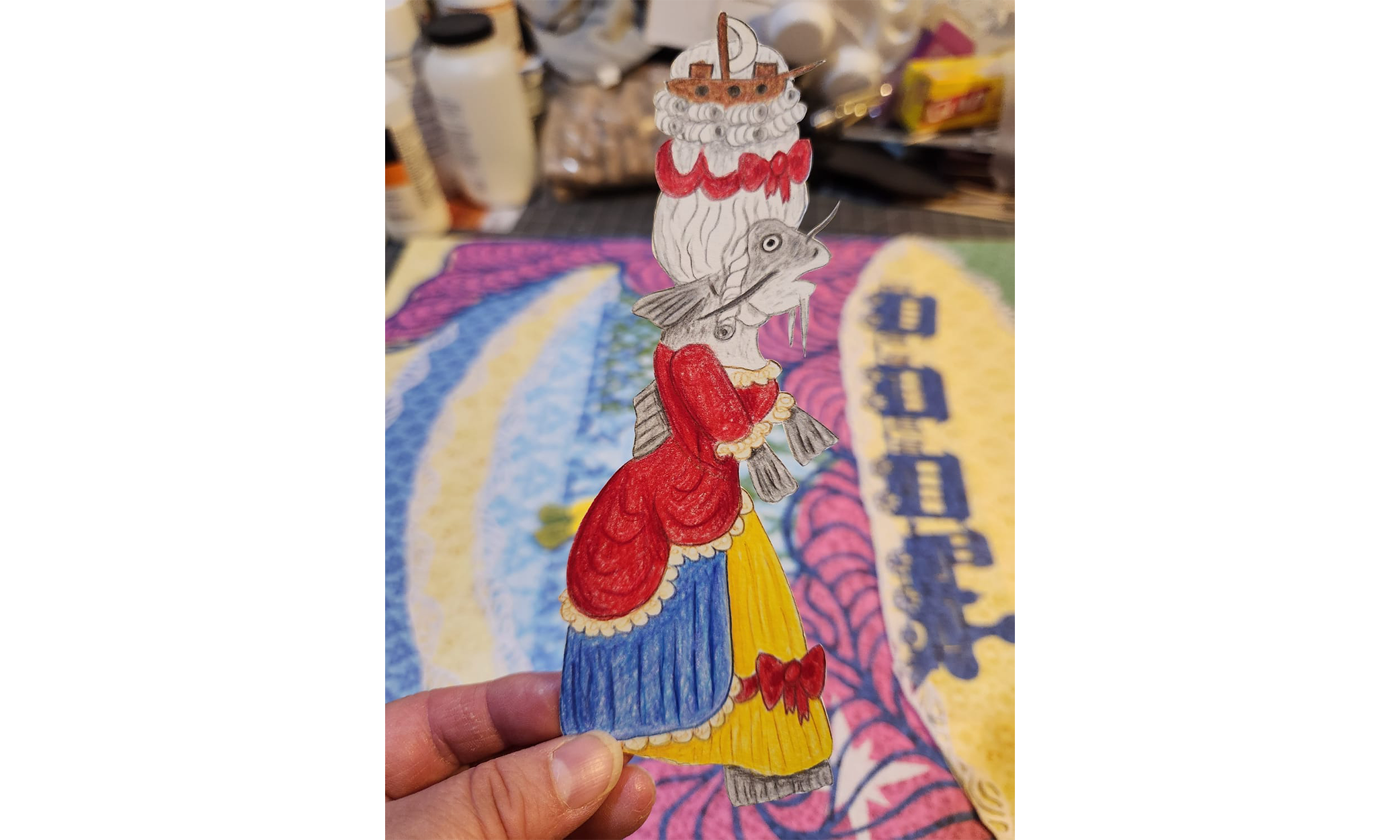
 The last piece is still in progress, so here are some sneak peaks. Meet the catfish lady.
a tale of two endings
Well, it turns out that while opus 135 was Beethoven's last finished quartet, it was not his final romp in the genre. That means we have one more piece to examine, or rather, one final movement. Hooray!
Earlier in 1826, the same year he wrote his last quartet, Beethoven premiered opus 130 in B flat, his pen-penultimate quartet.
It's an odd quartet, being in six movements when back then most of them were in four, but the last movement was odder still.
On the whole it feels like a charming and very affable quartet: beautiful, graceful, quirky, moving, intimate, but then the whole thing is crowned by an absolutely massive fugue that takes up about a third of the entire performance time.
This finale can come as a rude shock. It's just so complex, so bizarre, so experimental, so...long.
Welcome to the "Grosse Fuge" or "Big Ass Fugue."
The original audience was perplexed by it and thought Beethoven had collapsed under his deafness, finally losing it completely, or rather, they just didn't know what to think.
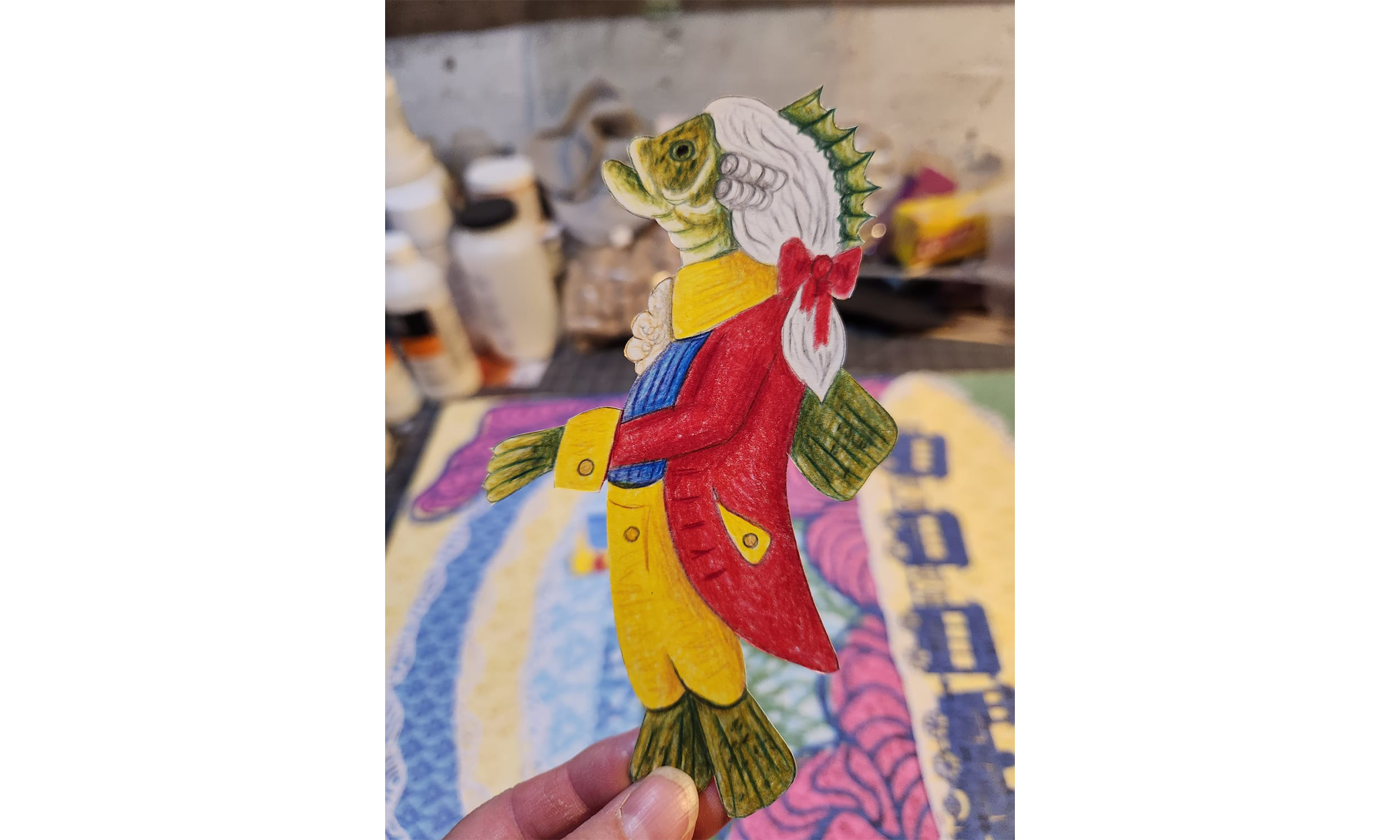 and here is the bass man...not to be confused with the Basstronaut.
Ultimately, it was just so hard to play that Beethoven's publisher said they would only publish this quartet if he wrote a replacement finale.
What was even stranger was that Beethoven agreed to these terms.
However, he hollered that those who didn't like the fugue were "cattle and asses," and took his sweet time getting the replacement done, writing two more quartets before getting around to it.
That makes this replacement movement the actual final thing that he ever wrote in the string quartet genre, as well as the final piece of music he ever finished period.
The replacement for this fugue is very, very different, and it gives a completely different flavor to opus 130 as a whole, just as a movie would be changed in its entirety if it had a different ending.
My own impression of opus 130 with the fugue returns us to the idea of "classical punks."
Most of the piece has this graceful, almost 18th century throwback kind of feel, but there's this spaciousness that gives it a vulnerable feeling.
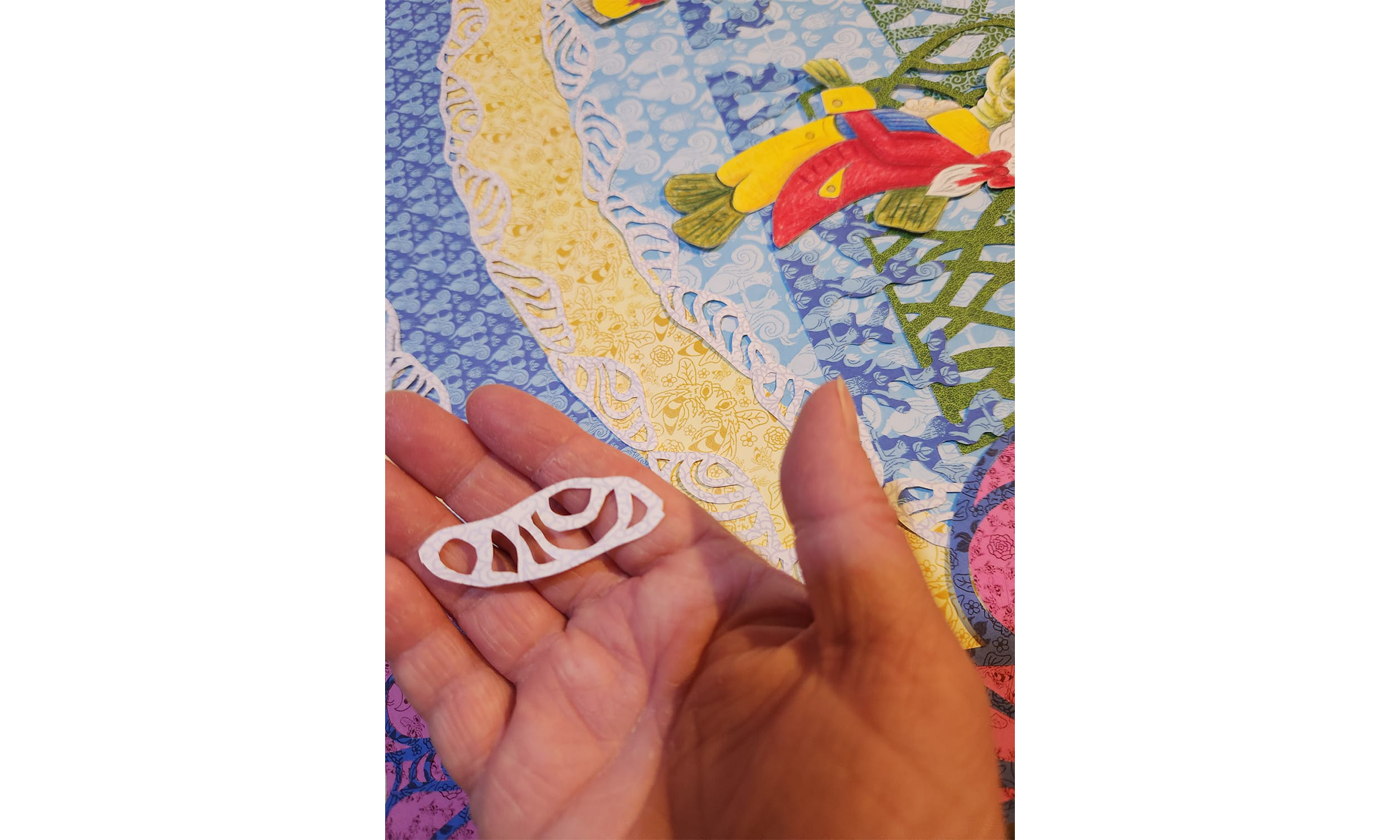 I'm cutting out close to 100 little dollops of frosting for this thing.
What the heck are you talking about, Juliana?
Think of the idea of "spaciousness" like standing in an open field. You are exposed to the elements, to everyone's gaze, you may as well be naked.
For me musical spaciousness is one way of expressing vulnerability, but how does one do that through music exactly?
There is always the use of silence, or at least a very soft dynamic. Staccato or pizzicato notes, wider harmonic intervals, a spare background texture, very long held notes, less vibrato.
A string quartet almost always sounds vulnerable simply because there are fewer players. Even their breathing doesn't fill the empty space.
Beethoven plays with so many of the elements listed above, that it makes me feel exposed just listening to it.
And then comes the Big Ass Fugue.
The fugue is the opposite of all this space. Every part of it is full, much of it is loud, its dissonances are bold and almost constant.
If Beethoven seemed to be tenderly revealing his most private self in the first two thirds of the quartet, now he's displaying the virtuosity of his deafness in absolute defiance.
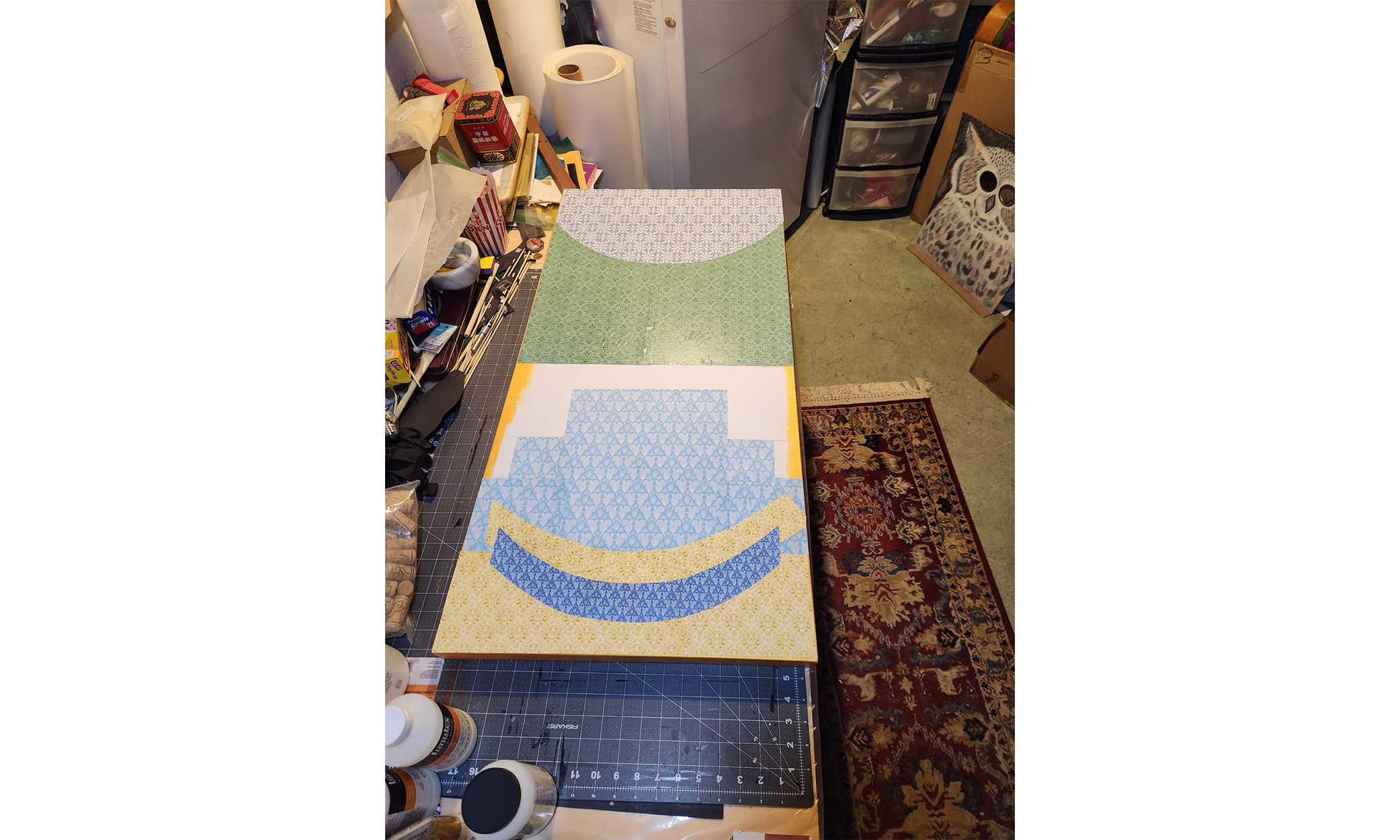 The first layer glued down. You can also see The Superb Owl in the background, and a whole lot of puppet sticks.
This is not at all what the audience would be given to expect from what happened before, and I can't help but feel like he's thumbing his nose at them all - I guess he didn't expect them to listen like the "cattle and asses" he later fumed that they were.
With the replacement ending, however, that spaciousness is preserved. It seems like a perfectly natural ending, if a little closer in style to his last quartet.
And this makes a different statement: that Beethoven's feelings, put on display in this music, are also the feelings of the audience. It ends up being much more empathetic.
For me, this one replacement movement has become the anthem for my summer.
I had that experience again of seeing everyone around me as a color of light when I listen to it, of loving everyone, of seeing how beautiful the continuous throb of humanity is.
This movement has a kind of locomotion, and I even hear a train in it moving on into the distance, so it's wonderful music to listen to while traveling.
I was feeling thrown upwards into the other world in a way I hadn't experienced since July of 2017, but then I realized something.
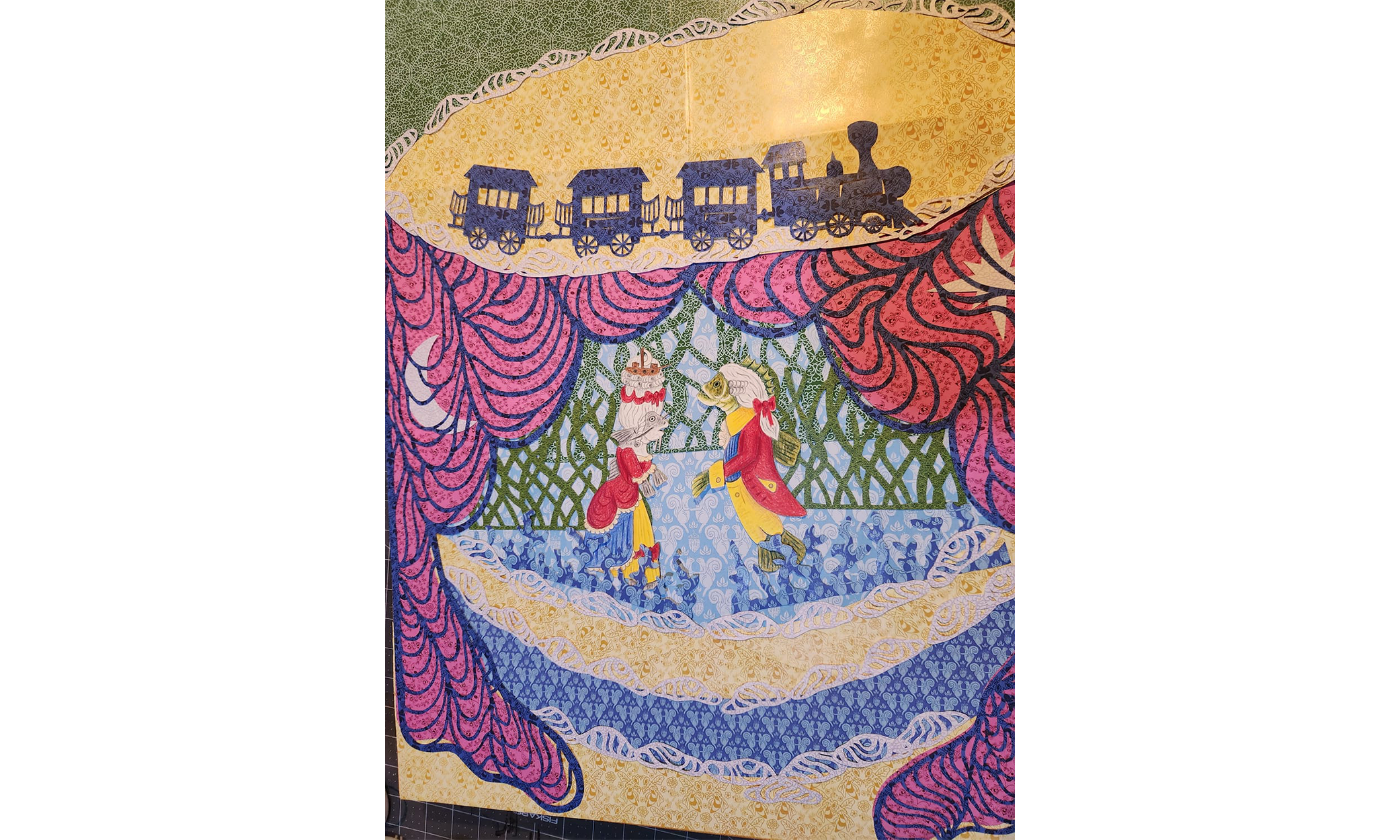 Messing around with placement before gluing. This train was fun to cut out!
When that happened nine years ago the music forming the soundtrack of bouncing around a spiritually liminal space was the song Taubenpost (Pigeon Post) by Schubert. Indeed, this experience forms part of a chapter in my book Winter From Above.
That was the last piece of music that Schubert ever finished, and this quartet movement was the last piece that Beethoven ever finished.
Coincidence? Maybe. I tried testing it out by listening to the last finished music by other composers. Nothing else seemed to grab me in the same way, but I did discover that the last piece that Mendelssohn finished was also a string quartet.
It's tempting to make a collage out of that one too, but there are other projects I'll need to get to soon.
It's also very tempting to make a collage out of The Big Ass Fugue, but that will require more of a mathematical approach.
Well, giant middle finger to the audience that the Grosse Fuge may be, it's also a startling work of art, and I feel like it indeed works best as a standalone piece that deserves our entire undiluted focus for its duration.
That's just my potentially unpopular opinion though (at least for these times,) and as much as I love it, it's the replacement that will always hold a special place in my heart as a kind of heavenly elevator.
It also makes me walk sexier, so if you find yourself wondering who that hot middle-aged chick is whistling Beethoven as she bounces down the streets of Jimothy Town, it's probably me.