

6 minute read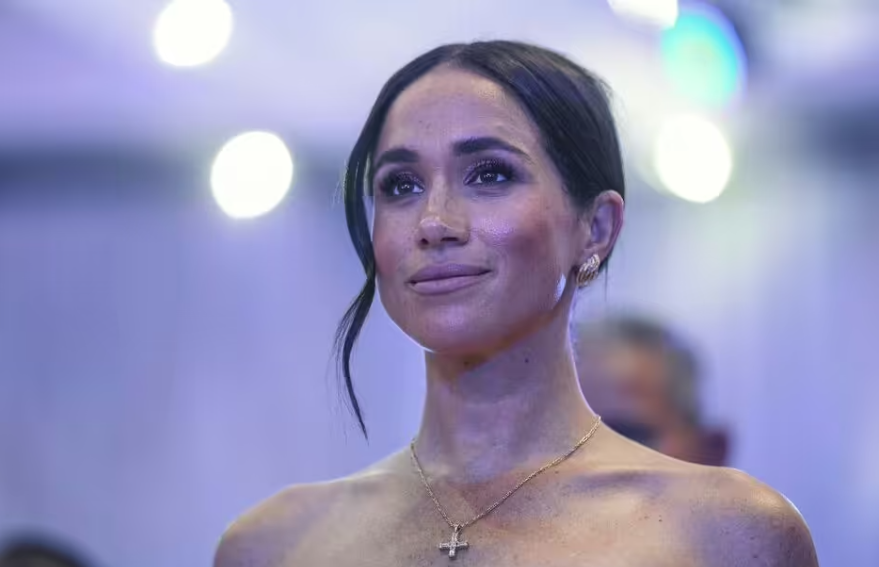 When Nigel Farage “joked” that Meghan, the Duchess of Sussex might be deported if he were ever in power, the obvious defence arrived before the criticism had even landed. It was only a joke. Nobody seriously imagines that a British Prime Minister - not even Nigel Farage - would deport someone on a political whim.
But “humour” works because it draws on ideas that already exist within a culture. A joke only lands if the audience instinctively recognises the premise beneath it. That’s what makes the remark interesting - the ease with which deportation could be offered as a punchline.
In Britain, "send them back" isn’t a politically neutral phrase floating free of history. It carries decades of baggage. For generations of Black Britons, Asian Britons and other minority communities, some version of "go back where you came from" has functioned as a social weapon. It’s been shouted from passing cars, muttered across pub counters, scrawled across walls and deployed as a way of reminding people that their belonging is considered conditional. The cruelty of the phrase was never simply geographical. It’s a way of saying: you may live here, you may work here, you may raise your children here, but we reserve the right to question whether you truly belong.
Deportation jokes don’t emerge from nowhere. They sit in the same family of ideas, drawing their power from the suggestion that somebody's place in the country is provisional, revocable, subject to approval.
And Meghan is a particularly revealing target.
She isn't simply an American who married into the British royal family. She is biracial, a woman, a former actress, a duchess by marriage and someone who has publicly criticised aspects of the institution into which she married. She occupies several identities that don't sit comfortably within the traditional image of the British establishment.
That makes her a remarkably convenient figure in Britain's culture wars. She represents a challenge to more than one established hierarchy: race, class, gender, celebrity and the monarchy itself.
There are many people who disagree with Meghan’s decisions, her interviews, her business ventures or her public statements. That's one thing. Public figures attract criticism. But with Meghan, criticism often drifts beyond behaviour and towards belonging.
The conversation shifts from what she’s done (even if all that can be pointed to is holding her husband’s hand at his grandmother’s funeral) to what she is. Not simply whether she may have made a mistake when she closed her own car door, but whether she ever fitted in. Not simply whether she said the wrong thing, but whether she was truly one of "us" in the first place.
A white, British-born aristocrat can be eccentric, controversial, outspoken or even deeply unpopular without their national belonging becoming a topic of discussion. Their behaviour is judged as an individual matter. Their right to be British is simply assumed.
Meghan's perceived failure to conform, by contrast, can be presented as evidence that she never belonged in the first place.
This is a familiar mechanism of exclusion. The behaviour of someone from a minority background becomes representative of their identity, while the behaviour of someone from the majority is treated as an individual matter. One person is allowed to be difficult, flawed or controversial. The other is made to represent a wider problem.
It's a subtle but important distinction. Because once someone's behaviour is used to question their legitimacy, the argument is no longer really about what they've done. It's about whether they have the right to be there at all.
And that's why the deportation joke works as a political signal. It rests on the idea that there is somewhere else Meghan should be.
If a politician joked about deporting an unpopular aristocrat born into Britain's traditional establishment – say, Boris Johnson – the audience would probably look puzzled. The joke would have nowhere to go. There's no underlying cultural script suggesting that that person's place in the country is open to question. Their belonging is assumed, regardless of how much people may dislike them.
With Meghan, however, another narrative has existed for years. The outsider narrative. The foreigner narrative. The narrative that casts her as somebody who arrived from elsewhere and never quite stopped being defined by that fact.
But there’s another contradiction here, one that goes to the heart of the British monarchy itself.
The monarchy, we’re told, embodies national continuity, heritage and a sense of shared identity. It presents itself as an institution that transcends political divisions, standing above the everyday arguments about who we are and what Britain represents.
Yet the royal family has never been an entirely closed or exclusively British institution. Its history is full of international connections, foreign-born spouses and dynastic relationships that stretch across Europe. Marriage into the royal family has always involved people from outside Britain becoming part of its story.
Meghan did precisely that.
And yet her American origins have repeatedly been used to suggest that she is somehow incompatible with the institution she married into. The question is why. Is it really her nationality that causes such unease? Old Europe good, New World bad? Or is it the combination of her race, her background, her independence and her unwillingness to conform to the expectations placed upon her?
Perhaps the discomfort is less about where Meghan came from and more about what she represents: the possibility that an institution built on inherited privilege might have to accommodate someone who doesn't fit its traditional mould.
Meghan has become a convenient proxy for a wider argument about Britishness. She’s a figure onto whom people can project anxieties about immigration, race, cultural change, feminism, celebrity and the erosion of traditional authority. The hostility directed at her isn’t always reducible to any single one of those things. But the ease with which criticism of her can slide into questions about her legitimacy tells us something about the assumptions beneath the debate.
Not every person who laughs at a joke like this is necessarily expressing prejudice, at least not consciously. But it would be naive to pretend historical context doesn't matter. Language accumulates meanings over time, and certain phrases acquire an echo. They carry traces of how they've been used before, awakening memories even when the speaker doesn't consciously intend them to.
There's also something revealing about the way humour can provide political cover. A provocative remark can communicate an idea to those who already sympathise with it, while giving the speaker an easy escape when challenged. It was only a joke. The critics have no sense of humour. Everyone is being far too sensitive.
But the joke has already done its work. It has introduced an idea into public discussion, invited an audience to entertain it and made the prospect of someone's exclusion a source of amusement.
The point isn't that everyone who laughed genuinely wants Meghan deported. It's that the joke makes the idea of her exclusion imaginable and gives it a cultural context in which it can be presented as harmless.
Populist politics often claims to speak for ordinary people against an establishment that has lost touch with them. It promises to restore national identity, defend sovereignty and return power to the people. But there’s a contradiction when the language of national sovereignty becomes a vehicle for deciding who is sufficiently acceptable to remain part of the national community.
The state isn’t supposed to be an extension of a politician's personal preferences. Deportation is a serious exercise of legal power, not a mechanism for expressing dislike. Yet the joke invites the audience to imagine precisely that kind of personalised authority: the idea that someone in power could simply decide that a particular individual no longer belongs.
The symbolism matters even if the threat is (for now, at least) unrealistic. Because the message isn’t necessarily that Meghan should actually be removed from Britain. It’s that her presence can be treated as conditional, that her connections and circumstances - including being married to a British prince who is fifth in line to the throne! - are somehow insufficient to make her belonging unquestionable.
Meghan is a wealthy, globally prominent woman with access to platforms and resources that most people facing exclusion or immigration insecurity could never imagine. Her experience isn’t equivalent to that of an ordinary migrant confronting a real threat of deportation, or a British citizen routinely told to go back to a country they have never known.
But that difference doesn't make the symbolism irrelevant. If anything, it makes the rhetoric particularly revealing. If even someone with Meghan's public standing and connections can be cast as an outsider whose right to belong is open to mockery, what does that suggest about the boundaries being drawn around British identity?
The most revealing political moments are often the throwaway remarks. The casual jokes. The comments made when the speaker believes nobody will inspect them too closely.
Because those are the moments when underlying assumptions become visible.
The deportation “quip” feels uncomfortable to so many people because they recognise the old cultural story lurking beneath it. A story about who gets to belong without question … and who is perpetually treated as though their place must be justified.
In modern Britain, that story has never disappeared. It simply learned to disguise itself as humour.
I rely on the support of readers to keep this blog going. If you are able, please support my work today. Every donation, no matter how small, helps me continue researching, writing and publishing independent work that challenges the dominant narrative and brings overlooked evidence and perspectives to light. Your support helps keep the majority of this work free and accessible to everyone.