

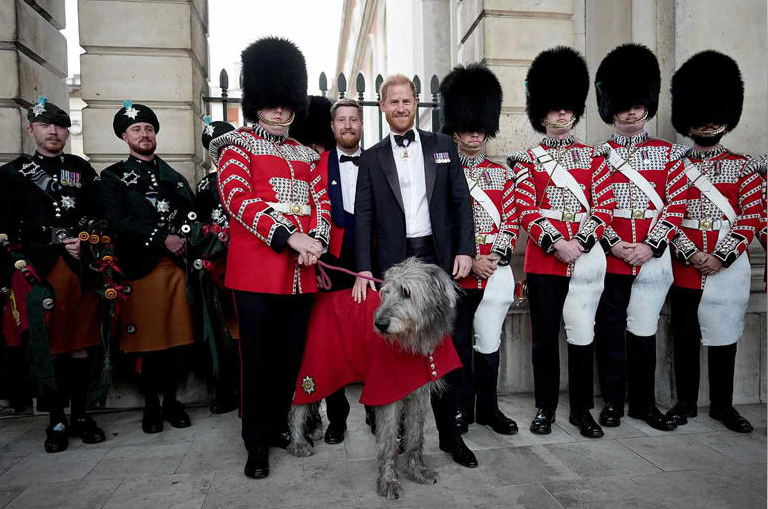
 Prince Harry, the Duke of Sussex, has been back in Britain for only a few weeks, and he’s already done more actual public service than the entire monarchy has managed in the last calendar year. All, of course, without taxpayer funding, without a palace press office, and without needing to be applauded for stepping off heavy machinery.
A quick recap of the highlights -
Harry kicked things off at the Invictus Spirit Awards at the Old Royal Naval College, where he helped raise £1.6 million for the Invictus Games Foundation and spent time with Ukrainian service personnel and other veterans. Then he headed to the WellChild Awards, where he’s been patron for nearly two decades. WellChild itself notes his 18 years of involvement , and Yahoo News reported how he spent over an hour meeting seriously ill children and their families, listening to their stories and presenting awards .
And then he flew to Canada and jumped out of a plane to raise money for Sunnybrook and the True Patriot Love Foundation and fulfilled a promise he made to 102‑year‑old WWII veteran, Ed Marshall.
All of this is happening while Harry is a private citizen, as Britain’s king helpfully reminded us. No Sovereign Grant. No taxpayer subsidy. No palace staff organising his diary. No public money underwriting his travel or events. He’s doing the kind of “public service” the monarchy claims as its unique selling point … except he’s doing it better, more visibly, and without sending British citizens a bill.
Which brings us to the awkward question:
If Harry can do all this without public funding, why exactly are we paying the rest of them?
Royalists often insist it’s because the monarchy “provides stability”, “brings in tourism”, or “performs essential duties”. But Harry’s schedule exposes how flimsy those claims are.
Tourism plainly doesn't depend on whether Kate Middleton steps off a tractor: France, which abolished its monarchy during the French Revolution more than two centuries ago, attracted 100 million international tourists in 2024, compared with 42.6 million overseas visitors to the UK the same year. Stability doesn’t hinge on William scooting around the grounds of Windsor Castle. And charity work - aka public duty - clearly doesn’t require a constitutional role, given that Harry is doing it from outside the institution. As did Dolly Parton, Marcus Rashford, Bob Geldof and countless other public figures.
I realise that none of this proves that Harry is a substitute for the king himself as head of state. My point is narrower. If “service” is the justification for asking the public to fund the whole family, then service should be something we can actually identify and assess, rather than a magic word attached to whatever a royal happens to be doing that week.
Harry’s doing things that are obviously, undeniably useful. Raising millions for veterans, supporting seriously ill children, partnering with charities that can show outcomes. And because he’s doing it without taxpayer funding, he inadvertently demonstrates that the monarchy’s “we must pay for them because they serve us” argument is just a convenient excuse.
Even royalists must, on some level, see the contradiction. If the argument for the monarchy is that it provides unique public service, then Harry’s post‑royal life is a problem: it shows that the service isn’t unique, and that the funding isn’t essential. What’s left, then, is something much less grand: preference, nostalgia and tradition. And if that's the real argument for the monarchy, perhaps we should have the honesty to say so.