

When the Duchess of Sussex’s lifestyle brand As Ever was revealed, thanks to a website glitch, to have sold nearly a million jars of jam, generating around £27 million in revenue, one headline thundered: “When Meghan can make £27m selling jam, you know society is broken.” Broken? Really? If society survived Marmite, bottled spring water, and the potato crisp industrial complex, it can probably withstand fruit spread.
Before we go further, friends, I must advise against reading the whole piece, even though I’m obliged to link to it to prove I’m not making this all up. Every paragraph is soaked in such bile and disdain that I’m frankly astonished that the Telegraph didn’t advise the writer, William Sitwell, to “tone it down a bit, old boy, or the hoi polloi will see how much we despise them.”
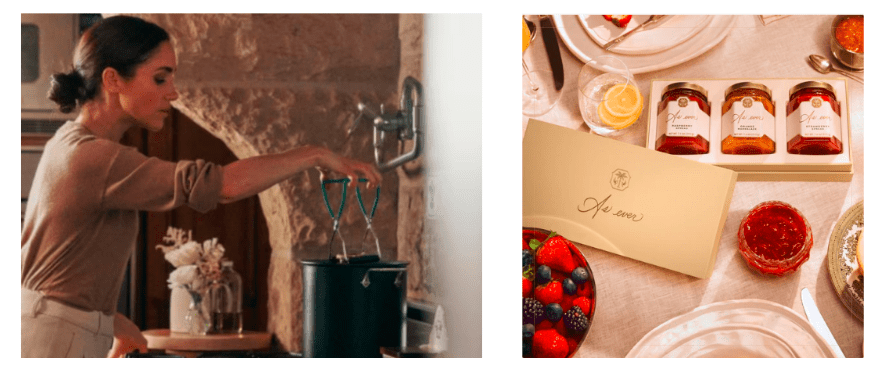
Meghan’s customers, for example, apparently don’t simply like her spreads (which garnered great reviews); they are actually “slobbering sycophants.” (Nice man, eh?) Meghan herself is described as having painted herself as “an unfairly maligned Messiah-like icon.” Presumably Sitwell thinks Jeremy Clarkson’s hate-filled column (which I absolutely won’t link to) was fair malignancy. As was the press attacking a pregnant woman for touching her baby bump. Or eating an avocado. And that if a woman admits to experiencing suicidal ideation from all the hate, she must think she’s Jesus.
Sitwell does reveal himself later, just in case we were in any doubt about what really gets his goat:
“The nation’s WI circles will be scratching their heads, of course. These ladies have been making jam for decades, selling their wares at fetes and in village halls, stymied, latterly, by regulations and battered by cost margins. Then a usurper emerges…”
What this pearl‑clutching really reveals is the establishment’s vision of society: money is acceptable only when it flows to the “right” people. The jam panic isn’t about economics… but you knew that. It’s about who is allowed to profit. Marmite, invented in the late 19th century, became a national staple and made fortunes for its manufacturers. Evian turned French spring water into a global luxury brand. Walkers crisps transformed potatoes into billions. Nobody declared civilisation broken when white men monetised yeast extract or tubers. But Meghan, a mixed‑heritage American woman, sells jam and suddenly the world is teetering on the edge of collapse.
The British press has long treated Meghan as an interloper, a disruption to the fantasy of a monarchy untouched by modernity or diversity. Her success in commerce is framed not as entrepreneurial savvy (she’s the wrong colour, the wrong sex and the wrong class!) but as a threat to the social order. The message is clear: wealth is fine, but only if it reinforces existing hierarchies. When Meghan earns it, she destabilises the myth that only establishment insiders, or legacy corporations should profit.
This is colonial logic dressed up as consumer outrage. The monarchy itself was built on extracting wealth from colonies. Yet the press now insists that Meghan’s jam is some kind of scandal. Empire could plunder entire continents, but a mixed-heritage American selling raspberry spread is where society supposedly breaks.
In true imperial style, of course, this type of reading is dripping with sexism as well as racism. Meghan’s jam is routinely mocked as frivolous, “domestic,” a lifestyle indulgence. Yet Britain has celebrated men who made fortunes from equally humble products. James Dyson became a billionaire selling vacuum cleaners. Innocent Drinks turned smoothies into a corporate empire. And I very much doubt anyone berated John Cadbury for making a success out of selling drinking chocolate. But Meghan’s jam? That’s practically the apocalypse.
Of course Sitwell doesn’t really have a problem with people selling fruit spread. In fact, he’s quite clear; his problem is with an influencer “of Meghan’s kind” persuading “hundreds of thousands of people to part with their hard-earned money for this type of product.” Meghan’s kind? This type of product? Does he actually believe that “jam” is the type of product the lower classes shouldn’t be buying?
Of course not. He simply wants us to buy it from more, ahem, traditional manufacturers. Robertsons. Or Hartleys. Or King Charles.
The British establishment simply cannot stomach Meghan’s autonomy. She and Harry walked away from the royal rota, refused to be palace props, and built independent income streams. Every success they achieve outside the monarchy is treated as betrayal. Just one more example of Meghan, especially, not knowing her place.
Society isn’t broken. What’s broken is the press’s worldview, where only the establishment is allowed to profit, and where a mixed‑heritage woman succeeding on her own terms is treated as a cosmic error. There’s nothing scandalous about selling foodstuffs. No one went after Sam Walton, founder of Walmart. Or Henry Tate, founder of Tate & Lyle sugar. Or Milton Hershey. Or Henry John Heinz. Or WK Kellogg, or Arthur Guinness or Colonel Sanders or Joseph Rowntree… Or, indeed, the King for his Duchy products.
The scandal is the British establishment’s desperate need to police who gets to thrive.