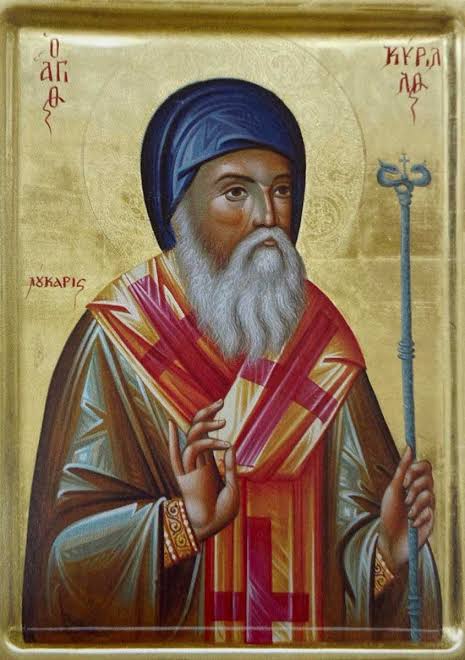

Here's a fascinating little episode from the history of the Eastern Church. In 1629, Cyril Lucaris (1572–1638), Patriarch of Constantinople and known as the “Orthodox Boogeyman” in popular online discussions, published a confession of faith that sounded remarkably Reformed. Indeed, his articulation of Scripture's authority could have come straight from Geneva! Consider his declaration in Chapter II of the Confessio Fidei:
"Credimus Scripturam sacram esse theodidacton, hoc est, a Deo traditam... Huius auctoritatem supra Ecclesiae auctoritatem esse credimus: multum enim interest inter Spiritum Sanctum et hominem: Spiritus enim Sanctus Deus est, neque errare, neque fallere potest; Ecclesia vero... falli et fallere potest."
"We believe that the Holy Scripture is God-given, that is, handed down from God... We believe its authority to be above the authority of the Church; for there is a great difference between the Holy Spirit and man: the Holy Spirit is God, who can neither err nor deceive; but the Church... can err and be deceived."
Lucaris's confession was subsequently repudiated by Eastern Orthodox synods, most notably Jerusalem and the resultant The Confession of Dositheus in 1672. But still, the historical significance is striking: a seventeenth-century patriarch of Constantinople publicly defended the fundamental Protestant distinction between the infallible authority of Scripture and the fallible authority of the Church.
And that, of course, is exactly the point of sola Scriptura. The Church really does have genuine authority, but it is always subordinate to the Word of God.
https://purelypresbyterian.com/2019/08/19/the-confession-of-cyril-lukaris-1629/