
Artificial intelligence is rapidly becoming one of the most influential technologies shaping the future. From healthcare advancements to smart infrastructure and environmental sustainability, AI is transforming industries and improving how societies function. As innovation accelerates, there is a growing emphasis on ensuring that artificial intelligence supports human values, enhances decision-making, and contributes to solving real-world challenges.
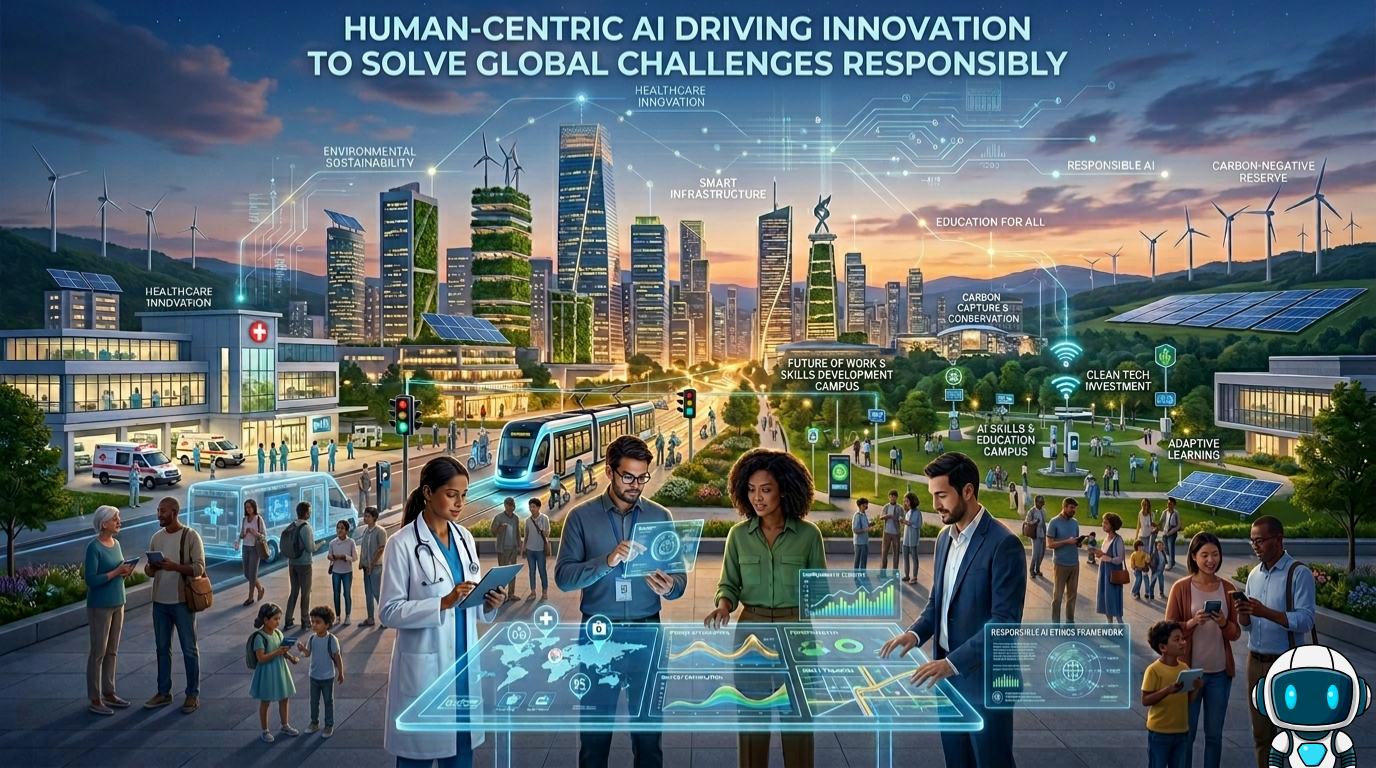 Rather than focusing solely on automation and convenience, organizations and innovators are increasingly prioritizing human-centric artificial intelligence. This approach ensures that AI works alongside people, strengthening human instincts, creativity, and ethical judgment. When developed responsibly, artificial intelligence becomes a powerful tool for progress, innovation, and sustainable growth.
The Rise of Human-Centric Artificial Intelligence
Artificial intelligence has already made a significant impact across industries. Businesses use AI for predictive analytics, automation, and customer engagement, while governments apply AI for smart infrastructure and public services. These advancements improve efficiency, reduce operational costs, and enhance productivity.
However, the next phase of AI development is focused on creating solutions that address broader societal challenges. Human-centric AI emphasizes collaboration between humans and technology. Instead of replacing human judgment, AI enhances decision-making and enables individuals and organizations to operate more effectively.
Human-centric AI focuses on:
Supporting human decision-making
Enhancing productivity and creativity
Promoting ethical technology development
Solving real-world challenges
Driving sustainable innovation
This approach helps ensure that artificial intelligence contributes to long-term progress and societal benefit.
AI Transforming Healthcare for Better Outcomes
Artificial intelligence is changing the way healthcare providers diagnose and treat patients. AI technology can process information and recognize medical issues before conventional approaches can do so.
Examples of how healthcare companies have adopted AI include:
Early detection of illnesses
Accurate diagnoses
Customized treatment regimens
Hospital management improvement
Increased healthcare availability
These changes benefit both healthcare practitioners and their patients by enabling healthcare providers to make informed decisions and retain the human element necessary for patient care. In effect, AI is becoming a valuable tool that allows physicians and other healthcare practitioners to provide enhanced service.
The future will likely see more AI adoption as healthcare providers look for innovative ways to increase worldwide medical access, especially in disadvantaged areas.
Driving Environmental Sustainability Through AI
Artificial intelligence has played an equally important role in environmental sustainability as well. With the growing concerns regarding issues like climate change and resource allocation, AI helps in finding creative solutions for the same.
Some of the tasks carried out by intelligent systems include:
Environmental monitoring
Energy optimization
Increasing renewable energy utilization
Carbon reduction
Conservation
The use of smart energy systems that employ artificial intelligence ensures that there is no wastage and everything is done in an efficient manner. This also includes monitoring environmental data and making predictions for possible hazards.
AI Enhancing Education and Skill Development
Artificial intelligence plays an important role in changing education through its capability to enable personalized learning. Adaptive learning tools incorporate artificial intelligence to provide insights into the performance of students and tailor learning content accordingly.
Educational technologies that incorporate artificial intelligence will be able to:
Enhance learning processes
Spot knowledge gaps
Enable remote learning
Ensure accessibility
Prep students for future employment
With industries constantly developing, skills development tools powered by artificial intelligence ensure that people keep up with changes within the labor market.
Smart Cities and Infrastructure Innovation
Innovations in artificial intelligence are revolutionizing the urban infrastructure and transportation sectors. Intelligent cities utilize intelligent systems that incorporate artificial intelligence to control traffic flow, enhance public safety, and optimize energy usage.
Some applications of artificial intelligence in intelligent infrastructure include:
Traffic management
Maintenance management
Intelligent public transport
Energy-efficient building design
Optimized urban planning
These innovations contribute to the efficient operation of cities while enhancing the quality of life of citizens.
Investment in Responsible AI Innovation
Investment is key in deciding what the future of AI will look like. There has been an increase in the number of investors backing technology that benefits humanity in some way.
Major investment sectors include:
Clean technology
Health innovation
Smart infrastructure
Sustainability-driven innovation
This kind of investment prompts firms to come up with solutions for AI problems. They are investing in responsible innovations that can positively affect people.
The Importance of Human Values in AI Development
The role of human values in developing artificial intelligence remains fundamental. Although AI can analyze data and provide insights, human instincts, empathy, and ethics cannot be overlooked.
Inclusion of humans in the process guarantees:
Ethical decision making
Justice and transparency
Responsible innovation
Trustworthiness of technology
Sustainability
AI which is human-centric ensures that technology complements human capabilities.
The Future of Artificial Intelligence
Innovation using artificial intelligence will not cease but instead produce greater opportunities in the future. It will be more human-centric, which means that the role played by artificial intelligence will help make society a better place through addressing healthcare problems, environmental concerns, education, and infrastructure problems.
Artificial intelligence in the future is going to benefit humanity when the collaboration between man and machine works hand in hand. Artificial intelligence helps people in their decisions and also in innovating for the better.
Artificial intelligence goes beyond being simply an automation tool; it also has the potential of helping to improve our lives. Artificial intelligence is here to help us make this world a better place through innovation.