

In today’s digital world, having an online presence is not enough. The real question is not “Do you have a website?” but rather “Does your website actually convert visitors into customers?”
Many businesses invest time and money into building full websites filled with multiple pages, menus, blogs, and sections. While these websites may look professional, they often fail in one important area: sales conversion.
That’s where landing pages come in.
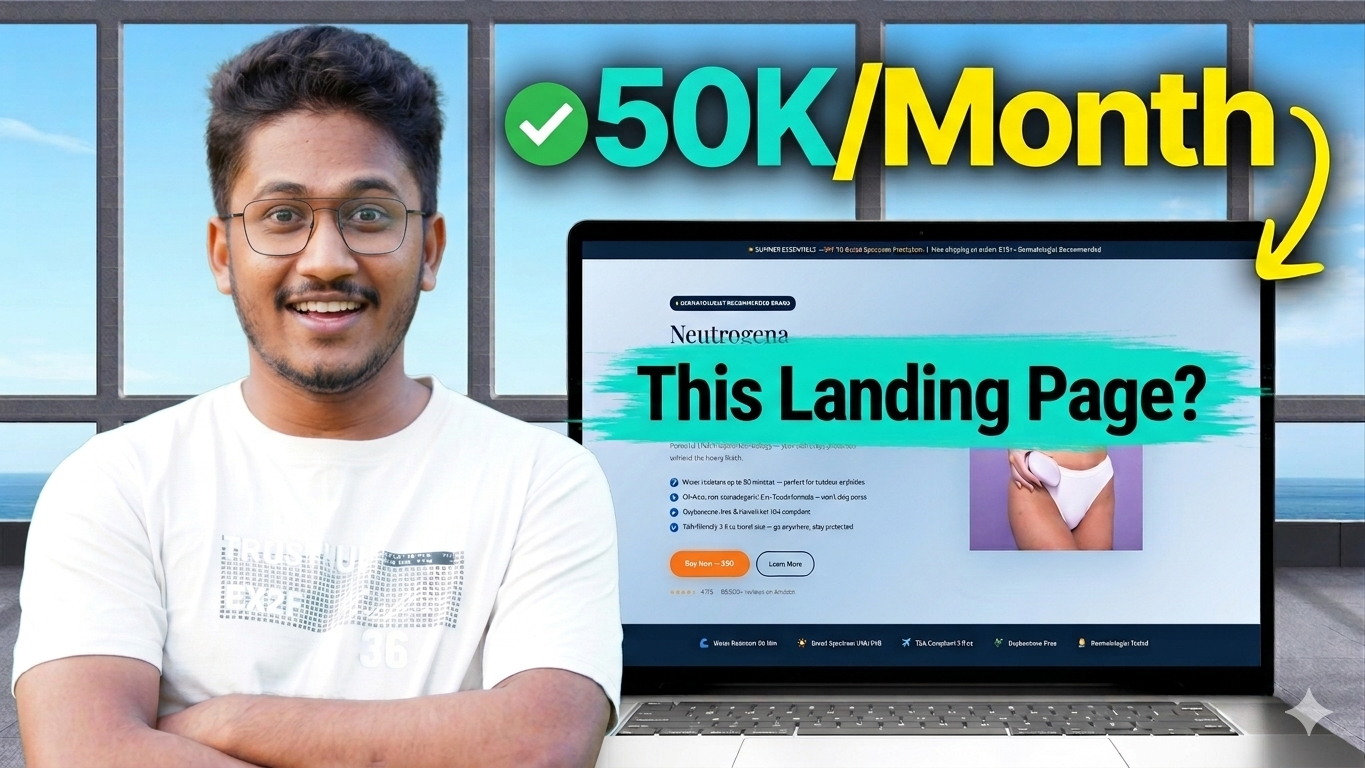 Check these videos: https://youtu.be/66ucv7uPQNw
A landing page is a focused, single-purpose page designed to drive one specific action—whether it’s buying a product, signing up for a service, or booking a call. Unlike a traditional website, it removes distractions and guides visitors directly toward conversion.
Let’s break down why landing pages are significantly more powerful than full websites when it comes to generating sales.
1. Focused Purpose Leads to Higher Conversions
A full website usually has multiple goals: showcasing services, sharing company information, blog content, contact pages, and more. While this is useful for branding, it creates a problem—lack of focus.
When a visitor lands on a website, they are immediately presented with multiple choices. They can click on the menu, read blogs, check about pages, or explore services. This freedom often leads to distraction and indecision.
A landing page eliminates this problem entirely.
It is built around one clear goal, such as:
Buying a product
Subscribing to a service
Filling out a form
Clicking a purchase button
Because there is only one action available, users are far more likely to complete it. In marketing terms, fewer choices = higher conversion rate.
2. No Distractions, No Leakage of Traffic
One of the biggest conversion killers in a website is navigation.
Menus, footers, links, and sidebars constantly pull users away from the main goal. A visitor who came with the intention to buy something might end up reading a blog post or checking another page—and never return to the purchase decision.
Landing pages remove these distractions completely.
There is no menu to explore, no unnecessary links to click. The entire page is structured to keep the visitor focused on one thing: the offer.
This simple change can dramatically improve sales performance.
3. Built Using Conversion Psychology
Landing pages are not just design pages—they are marketing tools built using psychological principles.
A high-converting landing page typically follows a proven structure:
Attention-Grabbing Headline – Captures interest immediately
Problem Identification – Shows the visitor’s pain point
Solution Presentation – Introduces the product/service
Benefits Breakdown – Explains what the user gains
Social Proof – Reviews, testimonials, trust signals
Call to Action (CTA) – Pushes for immediate action
This structured flow guides the user step-by-step through a decision-making process. Instead of thinking, the user is gently led toward action.
Websites rarely follow this structured sales psychology, which is why they often underperform in conversions.
4. Faster Decision-Making Process
On a full website, users tend to “browse.” They compare pages, check different services, and often leave without taking action.
On a landing page, users “decide.”
Because everything is presented in a single scrollable flow, the decision-making process becomes faster and more direct. There are no extra paths or confusing choices.
This is especially powerful for:
Paid advertising traffic (Facebook Ads, Google Ads)
Limited-time offers
Product launches
Lead generation campaigns
The faster a user understands the offer, the higher the chance of conversion.
5. Perfect for Paid Ads and Marketing Campaigns
If you are running paid ads, sending traffic to a full website is one of the biggest mistakes you can make.
Why?
Because ads are designed with a specific message and intent. But when users land on a general homepage, the message gets diluted.
A landing page matches the exact message of the ad.
For example:
Ad says: “Get a high-converting landing page for $99”
Landing page repeats and expands that exact offer
This consistency builds trust and significantly increases conversion rates.
That’s why professional marketers always use landing pages for campaigns instead of websites.
6. Easy to Test, Improve, and Scale
Landing pages are extremely flexible.
You can easily test:
Headlines
Button colors and text
Offers and pricing
Images and layouts
This process is called A/B testing, and it allows you to continuously improve your conversion rate over time.
With a full website, making changes is often complex and slow. But with landing pages, you can quickly create multiple versions and scale the one that performs best.
This makes landing pages ideal for businesses focused on growth and optimization.
7. Higher ROI Compared to Websites
A website is usually a branding asset. It builds trust and provides information.
A landing page is a sales machine.
Because of its focused design and psychological structure, a landing page delivers a much higher return on investment (ROI) when it comes to advertising and lead generation.
Even a small improvement in conversion rate can significantly increase revenue without increasing traffic.
For example:
Website conversion rate: 2%
Landing page conversion rate: 8%
That means 4x more results from the same traffic.
8. Simplicity Wins in the Digital Age
Modern users have short attention spans. They don’t want to explore complex websites—they want quick answers and instant solutions.
Landing pages respect this behavior.
They are:
Simple
Direct
Fast
Action-focused
Instead of overwhelming users with information, they deliver exactly what is needed to make a decision.
And in marketing, simplicity always wins.
Final Thoughts
A full website is important for branding, credibility, and long-term presence. But when it comes to one thing—generating sales and conversions—a landing page is far more powerful.
It removes distractions, focuses attention, uses psychological sales structure, and guides users directly toward action.
If your goal is to grow revenue, generate leads, or convert ad traffic, a landing page is not optional—it is essential.
In short:
👉 Website = Information
👉 Landing Page = Conversion
And in business, conversions are everything.
Here is the landing page. You can start: buymeacoffee.com/jahidulwd/e/531215