

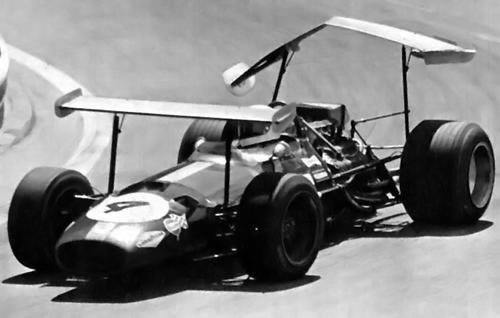
I wasn’t that long ago when aerofoils were first tested in Motorsports. In fact, many of the first trials with wings explored where to place the wing for the best impact. Many of these initial wings were single element wings, meaning there was only one airfoil but in multiple locations.
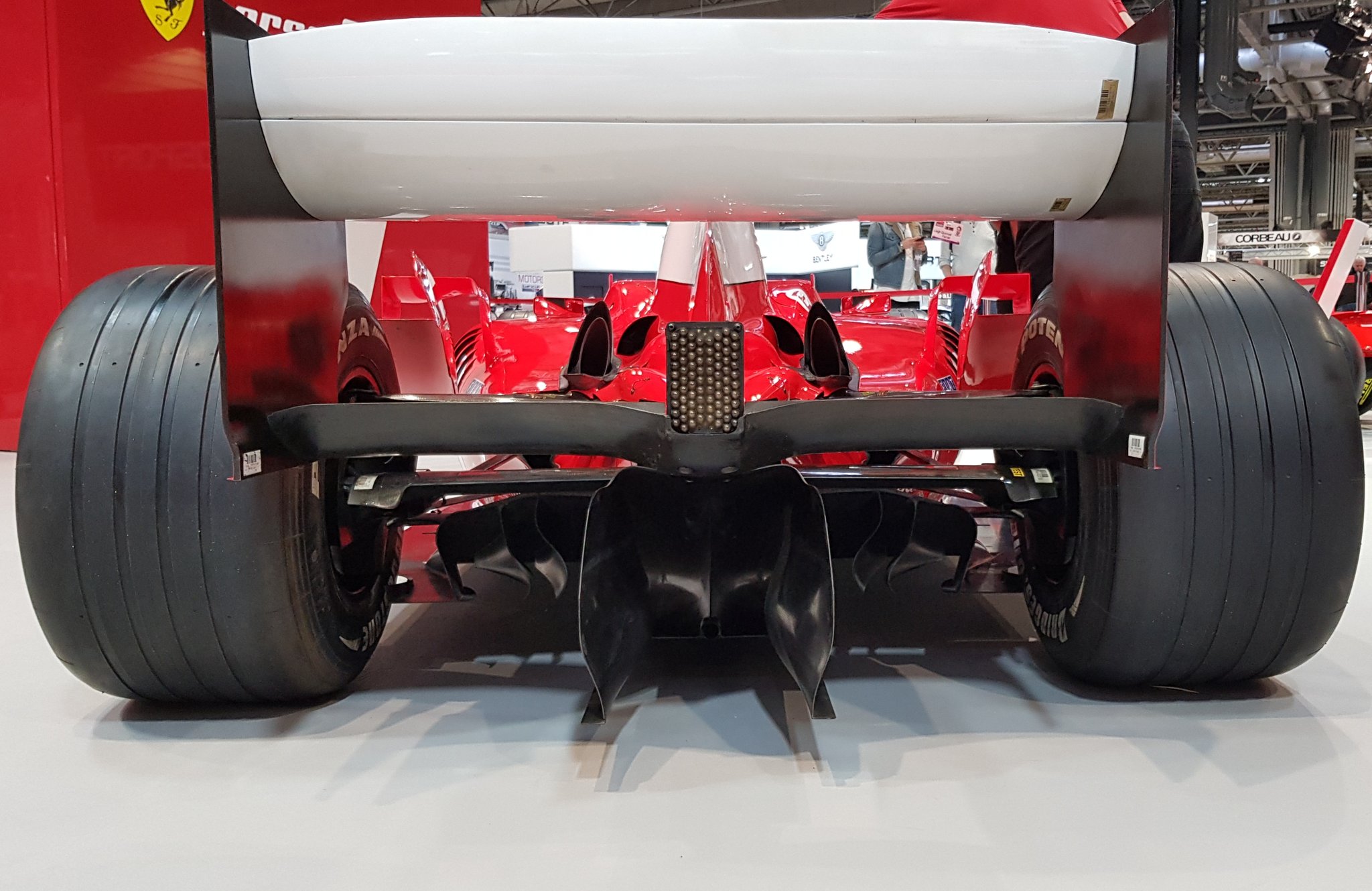
It wasn’t until the 2004 Formula 1 regulations that two element rear wings were mandated and teams began experimenting more with the design. Each element in a rear wings is designed to turn the air upwards. By using multiple elements, each wing turns the air in steps creating more and more downforce. By how does this work, and why is it better than a single curved wing?
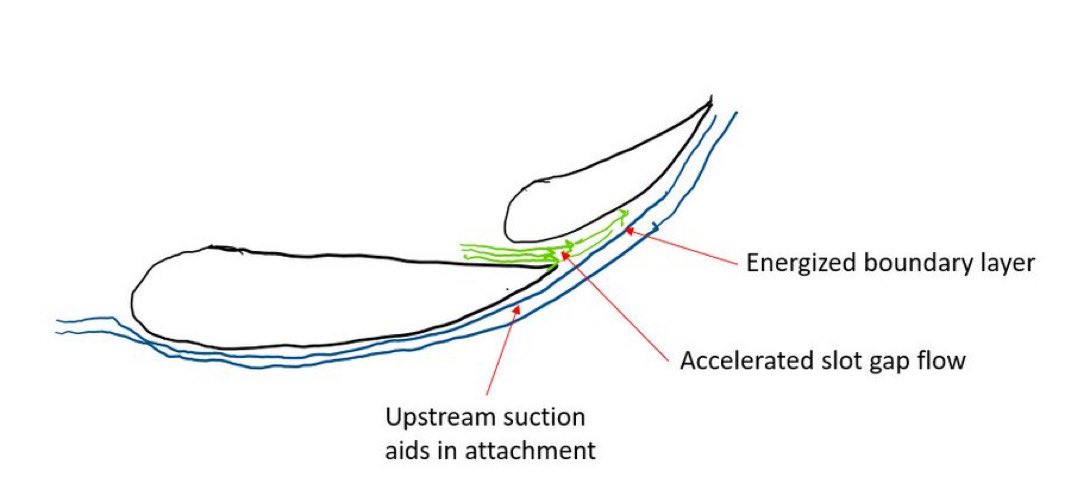
Each element of the rear wing is separated by a gap. This gap is called a slot gap and is a regulated (but engineered) part of a multi element rear wing. The slot gap between the wings has been a topic of conversation during the 2024 and 2025 seasons with videos showing flexing in this area. The purpose of the slot gap between the two elements is to bring fresh energy helping to maintain flow attachment.
Without this, a single element with similar chord and camber would detach due to the adverse pressure gradient experienced along the underside of the wing.
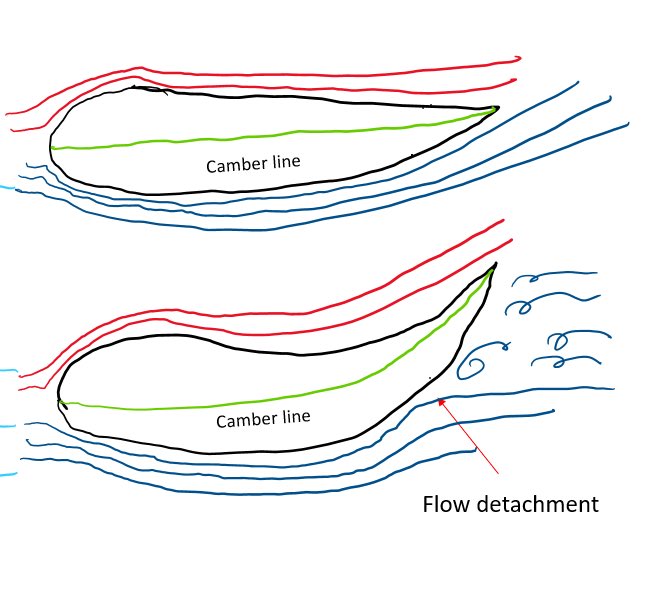
Splitting this up into multiple elements allows teams to generate maximum downforce with an effective airfoil chord and camber of a much bigger wing without the risk of separation.
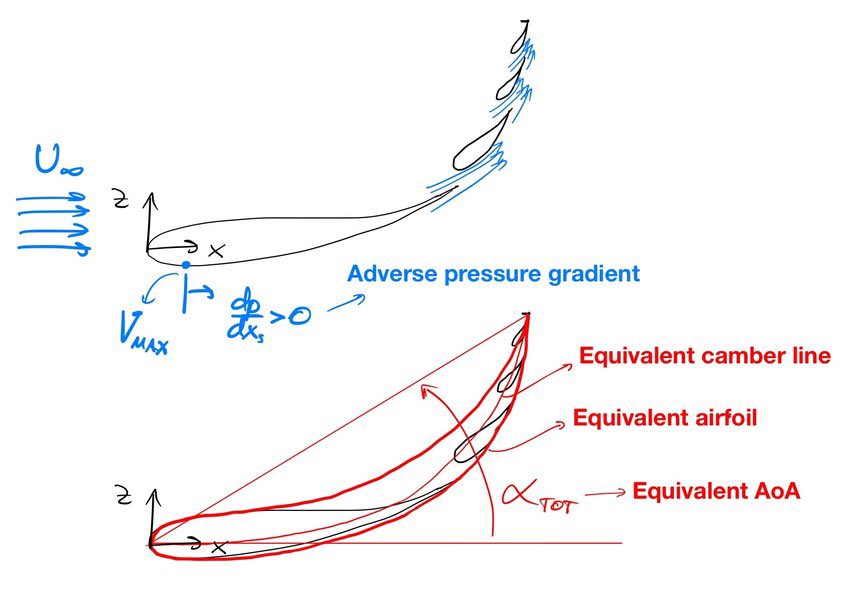
Flow separation can be a quite complicated phenomenon to study. With many years of research in the technical publications focusing on understanding the separation mechanisms, so they can be controlled/delayed better.
This can be a complex or simple explanation. The simple explanation is that as the flow travels up the underside of the wing, the pressure gradient (change in pressure per unit distance) is adverse. Meaning the pressure is increasing until trailing edge pressure recovery. Naturally, the wall interaction creates a boundary layer that grows as the adverse pressure builds. This grows until the flow actually reverses direction at the wall interface indicating the point of separation. At which point, the incident air then “separates” from the surface, following a path of least resistance into the surrounding regions.
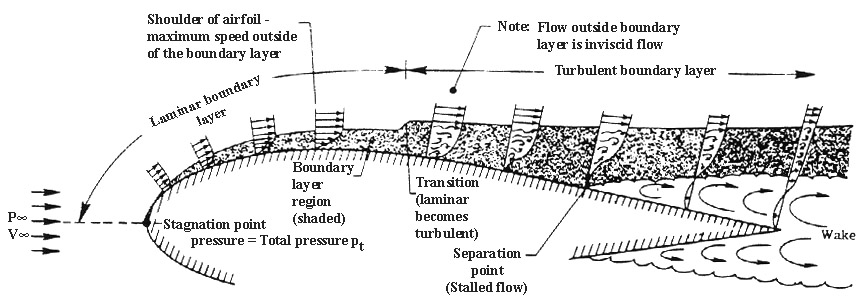
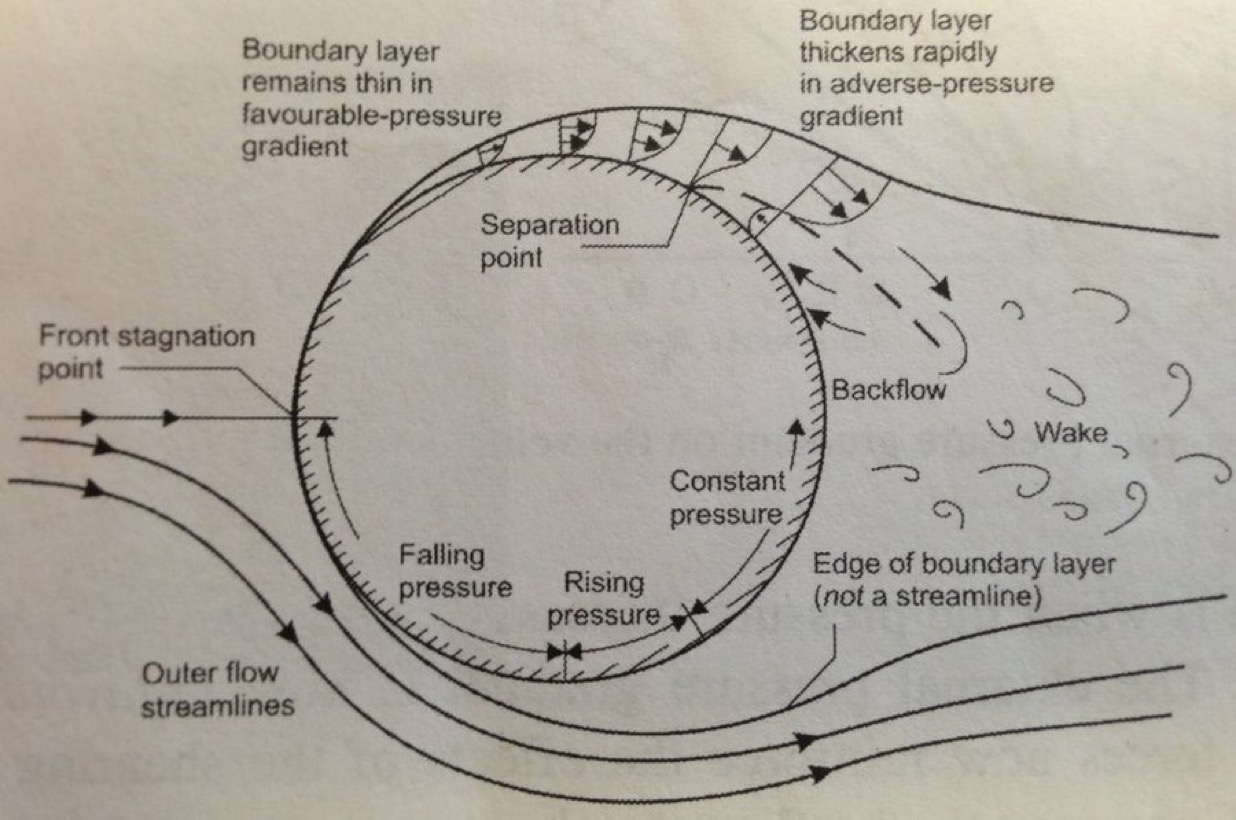
Thus, the slot gap is bringing energy into the localized slowing air near the wall boundary moving it along further up the second element. And now you understand why and how multiple element rear wings work!