

Lots of talk in racing about tyre degradation, tyre temps, corner balance, and the like. So I think it's time for a refresher course on tyres, grip, and degradation. I'll try and cover all of this in this thread, but stay at a high level (because it's incredibly complex) for general understanding.
Firstly, we should understand that as a car goes around a corner, the input angle of the driver to move the tyre relative to the direction of travel creates a slip angle. This slip angle creates the forces at the contact patch that act to rotate the car about the Center of Gravity (CoG) through the corner (moment).
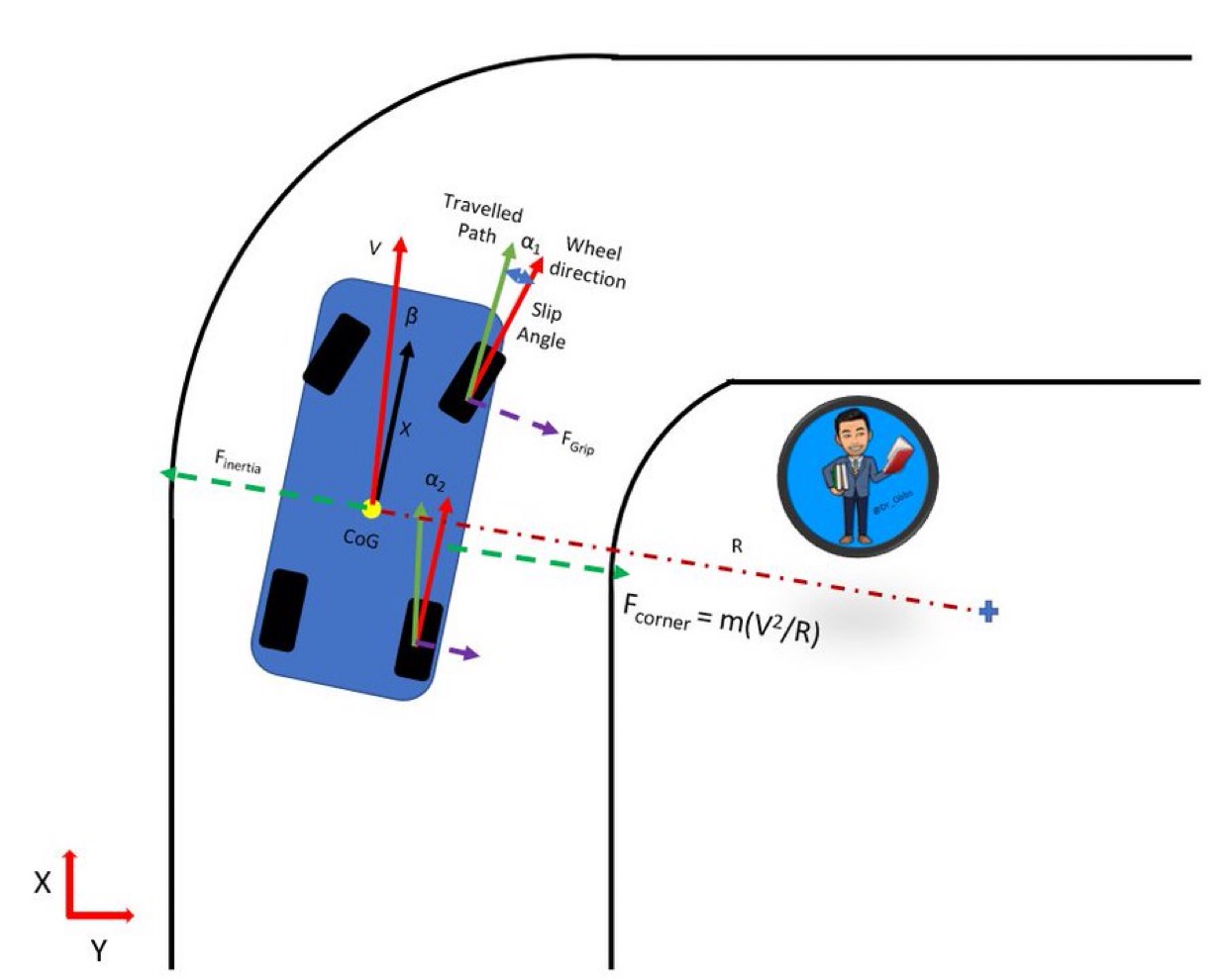
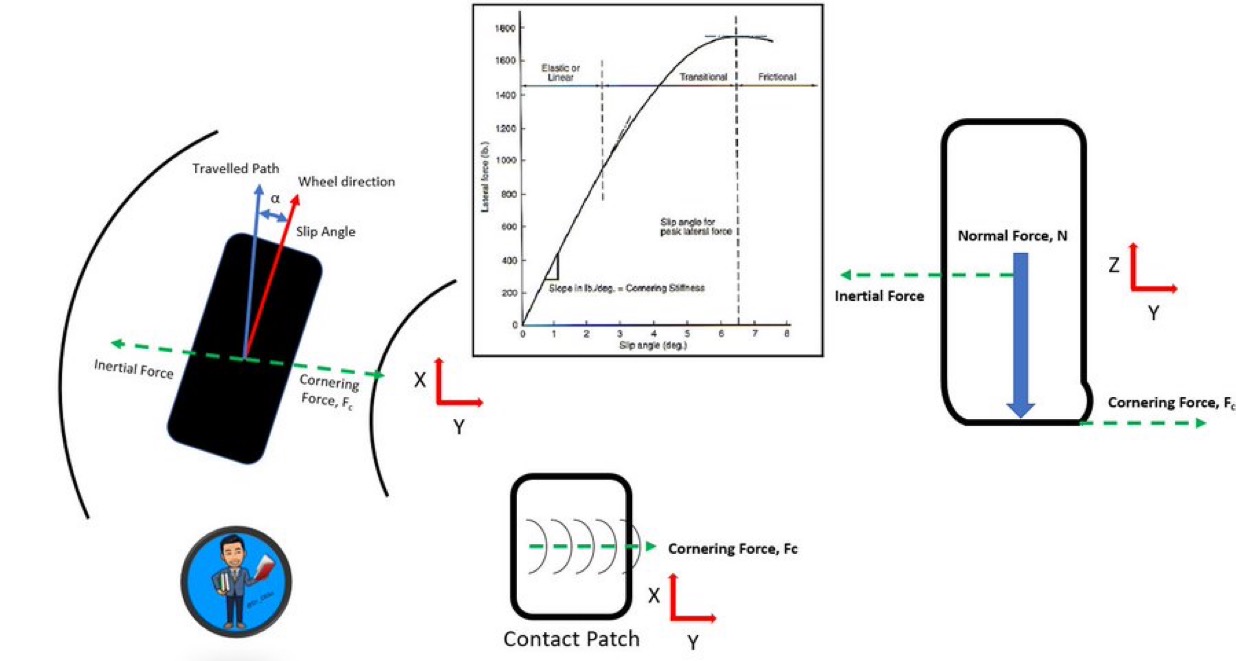
If we focus in on a single tyre, then we see that with increasing slip angle (with constant Normal Force), the lateral force to turn the car is increasing until a limit (sliding limit). After this point, increasing slip angle will result in less lateral force, as the tyre is no longer able to impart a force at the contact patch without sliding.
The rubber tyre behavior plays a key role in this as well. In the initial stressed region, the rubber acts as a linear elastic material with increasing slip angle (Figure in the middle). At a point, this transitions to an intermediate phase where the rubber acts non-linearly. This non-linear stress response generates a hysteresis within the material that manifests itself in a heating response. This is termed hysteretic heating, and can be a key to generating bulk tyre temperatures.
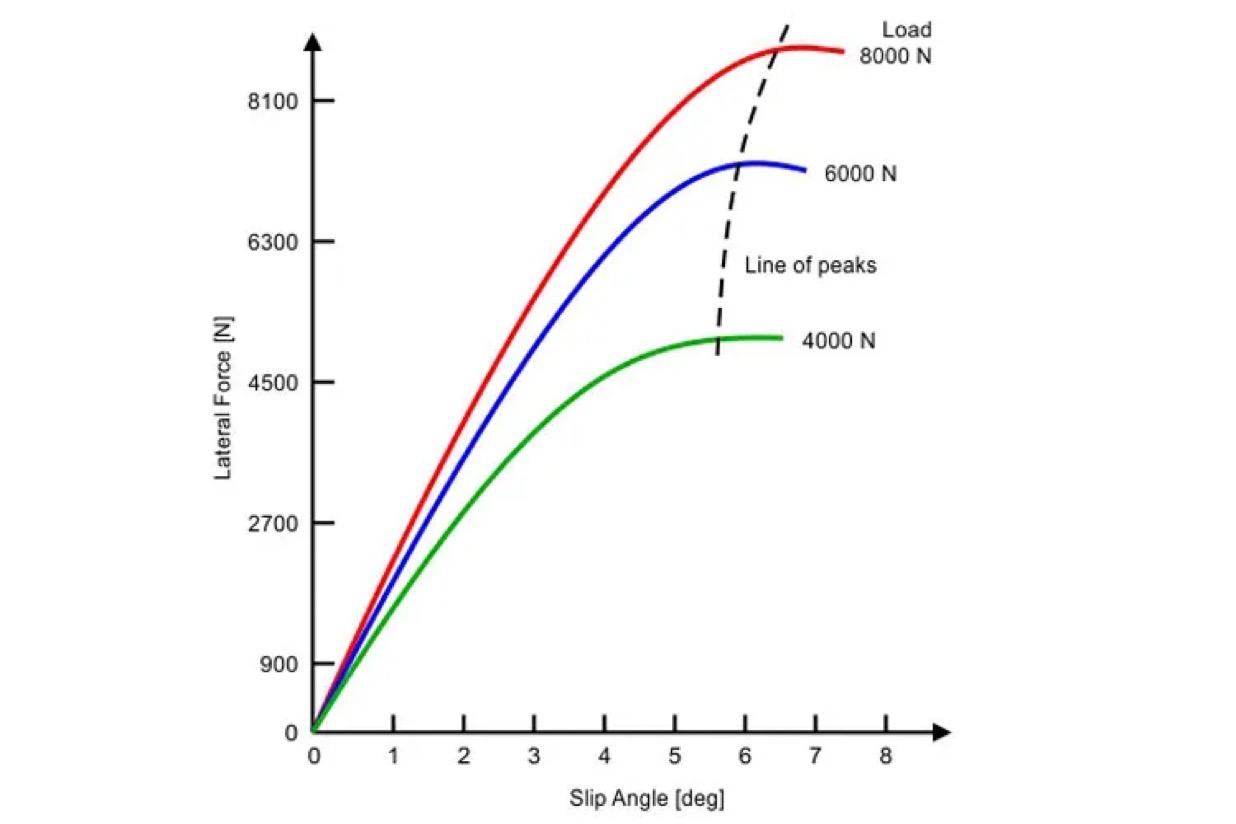
The grip at the contact patch is greater as the load at the patch is increased. This means that the lateral force that can be generated from the same tyre is greatly increased with increasing normal force. This is why downforce for race cars matters so much. As you increase the load, the turning force that can be applied is increased, as well as the load limit for sliding at increasing slip angle. The coefficient of friction between the track surface and the rubber plays a key element in this as well. With different track types, the surface has more or less grip potential. Essentially more or less coefficient of friction.
Ref. image (suspensionsecrets.co.uk/tyre-slip-angl…)
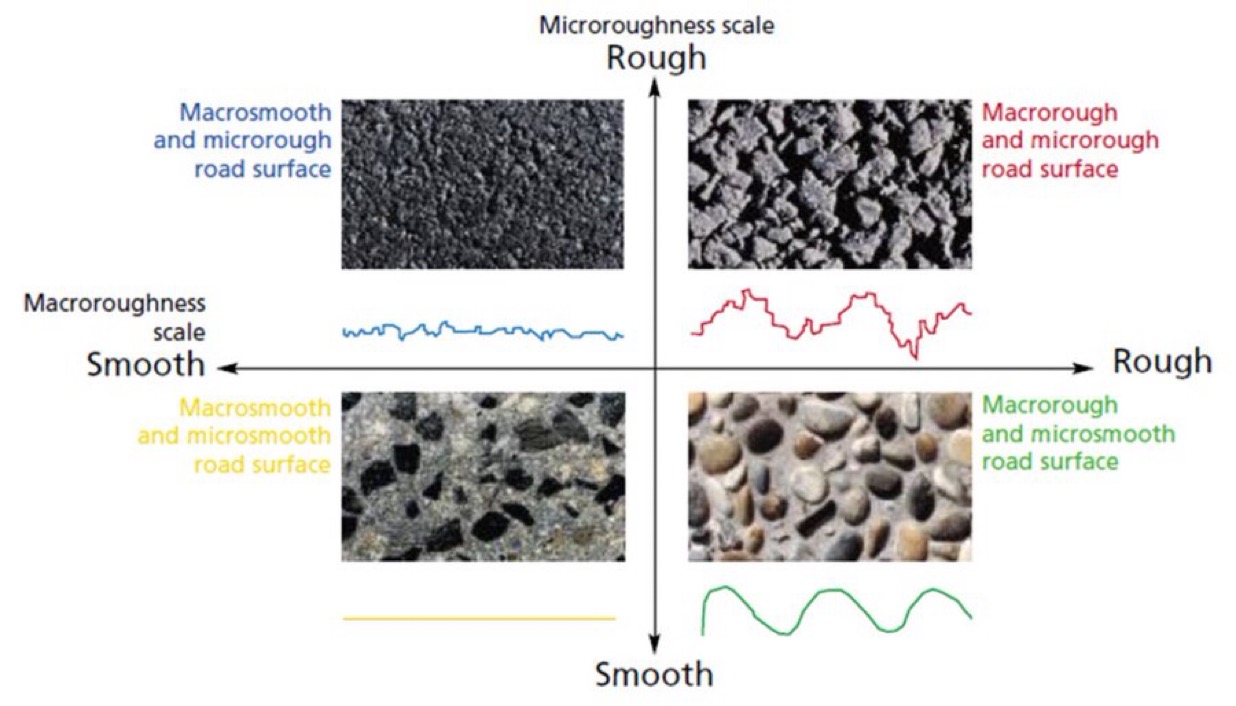
If we look at the differences in track surfaces, you would be shocked at how different they really are. The track designers will have chosen different materials for each surface to create more or less grip. I love this article by Gemma Hatton who is a former Pirelli trackside engineer, as well as tyre and strategy performance engineer for Manor Racing. As the figure shows, the surface of the track can yield major differences in surface roughness. The track surface typically consists of a combination of stones (aggregate) and binder (bitumen). (Key sounds of Martin Brundle saying "bitumen" in my head)
Macroroughness is the measure of the gaps between the stones in the surface. If there are big gaps, then this is a macrorough surface, while minimal gaps is a macro smooth surface. Filled in tracks can have more bitumen than aggregate, so it's considered macro smooth. While more exposed stones have greater space for rubber to fill in. These are tracks where typically track evolution is far greater.
Microroughness is the measure of the sharpness of the stones. New surfaces will typically have higher microroughness initially, and over time can wear down. This would take a normally microrough track and make is microsmooth. The peaks of the stones helps to penetrate into the tyre rubber also increasing grip. So smoother tracks will have less grip.
As you can see, the track surface can have a major influence on how the tyres behave and how much grip they can generate. Microrough tracks with lots of voids for the tyre to "key into" can generate lots of grip, but can also abrade the tyres faster and the little bits of rubber are torn and left behind. This is also when track evolution and "rubbering in" is key to faster lap times as well as decreasing degradation potential.
Reference Article from Gemma: https://www.catapult.com/blog/race-strategy-f1-track-surface
Now let's focus in a bit closer to the contact patch interaction of the tyre rubber and the track surface. If we consider a track that has high micro and macro roughness, then we can understand this interaction better.
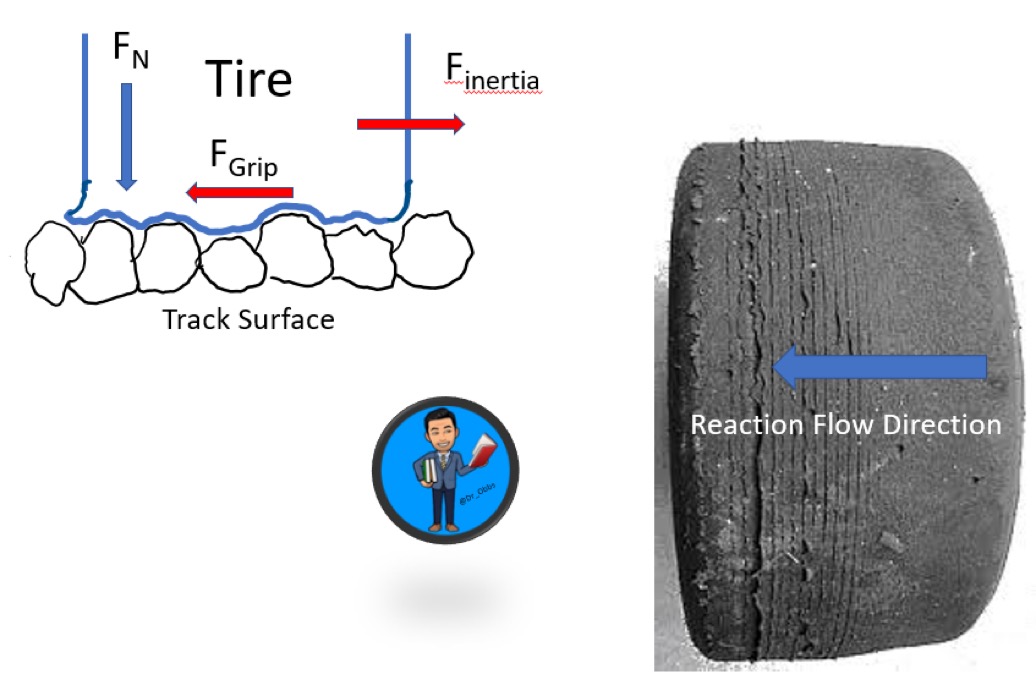
The rubber heats up and softens keying more into the void spaces of the track. These overlapping points become surfaces where grip is generated. The forces and reactionary forces at the surface work with the properties of the racing tyre to create more or less turning force. As the tyre heats up the rubber now molds better into the surface, however, the strength properties of the rubber are also weakened. Meaning that the ability of the rubber to withstand a stress (force over and area) before breaking is reduced.
I don't have good data for race tyres because it is highly protected, so lets just use NBR as a reference. All I have is this research paper for cyrogenic cooling. But it shows the principle just fine. As the NBR is heated, the stress limit before breakage is reduce. The strain capacity (displacement per unit distance) is increasing with temperature, however how much stress can be taken before breaking is reduced.
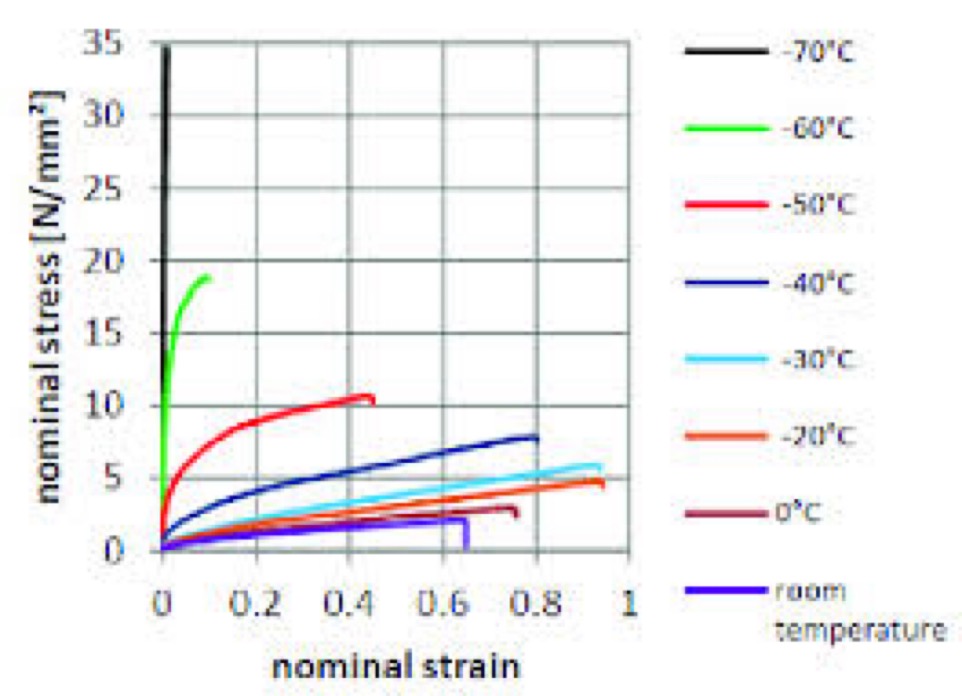
By the way, this is why graining is such a big deal. If you have a tyre that is only hot at the surface (from sliding for instance), and the rest of the tyre is cooler, then you get a different strain response through the thickness of the tyre. The surface is very hot, and prone to rubber breakage (breaking of cross link bonds), but the core is stiffer and stronger. So you only get tearing along the surface of the tyre, and thus graining.
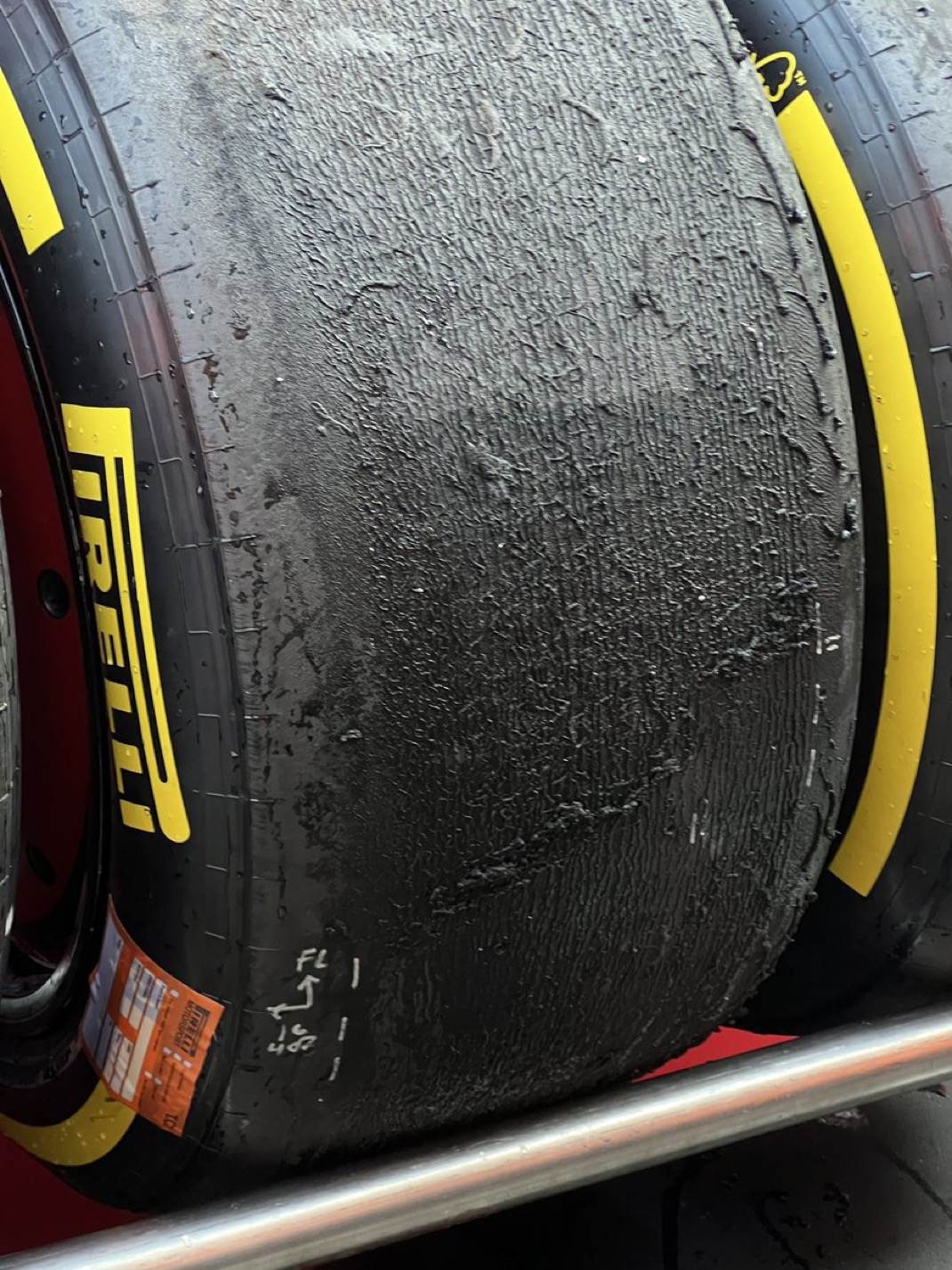
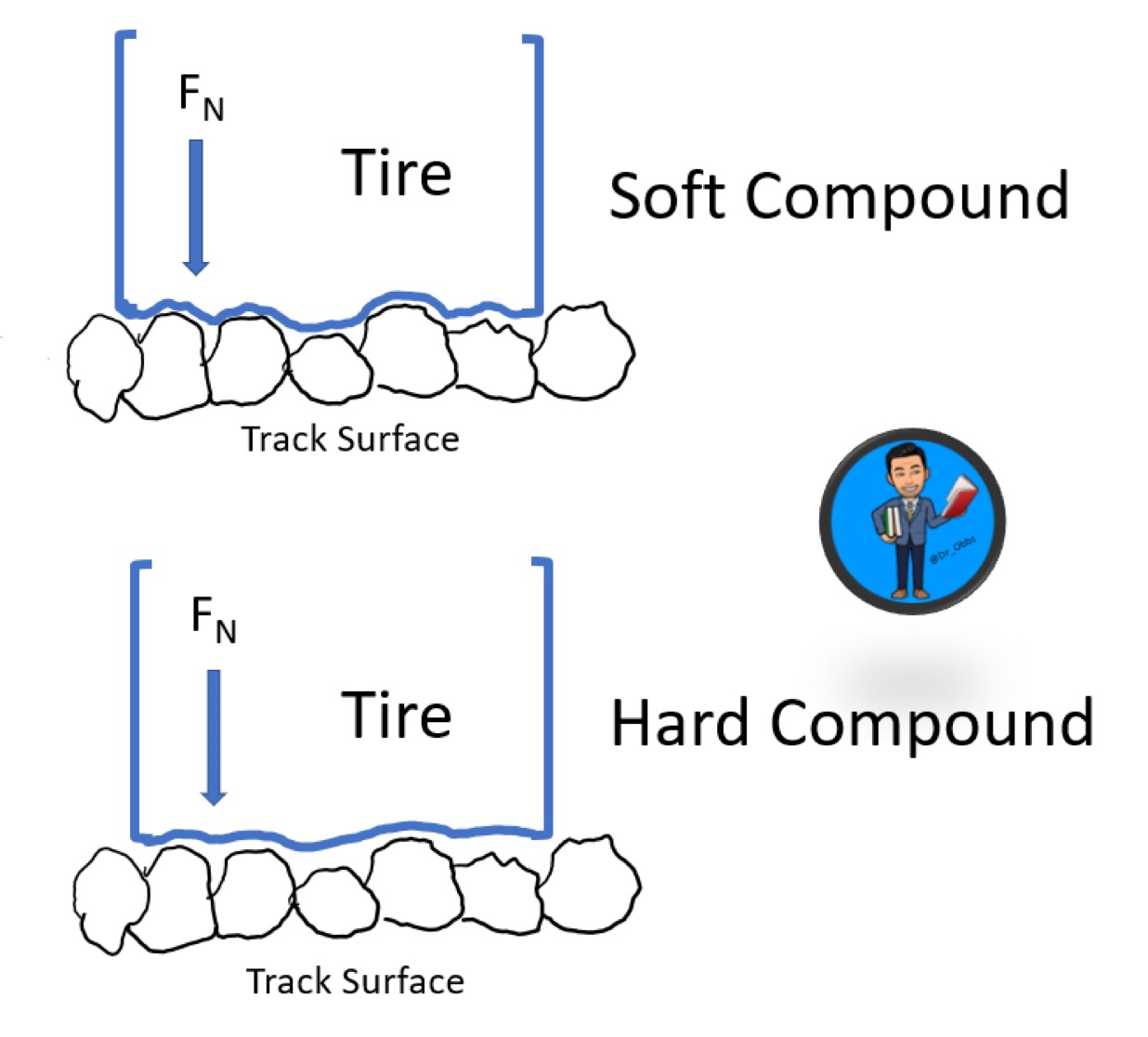
So combining all that we have learned now into a discussion around tyre compounds. Pirelli will choose the tyres for each of the races. The Soft, Medium, and Hard tyres. Each tyre has different chemical properties that influence the hardness and strength of the tyre. So think about all the things we've discussed until this point. Softer tyres will deform and fill the void space in the track better giving you more grip. But they may also heat up faster and be prone to tearing and sliding (degradation) faster. As the hardness is increased, the potential for the tyre to grip into these void spaces is decreased. Thus, you may have less grip on a harder tyre, but you will also have less degradation (usually). The heating of the harder tyre compounds is also key as stressing the harder compounds too early can lead to more sliding early, greater surface heating, but not core heating, and surface graining. This is why many teams will tell their drivers to bring in the harder new tyres easier than maybe a softer compound.
Anyways, I hope that you enjoyed this tech article. Like I said, I kept it real high level and tried to go into details where it was essential to understanding the physics. We didn't even get to chemical adhesion, and other more complicated topics. But I'll leave that to the tyre nerds and the Chem. Engrs. Anyways comment below if you have any questions, or if I stated something incorrectly. We are all here to learn!