

A chronological examination of security breaches and art heists at the world's most visited museum
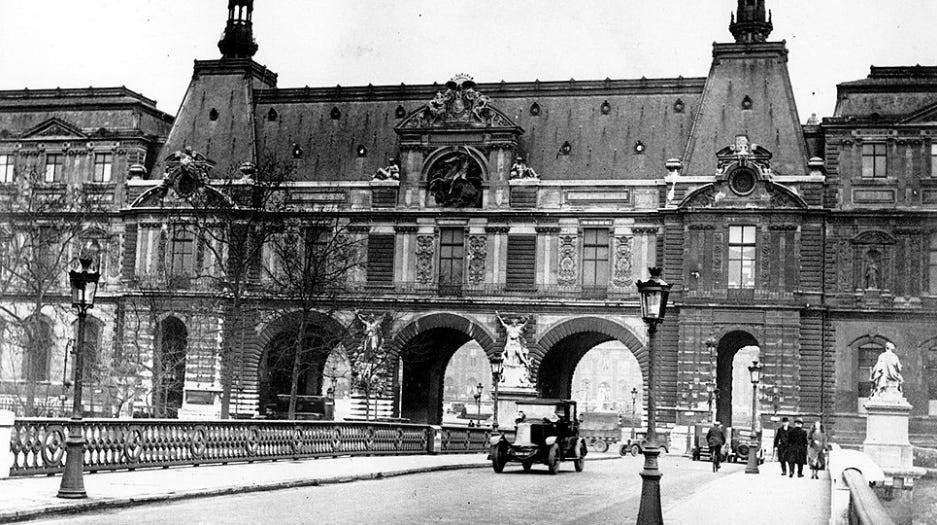 One of the most famous museums in the world was originally a fortress that protected the approaches to the island of Cite, where the center of Paris was then. According to one version, the name “Louvre” appeared because there were many wolves in the neighborhood, and it was called a “wolf place” - Luvenia. Photo: AP
subscribe to https://isitpropaganda.substack.com
On November 8, 1793, the Louvre, one of the most iconic museums in the world, opened its doors to the general public for the first time.
This monumental event, born out of the revolutionary fervor sweeping across France, transformed the Louvre from a royal palace to a national treasure trove, symbolizing the birth of a new era in French history.
It was a time when the French Revolution had turned everything upside down.
The monarchy was toppled, and the Louvre’s royal collections, once the pride of kings and queens, were now part of the nation’s patrimony.
Amid the ruins of the old order, a new republic emerged, one that placed culture at its heart. The Louvre was reimagined as a democratic institution, open to all citizens to marvel at the beauty of their shared heritage.
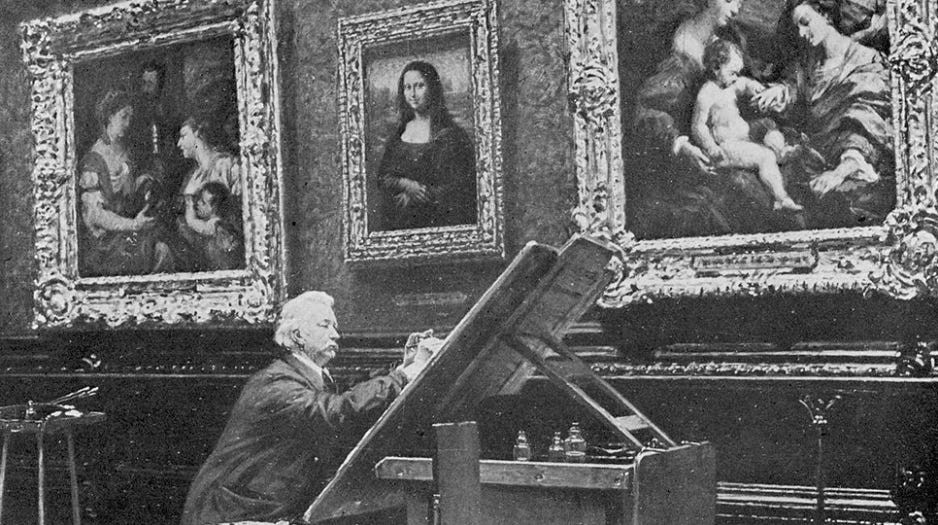 Charles V rebuilt the castle and fortress for himself in 1317, turning them into a royal palace. Approximately 16 kings and 20 architects at different times completed and constructed the Louvre. The most famous among them are architects Pierre Lescaut, Louis Levo, Claude Perrault, artists Poussin, Romaneli, Lebrun. Photo: Global Look.
Yet, dear readers and subscribers,
The Louvre, despite its splendor, has not escaped theft, one of the oldest threats to its collection. In fact, the museum has long been plagued by some of the most daring art heists in history, many of which occurred in broad daylight, right under the noses of museum staff and visitors.
As we saw recently, not all of the museum's stories are happy. Some are dark tales of stolen masterpieces and unsolved crimes that have threatened to unravel the very fabric of France’s cultural heritage.
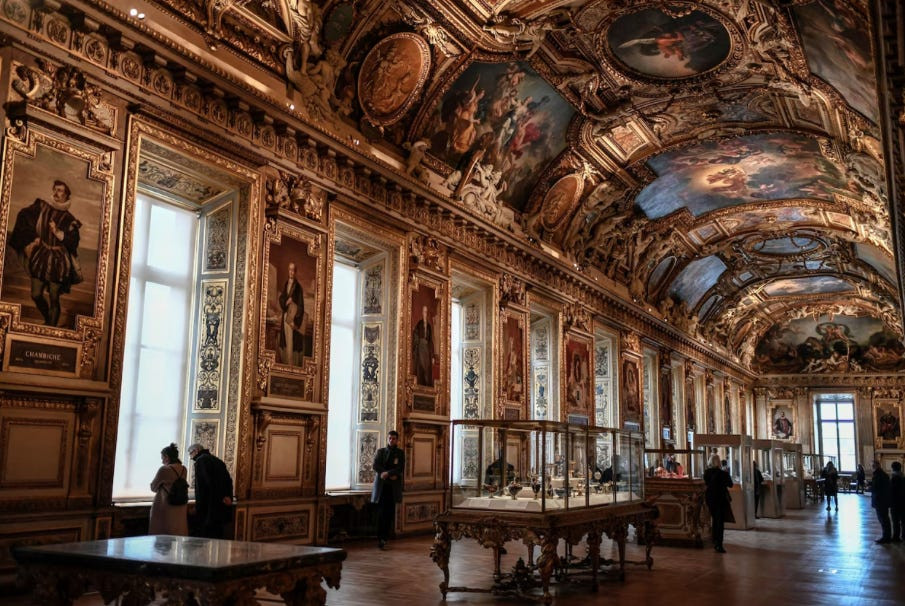 The Apollo Gallery at the Louvre, where the jewelry theft occurred. Stephanie de Sakutin, AFP via Getty Images.
A Chronology of Heists: The Louvre’s Long History of Theft
Since its opening, the Louvre has been the target of numerous high-profile art thefts, often orchestrated with such audacity that they seem almost too brazen to believe. Let us take a closer look at the timeline of these infamous robberies, which have left their indelible mark on the museum’s legacy.
1. The 1911 Mona Lisa Heist
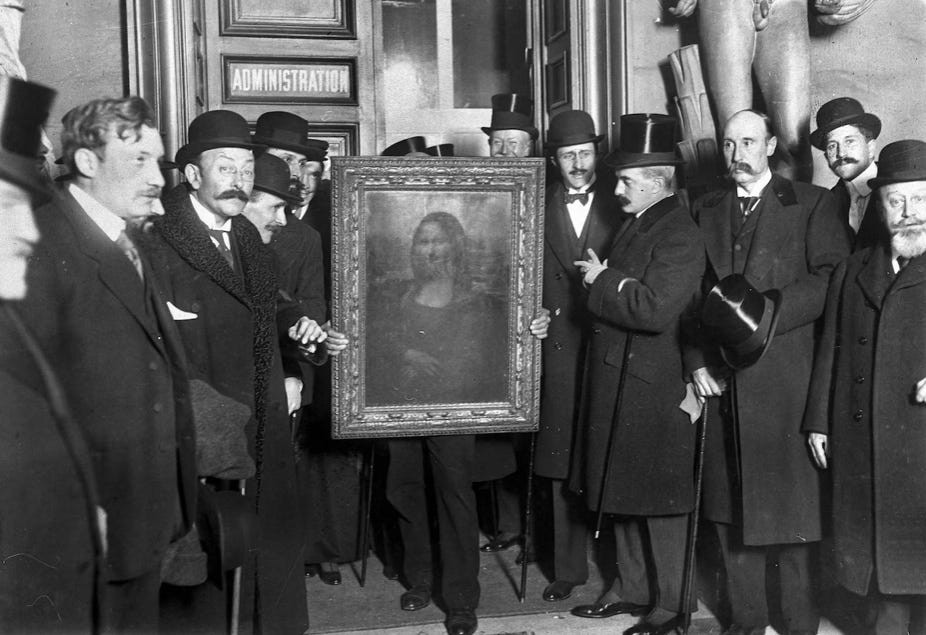 People gather around the Mona Lisa painting in Paris, three years after it was stolen from the Louvre by Vincenzo Peruggia in 1911. The theft is one of the most famous in the museum’s history. Photo: Roger-Viollet, Getty Images.
Date: August 21, 1911
Stolen Object: Mona Lisa by Leonardo da Vinci
Details: Perhaps the most famous art theft in modern history, the Mona Lisa was stolen by Vincenzo Peruggia, an Italian handyman who had briefly worked at the Louvre. On that fateful day, Peruggia disguised himself as a worker, entered the museum, and walked out with the painting hidden under his smock. It wasn’t until the following day that anyone noticed the Mona Lisa was missing. The thief, who had worked at the museum, was able to navigate the Louvre’s security unnoticed. For over two years, the world wondered where the painting was until Peruggia tried to sell it in Italy. The theft, which turned Mona Lisa into a household name, remains one of the greatest art heists of the 20th century.
2. The Nazi Occupation and Looting of 1940
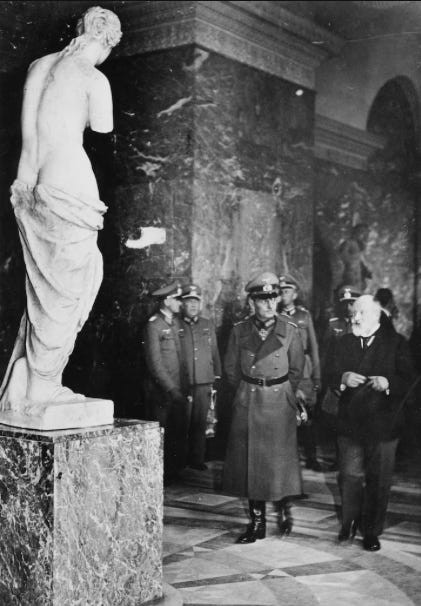 Nazi field marshall Gerd von Rundstedt and curator Alfred Merlin tour the Louvre’s collection in Paris, standing in front of the Venus de Milo in 1940.
Date: 1940
Stolen Objects: Various artworks, including masterpieces from the French collection.
Details: When Nazi forces occupied Paris during World War II, they sought to plunder the Louvre’s collection. However, Jacques Jaujard, the museum’s director, orchestrated one of the most heroic acts of cultural preservation in history. Before Paris fell, he secretly relocated over 1,800 works of art to a safer location in the French countryside. Despite the valiant efforts to protect the collection, the Nazis did manage to steal a number of valuable works, including paintings that were later exchanged with Nazi-aligned governments, most notably Franco’s Spain.
3. The 1976 Masked Robbery
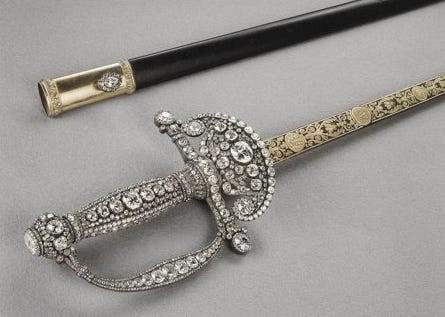 the coronation sword of Charles X, a masterpiece of goldsmithing by masters Frédéric and Jacques-Evrard Bapst and the famous gunsmith Charles-Louis Sir-Henri. A sumptuous weapon, 94 centimeters long, with a silver hilt encrusted with diamonds and a gold-plated blade.
Date: Night of December 15-16, 1976
Stolen Objects: Charles X Coronation Sword.
Details: That night, three armed men climbed a scaffold, broke a window (the same one used this week, October 19, 2025), neutralized two guards, and disappeared with their loot. The theft made headlines and left its mark on the history of the Louvre.
Despite a lengthy investigation, the sword has never been recovered, adding yet another unsolved mystery to the Louvre’s dark history.
4. The 1983 Theft of 16th-century armor
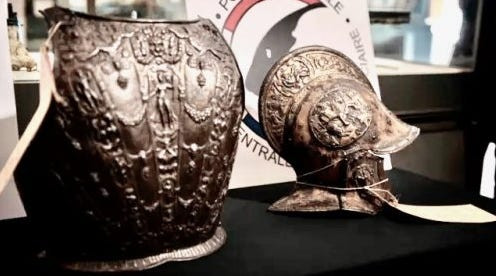 The burgundy and the back of the armor stolen in 1983 and found in 2021.
Date: May 31, 1983
Stolen Objects: Two pieces of Renaissance armor (Burgundian and back armor)
Details: The two pieces of armor gifted to the museum by the Rothschild family were stolen from the museum overnight. Nearly 40 years passed before the armor was recovered in 2021, when an appraiser recognized the helmet and upper back piece among the items he was valuing as part of an estate in Bordeaux and contacted police. It was never determined who stole the armor pieces or how they did it. The pieces were returned to the Louvre and are on display there.

5. The 1990 Renoir and Roman Jewelry Heist
Date: 1990
Stolen Objects: A small Renoir painting, 12 pieces of ancient Roman jewelry, and additional artworks.
Details: Thieves once again struck in broad daylight, stealing a Renoir painting and a collection of Roman jewelry from the museum. The painting was cut from its frame, and the thieves made their getaway without triggering the alarm. To this day, the stolen pieces have never been fully recovered.
6. The 1998 Corot Painting Theft
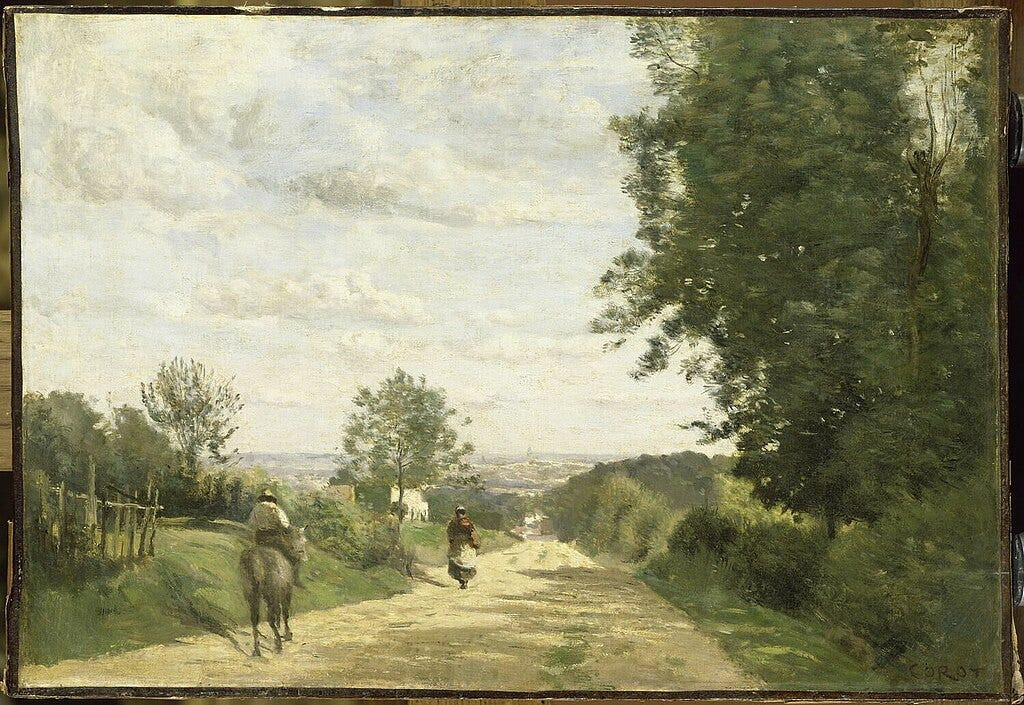 Le Chemin de Sèvres. Vue de Paris (English: The Road from Sèvres. View from Paris). Jean-Baptiste-Camille COROT
Date: 1998
Stolen Object: The Road from Sèvres by Camille Corot
Details: Another brazen theft occurred in 1998, when The Road from Sèvres was stolen from its frame during a busy museum day. Despite police efforts, the painting has never been found, adding to the Louvre’s growing list of unsolved art thefts.
7. The 2025 Napoleonic Jewelry Heist
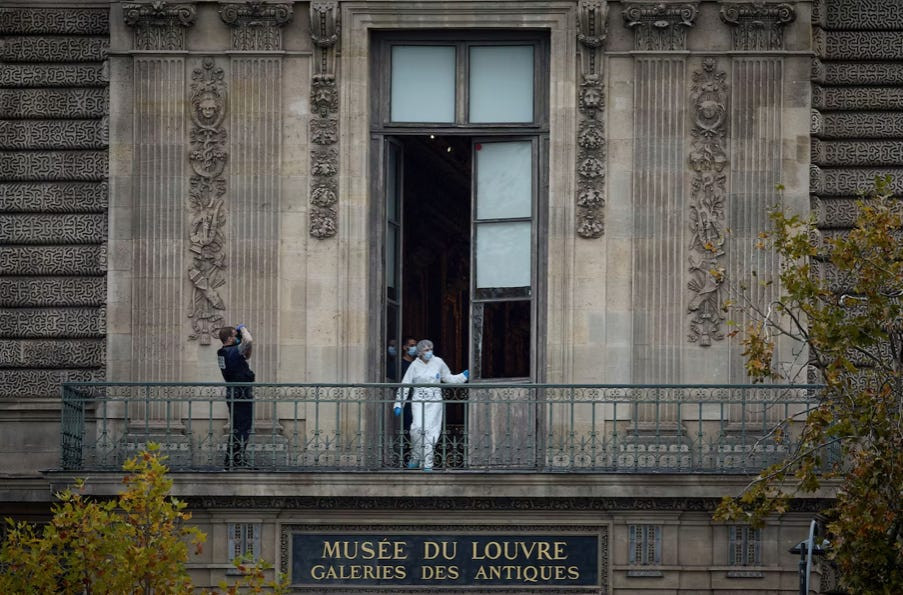
Date: October 19, 2025
Stolen Objects: Napoleonic-era jewels, including a famous emerald necklace.
Details: In one of the most audacious crimes of the 21st century, a group of thieves stole priceless jewels once owned by Napoleon and his second wife, Marie-Louise. They bypassed the museum’s security in broad daylight, making off with several valuable pieces, including the emerald necklace. Although some of the items have resurfaced, much of the stolen collection remains missing. The heist has led to a new wave of debate over the security measures in place at the Louvre.
The thieves reportedly took pieces of sapphire jewelry from the Louvre museum on SundayThe thieves also stole this emerald-and-diamond necklace, which Napoleon gave to his second wife Marie-Louise for their wedding.
 Louvre Museum theft: Stolen jewels added to INTERPOL’s Stolen Works of Art database. Added October 21, 2025. Source.
The Ongoing Battle: Protecting France’s Cultural Legacy
Despite the Louvre’s best efforts to reinforce its security, these bold thefts have demonstrated the museum’s vulnerability to sophisticated criminals.
The Louvre’s storied history of thefts not only casts a shadow over its collections but also raises profound questions about how best to safeguard such irreplaceable treasures.
As the museum continues to house some of the most valuable art ever created, the ongoing battle between security and theft underscores the fragile nature of cultural heritage protection, even in the heart of France.
—Jerry B. Marchant
Thank you for your patronage!
subscribe to https://isitpropaganda.substack.com
References:
Freundschuh, Aaron. “The 1911 Theft of the Mona Lisa: An Art Heist that Changed the World.” Urban History Journal 32, no. 2 (2006): 123-145.
Jaujard, Jacques. The Louvre in the Time of War. Paris: Gallimard, 1953.
INTERPOL. Stolen Artwork Database.
“Louvre Museum Heist of 2025: The Stolen Jewels of Napoleon and Empress Josephine.” Reuters, October 21, 2025.
“Peruggia and the Mona Lisa: The Theft That Shook the Art World.” Art Theft Quarterly 15, no. 3 (2011): 89
“The Daylight Robberies: A History of Art Theft in Paris’s Louvre Museum.” Le Monde, December 2, 1998.
© 2025 Jerry B. Marchant
Privacy ∙ Terms ∙ Collection notice
Start your SubstackGet the app
Substack is the home for great culture