

With a proposed driving range of 322 km, a targeted flight range of 177 km and an expected price of $299,999, Alef Aeronautics is working to bring the flying car closer to reality. But how soon could people actually use one?
For decades, flying cars have belonged to the world of science fiction. Films and futuristic illustrations have often shown people travelling above traffic in their personal vehicles. Today, several companies are trying to turn that idea into a working technology. Among them is Alef Aeronautics, a California-based company developing an electric vehicle designed to travel on roads and fly through the air.
Its Model A has attracted attention because of its unusual design and its ambition to combine two forms of transport in one vehicle. Unlike conventional cars, which remain on the ground, or electric aircraft that require dedicated landing areas, Alef is developing a vehicle intended to drive on roads and take off vertically.
The idea sounds simple enough. In practice, however, building a safe, affordable and legally approved flying car is a difficult engineering challenge.
What Is the Alef Flying Car?
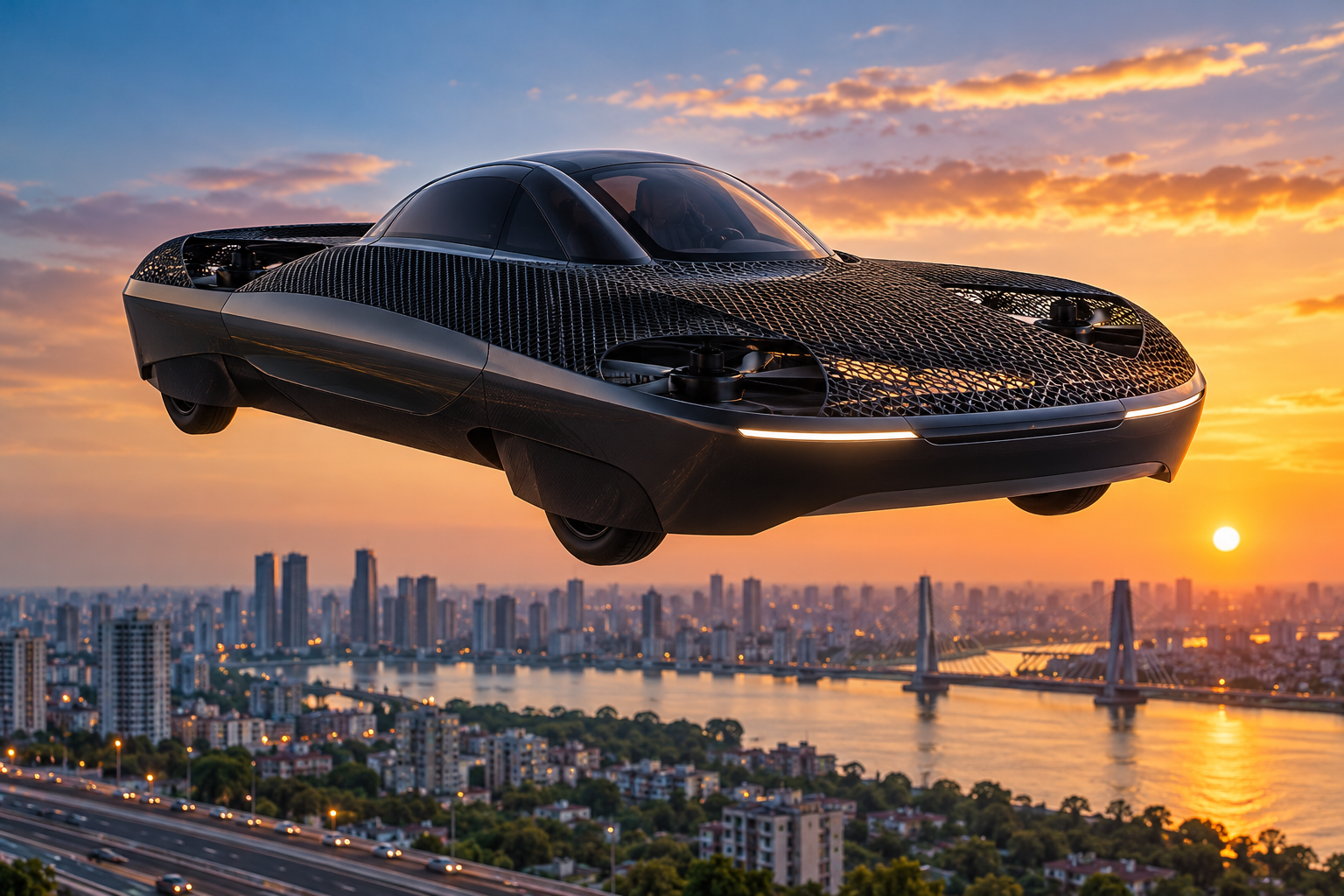
The Alef Model A is an all-electric vehicle designed for both road travel and flight. The company describes it as a vehicle capable of vertical takeoff and landing, commonly known as VTOL.
Its exterior looks like a compact car, but the body incorporates an electric propulsion system designed to lift the vehicle into the air. The cabin is also designed to rotate during flight, allowing passengers to remain upright as the vehicle changes orientation.
The company aims to offer a different approach to personal air mobility. Rather than building an aircraft that can only fly, Alef wants to create a vehicle that can drive through ordinary streets before taking off when road travel is impractical and conditions permit.
However, the ability to drive and fly does not mean the vehicle can take off from any road or operate freely above a crowded city. Suitable locations, weather conditions, safety procedures and aviation regulations will all influence its practical use.
How Does It Fly?
The Model A uses electric propulsion, with multiple propellers designed to generate the thrust needed for vertical lift and flight.
In road mode, the vehicle operates as an electric car. In flight mode, its propulsion system generates enough lift to raise the vehicle from the ground. The design also incorporates a rotating cabin to help maintain the occupants' orientation during flight.
This arrangement differs from a conventional helicopter, which relies on large overhead rotor blades, and from an ordinary aeroplane, which generally needs forward speed and a suitable runway to take off.
Electric propulsion offers potential benefits, including reduced direct emissions during operation and the possibility of precise control through multiple motors. Yet it also brings challenges. Batteries are heavy, flying requires considerable energy, and the vehicle must balance road performance, flight stability, passenger safety and usable range.
These factors will determine whether the flying car can become a practical transport option rather than simply an impressive demonstration of engineering.
Alef Model A: Specifications and Expected Price
These figures are manufacturer-stated specifications and targets. They should not be treated as independently verified real-world performance figures for a fully certified production vehicle. Actual range can depend on payload, weather, operating conditions and the final production configuration.
At the announced price, the Model A would be a luxury purchase. At an illustrative exchange rate of ₹90 per US dollar, US$299,999 comes to around ₹2.7 crore before import costs, taxes and other expenses.
For Indian buyers, the final cost could be considerably higher if the vehicle becomes available for import.
Has the Alef Flying Car Started Production?
One of the important developments in the project has been the move from prototype development towards early manufacturing.
Alef announced the start of hand-building early Model A Ultralight vehicles in December 2025. These early vehicles are intended for a limited group of customers and testing activities. They should not automatically be considered identical to the eventual consumer version of the Model A.
The distinction matters because building an early vehicle is only one stage of bringing a new transport technology to market. Manufacturers must also demonstrate safety, establish reliable production processes and obtain the necessary approvals for the intended use.
Alef has also released footage of its vehicle in flight, helping demonstrate the concept beyond computer-generated designs. Nevertheless, a successful test flight does not establish that the vehicle is ready for everyday use in busy urban environments.
The key questions now concern repeatable performance, safety, certification, customer deliveries and the cost of operating the vehicle.
What About Safety and Aviation Approval?
Safety will be one of the biggest factors in deciding whether flying cars can become a practical form of transport.
In June 2023, the US Federal Aviation Administration issued a special airworthiness certificate for an experimental Alef prototype. This was a limited approval for experimental purposes, not blanket permission for unrestricted commercial operation.
A vehicle that operates both on roads and in the air must satisfy requirements relevant to each environment. On the road, it must be suitable for driving and comply with applicable vehicle rules. In the air, it must meet the requirements relevant to its aircraft classification and intended operation.
The company will also need to address issues such as emergency landings, motor or battery failures, weather limitations, maintenance, operator training and the protection of people on the ground.
These are not minor details. A flying car must be able to handle failures safely, particularly if its intended operating environment includes populated areas.
Can the Alef Flying Car Come to India?
The prospect of a flying car naturally raises questions about its use in Indian cities such as Kolkata, Delhi, Mumbai and Bengaluru, where road congestion can consume a significant amount of time.
In theory, a vehicle that can travel on roads and fly could offer another way to cover certain journeys. In practice, bringing the Alef Model A to India would require several regulatory and logistical steps.
The Directorate General of Civil Aviation and other relevant Indian authorities would need to determine the applicable aviation requirements. Road registration, import procedures, taxation, maintenance arrangements and operating permissions would also need to be addressed.
There would be additional questions about where the vehicle could take off and land, how it would interact with existing air traffic, and whether suitable facilities could be established in urban areas.
A US experimental certificate does not automatically allow a vehicle to fly in India. Nor would the ability to take off vertically make it legal to launch from a public road or an ordinary residential neighbourhood.
For now, there is no established basis for treating the Alef Model A as a routinely available, road-legal and aviation-approved vehicle for Indian consumers.
Will Flying Cars Solve Traffic Congestion?
The promise of flying cars is closely linked to the frustration of sitting in traffic. However, moving vehicles into the air does not automatically solve every problem associated with urban transport.
Flying vehicles would need safe routes, approved takeoff and landing areas, traffic management systems and clear operating rules. Noise, energy consumption, weather, maintenance and the number of vehicles that can safely share the airspace would also matter.
Price is another barrier. At nearly US$300,000, the proposed Model A is far beyond the budget of most private vehicle buyers. The technology would need to become more affordable before it could serve a large section of the population.
There is also a difference between using a flying car for occasional journeys and making it a daily commuting vehicle. Its real value will depend on how easily owners can charge it, maintain it, park it, and use it legally in their area.
The Road Ahead for Alef
The Alef Model A represents an attempt to combine electric road transport with personal flight in a single vehicle. Its unusual design and reported prototype flights make it a project worth following, but the gap between a working prototype and a practical consumer vehicle remains significant.
The next major milestones will be evidence of reliable flight performance, certification for the intended production model, confirmed deliveries and clarity about where customers will be allowed to drive and fly.
For India, widespread use would require a separate assessment of local aviation rules, road regulations, infrastructure and affordability.
Flying cars may eventually become part of personal transport, but their success will depend on much more than the ability to rise into the air. They must be safe, reliable, affordable and legally usable.
For now, Alef's Model A offers a glimpse of what the future of personal mobility might look like. Whether that future arrives soon will depend on how successfully the company turns its ambitious design into a vehicle people can use in everyday life.